Editorial Technical Reference

Output Terminal Block / Socket

This page explains how Output Terminal Block / Socket is classified within Electrical Equipment Manufacturing. Technical values and manufacturer relationships are research references; confirm the current specification and supplier evidence for each order.

Technical Definition & Core Assembly

Electrical connection interface within a Power Distribution Unit (PDU) that provides secure termination points for output power cables to connected equipment.
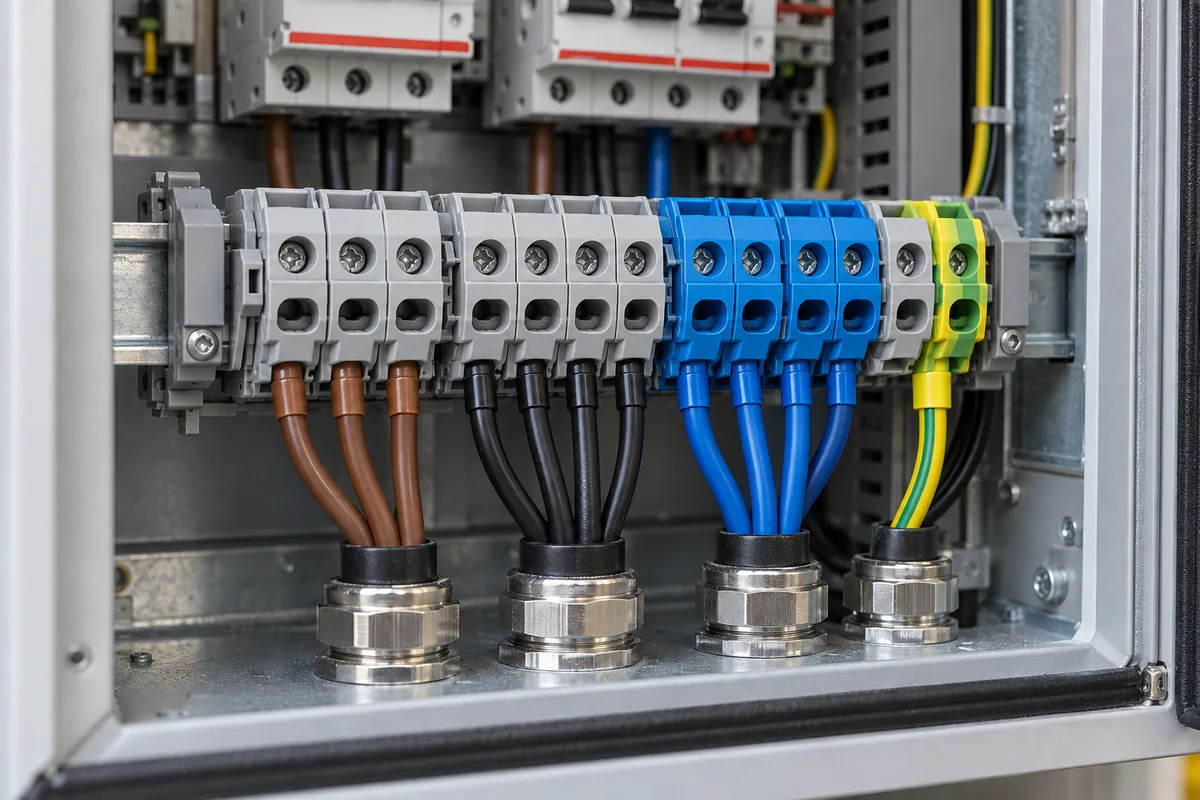
Representative product image. Confirm appearance and specifications with the manufacturer.

Product Specifications

Technical details and manufacturing context for Output Terminal Block / Socket

Definition
An output terminal block or socket is a critical component of a Power Distribution Unit (PDU) that serves as the final electrical interface for distributing power to connected devices. It provides a secure, organized, and often modular point for terminating output power conductors (wires or cables). The block/socket ensures reliable electrical contact, facilitates safe installation and maintenance (e.g., through screw terminals, clamp connections, or plug-and-socket designs), and may incorporate features for circuit protection, identification, or monitoring within the PDU assembly. This component is typically rated for continuous currents from 10 to 32 amperes per contact, with operating voltages up to 690 V AC, and is designed to meet the requirements of IEC 60947-7-1 for terminal blocks. The housing is made of flame-retardant thermoplastic or thermoset materials (e.g., PA66, PC, PBT) with a UL94 V-0 flammability rating, while the conductive parts are copper alloys (e.g., brass, phosphor bronze) with tin plating for corrosion resistance. Key electrical parameters include contact resistance of ≤5 mΩ, insulation resistance of ≥1000 MΩ at 500 V DC, and dielectric withstand voltage of 2.5 to 4 kV for one minute. The operating temperature range is -40 to 85 °C, and the degree of protection can vary from IP20 (indoor) to IP65 (dust and water resistant). Wire cross-sections from 0.5 to 16 mm² are accommodated, with tightening torques from 0.5 to 2.5 N·m. The weight ranges from 20 to 150 grams depending on the number of poles and current rating. These values are reference ranges; the actual model must be verified with the manufacturer. The terminal block/socket is a passive component, but its proper selection and installation are essential for the safe and reliable operation of the PDU. It is used in various applications, including data centers, industrial control panels, and power distribution systems. When selecting an output terminal block or socket, consider the required current and voltage ratings, wire size, environmental conditions, and applicable standards. Always consult the manufacturer's datasheet for specific model details and installation instructions.
Working Principle
The terminal block/socket provides a mechanical clamping mechanism (e.g., screw terminal, spring clamp, push-in) or a mating socket interface to establish a secure electrical connection between the PDU's internal busbars/wiring and the external output cables. This creates a low-resistance path for electrical current to flow from the PDU to the connected load equipment. Proper torque or engagement ensures contact integrity, minimizing heat generation and voltage drop. The clamping mechanism applies pressure to the conductor, ensuring a gas-tight connection that resists vibration and thermal cycling. For socket types, the mating plug ensures a reliable connection with appropriate insertion force and contact pressure. The design must accommodate the specified wire cross-section and provide adequate creepage and clearance distances for the rated voltage. The working principle is based on maintaining a stable, low-resistance interface that can handle the rated current without excessive temperature rise. Over time, loose connections or contamination can increase resistance, to heat buildup and potential failure. Therefore, periodic inspection and proper torque verification are recommended.
Common Materials
Copper alloy (e.g., brass, phosphor bronze), Thermoplastic or thermoset housing (e.g., PA66, PC, PBT)
Technical Parameters
ParameterTypical rangeNotes & selection driver
Rated Current10–32 AContinuous current per contact; higher requires larger terminalIEC 60947-7-1
Rated Voltage250–690 V ACMax operating voltage between conductorsIEC 60947-7-1
Contact Resistance≤5 Per contact after tightening; higher causes heat riseIEC 60947-7-1
Insulation Resistance≥1000 At 500 V DC; lower indicates moisture or contaminationIEC 60947-7-1
Dielectric Withstand Voltage2.5–4 kV1 min at 50/60 Hz; ensures insulation integrityIEC 60947-7-1
Operating Temperature Range-40–85 °CContinuous operation; outside range derating requiredIEC 60947-7-1
Degree of ProtectionIP20–IP65IP20 for indoor, IP65 for dust/water resistanceIEC 60529
Wire Cross-Section0.5–16 mm²Solid or stranded; must match terminal capacityIEC 60947-7-1
Tightening Torque0.5–2.5 N·mPer screw size; under-torque causes loose connectionIEC 60947-7-1
MaterialCu alloy, Sn-platedConductor: copper alloy; plating: tin for corrosion resistanceIEC 60947-7-1
Flammability RatingUL94 V-0Housing material; V-0 stops burning within 10 sUL 94
Weight20–150 gDepends on number of poles and current rating

Ranges are indicative industry figures for RFQ preparation, not a supplier commitment. Confirm every value and standard with the legal manufacturer before ordering.

Components / BOM
  • Terminal Clamp/Screw Part
    Provides mechanical force to secure the conductor and ensure electrical contact.
    Material: Steel (often plated) or brass
  • Conductor Bar/Contact Part
    Internal metal component that carries current between the internal connection and the clamp.
    Material: Copper alloy (e.g., brass, phosphor bronze)
  • Insulating Housing Part
    Encases the conductive parts, providing electrical insulation, mechanical protection, and mounting structure.
    Material: Thermoplastic (e.g., PA66, PC) or thermoset material
  • Marking/Label Area Part
    Surface for identifying the terminal (e.g., circuit number).
    Material: Integrated into housing or separate label
  • Socket Contact Set Optional
    The receptacle contacts on socket-type outputs, where a plug is used instead of screw terminals.

Applied To / Applications

This component is essential for the following industrial systems and equipment:

Industrial Ecosystem & Supply Chain Structure

Complementary Systems
Downstream Applications
Specialized Tooling

Application Fit & Sizing Matrix

Operational Limits
pressure: N/A (electrical connection only)
other spec: Current Rating: 10A to 100A, Voltage Rating: Up to 600V AC/DC, Wire Size: 12 AWG to 250 kcmil
temperature: -40°C to +105°C
Media Compatibility
✓ Copper conductors ✓ Aluminum conductors (with appropriate lugs) ✓ Stranded and solid core cables
Unsuitable: High-vibration environments without vibration-resistant mounting
Sizing Data Required
  • Maximum continuous current (Amps)
  • Wire gauge/size (AWG or mm²)
  • Number of poles/connections required

Reliability & Engineering Risk Analysis

Failure Mode & Root Cause
Contact Corrosion
Cause: Environmental exposure to moisture, chemicals, or contaminants leading to oxidation or galvanic corrosion at terminal connections, increasing resistance and causing overheating.
Mechanical Fatigue
Cause: Repeated thermal cycling, vibration, or improper installation stresses causing loosening of screws, cracks in insulation, or deformation of socket housing.
Maintenance Indicators
  • Visible discoloration, charring, or melting around terminal blocks indicating overheating
  • Audible buzzing, crackling sounds, or intermittent electrical arcing from the socket area
Engineering Tips
  • Apply appropriate anti-oxidation compound (e.g., nickel or silver-based conductive grease) to contact surfaces during installation to prevent corrosion and maintain low resistance.
  • Implement torque-controlled installation with calibrated tools and periodic retorquing schedules to ensure proper clamping force without damaging components.

Indicative industry ranges for design and RFQ preparation. Confirm the exact figures and applicable standard with the manufacturer before specifying.

Compliance & Manufacturing Standards

Applicable Standards
IEC 60947-7-1: Low-voltage switchgear and controlgear - Terminal blocks for copper conductors UL 1059: Terminal Blocks DIN 46247: Flat quick-connect terminations

Quoted from the published standard.

Manufacturing Precision
  • Bore diameter: +/-0.02mm
  • Terminal pitch: +/-0.1mm
Quality Inspection
  • Dielectric strength test (hipot test)
  • Contact resistance measurement

Manufacturers of Output Terminal Block / Socket

Manufacturer profiles associated with Output Terminal Block / Socket.

Sourcing Output Terminal Block / Socket from China?
Tell us your specification and target quantity — we will match it against manufacturer records and come back with the factories that fit.
Request manufacturers We manufacture this

Manufacturer listings support early research and capability understanding. They are not certification, ranking, or transaction guarantees.

Technical documentation
Request current drawings, revision history, and a signed specification sheet.
Manufacturing capability
Verify equipment lists, process limits, capacity, and representative production evidence.
Inspection readiness
Confirm test methods, calibrated equipment, sampling plans, and traceable reports.
Supplier transparency
Check the legal entity, factory address, ownership, certifications, and direct contacts.

CNFX does not score or rank suppliers. Buyers must verify all claims and documents with the legal manufacturer before ordering.

Supply Chain Compatible Machinery & Devices

Motor Terminal Block

A motor terminal block is a standardized electrical component that provides secure, insulated connection points for motor winding leads.

Explore Specs →
PLC Control System

A digital industrial computer control system that monitors inputs, makes decisions based on a custom program, and controls outputs to automate industrial processes.

Explore Specs →
Control Panel

A centralized interface for monitoring and controlling industrial equipment and processes

Explore Specs →
PLC Control Panel

A centralized interface unit housing the programmable logic controller and associated control components for industrial automation systems.

Explore Specs →

Frequently Asked Questions

What is the rated current range for these output terminal blocks?

According to the reference data, the rated current per contact is typically between 10 and 32 amperes. However, the exact rating depends on the specific model and must be confirmed with the manufacturer's datasheet.

What standards apply to these terminal blocks?

The primary standard is IEC 60947-7-1 for terminal blocks, which covers requirements for rated current, voltage, contact resistance, insulation resistance, dielectric withstand voltage, and other parameters. Additionally, the flammability rating is per UL 94, and the degree of protection is per IEC 60529. These standards serve as verification references; actual compliance must be confirmed with the supplier.

What wire sizes can be used with these terminal blocks?

The reference data indicates a wire cross-section range of 0.5 to 16 mm². The specific wire size that can be accommodated depends on the terminal design and must be checked against the manufacturer's specifications.

How should I verify the correct tightening torque?

The recommended tightening torque ranges from 0.5 to 2.5 N·m, depending on the screw size and terminal design. Always follow the manufacturer's instructions for the specific model to ensure a secure connection and avoid damage.

Data Basis

Editorial classification, named public sources where available, and source-reviewed manufacturer records.

Preliminary Technical Classification
This page supports structured research, RFQ preparation, and supplier evaluation. It does not replace buyer-led supplier qualification, standards review, or technical approval.
Buyer enquiry

Request manufacturing insight for Output Terminal Block / Socket

Ask for use case, specification boundaries, supplier type, and RFQ preparation information for this product.

Where it goes
Straight to the CNFX editorial desk, and to the manufacturer if this product is linked to a claimed profile. Nothing is broadcast to a supplier list.
Your details stay here
We do not sell or rent enquiry data, and we do not add you to a mailing list. Used only to answer this request.
No commission, no middleman
CNFX is a directory. We take no cut of any order and never negotiate on a supplier's behalf.
What we don't claim
A listing is not an endorsement. Qualify every supplier and verify every figure yourself before ordering.

Your business information is used only to process this request.

Thank you! Your message has been sent. We'll respond within 1–3 business days.
Sorry, we couldn't send your message. Please try again, or email us at contact@cnfx.com.

Need to Manufacture Output Terminal Block / Socket?

Compare manufacturer profiles with relevant product and process capability.

Previous Product
Wire Tensioning System
Last Product
Get QuotesChat