Structured Manufacturing Data (2026)

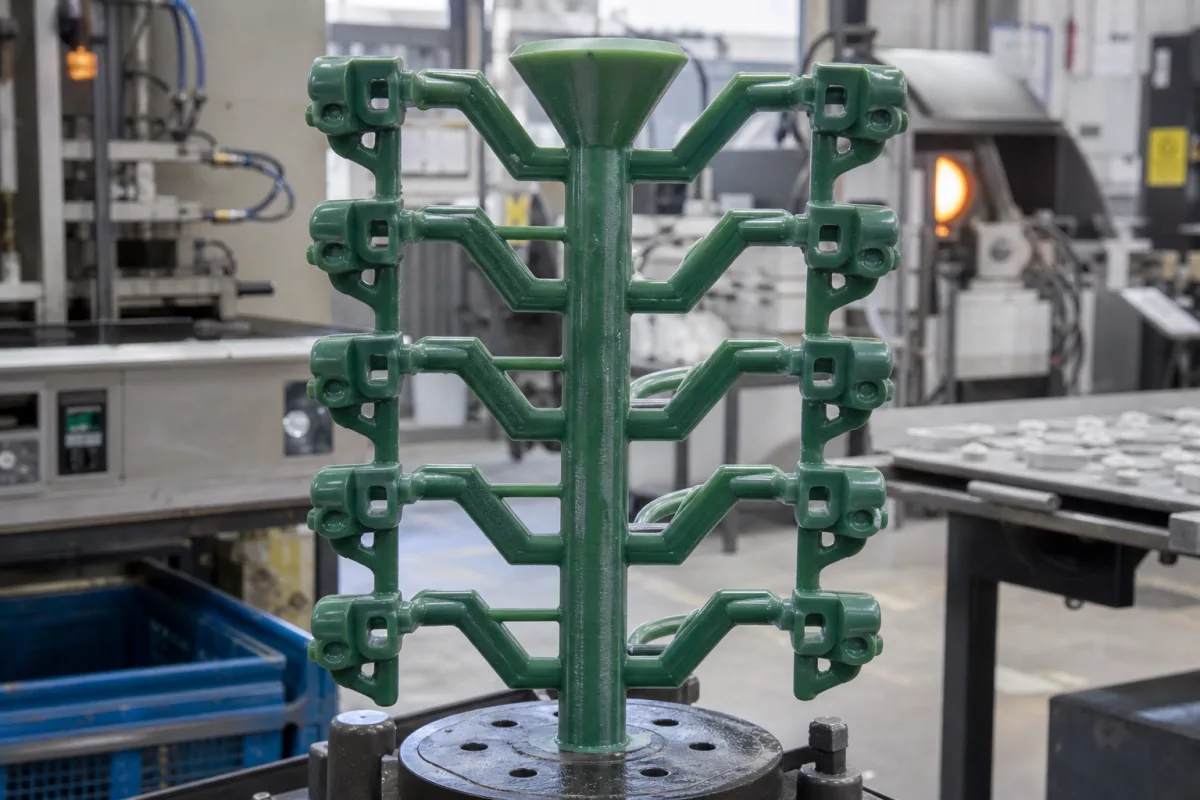
Precision Casting Gating System

Based on aggregated insights from structured factory profiles within the CNFX directory, the standard Precision Casting Gating System used in the Foundries sector typically supports operational capacities ranging from standard industrial configurations to heavy-duty production requirements.

Technical Definition & Core Assembly

A canonical Precision Casting Gating System is characterized by the integration of Sprue and Runner. In industrial production environments, manufacturers listed on CNFX commonly emphasize Refractory Ceramic construction to support stable, high-cycle operation across diverse manufacturing scenarios.

Network of channels delivering molten metal to mold cavities in foundry casting.
Product Specifications

Technical details and manufacturing context for Precision Casting Gating System

Definition
A precision casting gating system is a critical component in metal casting processes that controls the flow of molten metal from the pouring basin into the mold cavity. It consists of carefully designed channels including sprue, runners, and gates that regulate metal velocity, temperature, and turbulence to ensure proper mold filling and minimize defects. In industrial foundry operations, optimized gating systems directly impact casting quality, yield rates, and production efficiency by reducing scrap and improving metallurgical properties. These components are essential in B2B supply chains for automotive, aerospace, and machinery manufacturing where consistent casting quality is paramount.
Working Principle
Utilizes fluid dynamics principles to guide molten metal through progressively smaller channels, controlling flow rate and minimizing turbulence while preventing premature solidification.
Common Materials
Refractory Ceramic, Silica Sand, Zircon Sand
Technical Parameters
  • Runner diameter controlling metal flow rate (mm) Customizable
  • Total cross-sectional area of gating channels (mm²) Customizable
Components / BOM
  • Sprue Part
    Vertical channel receiving molten metal from pouring basin
    Material: Refractory ceramic or sand
  • Runner Part
    Horizontal distribution channels directing metal to multiple gates
    Material: Silica sand or zircon sand
  • Gate Part
    Final entry point controlling metal flow into mold cavity
    Material: Refractory ceramic
  • Pouring Basin Optional Part
    Initial reservoir that receives molten metal from ladle
    Material: Refractory ceramic

Industry Taxonomies & Aliases

Commonly used trade names and technical identifiers for Precision Casting Gating System.

Industrial Ecosystem & Supply Chain Structure

Complementary Systems
Downstream Applications
Specialized Tooling

Application Fit & Sizing Matrix

Operational Limits
pressure: 0.1-0.5 MPa (gravity/pressure-assisted systems)
flow rate: 0.5-5.0 kg/s (depends on gating ratio)
temperature: 1400-1700°C (typical ferrous alloys)
slurry concentration: N/A (solid ceramic systems)
Media Compatibility
✓ Molten steel alloys ✓ Aluminum alloys ✓ Copper-based alloys
Unsuitable: Highly reactive metals (e.g., titanium, magnesium) requiring inert atmosphere gating
Sizing Data Required
  • Casting weight and volume (kg/cm³)
  • Number of cavities in mold
  • Solidification characteristics of alloy

Reliability & Engineering Risk Analysis

Failure Mode & Root Cause
Thermal fatigue cracking
Cause: Repeated thermal cycling from molten metal contact and cooling cycles, leading to stress concentration at sharp corners and material embrittlement
Erosion wear
Cause: High-velocity molten metal flow causing gradual material removal, particularly at gate entries and runner bends, exacerbated by abrasive inclusions in the melt
Maintenance Indicators
  • Visible cracks or discoloration (blue/brown temper colors) on gating surfaces indicating overheating and material degradation
  • Abnormal casting defects in products such as incomplete fills, cold shuts, or increased porosity suggesting flow restriction or temperature loss in the gating system
Engineering Tips
  • Implement regular thermal imaging inspections to identify hot spots and uneven temperature distribution before cracking initiates
  • Apply specialized refractory coatings to critical wear areas and optimize gating geometry using fluid dynamics simulation to reduce turbulence and erosion

Compliance & Manufacturing Standards

Reference Standards
ISO 8062:2020 (Geometrical product specifications (GPS) - Dimensional and geometrical tolerances for moulded parts) ASTM A703/A703M-22 (Standard Specification for Steel Castings, General Requirements, for Pressure-Containing Parts) DIN EN 1559-1:2011 (Founding - Technical conditions of delivery - Part 1: General)
Manufacturing Precision
  • Wall thickness: +/-0.5mm (for typical sections)
  • Surface finish: Ra 3.2 μm (as-cast condition)
Quality Inspection
  • Radiographic Testing (RT) for internal defects
  • Coordinate Measuring Machine (CMM) for dimensional verification

Factories Producing Precision Casting Gating System

Manufacturer profiles with relevant production capability in China

Manufacturer listings support early research and capability understanding. They are not certification, ranking, or transaction guarantees.

Technical documentation
4/5
Manufacturing capability
4/5
Inspection readiness
5/5
Supplier transparency
3/5

These scores are example evaluation dimensions, not real customer ratings, country-specific buyer feedback, or live inquiry activity.

Frequently Asked Questions

What materials are used in precision casting gating systems?

Precision casting gating systems are typically manufactured from refractory ceramic, silica sand, or zircon sand materials to withstand high pouring temperatures and ensure dimensional stability during metal casting processes.

How does gating ratio affect casting quality?

The gating ratio controls the flow rate and pressure of molten metal entering mold cavities. Proper ratios minimize turbulence, reduce oxidation, prevent defects like porosity, and ensure complete mold filling for higher quality castings.

What components make up a complete gating system?

A complete gating system consists of four main components: the pouring basin (receives molten metal), sprue (vertical channel), runner (horizontal distribution channels), and gate (final entry point into mold cavities).

Can I contact factories directly on CNFX?

CNFX is an open directory, not a transaction platform. Each factory profile provides direct contact information and production details to help you initiate direct inquiries with Chinese suppliers.

Data Basis

CNFX manufacturer profiles, technical classification, publicly available product information, and ongoing plausibility checks.

Preliminary Technical Classification
This page supports structured research, RFQ preparation, and supplier evaluation. It does not replace buyer-led supplier qualification, standards review, or technical approval.

Request Manufacturing Insight for Precision Casting Gating System

Ask for use case, specification boundaries, supplier type, and RFQ preparation information for Precision Casting Gating System.

Your business information is used only to process this request.

Thank you! Your message has been sent. We'll respond within 1–3 business days.

Need to Manufacture Precision Casting Gating System?

Compare manufacturer profiles with relevant product and process capability.

Create Manufacturer Profile Contact Us
Previous Product
Integrated Continuous Casting Production System
Next Product
Precision Casting Mold Cavity Insert