Editorial Technical Reference

Deliming Bath

This page explains how Deliming Bath is classified within Leather and Related Product Manufacturing. Technical values and manufacturer relationships are research references; confirm the current specification and supplier evidence for each order.

Technical Definition & Core Assembly

A chemical treatment vessel used in leather processing to remove lime and adjust pH after liming operations.
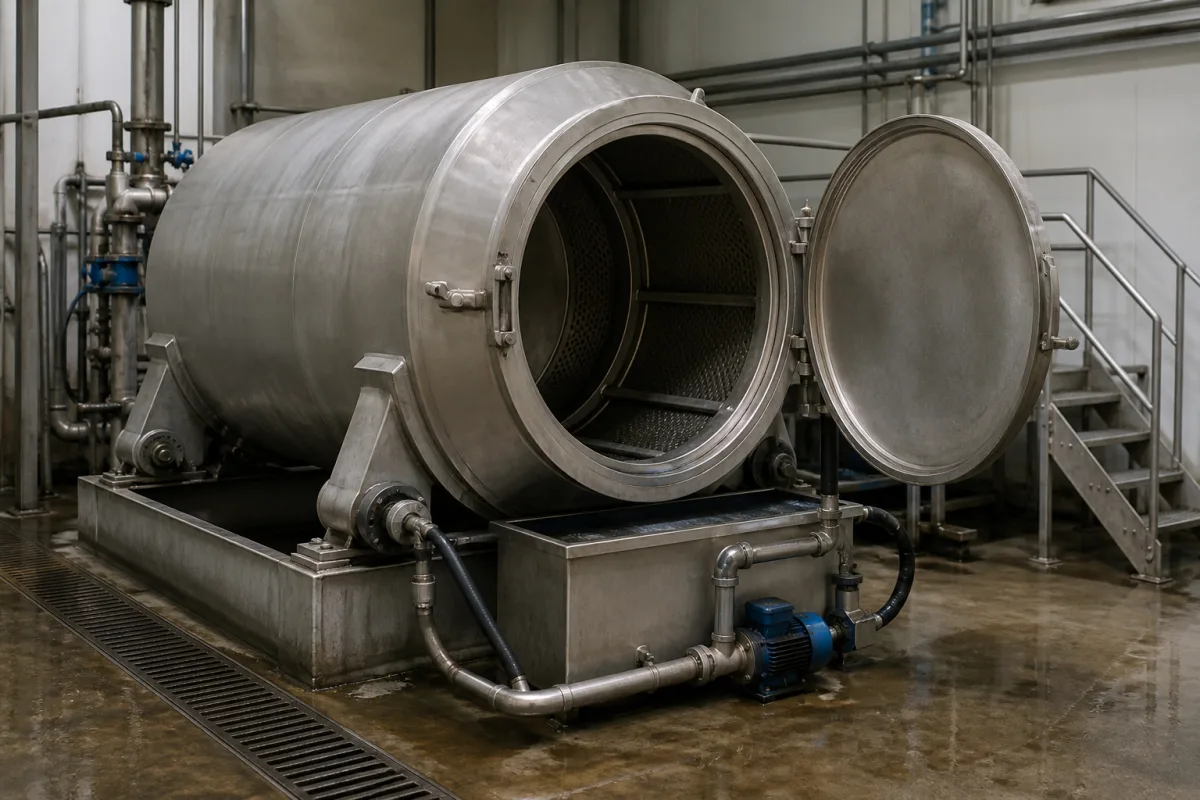
Representative product image. Confirm appearance and specifications with the manufacturer.

Product Specifications

Technical details and manufacturing context for Deliming Bath

Definition
The deliming bath is a critical component within the Beamhouse Module of leather manufacturing facilities. It serves as the processing tank where hides undergo deliming treatment after the liming stage. This bath facilitates the neutralization of alkaline residues, removal of calcium hydroxide, and pH adjustment to prepare the hides for subsequent bating and pickling processes. The bath ensures proper chemical penetration and uniform treatment across the hide surface.

Constructed from materials such as stainless steel, chemical-resistant polymers, or reinforced concrete, the deliming bath is designed to withstand the corrosive chemicals used in the deliming process. Typical working volumes range from 1000 to 5000 liters, with operating temperatures between 20 and 40°C. The pH is reduced from approximately 12 to a range of 7.5–9.5. Agitation speeds of 10–30 rpm ensure uniform chemical distribution and heat transfer. The bath may be equipped with a motor (2.2–7.5 kW) and electrical supply of 380–415 V AC (three-phase, 50/60 Hz). Ingress protection ratings of IP54–IP65 are typical. Operating pressure is atmospheric or slight positive (0.1–0.3 MPa). The weight ranges from 500 to 2000 kg, and the footprint is approximately 2–6 m². Temperature control accuracy is ±1°C.

Material grade for stainless steel components is often 316L per ASTM A240. Motor power and electrical supply references are per IEC 60034 and IEC 60038, respectively. Ingress protection is per IEC 60529. These standards serve as procurement references; actual compliance must be verified with the manufacturer.

When selecting a deliming bath, consider the required working volume, available floor space, and utility connections. Verify that the bath's agitation system and temperature control meet the specific chemical and hide-load requirements. Confirm the material compatibility with the deliming agents used. Maintenance signals include inconsistent pH adjustment, uneven chemical penetration, or visible corrosion. Failure boundaries include leaks, motor failure, or loss of temperature control. Always verify model-specific values and standards with the legal manufacturer or supplier.
Working Principle
The deliming bath operates by immersing hides in a chemical solution containing deliming agents (typically ammonium salts or weak acids). The solution circulates through the bath, facilitating chemical reactions that neutralize alkaline residues from liming, dissolve calcium compounds, and lower the pH to the optimal range for subsequent processing. Temperature, chemical concentration, and immersion time are carefully controlled to achieve complete deliming without damaging the hide structure.
Common Materials
Stainless steel, Chemical-resistant polymers, Reinforced concrete
Technical Parameters
ParameterTypical rangeNotes & selection driver
Working Volume1000–5000 LTypical capacity range for deliming baths
Operating Temperature20–40 °COptimal enzyme activity and chemical reaction rate
pH Range7.5–9.5 pHAfter deliming, pH should be reduced from ~12 to this range
Agitation Speed10–30 rpmEnsures uniform chemical distribution and heat transfer
Material Grade316L SSCorrosion-resistant stainless steel for chemical exposureASTM A240
Motor Power2.2–7.5 kWDepends on volume and agitation requirementsIEC 60034
Electrical Supply380–415 V ACThree-phase, 50/60 HzIEC 60038
Ingress ProtectionIP54–IP65Protection against dust and water splashesIEC 60529
Operating Pressure0.1–0.3 MPaAtmospheric or slight positive pressure for venting
Weight500–2000 kgDepends on capacity and material thickness
Footprint2–6 Approximate floor space required
Temperature Control Accuracy±1 °CMaintains consistent temperature for chemical reactions

Ranges are indicative industry figures for RFQ preparation, not a supplier commitment. Confirm every value and standard with the legal manufacturer before ordering.

Components / BOM
  • Bath Tank
    Primary containment vessel for deliming solution and hides
    Material: Stainless steel
  • Agitation System
    Circulates chemical solution to ensure uniform treatment
    Material: Stainless steel/PVC
  • Temperature Control Unit
    Maintains optimal process temperature
    Material: Stainless steel/Copper
  • pH Monitoring Probe
    Continuously measures and controls solution pH
    Material: Glass/Platinum
  • Drain Valve
    Controls solution drainage and replacement
    Material: PVC/Stainless steel

Applied To / Applications

This component is essential for the following industrial systems and equipment:

Industrial Ecosystem & Supply Chain Structure

Complementary Systems
Downstream Applications
Specialized Tooling

Application Fit & Sizing Matrix

Operational Limits
pressure: Atmospheric to 1.5 bar (21.8 psi)
flow rate: 0.5-5 m³/h (2.2-22 gpm)
temperature: 20-50°C (68-122°F)
slurry concentration: 5-15% solids by weight
Media Compatibility
✓ Ammonium salts solution ✓ Weak organic acids (e.g., formic, acetic) ✓ pH-adjusting salts (e.g., sodium bisulfate)
Unsuitable: Strong oxidizing agents (e.g., concentrated nitric acid, hydrogen peroxide)
Sizing Data Required
  • Daily leather processing capacity (kg/day)
  • Required residence time for deliming (minutes)
  • Available footprint/installation space (m²)

Reliability & Engineering Risk Analysis

Failure Mode & Root Cause
Chemical corrosion of tank lining
Cause: Prolonged exposure to acidic deliming solutions (e.g., hydrochloric or sulfuric acid) degrading protective linings (rubber, fiberglass, or epoxy), leading to leaks and structural weakness.
Pump or agitator mechanical failure
Cause: Cavitation or abrasive wear from suspended solids in the bath, combined with improper maintenance intervals, causing impeller damage, seal leaks, or motor burnout.
Maintenance Indicators
  • Visible leaks or weeping at tank seams, valves, or pump seals, indicating lining degradation or seal failure.
  • Unusual noises (grinding, knocking) from agitators or pumps, suggesting cavitation, bearing wear, or impeller imbalance.
Engineering Tips
  • Implement routine lining inspections and non-destructive testing (e.g., ultrasonic thickness gauging) to monitor corrosion rates and schedule proactive repairs.
  • Optimize bath filtration and solids removal systems to reduce abrasive particles, and ensure proper pump selection (e.g., corrosion-resistant materials, adequate NPSH) to prevent cavitation.

Indicative industry ranges for design and RFQ preparation. Confirm the exact figures and applicable standard with the manufacturer before specifying.

Compliance & Manufacturing Standards

Applicable Standards
ASTM A967 - Standard Specification for Chemical Passivation Treatments for Stainless Steel Parts CE Marking - Directive 2014/68/EU for Pressure Equipment

Quoted from the published standard.

Manufacturing Precision
  • Bath wall thickness: +/-0.5 mm
  • Internal surface roughness: Ra ≤ 1.6 μm
Quality Inspection
  • Leak test (hydrostatic/pneumatic)
  • Material composition verification via X-ray fluorescence (XRF) analysis

Manufacturers of Deliming Bath

Manufacturer profiles associated with Deliming Bath.

Sourcing Deliming Bath from China?
Tell us your specification and target quantity — we will match it against manufacturer records and come back with the factories that fit.
Request manufacturers We manufacture this

Manufacturer listings support early research and capability understanding. They are not certification, ranking, or transaction guarantees.

Technical documentation
Request current drawings, revision history, and a signed specification sheet.
Manufacturing capability
Verify equipment lists, process limits, capacity, and representative production evidence.
Inspection readiness
Confirm test methods, calibrated equipment, sampling plans, and traceable reports.
Supplier transparency
Check the legal entity, factory address, ownership, certifications, and direct contacts.

CNFX does not score or rank suppliers. Buyers must verify all claims and documents with the legal manufacturer before ordering.

Supply Chain Compatible Machinery & Devices

Integrated Leather Processing System

The Integrated Leather Processing System is a coordinated multi-module production line designed for the tanning and dressing of leather.

Explore Specs →
Industrial Leather Skiving Machine

Precision machine for thinning leather edges in luggage, handbag, and saddlery manufacturing

Explore Specs →
Automated Footwear Assembly System

Integrated production line for automated footwear manufacturing with modular assembly stations.

Explore Specs →
Leather Hydraulic Piston Seal

This precision-engineered leather seal is designed specifically for hydraulic piston applications.

Explore Specs →

Frequently Asked Questions

What is the typical working volume of a deliming bath?

Typical working volumes range from 1000 to 5000 liters, but the exact capacity depends on the specific model and application. Always confirm with the manufacturer.

What materials are commonly used for deliming baths?

Common materials include stainless steel (often grade 316L per ASTM A240), chemical-resistant polymers, and reinforced concrete. The choice depends on the chemical environment and structural requirements.

What pH range is targeted after deliming?

After deliming, the pH is typically reduced from around 12 to a range of 7.5–9.5. This prepares the hides for subsequent bating and pickling processes.

What standards are referenced for deliming bath components?

Standards such as ASTM A240 for material grade, IEC 60034 for motor power, IEC 60038 for electrical supply, IEC 60529 for ingress protection for operating pressure are often referenced. These are procurement references; actual compliance must be verified with the manufacturer.

Data Basis

Editorial classification, named public sources where available, and source-reviewed manufacturer records.

Preliminary Technical Classification
This page supports structured research, RFQ preparation, and supplier evaluation. It does not replace buyer-led supplier qualification, standards review, or technical approval.
Buyer enquiry

Request manufacturing insight for Deliming Bath

Ask for use case, specification boundaries, supplier type, and RFQ preparation information for this product.

Where it goes
Straight to the CNFX editorial desk, and to the manufacturer if this product is linked to a claimed profile. Nothing is broadcast to a supplier list.
Your details stay here
We do not sell or rent enquiry data, and we do not add you to a mailing list. Used only to answer this request.
No commission, no middleman
CNFX is a directory. We take no cut of any order and never negotiate on a supplier's behalf.
What we don't claim
A listing is not an endorsement. Qualify every supplier and verify every figure yourself before ordering.

Your business information is used only to process this request.

Thank you! Your message has been sent. We'll respond within 1–3 business days.
Sorry, we couldn't send your message. Please try again, or email us at contact@cnfx.com.

Need to Manufacture Deliming Bath?

Compare manufacturer profiles with relevant product and process capability.

Previous Product
Loading/Unloading Door
Last Product
Get QuotesChat