Editorial Technical Reference

Loading/Unloading Door

This page explains how Loading/Unloading Door is classified within Leather and Related Product Manufacturing. Technical values and manufacturer relationships are research references; confirm the current specification and supplier evidence for each order.

Technical Definition & Core Assembly

A specialized access door on a tanning drum that allows for the loading of raw hides and unloading of processed leather.
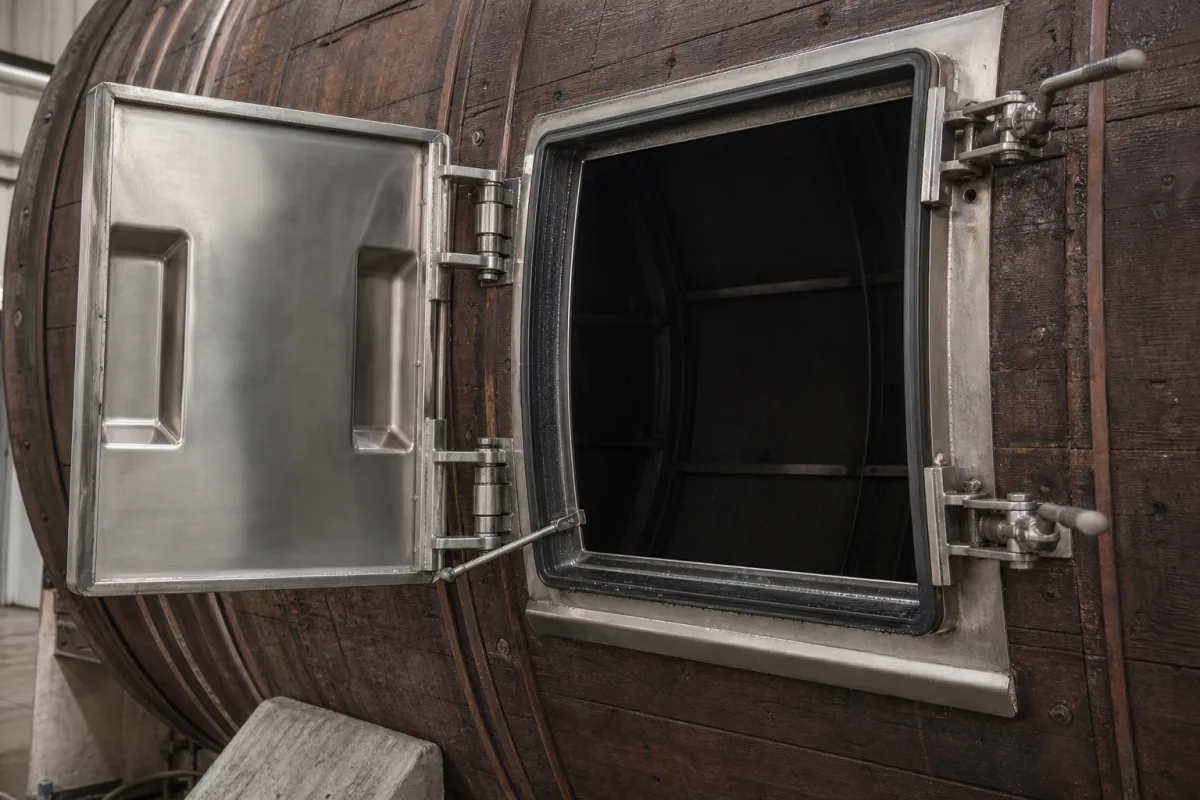
Representative product image. Confirm appearance and specifications with the manufacturer.

Product Specifications

Technical details and manufacturing context for Loading/Unloading Door

Definition
The Loading/Unloading Door is a critical component of the Tanning Drum System, providing a secure, sealable opening through which raw animal hides are introduced into the drum for chemical treatment and mechanical agitation, and from which the tanned leather is subsequently removed after processing. It is designed to withstand the harsh chemical environment and mechanical stresses of the tanning operation. The door is typically constructed from stainless steel (e.g., 316L) with a rubber gasket (EPDM) to ensure a tight seal. It operates on a hinged or bolted mechanism, allowing it to be opened for material transfer and securely closed during the drum's rotation. When closed, it forms a sealed barrier to contain the tanning liquors, chemicals, and hides within the drum, preventing leaks and ensuring process efficiency and safety. Key parameters include door diameter (600–1200 mm), operating pressure (1.0–1.6 MPa), sealing temperature range (-40 to 85 °C), leakage rate (0.01–0.1 mL/min), opening and closing times (5–15 s each), motor power (0.75–2.2 kW), supply voltage (380–480 V AC per IEC 60038), control voltage (24 V DC ±10% per IEC 61131-2), ingress protection (IP54–IP65 per IEC 60529), door material (316L per ASTM A240), seal material (EPDM per ASTM D2000), and weight (150–350 kg). These values are reference ranges for directory purposes and must be verified with the legal manufacturer for specific models and applications. The door is essential for efficient loading and unloading, and its proper maintenance is crucial for preventing leaks and ensuring operational safety.
Working Principle
The door operates on a hinged or bolted mechanism, allowing it to be opened for material transfer and securely closed during the drum's rotation. When closed, it forms a sealed barrier to contain the tanning liquors, chemicals, and hides within the drum, preventing leaks and ensuring process efficiency and safety. The sealing is achieved through a rubber gasket that compresses against the drum opening, and the door is secured by bolts or a locking mechanism to withstand the internal pressure and mechanical stresses during rotation. The opening and closing times are controlled to optimize cycle times, and the door's motor provides the necessary force to move the door safely. The door's design ensures that it can withstand the corrosive chemicals and abrasive conditions typical of tanning operations.
Common Materials
Stainless Steel (e.g., 316L), Rubber Gasket
Technical Parameters
ParameterTypical rangeNotes & selection driver
Door Diameter600–1200 mmDetermines loading capacity for hides
Operating Pressure1.0–1.6 MPa
Sealing Temperature Range-40–85 °COutside range seal integrity compromised
Leakage Rate0.01–0.1 mL/minHigher leakage indicates seal wear
Opening Time5–15 sAffects cycle time in production
Closing Time5–15 sEnsures proper sealing before rotation
Motor Power0.75–2.2 kWSized for door weight and friction
Supply Voltage380–480 V ACThree-phase; other voltages on requestIEC 60038
Control Voltage24 ±10% V DCFor PLC and sensorsIEC 61131-2
Ingress ProtectionIP54–IP65Protects against dust and water jetsIEC 60529
Door Material316LCorrosion-resistant for tanning chemicalsASTM A240
Seal MaterialEPDMResistant to acids and alkalisASTM D2000
Weight150–350 kgAffects installation and support structure

Ranges are indicative industry figures for RFQ preparation, not a supplier commitment. Confirm every value and standard with the legal manufacturer before ordering.

Components / BOM
  • Door Panel
    The main structural body that seals the drum opening.
    Material: Stainless Steel
  • Sealing Gasket Part
    Creates a leak-proof seal between the door panel and the drum flange.
    Material: Chemical-resistant Rubber (e.g., EPDM, Viton)
  • Locking Mechanism
    Secures the door in the closed position during operation.
    Material: Stainless Steel
  • Hinge or Flange Part
    Provides the pivot point for door opening/closing or the mounting surface for bolts.
    Material: Stainless Steel
  • Door Motor Optional
    Drives the door open and closed on powered versions; bolted doors are moved by hand.

Industry Taxonomies & Aliases

Commonly used trade names and technical identifiers for Loading/Unloading Door.

Applied To / Applications

This component is essential for the following industrial systems and equipment:

Industrial Ecosystem & Supply Chain Structure

Complementary Systems
Downstream Applications
Specialized Tooling

Application Fit & Sizing Matrix

Operational Limits
pressure: Atmospheric to 0.5 bar (sealed operation)
other spec: Slurry concentration: Up to 30% solids by weight, pH range: 2-12 (acidic to alkaline tanning solutions)
temperature: 5°C to 95°C (typical tanning process range)
Media Compatibility
✓ Chrome tanning solutions ✓ Vegetable tanning extracts ✓ Fat-liquoring emulsions
Unsuitable: High-pressure steam cleaning (>1 bar) or abrasive particulate media
Sizing Data Required
  • Drum internal diameter (mm)
  • Maximum hide batch volume (L)
  • Required cycle time (minutes/load)

Reliability & Engineering Risk Analysis

Failure Mode & Root Cause
Seal degradation and leakage
Cause: Repeated compression cycles, exposure to UV/weathering, and chemical contamination from transported materials leading to loss of elasticity and sealing integrity.
Structural fatigue and misalignment
Cause: Cyclic loading/unloading impacts, improper forklift operation, and foundation settlement causing frame distortion, hinge wear, and compromised door operation.
Maintenance Indicators
  • Visible daylight or air gaps around door perimeter when closed
  • Unusual grinding, scraping, or popping noises during opening/closing cycles
Engineering Tips
  • Implement quarterly seal inspections and replacement schedule using manufacturer-specified materials resistant to local environmental conditions
  • Install impact protection systems (bumpers/guides) and conduct semi-annual laser alignment checks of door frame and track systems

Indicative industry ranges for design and RFQ preparation. Confirm the exact figures and applicable standard with the manufacturer before specifying.

Compliance & Manufacturing Standards

Applicable Standards
ANSI/BHMA A156.10 - Power Operated Pedestrian Doors EN 16005:2012 - Safety in Use of Power Operated Pedestrian Doors

Quoted from the published standard.

Manufacturing Precision
  • Door Panel Flatness: +/- 1.5mm per meter
  • Frame Alignment: +/- 2mm vertical/horizontal
Quality Inspection
  • Operational Safety Test (force limitation, reversal sensitivity)
  • Seal Integrity Test (air/water infiltration resistance)

Manufacturers of Loading/Unloading Door

Manufacturer profiles associated with Loading/Unloading Door.

Sourcing Loading/Unloading Door from China?
Tell us your specification and target quantity — we will match it against manufacturer records and come back with the factories that fit.
Request manufacturers We manufacture this

Manufacturer listings support early research and capability understanding. They are not certification, ranking, or transaction guarantees.

Technical documentation
Request current drawings, revision history, and a signed specification sheet.
Manufacturing capability
Verify equipment lists, process limits, capacity, and representative production evidence.
Inspection readiness
Confirm test methods, calibrated equipment, sampling plans, and traceable reports.
Supplier transparency
Check the legal entity, factory address, ownership, certifications, and direct contacts.

CNFX does not score or rank suppliers. Buyers must verify all claims and documents with the legal manufacturer before ordering.

Supply Chain Compatible Machinery & Devices

Industrial Leather Skiving Machine

Precision machine for thinning leather edges in luggage, handbag, and saddlery manufacturing

Explore Specs →
Automated Footwear Assembly System

Integrated production line for automated footwear manufacturing with modular assembly stations.

Explore Specs →
Leather Hydraulic Piston Seal

This precision-engineered leather seal is designed specifically for hydraulic piston applications.

Explore Specs →

Frequently Asked Questions

What materials are used for the Loading/Unloading Door?

The door is typically made of stainless steel (e.g., 316L) and uses a rubber gasket (EPDM) for sealing. These materials are chosen for corrosion resistance and durability in the tanning chemical environment.

What are the typical operating pressure and temperature ranges?

The operating pressure range is 1.0–1.6 MPa, and the sealing temperature range is -40 to 85 °C. These values are reference ranges and must be confirmed for the specific model.

How is the door sealed to prevent leaks?

The door uses a rubber gasket (EPDM) that compresses against the drum opening when closed. The door is secured with bolts or a locking mechanism to maintain a tight seal during rotation, preventing leaks of tanning liquors and chemicals.

What maintenance signals indicate seal wear?

An increase in leakage rate above the specified range (0.01–0.1 mL/min) indicates seal wear. Regular inspection of the gasket and replacement when necessary is recommended to maintain process efficiency and safety.

Data Basis

Editorial classification, named public sources where available, and source-reviewed manufacturer records.

Preliminary Technical Classification
This page supports structured research, RFQ preparation, and supplier evaluation. It does not replace buyer-led supplier qualification, standards review, or technical approval.
Buyer enquiry

Request manufacturing insight for Loading/Unloading Door

Ask for use case, specification boundaries, supplier type, and RFQ preparation information for this product.

Where it goes
Straight to the CNFX editorial desk, and to the manufacturer if this product is linked to a claimed profile. Nothing is broadcast to a supplier list.
Your details stay here
We do not sell or rent enquiry data, and we do not add you to a mailing list. Used only to answer this request.
No commission, no middleman
CNFX is a directory. We take no cut of any order and never negotiate on a supplier's behalf.
What we don't claim
A listing is not an endorsement. Qualify every supplier and verify every figure yourself before ordering.

Your business information is used only to process this request.

Thank you! Your message has been sent. We'll respond within 1–3 business days.
Sorry, we couldn't send your message. Please try again, or email us at contact@cnfx.com.

Need to Manufacture Loading/Unloading Door?

Compare manufacturer profiles with relevant product and process capability.

Previous Product
Leather Hydraulic Piston Seal
Last Product
Get QuotesChat