Industry-Verified Manufacturing Data (2026)

Application Mechanism

Based on aggregated insights from multiple verified factory profiles within the CNFX directory, the standard Application Mechanism used in the Machinery and Equipment Manufacturing sector typically supports operational capacities ranging from standard industrial configurations to heavy-duty production requirements.

Technical Definition & Core Assembly

A canonical Application Mechanism is characterized by the integration of Actuator Assembly and Application Tool Head. In industrial production environments, manufacturers listed on CNFX commonly emphasize Stainless Steel construction to support stable, high-cycle operation across diverse manufacturing scenarios.

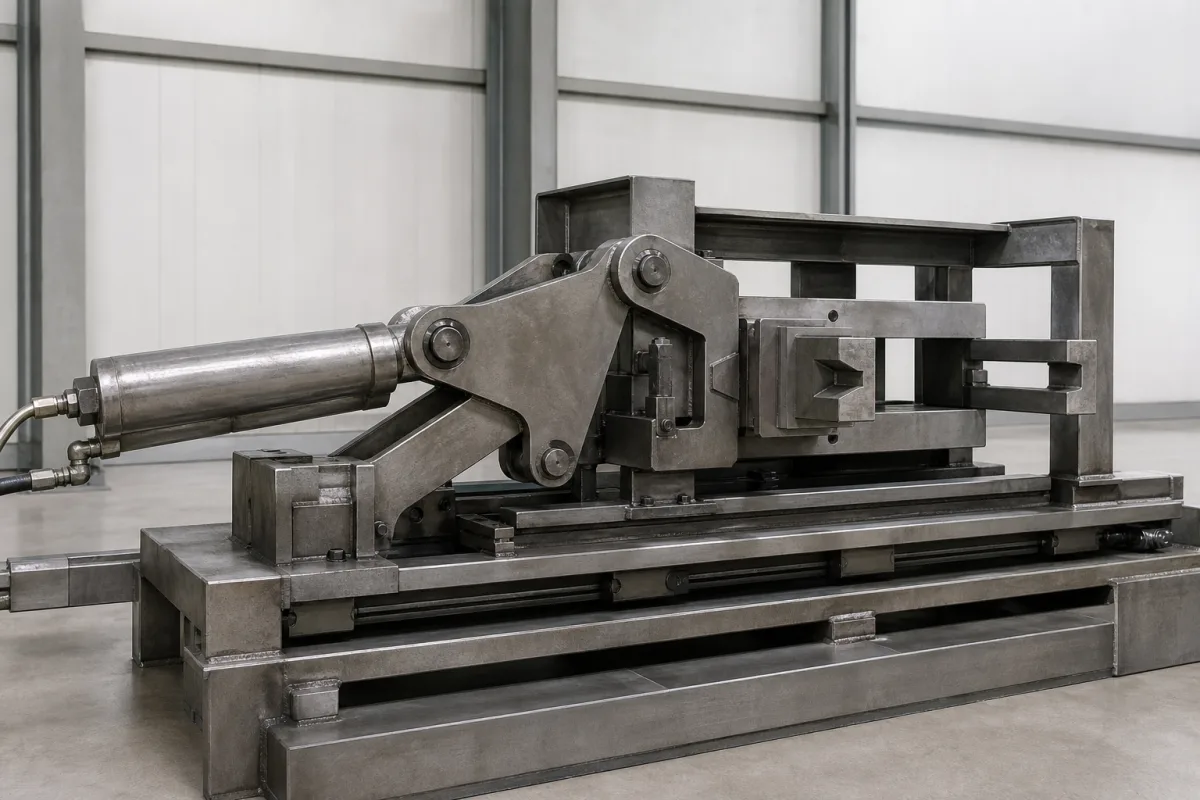
A mechanical component within the Pattern Processing Unit responsible for applying patterns, coatings, or treatments to materials during manufacturing processes.

Product Specifications

Technical details and manufacturing context for Application Mechanism

Definition
The Application Mechanism is a critical subassembly of the Pattern Processing Unit that physically implements pattern application functions. It translates digital or mechanical pattern data into precise physical actions, such as depositing materials, applying pressure, or executing specific movements to transfer patterns onto workpieces. This mechanism ensures accurate pattern replication according to programmed specifications.
Working Principle
The Application Mechanism operates by receiving control signals from the Pattern Processing Unit's controller, which converts pattern data into mechanical movements. It typically uses actuators, nozzles, rollers, or other application tools to precisely deposit, imprint, or transfer materials onto target surfaces. The mechanism maintains consistent pressure, speed, and positioning to ensure pattern fidelity across production runs.
Common Materials
Stainless Steel, Aluminum Alloy, Engineering Plastics
Technical Parameters
  • Positioning accuracy of the application tool relative to the workpiece (mm) Per Request
Components / BOM
Engineering Reasoning
0.5-3.0 MPa (5-30 bar)
4.2 MPa (42 bar) internal pressure causing structural yield
Design Rationale: Von Mises stress exceeding 250 MPa yield strength of 316L stainless steel at 4.2 MPa internal pressure
Risk Mitigation (FMEA)
Trigger Hydraulic fluid contamination exceeding ISO 4406 18/16/13 cleanliness level
Mode: Spool valve stiction causing 0.5+ second response delay
Strategy: Integrate 3 μm absolute filtration with differential pressure monitoring
Trigger Thermal cycling between 20°C and 180°C at >5 cycles/hour
Mode: Thermal fatigue cracking at actuator mounting points
Strategy: Implement Inconel 718 thermal expansion compensation joints

Industry Taxonomies & Aliases

Commonly used trade names and technical identifiers for Application Mechanism.

Applied To / Applications

This component is essential for the following industrial systems and equipment:

Industrial Ecosystem & Supply Chain DNA

Complementary Systems
Downstream Applications
Specialized Tooling

Application Fit & Sizing Matrix

Operational Limits
pressure: 0 to 50 bar
flow rate: 0.1 to 10 L/min
temperature: -20°C to 200°C
slurry concentration: Up to 40% solids by weight
Media Compatibility
✓ Polymer coatings ✓ Ceramic slurries ✓ UV-curable inks
Unsuitable: Highly corrosive acidic environments (pH < 2)
Sizing Data Required
  • Material viscosity (cP)
  • Pattern application speed (m/min)
  • Required coating thickness (μm)

Reliability & Engineering Risk Analysis

Failure Mode & Root Cause
Abrasive erosion
Cause: Prolonged exposure to particulate-laden fluids causing material degradation and loss of sealing integrity.
Cavitation
Cause: Rapid pressure changes leading to vapor bubble formation and implosion, causing pitting and surface fatigue.
Maintenance Indicators
  • Unusual grinding or scraping noises during operation
  • Visible fluid leakage or seepage around the mechanism housing
Engineering Tips
  • Implement regular fluid filtration and contamination control to minimize abrasive particle ingress
  • Maintain optimal operating pressure ranges and avoid rapid pressure cycling to prevent cavitation damage

Compliance & Manufacturing Standards

Reference Standards
ISO 9001:2015 - Quality Management Systems ANSI B46.1 - Surface Texture (Surface Roughness, Waviness, and Lay) DIN 7184 - Tolerances and Fits for Cylindrical Parts
Manufacturing Precision
  • Bore diameter tolerance: +/-0.01 mm
  • Surface flatness tolerance: 0.05 mm per 100 mm length
Quality Inspection
  • Coordinate Measuring Machine (CMM) dimensional verification
  • Surface roughness measurement using profilometer

Factories Producing Application Mechanism

Verified manufacturers with capability to produce this product in China

✓ 92% Supplier Capability Match Found

T Technical Director from United States Jan 22, 2026
★★★★★
"Found 18+ suppliers for Application Mechanism on CNFX, but this spec remains the most cost-effective."
Technical Specifications Verified
P Project Engineer from United Arab Emirates Jan 19, 2026
★★★★☆
"The technical documentation for this Application Mechanism is very thorough, especially regarding technical reliability. (Delivery took slightly longer than expected, but technical support was excellent.)"
Technical Specifications Verified
S Sourcing Manager from Australia Jan 16, 2026
★★★★★
"Reliable performance in harsh Machinery and Equipment Manufacturing environments. No issues with the Application Mechanism so far."
Technical Specifications Verified
Verification Protocol

“Feedback is collected from verified sourcing managers during RFQ (Request for Quote) and factory evaluation processes on CNFX. These reports represent historical performance data and technical audit summaries from our B2B manufacturing network.”

16 sourcing managers are analyzing this specification now. Last inquiry for Application Mechanism from Mexico (1h ago).

Supply Chain Compatible Machinery & Devices

Automated Assembly Line System

Integrated production system for sequential component assembly operations

Explore Specs →
Automated Powder Coating System

Integrated industrial system for applying dry powder coatings to metal substrates.

Explore Specs →
Centrifugal Pump Impeller

Rotating component that transfers energy to fluid in centrifugal pumps.

Explore Specs →
High-Precision CNC Laser Cutting Machine

Computer-controlled industrial machine using focused laser beams to cut sheet metal with micron-level accuracy.

Explore Specs →

Frequently Asked Questions

What materials are used in the Application Mechanism construction?

The Application Mechanism is constructed from durable materials including Stainless Steel for corrosion resistance, Aluminum Alloy for lightweight strength, and Engineering Plastics for specific component applications.

What are the main components in the Application Mechanism BOM?

The Bill of Materials includes four key assemblies: Actuator Assembly for movement control, Application Tool Head for material application, Positioning Guide Rails for precision alignment, and Pressure Regulation System for consistent application force.

How does the Application Mechanism integrate with Pattern Processing Units?

The Application Mechanism functions as a core mechanical component within Pattern Processing Units, precisely applying patterns, coatings, or treatments to materials during manufacturing processes with controlled pressure and positioning.

Can I contact factories directly on CNFX?

CNFX is an open directory, not a transaction platform. Each factory profile provides direct contact information and production details to help you initiate direct inquiries with Chinese suppliers.

Get Quote for Application Mechanism

Request technical pricing, lead times, or customized specifications for Application Mechanism directly from verified manufacturing units.

Your business information is encrypted and only shared with verified Application Mechanism suppliers.

Thank you! Your message has been sent. We'll respond within 1–3 business days.

Need to Manufacture Application Mechanism?

Connect with verified factories specializing in this product category

Add Your Factory Contact Us
Previous Product
Application Head
Next Product
Application Software