Industry-Verified Manufacturing Data (2026)

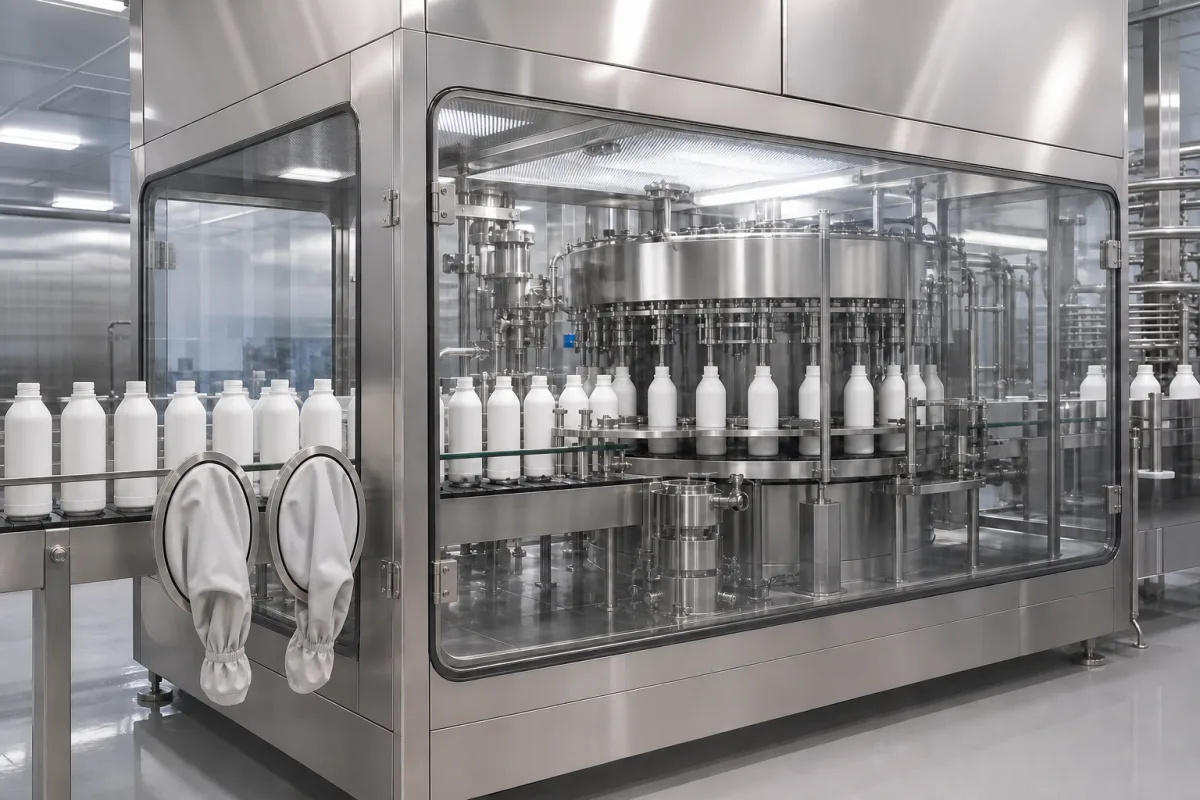
Aseptic Filling Chamber

Based on aggregated insights from multiple verified factory profiles within the CNFX directory, the standard Aseptic Filling Chamber used in the Machinery and Equipment Manufacturing sector typically supports operational capacities ranging from standard industrial configurations to heavy-duty production requirements.

Technical Definition & Core Assembly

A canonical Aseptic Filling Chamber is characterized by the integration of HEPA Filter Housing and Viewing Window. In industrial production environments, manufacturers listed on CNFX commonly emphasize Stainless Steel (Grade 316L) construction to support stable, high-cycle operation across diverse manufacturing scenarios.

A controlled environment within an aseptic filling machine where sterile containers are filled with sterile product under aseptic conditions.
Product Specifications

Technical details and manufacturing context for Aseptic Filling Chamber

Definition
The aseptic filling chamber is a critical component of aseptic filling machines, designed to maintain a sterile environment (ISO Class 5 or better) during the filling process. It houses the filling nozzles, container handling systems, and sealing mechanisms, ensuring that pre-sterilized containers are filled with sterile liquid products without contamination from airborne microorganisms or particles. It is typically integrated with HEPA-filtered laminar airflow systems and sterilization systems like hydrogen peroxide vapor or steam.
Working Principle
The chamber creates and maintains a sterile zone using HEPA-filtered laminar airflow. Sterile containers enter through a transfer system, are positioned under sterile filling nozzles, filled with the sterile product, and then sealed (e.g., with sterile caps or lids) within the chamber before exiting, all while maintaining positive pressure to prevent ingress of contaminants.
Common Materials
Stainless Steel (Grade 316L), Tempered Safety Glass
Technical Parameters
  • Internal dimensions (Length x Width x Height) defining the workspace for containers and filling mechanisms. (mm) Standard Spec
Components / BOM
  • HEPA Filter Housing
    Holds and seals the HEPA filter that provides sterile laminar airflow into the chamber.
    Material: Stainless Steel
  • Viewing Window
    Allows visual monitoring of the filling process without breaching the sterile environment.
    Material: Tempered Safety Glass
  • Glove Ports / Gauntlets
    Provide operator access for manual adjustments or interventions while maintaining the sterile barrier.
    Material: Butyl Rubber or similar
  • Sterilization Nozzle Port
    Interface for connecting vaporized hydrogen peroxide (VHP) or other sterilant delivery systems for chamber decontamination.
    Material: Stainless Steel
Engineering Reasoning
0.5-1.0 μm HEPA-filtered particle count, 20-25°C temperature, 30-70% relative humidity, 0.02-0.05 m/s laminar airflow velocity
>0.5 μm particle count exceeding 100 particles/m³, temperature deviation beyond ±2°C from setpoint, relative humidity outside 45-65% range, airflow velocity below 0.15 m/s
Design Rationale: Turbulent airflow at velocities below 0.15 m/s fails to maintain unidirectional particle displacement, allowing microbial ingress through boundary layer separation; humidity below 45% causes electrostatic particle attraction to surfaces, while above 65% promotes microbial growth on condensation surfaces
Risk Mitigation (FMEA)
Trigger HEPA filter media degradation due to 0.3 μm particle loading exceeding 85% of initial pressure drop
Mode: Filter bypass leakage exceeding ISO 14644-1 Class 5 limits at 0.5 μm particle size
Strategy: Differential pressure monitoring with dual redundant sensors triggering automatic shutdown at 90 Pa pressure differential across filter
Trigger Laminar airflow disruption from plenum chamber pressure imbalance exceeding 15% between supply ducts
Mode: Airflow velocity gradient exceeding 20% variation across work surface, creating recirculation zones
Strategy: Computational fluid dynamics-optimized plenum design with flow straighteners and automated damper control maintaining ±5% pressure balance

Industry Taxonomies & Aliases

Commonly used trade names and technical identifiers for Aseptic Filling Chamber.

Applied To / Applications

This component is essential for the following industrial systems and equipment:

Industrial Ecosystem & Supply Chain DNA

Complementary Systems
Downstream Applications
Specialized Tooling

Application Fit & Sizing Matrix

Operational Limits
airflow: Unidirectional laminar airflow (ISO Class 5/A), velocity 0.45±0.1 m/s
pressure: Positive pressure differential of 10-30 Pa relative to surrounding area to prevent contamination ingress
temperature: Typically 2-25°C (product-dependent), chamber environment maintained at 20-25°C with ±1°C stability
particle count: ≤3,520 particles/m³ for ≥0.5μm (ISO Class 5 equivalent)
sterility hold time: Minimum 20 minutes at operational conditions before filling
Media Compatibility
✓ Sterile pharmaceutical liquids (vials, syringes) ✓ Aseptic nutritional products ✓ Sterile biotech solutions (monoclonal antibodies, vaccines)
Unsuitable: Non-sterile, highly viscous, or particulate-laden slurries requiring non-aseptic filling
Sizing Data Required
  • Required throughput (containers/hour)
  • Container type and dimensions (vial, syringe, cartridge)
  • Product viscosity and fill volume accuracy requirements

Reliability & Engineering Risk Analysis

Failure Mode & Root Cause
Seal Degradation
Cause: Exposure to aggressive cleaning agents (e.g., hydrogen peroxide vapor) and thermal cycling during sterilization cycles, leading to material hardening, cracking, or loss of elasticity in gaskets and door seals.
HEPA Filter Integrity Loss
Cause: Particle loading from environmental contaminants or improper handling during filter changes, combined with vibration from adjacent machinery, causing pinhole leaks or seal failures that compromise sterile air supply.
Maintenance Indicators
  • Audible hissing or whistling from chamber doors or seals during operation, indicating air leakage and loss of overpressure critical for sterility.
  • Visible condensation or moisture streaks on interior viewports or walls post-sterilization, suggesting inadequate drying, seal failure, or compromised air filtration humidity control.
Engineering Tips
  • Implement a predictive maintenance program using ultrasonic leak detection and particle counters to monitor seal integrity and HEPA filter performance in real-time, scheduling replacements based on data trends rather than fixed intervals.
  • Establish strict protocols for cleaning agent concentration and sterilization cycle parameters (temperature, time, vapor concentration), validated regularly to prevent overexposure that accelerates material degradation.

Compliance & Manufacturing Standards

Reference Standards
ISO 14644-1:2015 Cleanrooms and associated controlled environments ANSI/ASME BPE-2019 Bioprocessing Equipment DIN 58950-6:2019 Sterilization - Aseptic processing of health care products
Manufacturing Precision
  • Surface finish: Ra ≤ 0.8 μm
  • Sealing surface flatness: ≤ 0.1 mm/m
Quality Inspection
  • HEPA filter integrity test (DOP/PAO challenge)
  • Airborne particle count verification (ISO 14644-1 classification)

Factories Producing Aseptic Filling Chamber

Verified manufacturers with capability to produce this product in China

✓ 97% Supplier Capability Match Found

S Sourcing Manager from Canada Feb 13, 2026
★★★★★
"The technical documentation for this Aseptic Filling Chamber is very thorough, especially regarding technical reliability."
Technical Specifications Verified
P Procurement Specialist from United States Feb 10, 2026
★★★★☆
"Reliable performance in harsh Machinery and Equipment Manufacturing environments. No issues with the Aseptic Filling Chamber so far. (Delivery took slightly longer than expected, but technical support was excellent.)"
Technical Specifications Verified
T Technical Director from United Arab Emirates Feb 07, 2026
★★★★★
"Testing the Aseptic Filling Chamber now; the technical reliability results are within 1% of the laboratory datasheet."
Technical Specifications Verified
Verification Protocol

“Feedback is collected from verified sourcing managers during RFQ (Request for Quote) and factory evaluation processes on CNFX. These reports represent historical performance data and technical audit summaries from our B2B manufacturing network.”

9 sourcing managers are analyzing this specification now. Last inquiry for Aseptic Filling Chamber from Vietnam (1h ago).

Supply Chain Compatible Machinery & Devices

Heavy-Duty CNC Plasma Cutting Machine

Industrial machine for precision metal cutting using plasma arc technology

Explore Specs →
Automated Assembly Line System

Integrated production system for sequential component assembly operations

Explore Specs →
Automated Powder Coating System

Integrated industrial system for applying dry powder coatings to metal substrates.

Explore Specs →
Centrifugal Pump Impeller

Rotating component that transfers energy to fluid in centrifugal pumps.

Explore Specs →

Frequently Asked Questions

What are the key benefits of using a Grade 316L stainless steel aseptic filling chamber?

Grade 316L stainless steel offers superior corrosion resistance, easy sterilization, and compliance with pharmaceutical and food industry hygiene standards, ensuring product purity and equipment durability.

How does the HEPA filter housing maintain aseptic conditions during filling?

The HEPA filter housing provides ISO Class 5 (Class 100) air filtration, removing 99.97% of particles ≥0.3 microns to create a sterile environment that prevents contamination during the filling process.

What maintenance is required for the glove ports and sterilization nozzle ports?

Regular integrity testing of glove ports, replacement of gauntlets per schedule, and validation of sterilization nozzle ports through microbial challenge tests are essential to maintain aseptic performance.

Can I contact factories directly on CNFX?

CNFX is an open directory, not a transaction platform. Each factory profile provides direct contact information and production details to help you initiate direct inquiries with Chinese suppliers.

Get Quote for Aseptic Filling Chamber

Request technical pricing, lead times, or customized specifications for Aseptic Filling Chamber directly from verified manufacturing units.

Your business information is encrypted and only shared with verified Aseptic Filling Chamber suppliers.

Thank you! Your message has been sent. We'll respond within 1–3 business days.

Need to Manufacture Aseptic Filling Chamber?

Connect with verified factories specializing in this product category

Add Your Factory Contact Us
Previous Product
Articulation Joints
Next Product
Asphalt Distributor