Industry-Verified Manufacturing Data (2026)

Blower Fan & Motor

Based on aggregated insights from multiple verified factory profiles within the CNFX directory, the standard Blower Fan & Motor used in the Machinery and Equipment Manufacturing sector typically supports operational capacities ranging from standard industrial configurations to heavy-duty production requirements.

Technical Definition & Core Assembly

A canonical Blower Fan & Motor is characterized by the integration of Electric Motor and Fan Blades/Impeller. In industrial production environments, manufacturers listed on CNFX commonly emphasize Steel construction to support stable, high-cycle operation across diverse manufacturing scenarios.

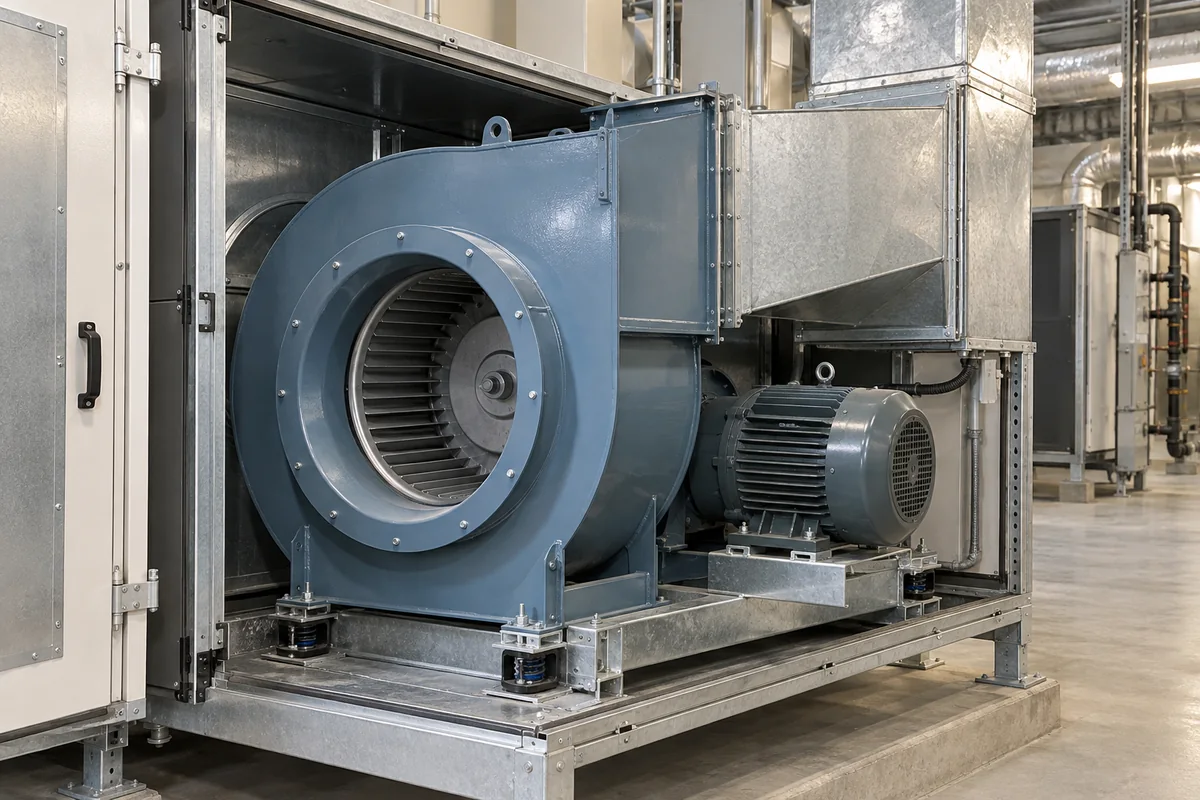
A combined unit consisting of a fan and electric motor that generates airflow within climate control systems.

Product Specifications

Technical details and manufacturing context for Blower Fan & Motor

Definition
The blower fan and motor is a critical component of climate control systems that creates forced air circulation for heating, ventilation, and air conditioning applications. It consists of an electric motor that drives a fan assembly to move air through ductwork and across heat exchangers or cooling coils.
Working Principle
The electric motor converts electrical energy into rotational mechanical energy, which drives the fan blades. As the fan rotates, it creates pressure differentials that move air from intake to discharge points, facilitating heat transfer and air distribution throughout the controlled environment.
Common Materials
Steel, Aluminum, Copper, Plastic
Technical Parameters
  • Fan diameter and motor dimensions (mm) Per Request
Components / BOM
  • Electric Motor
    Provides rotational force to drive the fan
    Material: Steel, Copper, Aluminum
  • Fan Blades/Impeller
    Creates airflow through centrifugal or axial action
    Material: Steel, Aluminum, Plastic
  • Motor Housing
    Protects motor components and provides mounting
    Material: Steel, Aluminum
  • Shaft
    Transmits torque from motor to fan
    Material: Steel
  • Bearings
    Supports shaft rotation with minimal friction
    Material: Steel, Ceramic
Engineering Reasoning
0.5-3.0 m³/s airflow at 100-1500 Pa static pressure, 50-60 Hz frequency, 0.75-15 kW power input
Bearing temperature exceeding 120°C, rotor imbalance exceeding 0.05 mm displacement, insulation resistance dropping below 1 MΩ at 500 VDC
Design Rationale: Laminar-to-turbulent flow transition at Reynolds number >2300 causing aerodynamic stall, electromagnetic torque exceeding yield strength of rotor laminations at 350 N·m, thermal expansion differential exceeding 0.15 mm between aluminum housing and steel shaft
Risk Mitigation (FMEA)
Trigger Electromagnetic imbalance from 5% phase voltage unbalance
Mode: Rotor bar fracture at 2× slip frequency vibration (≈100 Hz)
Strategy: Embedded Rogowski coils for real-time current symmetry monitoring with 0.5% accuracy
Trigger Aerodynamic resonance at 0.85× blade passing frequency (≈425 Hz for 8-blade impeller at 3600 RPM)
Mode: Fatigue crack initiation at blade root stress concentration factor Kt=3.2
Strategy: Laser vibrometer-tuned dynamic balancing to ISO 1940 G2.5 standard

Industry Taxonomies & Aliases

Commonly used trade names and technical identifiers for Blower Fan & Motor.

Applied To / Applications

This component is essential for the following industrial systems and equipment:

Industrial Ecosystem & Supply Chain DNA

Complementary Systems
Downstream Applications
Specialized Tooling

Application Fit & Sizing Matrix

Operational Limits
pressure: Up to 1.5 bar
flow rate: 100-5000 CFM
other spec: Max slurry concentration: 5% solids by weight
temperature: -20°C to 80°C
Media Compatibility
✓ Clean air ✓ HVAC systems ✓ Industrial ventilation
Unsuitable: Corrosive chemical fumes
Sizing Data Required
  • Required airflow (CFM)
  • Static pressure (inches H₂O)
  • Electrical supply voltage/frequency

Reliability & Engineering Risk Analysis

Failure Mode & Root Cause
Bearing failure
Cause: Inadequate lubrication, contamination from dust/moisture, misalignment, or excessive vibration leading to wear, overheating, and eventual seizure or fatigue spalling.
Imbalance and blade fatigue
Cause: Material buildup on fan blades, erosion/corrosion from abrasive or corrosive airflow, or mechanical damage causing uneven mass distribution, leading to excessive vibration, stress concentrations, and eventual blade cracking or detachment.
Maintenance Indicators
  • Excessive vibration or unusual audible knocking/grinding noises from the motor or fan housing, indicating potential bearing wear, imbalance, or mechanical interference.
  • Overheating of motor housing or abnormal current draw (measured via ammeter), signaling electrical issues, overload, poor ventilation, or failing windings.
Engineering Tips
  • Implement a routine lubrication schedule with the correct grease type and quantity, and use vibration analysis or thermography to monitor bearing health and alignment, addressing imbalances or misalignment promptly.
  • Install inlet filters or screens to reduce airborne contaminants, regularly clean fan blades to prevent buildup, and ensure proper motor ventilation with clean, cool air to avoid overheating and insulation degradation.

Compliance & Manufacturing Standards

Reference Standards
ISO 5801:2017 - Industrial fans - Performance testing using standardized airways ANSI/AMCA 210-07 - Laboratory Methods of Testing Fans for Certified Aerodynamic Performance Rating DIN EN 13142:2013 - Ventilation for buildings - Components/products for residential ventilation
Manufacturing Precision
  • Shaft runout: +/-0.05mm
  • Impeller balance tolerance: G6.3 per ISO 1940-1
Quality Inspection
  • Vibration analysis per ISO 10816-3
  • Insulation resistance test per IEC 60034-1

Factories Producing Blower Fan & Motor

Verified manufacturers with capability to produce this product in China

✓ 97% Supplier Capability Match Found

P Project Engineer from Canada Jan 13, 2026
★★★★★
"Testing the Blower Fan & Motor now; the technical reliability results are within 1% of the laboratory datasheet."
Technical Specifications Verified
S Sourcing Manager from United States Jan 10, 2026
★★★★★
"Impressive build quality. Especially the technical reliability is very stable during long-term operation."
Technical Specifications Verified
P Procurement Specialist from United Arab Emirates Jan 07, 2026
★★★★★
"As a professional in the Machinery and Equipment Manufacturing sector, I confirm this Blower Fan & Motor meets all ISO standards."
Technical Specifications Verified
Verification Protocol

“Feedback is collected from verified sourcing managers during RFQ (Request for Quote) and factory evaluation processes on CNFX. These reports represent historical performance data and technical audit summaries from our B2B manufacturing network.”

15 sourcing managers are analyzing this specification now. Last inquiry for Blower Fan & Motor from Turkey (55m ago).

Supply Chain Compatible Machinery & Devices

Automated Assembly Line System

Integrated production system for sequential component assembly operations

Explore Specs →
Automated Powder Coating System

Integrated industrial system for applying dry powder coatings to metal substrates.

Explore Specs →
Centrifugal Pump Impeller

Rotating component that transfers energy to fluid in centrifugal pumps.

Explore Specs →
High-Precision CNC Laser Cutting Machine

Computer-controlled industrial machine using focused laser beams to cut sheet metal with micron-level accuracy.

Explore Specs →

Frequently Asked Questions

What materials are used in the construction of this blower fan and motor unit?

This unit is constructed from durable materials including steel for structural components, aluminum for lightweight parts, copper in the electric motor windings, and plastic for specific housings or connectors, ensuring longevity and optimal performance in industrial environments.

What are the key components in the bill of materials (BOM) for this product?

The BOM includes an electric motor, fan blades or impeller, motor housing, shaft, and bearings. These components work together to generate reliable airflow in climate control systems for machinery and equipment manufacturing applications.

How does this blower fan and motor unit benefit climate control systems in industrial settings?

This combined unit efficiently generates consistent airflow for ventilation, cooling, or heating in industrial climate control systems. Its robust construction ensures reliable operation in demanding machinery environments, helping maintain optimal temperatures and air quality.

Can I contact factories directly on CNFX?

CNFX is an open directory, not a transaction platform. Each factory profile provides direct contact information and production details to help you initiate direct inquiries with Chinese suppliers.

Get Quote for Blower Fan & Motor

Request technical pricing, lead times, or customized specifications for Blower Fan & Motor directly from verified manufacturing units.

Your business information is encrypted and only shared with verified Blower Fan & Motor suppliers.

Thank you! Your message has been sent. We'll respond within 1–3 business days.

Need to Manufacture Blower Fan & Motor?

Connect with verified factories specializing in this product category

Add Your Factory Contact Us
Previous Product
Blower Fan
Next Product
Blower Motor