Industry-Verified Manufacturing Data (2026)

Control Mechanism

Based on aggregated insights from multiple verified factory profiles within the CNFX directory, the standard Control Mechanism used in the Machinery and Equipment Manufacturing sector typically supports operational capacities ranging from standard industrial configurations to heavy-duty production requirements.

Technical Definition & Core Assembly

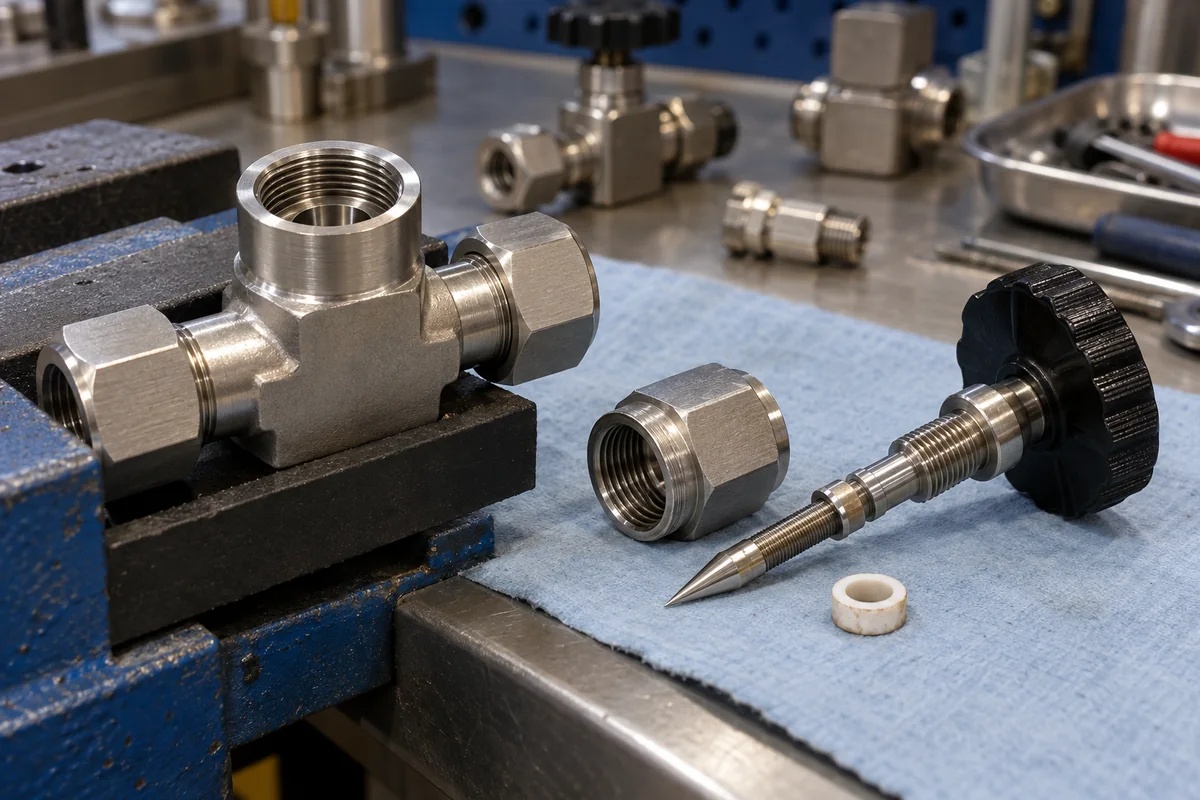
A canonical Control Mechanism is characterized by the integration of Stem and Stem Nut / Yoke. In industrial production environments, manufacturers listed on CNFX commonly emphasize Stainless Steel construction to support stable, high-cycle operation across diverse manufacturing scenarios.

The internal assembly within a flow control valve or meter that regulates fluid flow by adjusting the position of the closure element.
Product Specifications

Technical details and manufacturing context for Control Mechanism

Definition
A control mechanism is the core functional component of a flow control valve or meter that translates control signals into mechanical movement to precisely adjust the position of the valve's closure element (such as a plug, ball, or gate). This adjustment directly modulates the flow rate, pressure, or direction of the fluid passing through the system. It serves as the interface between the actuator (or manual operator) and the flow-modifying element.
Working Principle
The control mechanism receives an input signal (e.g., pneumatic pressure, electric current, or manual force) from an actuator. This input energy is converted into mechanical force and motion through internal components like stems, linkages, gears, or diaphragms. This motion is transmitted to the valve's closure element, moving it to a specific position (open, closed, or throttled) within the flow path, thereby controlling the cross-sectional area available for fluid passage and regulating the flow characteristics.
Common Materials
Stainless Steel, Carbon Steel, Brass, Engineering Plastics
Technical Parameters
  • Stem diameter or critical shaft dimension. (mm) Per Request
Components / BOM
  • Stem
    Transmits force and motion from the actuator to the closure element.
    Material: Stainless Steel
  • Stem Nut / Yoke
    Converts rotary actuator motion to linear stem motion (in rising stem designs) or provides mounting and support.
    Material: Bronze or Stainless Steel
  • Packing
    Seals around the stem to prevent fluid leakage along the stem path to the atmosphere.
    Material: PTFE, Graphite, Flexible Graphite
  • Bushings/Bearings
    Reduce friction and guide the stem, ensuring smooth and aligned movement.
    Material: Bronze, PTFE, Composite
Engineering Reasoning
0.5-100 bar differential pressure, -40°C to 150°C fluid temperature
Cracking at 120 MPa von Mises stress in 316L stainless steel, seal extrusion at 0.5 mm radial clearance
Design Rationale: High-cycle fatigue from 10^7 cycles at 10 Hz flow pulsation exceeding 0.2% strain amplitude in martensitic phase
Risk Mitigation (FMEA)
Trigger Particulate contamination exceeding 15 μm in hydraulic fluid at 1000 ppm concentration
Mode: Spool valve stiction exceeding 5 N breakaway force causing 2 second response delay
Strategy: Install 10 μm absolute beta₃≥200 filter with differential pressure monitoring at 3 bar warning threshold
Trigger Water ingress creating 500 ppm chloride concentration in steam at 80°C
Mode: Stress corrosion cracking initiating at 0.1 mm depth in 17-4PH stainless steel after 1000 hours
Strategy: Apply 50 μm electroless nickel plating with 0.8% phosphorus content maintaining <0.5 μm surface roughness

Industry Taxonomies & Aliases

Commonly used trade names and technical identifiers for Control Mechanism.

Applied To / Applications

This component is essential for the following industrial systems and equipment:

Industrial Ecosystem & Supply Chain DNA

Complementary Systems
Downstream Applications
Specialized Tooling

Application Fit & Sizing Matrix

Operational Limits
pressure: 0 to 100 bar
flow rate: 0.1 to 1000 m³/h
temperature: -20°C to 150°C
slurry concentration: Up to 30% solids by weight
Media Compatibility
✓ Water ✓ Hydraulic Oil ✓ Natural Gas
Unsuitable: Highly corrosive acids (e.g., hydrochloric acid)
Sizing Data Required
  • Fluid Viscosity
  • Required Flow Rate
  • Pressure Drop Across Valve

Reliability & Engineering Risk Analysis

Failure Mode & Root Cause
Stiction or Binding
Cause: Accumulation of contaminants, corrosion, or inadequate lubrication leading to increased friction and resistance in moving parts, preventing smooth operation.
Wear or Degradation of Seals and Gaskets
Cause: Exposure to harsh chemicals, extreme temperatures, or cyclic pressure changes causing material fatigue, hardening, or cracking, resulting in leaks or loss of pressure integrity.
Maintenance Indicators
  • Unusual noises such as grinding, squealing, or knocking during operation, indicating mechanical distress or misalignment.
  • Visible leaks, drips, or seepage of fluids (e.g., hydraulic oil, coolant) around seals, joints, or connections, signaling seal failure or loose fittings.
Engineering Tips
  • Implement a proactive lubrication management program using manufacturer-recommended lubricants and schedules to minimize friction and prevent stiction or binding.
  • Conduct regular inspections and preventive maintenance, including cleaning, alignment checks, and seal condition assessments, to detect early signs of wear and address issues before failure occurs.

Compliance & Manufacturing Standards

Reference Standards
ISO 9001:2015 Quality Management Systems ANSI B11.0 Safety of Machinery CE Marking (Machinery Directive 2006/42/EC)
Manufacturing Precision
  • Bore Diameter: +/-0.02mm
  • Surface Flatness: 0.1mm per 100mm
Quality Inspection
  • Dimensional Verification with CMM
  • Functional Performance Test under Load

Factories Producing Control Mechanism

Verified manufacturers with capability to produce this product in China

✓ 97% Supplier Capability Match Found

S Sourcing Manager from Canada Jan 16, 2026
★★★★★
"Testing the Control Mechanism now; the technical reliability results are within 1% of the laboratory datasheet."
Technical Specifications Verified
P Procurement Specialist from United States Jan 13, 2026
★★★★☆
"Impressive build quality. Especially the technical reliability is very stable during long-term operation. (Delivery took slightly longer than expected, but technical support was excellent.)"
Technical Specifications Verified
T Technical Director from United Arab Emirates Jan 10, 2026
★★★★★
"As a professional in the Machinery and Equipment Manufacturing sector, I confirm this Control Mechanism meets all ISO standards."
Technical Specifications Verified
Verification Protocol

“Feedback is collected from verified sourcing managers during RFQ (Request for Quote) and factory evaluation processes on CNFX. These reports represent historical performance data and technical audit summaries from our B2B manufacturing network.”

7 sourcing managers are analyzing this specification now. Last inquiry for Control Mechanism from India (1h ago).

Supply Chain Compatible Machinery & Devices

Automated Assembly Line System

Integrated production system for sequential component assembly operations

Explore Specs →
Automated Powder Coating System

Integrated industrial system for applying dry powder coatings to metal substrates.

Explore Specs →
Centrifugal Pump Impeller

Rotating component that transfers energy to fluid in centrifugal pumps.

Explore Specs →
High-Precision CNC Laser Cutting Machine

Computer-controlled industrial machine using focused laser beams to cut sheet metal with micron-level accuracy.

Explore Specs →

Frequently Asked Questions

What materials are commonly used in control mechanisms for flow valves?

Control mechanisms are typically manufactured from durable materials including stainless steel for corrosion resistance, carbon steel for strength, brass for compatibility with various fluids, and engineering plastics for chemical resistance and reduced weight.

What are the main components in a control mechanism BOM?

The bill of materials includes the stem (which moves the closure element), stem nut or yoke (for mechanical advantage), packing (to prevent leaks), and bushings or bearings (to reduce friction and ensure smooth operation).

How does a control mechanism regulate fluid flow in industrial equipment?

The control mechanism adjusts the position of the closure element (like a plug or disc) within the valve or meter body, changing the flow area to precisely control fluid rate, pressure, or direction in industrial systems.

Can I contact factories directly on CNFX?

CNFX is an open directory, not a transaction platform. Each factory profile provides direct contact information and production details to help you initiate direct inquiries with Chinese suppliers.

Get Quote for Control Mechanism

Request technical pricing, lead times, or customized specifications for Control Mechanism directly from verified manufacturing units.

Your business information is encrypted and only shared with verified Control Mechanism suppliers.

Thank you! Your message has been sent. We'll respond within 1–3 business days.

Need to Manufacture Control Mechanism?

Connect with verified factories specializing in this product category

Add Your Factory Contact Us
Previous Product
Control Logic Unit
Next Product
Control Output Module