Industry-Verified Manufacturing Data (2026)

Delivery Nozzles & Hoses

Based on aggregated insights from multiple verified factory profiles within the CNFX directory, the standard Delivery Nozzles & Hoses used in the Machinery and Equipment Manufacturing sector typically supports operational capacities ranging from standard industrial configurations to heavy-duty production requirements.

Technical Definition & Core Assembly

A canonical Delivery Nozzles & Hoses is characterized by the integration of Hose Body and Reinforcement Layer. In industrial production environments, manufacturers listed on CNFX commonly emphasize Synthetic Rubber (e.g., EPDM, Nitrile) construction to support stable, high-cycle operation across diverse manufacturing scenarios.

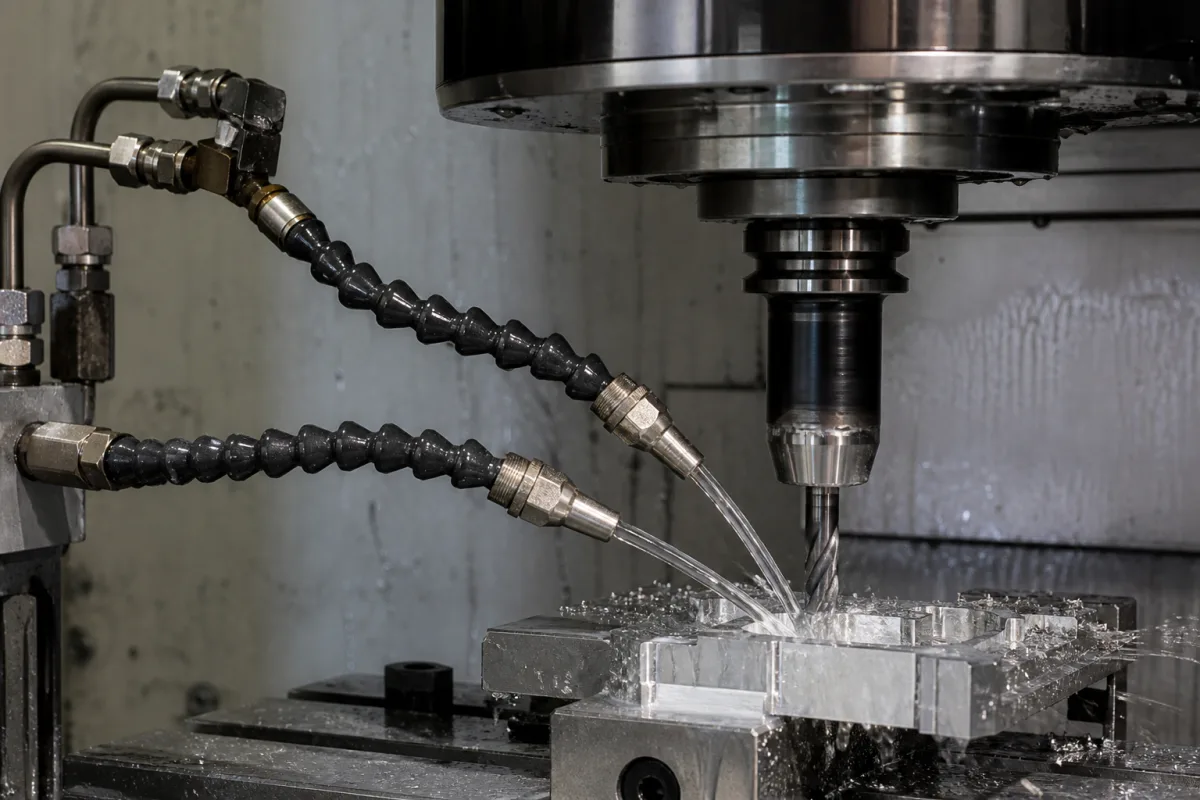
Components that direct and transport coolant fluid within a cooling system.

Product Specifications

Technical details and manufacturing context for Delivery Nozzles & Hoses

Definition
Delivery nozzles and hoses are critical components of a coolant system responsible for precisely directing and transporting coolant fluid from the reservoir or pump to specific target areas requiring temperature regulation. Nozzles control the flow pattern and spray characteristics, while hoses provide flexible, durable conduits for fluid transfer under pressure and across varying temperatures.
Working Principle
Coolant fluid is pumped through the system under pressure. Hoses transport the fluid from one point to another, maintaining flow integrity and resisting pressure, temperature, and chemical degradation. Nozzles, positioned at delivery points, shape and direct the fluid stream or spray onto target surfaces (e.g., machinery parts, molds, or heat exchangers) to facilitate efficient heat absorption or dissipation.
Common Materials
Synthetic Rubber (e.g., EPDM, Nitrile), Thermoplastic (e.g., PVC, Polyurethane), Stainless Steel, Brass
Technical Parameters
  • Inner Diameter (ID) and Outer Diameter (OD) of hoses; orifice size and thread specification for nozzles. (mm) Standard Spec
Components / BOM
  • Hose Body
    Provides the primary fluid conduit, offering flexibility and pressure containment.
    Material: Synthetic Rubber or Thermoplastic
  • Reinforcement Layer
    Embedded within the hose wall (e.g., braided textile or wire) to enhance pressure resistance and prevent expansion/rupture.
    Material: Textile (Polyester) or Steel Wire
  • Nozzle Orifice
    The precisely shaped opening that controls the flow pattern, velocity, and spray angle of the exiting coolant.
    Material: Stainless Steel or Brass
  • Connection Fitting
    The threaded, barbed, or quick-connect end that secures the hose or nozzle to the system (e.g., pump, manifold, or target fixture).
    Material: Brass, Stainless Steel, or Plastic
Engineering Reasoning
0.5-25 bar (7.25-362.5 psi)
35 bar (507.5 psi) burst pressure for reinforced rubber hoses; 0.1 mm (100 μm) nozzle orifice erosion threshold
Design Rationale: Hose failure: Tensile stress exceeding 20 MPa yield strength of EPDM rubber reinforcement. Nozzle failure: Cavitation-induced erosion when local pressure drops below coolant vapor pressure (0.0234 bar at 20°C water), causing implosive bubble collapse with 1 GPa microjet impacts.
Risk Mitigation (FMEA)
Trigger Coolant pH deviation beyond 6.5-8.5 range
Mode: Chemical degradation of EPDM rubber matrix at 0.5 mm/year corrosion rate
Strategy: Integrate inline pH sensors with automated dosing system maintaining 7.2±0.3 pH
Trigger Particulate contamination exceeding ISO 4406 18/16/13 cleanliness level
Mode: Abrasive wear at nozzle orifice increasing diameter by 0.05 mm per 1000 operating hours
Strategy: Install 10 μm absolute filtration with differential pressure monitoring at 0.5 bar trigger

Industry Taxonomies & Aliases

Commonly used trade names and technical identifiers for Delivery Nozzles & Hoses.

Applied To / Applications

This component is essential for the following industrial systems and equipment:

Industrial Ecosystem & Supply Chain DNA

Complementary Systems
Downstream Applications
Specialized Tooling

Application Fit & Sizing Matrix

Operational Limits
pressure: Up to 300 psi (20 bar)
flow rate: 0.5 to 50 GPM (1.9 to 189 L/min)
temperature: -40°C to 150°C
slurry concentration: Up to 30% solids by weight
Media Compatibility
✓ Water-glycol coolant mixtures ✓ Mineral oil-based coolants ✓ Deionized water systems
Unsuitable: Chlorinated solvents or strong oxidizing acids
Sizing Data Required
  • Required flow rate (GPM/LPM)
  • System operating pressure (psi/bar)
  • Nozzle outlet diameter and hose inner diameter (inches/mm)

Reliability & Engineering Risk Analysis

Failure Mode & Root Cause
Abrasive erosion
Cause: Prolonged exposure to abrasive media (e.g., slurries, sand-laden fluids) leading to material degradation and thinning of nozzle/hose walls.
Cavitation
Cause: Rapid pressure drops causing vapor bubble formation and collapse, resulting in localized pitting and material fatigue, often due to improper nozzle design or excessive flow velocities.
Maintenance Indicators
  • Visible external cracking, bulging, or material flaking on hose surfaces
  • Audible hissing or irregular spray patterns indicating internal damage or blockages
Engineering Tips
  • Implement routine inspections using ultrasonic thickness gauging to monitor wall thinning and schedule replacements before failure.
  • Optimize fluid velocity and pressure settings to stay within manufacturer specifications, reducing cavitation and erosion risks.

Compliance & Manufacturing Standards

Reference Standards
ISO 1402:2009 - Rubber and plastics hoses and hose assemblies ANSI/ASME B40.100-2013 - Pressure Gauges and Gauge Attachments DIN 20066:2012 - Hydraulic fluid power - Hoses and hose assemblies
Manufacturing Precision
  • Bore diameter: +/-0.05mm
  • Thread concentricity: 0.1mm TIR
Quality Inspection
  • Hydrostatic pressure test
  • Leak test with inert gas

Factories Producing Delivery Nozzles & Hoses

Verified manufacturers with capability to produce this product in China

✓ 98% Supplier Capability Match Found

P Procurement Specialist from Singapore Jan 11, 2026
★★★★★
"Great transparency on the Delivery Nozzles & Hoses components. Essential for our Machinery and Equipment Manufacturing supply chain."
Technical Specifications Verified
T Technical Director from Germany Jan 08, 2026
★★★★★
"The Delivery Nozzles & Hoses we sourced perfectly fits our Machinery and Equipment Manufacturing production line requirements."
Technical Specifications Verified
P Project Engineer from Brazil Jan 05, 2026
★★★★★
"Found 39+ suppliers for Delivery Nozzles & Hoses on CNFX, but this spec remains the most cost-effective."
Technical Specifications Verified
Verification Protocol

“Feedback is collected from verified sourcing managers during RFQ (Request for Quote) and factory evaluation processes on CNFX. These reports represent historical performance data and technical audit summaries from our B2B manufacturing network.”

12 sourcing managers are analyzing this specification now. Last inquiry for Delivery Nozzles & Hoses from Thailand (1h ago).

Supply Chain Compatible Machinery & Devices

Heavy-Duty CNC Plasma Cutting Machine

Industrial machine for precision metal cutting using plasma arc technology

Explore Specs →
Automated Assembly Line System

Integrated production system for sequential component assembly operations

Explore Specs →
Automated Powder Coating System

Integrated industrial system for applying dry powder coatings to metal substrates.

Explore Specs →
Centrifugal Pump Impeller

Rotating component that transfers energy to fluid in centrifugal pumps.

Explore Specs →

Frequently Asked Questions

What materials are best for coolant delivery nozzles in high-temperature applications?

For high-temperature coolant systems, EPDM synthetic rubber and stainless steel are recommended due to their excellent heat resistance and durability, maintaining integrity under thermal stress.

How do I select the right reinforcement layer for a coolant hose?

Choose reinforcement based on pressure requirements: braided synthetic fibers for moderate pressure, spiral wire for high pressure, ensuring the hose withstands system demands without bulging or bursting.

What are the key specifications to check when replacing delivery nozzles in machinery?

Verify orifice size for flow rate, connection fitting type (e.g., NPT, BSP), material compatibility with coolant, and temperature/pressure ratings to match your cooling system's operational needs.

Can I contact factories directly on CNFX?

CNFX is an open directory, not a transaction platform. Each factory profile provides direct contact information and production details to help you initiate direct inquiries with Chinese suppliers.

Get Quote for Delivery Nozzles & Hoses

Request technical pricing, lead times, or customized specifications for Delivery Nozzles & Hoses directly from verified manufacturing units.

Your business information is encrypted and only shared with verified Delivery Nozzles & Hoses suppliers.

Thank you! Your message has been sent. We'll respond within 1–3 business days.

Need to Manufacture Delivery Nozzles & Hoses?

Connect with verified factories specializing in this product category

Add Your Factory Contact Us
Previous Product
Delivery Nozzles
Next Product
Delivery Pipeline