Servo Valve
View system integration details
This page explains how Feedback Device (e.g., LVDT) is classified within Machinery and Equipment Manufacturing. Technical values and manufacturer relationships are research references; confirm the current specification and supplier evidence for each order.
A sensor component in servo valves that provides real-time position feedback of the valve spool to the control system.
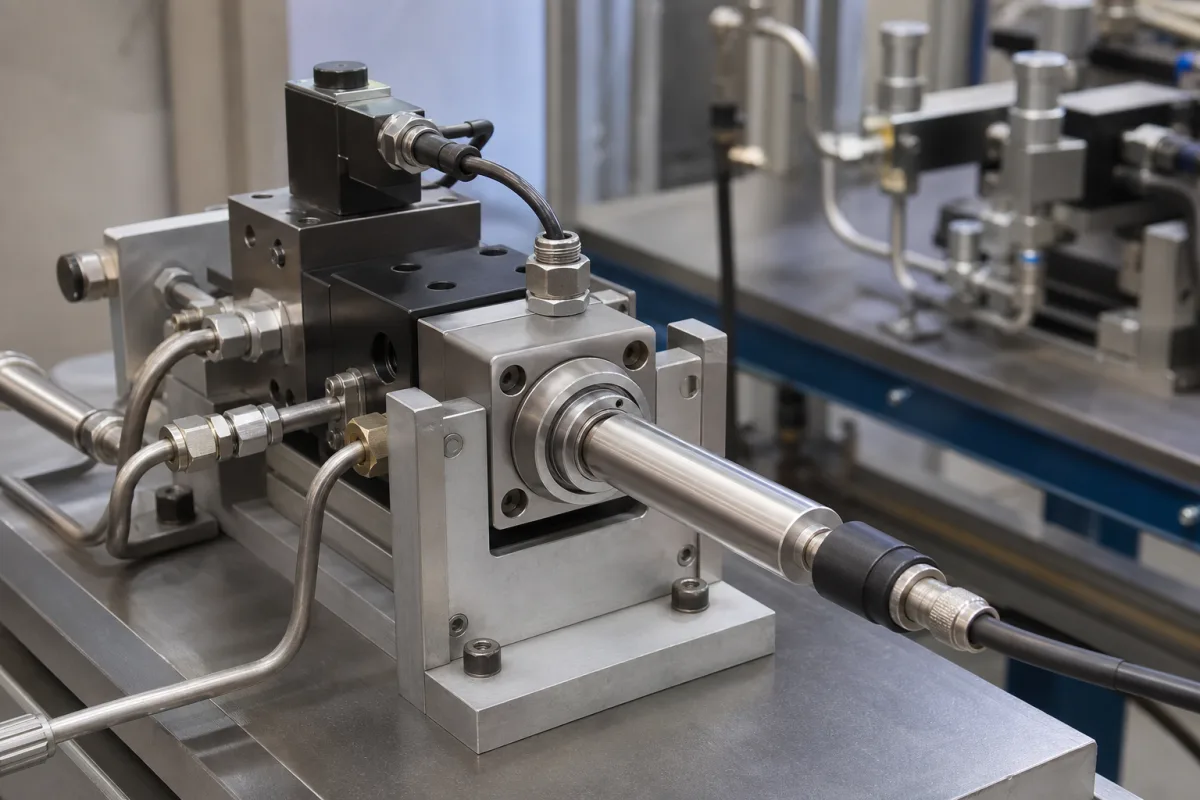
Technical details and manufacturing context for Feedback Device (e.g., LVDT)
What to specify in your RFQ
These are the quantities to specify to the manufacturer when sizing or requesting a quote. The manufacturer's own documentation governs the exact figures and applicable standard.
This component is essential for the following industrial systems and equipment:
| pressure: | 0 to 5000 psi |
| other spec: | Flow Rate: 0-100 GPM, Slurry Concentration: <5% solids by weight |
| temperature: | -40°C to +125°C |
Indicative industry ranges for design and RFQ preparation. Confirm the exact figures and applicable standard with the manufacturer before specifying.
Quoted from the published standard.
Manufacturer profiles associated with Feedback Device (e.g., LVDT).
Manufacturer listings support early research and capability understanding. They are not certification, ranking, or transaction guarantees.
A practical evidence checklist for RFQ preparation and supplier evaluation.
CNFX does not score or rank suppliers. Buyers must verify all claims and documents with the legal manufacturer before ordering.
The feedback device continuously measures the position of the valve spool and sends an electrical signal to the control system. This allows the control system to compare the actual position with the desired position and make corrections, ensuring precise control of fluid flow or pressure.
An LVDT uses a movable ferromagnetic core inside a transformer with a primary and two secondary coils. An AC signal excites the primary, and the core's position affects the magnetic coupling, producing a differential voltage in the secondaries. The voltage magnitude and phase indicate the core's displacement from the null position.
Typical materials include electrical steel for the core, copper for the windings, epoxy or phenolic for the bobbin and insulation, and stainless steel for the housing. These materials provide magnetic properties, electrical conductivity, insulation, and mechanical protection.
You should verify the required stroke length (measurement range), environmental conditions (temperature, vibration, moisture), electrical interface (excitation voltage, output signal), and accuracy requirements. Always confirm model-specific specifications with the manufacturer or supplier.
Editorial classification, named public sources where available, and source-reviewed manufacturer records.
Ask for use case, specification boundaries, supplier type, and RFQ preparation information for this product.
Compare manufacturer profiles with relevant product and process capability.