Industry-Verified Manufacturing Data (2026)

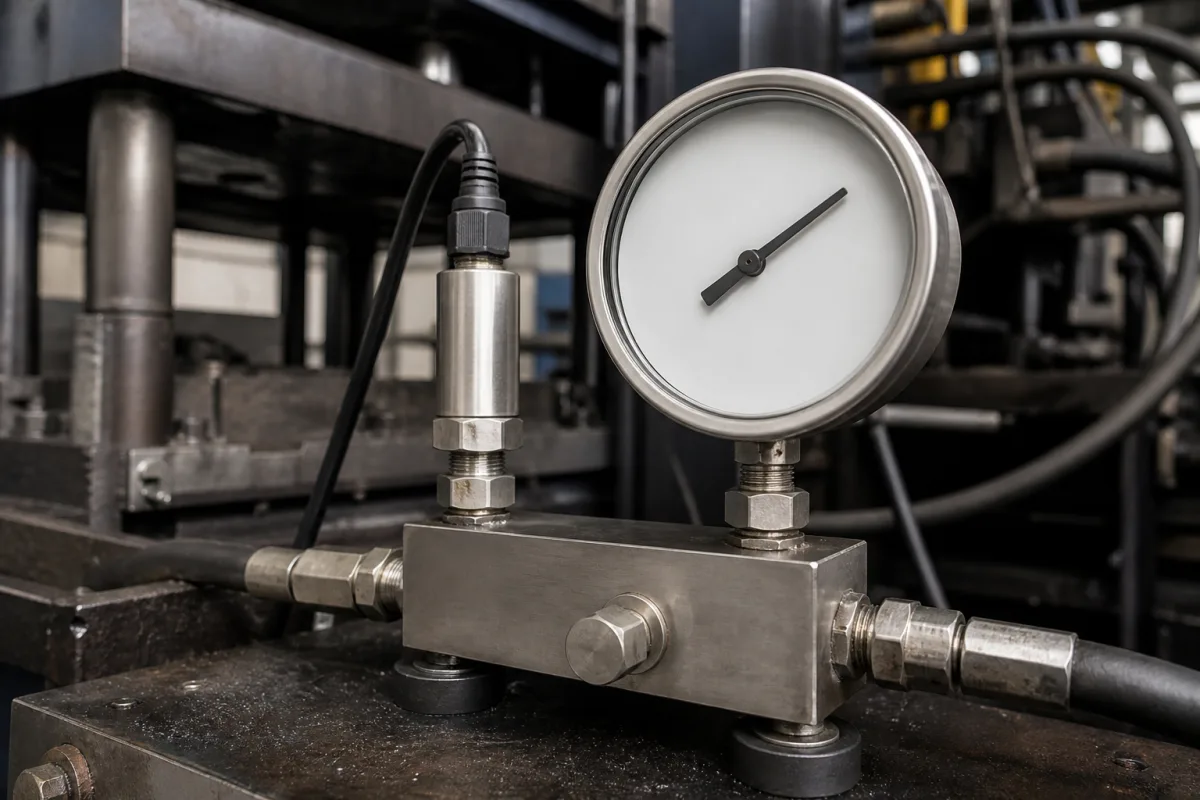
Force Sensor / Pressure Gauge

Based on aggregated insights from multiple verified factory profiles within the CNFX directory, the standard Force Sensor / Pressure Gauge used in the Machinery and Equipment Manufacturing sector typically supports operational capacities ranging from standard industrial configurations to heavy-duty production requirements.

Technical Definition & Core Assembly

A canonical Force Sensor / Pressure Gauge is characterized by the integration of Sensing Element and Signal Transmitter/Conditioner. In industrial production environments, manufacturers listed on CNFX commonly emphasize Stainless Steel construction to support stable, high-cycle operation across diverse manufacturing scenarios.

A measurement device that monitors and displays clamping force or pressure within a mold box clamping system.
Product Specifications

Technical details and manufacturing context for Force Sensor / Pressure Gauge

Definition
A critical component of the Mold Box Clamping System responsible for real-time monitoring of the clamping force or hydraulic pressure applied during the molding process. It ensures the mold halves are held together with the precise force required for proper material flow and part formation, preventing defects like flash or short shots.
Working Principle
Converts the mechanical force or fluid pressure from the clamping mechanism into an electrical signal (for sensors) or a mechanical displacement (for gauges). Force sensors typically use strain gauges or piezoelectric elements, while pressure gauges use a Bourdon tube or diaphragm that moves a pointer on a calibrated dial.
Common Materials
Stainless Steel, Alloy Steel, Silicon
Technical Parameters
  • Maximum measurable force or pressure range. (kN or MPa) Per Request
Components / BOM
  • Sensing Element
    The core component that physically deforms or reacts under applied force/pressure to initiate the measurement.
    Material: Stainless Steel, Silicon
  • Signal Transmitter/Conditioner
    Converts the raw physical response from the sensing element into a standardized, usable electrical signal.
    Material: Electronic Components (PCB, ICs)
  • Housing/Body
    Protects internal components from environmental factors like dust, moisture, and mechanical impact.
    Material: Stainless Steel, Aluminum Alloy
  • Display/Indicator (for gauges)
    Provides a visual readout of the measured pressure, typically a dial with a pointer.
    Material: Glass, Plastic, Metal
Engineering Reasoning
0-100 bar (0-10 MPa) with ±0.25% full-scale accuracy
150 bar (15 MPa) burst pressure for diaphragm rupture, 125°C thermal limit for strain gauge degradation
Design Rationale: Diaphragm plastic deformation exceeding yield strength (typically 250 MPa for 17-4PH stainless steel) at overpressure conditions; strain gauge adhesive thermal breakdown above glass transition temperature (125°C for polyimide adhesives)
Risk Mitigation (FMEA)
Trigger Hydraulic fluid contamination with particles >5 μm
Mode: Diaphragm abrasion leading to pressure reading drift exceeding ±1% FS/month
Strategy: Install 3 μm absolute filtration with differential pressure monitoring at hydraulic inlet
Trigger Cyclic pressure loading at 0.5-1 Hz frequency exceeding 80% of rated pressure
Mode: Strain gauge fatigue failure after approximately 10^7 cycles
Strategy: Implement pressure snubber with 0.5 mm orifice diameter to dampen pressure transients

Industry Taxonomies & Aliases

Commonly used trade names and technical identifiers for Force Sensor / Pressure Gauge.

Applied To / Applications

This component is essential for the following industrial systems and equipment:

Industrial Ecosystem & Supply Chain DNA

Complementary Systems
Downstream Applications
Specialized Tooling

Application Fit & Sizing Matrix

Operational Limits
pressure: 0 to 500 bar
other spec: Accuracy: ±0.5% FS, Response Time: <10 ms, Overload Capacity: 150% FS
temperature: -20°C to 85°C
Media Compatibility
✓ Hydraulic Oil ✓ Compressed Air ✓ Water-Glycol Mixtures
Unsuitable: Corrosive Chemicals (e.g., strong acids, chlorinated solvents)
Sizing Data Required
  • Maximum Expected Clamping Force (kN)
  • Required Accuracy (% FS)
  • Process Media Type

Reliability & Engineering Risk Analysis

Failure Mode & Root Cause
Zero drift or calibration shift
Cause: Mechanical fatigue of sensing elements, thermal stress from temperature cycling, or contamination buildup affecting diaphragm movement
Signal noise or erratic readings
Cause: Electrical interference from nearby equipment, damaged wiring/cabling, moisture ingress causing short circuits, or power supply fluctuations
Maintenance Indicators
  • Persistent zero offset that cannot be recalibrated or readings that don't return to baseline after pressure release
  • Audible electrical buzzing/humming from the sensor housing or visible fluid leakage around pressure ports
Engineering Tips
  • Install surge protectors and electrical filters on power/signal lines, and use shielded cables with proper grounding to prevent electromagnetic interference
  • Implement regular calibration schedules with documented drift analysis, and use protective boots/covers in harsh environments to prevent contamination

Compliance & Manufacturing Standards

Reference Standards
ISO 376:2011 - Calibration of force-proving instruments used for the verification of uniaxial testing machines ANSI B40.1 - Gauges - Pressure and Vacuum Indicating Dial Type - Elastic Element DIN EN 837-1 - Pressure gauges - Part 1: Bourdon tube pressure gauges - Dimensions, metrology, requirements and testing
Manufacturing Precision
  • Full Scale Output (FSO): +/-0.5%
  • Hysteresis: +/-0.25% of full scale
Quality Inspection
  • Pressure Cycling Test - Verifies durability and stability under repeated pressure cycles
  • Temperature Compensation Test - Ensures accuracy across specified operating temperature range

Factories Producing Force Sensor / Pressure Gauge

Verified manufacturers with capability to produce this product in China

✓ 98% Supplier Capability Match Found

P Project Engineer from Singapore Feb 18, 2026
★★★★★
"Found 31+ suppliers for Force Sensor / Pressure Gauge on CNFX, but this spec remains the most cost-effective."
Technical Specifications Verified
S Sourcing Manager from Germany Feb 15, 2026
★★★★★
"The technical documentation for this Force Sensor / Pressure Gauge is very thorough, especially regarding technical reliability."
Technical Specifications Verified
P Procurement Specialist from Brazil Feb 12, 2026
★★★★★
"Reliable performance in harsh Machinery and Equipment Manufacturing environments. No issues with the Force Sensor / Pressure Gauge so far."
Technical Specifications Verified
Verification Protocol

“Feedback is collected from verified sourcing managers during RFQ (Request for Quote) and factory evaluation processes on CNFX. These reports represent historical performance data and technical audit summaries from our B2B manufacturing network.”

19 sourcing managers are analyzing this specification now. Last inquiry for Force Sensor / Pressure Gauge from USA (52m ago).

Supply Chain Compatible Machinery & Devices

Automated Assembly Line System

Integrated production system for sequential component assembly operations

Explore Specs →
Automated Powder Coating System

Integrated industrial system for applying dry powder coatings to metal substrates.

Explore Specs →
Centrifugal Pump Impeller

Rotating component that transfers energy to fluid in centrifugal pumps.

Explore Specs →
High-Precision CNC Laser Cutting Machine

Computer-controlled industrial machine using focused laser beams to cut sheet metal with micron-level accuracy.

Explore Specs →

Frequently Asked Questions

What materials are used in this force sensor/pressure gauge?

This device is constructed from durable materials including stainless steel and alloy steel for the housing/body, with silicon components in the sensing element for precise measurements in industrial environments.

How does this device monitor clamping force in mold box systems?

The sensing element detects pressure changes within the clamping system, which is then processed by the signal transmitter/conditioner and displayed on the indicator for real-time monitoring of clamping force.

What are the main components of this measurement device?

Key components include the sensing element for pressure detection, signal transmitter/conditioner for data processing, durable housing/body for protection, and display/indicator for force/pressure visualization.

Can I contact factories directly on CNFX?

CNFX is an open directory, not a transaction platform. Each factory profile provides direct contact information and production details to help you initiate direct inquiries with Chinese suppliers.

Get Quote for Force Sensor / Pressure Gauge

Request technical pricing, lead times, or customized specifications for Force Sensor / Pressure Gauge directly from verified manufacturing units.

Your business information is encrypted and only shared with verified Force Sensor / Pressure Gauge suppliers.

Thank you! Your message has been sent. We'll respond within 1–3 business days.

Need to Manufacture Force Sensor / Pressure Gauge?

Connect with verified factories specializing in this product category

Add Your Factory Contact Us
Previous Product
Force Sensor
Next Product
Force Sensor/Load Cell