Industry-Verified Manufacturing Data (2026)

Guide Tube

Based on aggregated insights from multiple verified factory profiles within the CNFX directory, the standard Guide Tube used in the Machinery and Equipment Manufacturing sector typically supports operational capacities ranging from standard industrial configurations to heavy-duty production requirements.

Technical Definition & Core Assembly

A canonical Guide Tube is characterized by the integration of Tube Body and Internal Liner/Coating. In industrial production environments, manufacturers listed on CNFX commonly emphasize Zirconium alloy (e.g., Zircaloy-4) construction to support stable, high-cycle operation across diverse manufacturing scenarios.

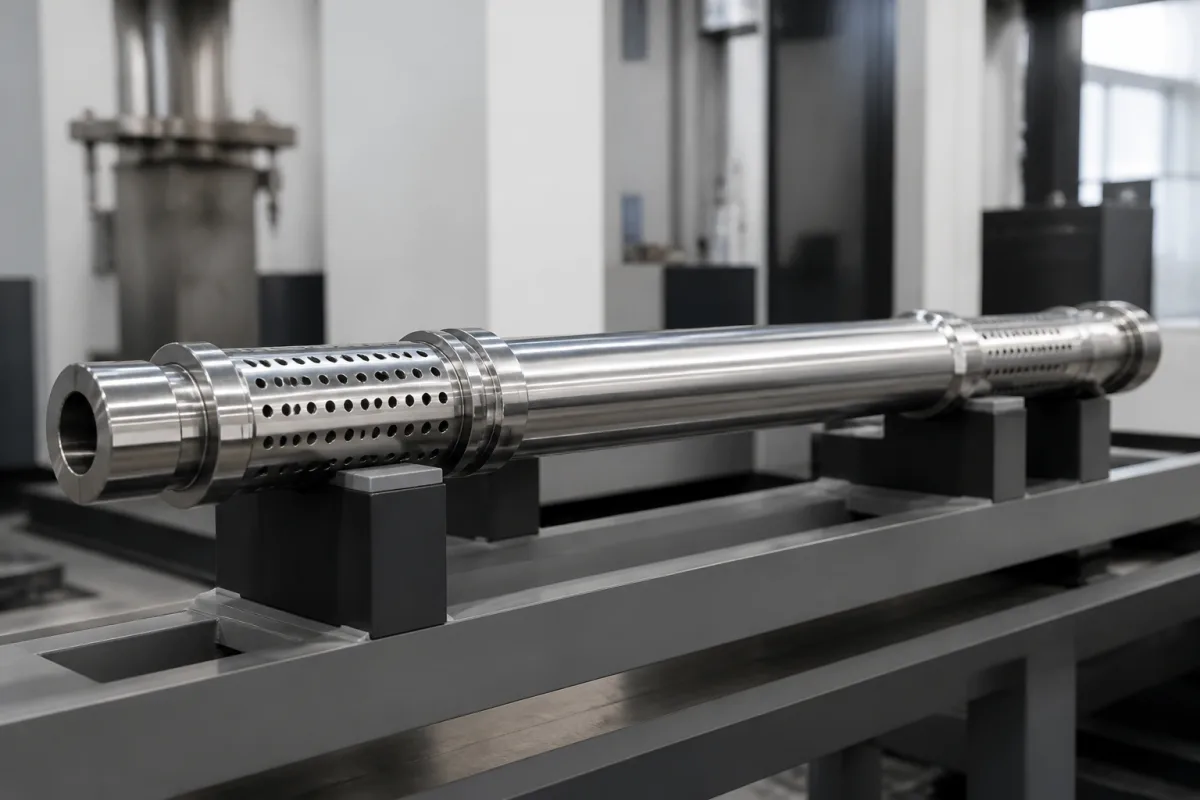
A precision tubular component that provides a controlled pathway for control rods within a nuclear reactor core.
Product Specifications

Technical details and manufacturing context for Guide Tube

Definition
The Guide Tube is a critical structural component of the Control Rod Assembly in nuclear reactors. It serves as a protective housing and alignment mechanism that ensures the control rods move smoothly and precisely along their designated paths during insertion and withdrawal operations. The tube maintains proper spacing and prevents rod vibration or misalignment that could compromise reactor safety and control.
Working Principle
The Guide Tube creates a low-friction, precisely aligned channel through which control rods travel. It typically features internal surfaces with specialized coatings or liners to minimize friction and wear. The tube's rigid structure maintains geometric integrity under thermal and mechanical stresses, ensuring the control rods follow their intended trajectory without binding or deviation.
Common Materials
Zirconium alloy (e.g., Zircaloy-4), Stainless steel (316L), Inconel alloys
Technical Parameters
  • Inner diameter tolerance typically ±0.05mm to ensure precise control rod clearance (mm) Standard Spec
Components / BOM
  • Tube Body
    Primary structural element providing the guide channel
    Material: Zirconium alloy
  • Internal Liner/Coating
    Reduces friction and wear between tube and control rod
    Material: Hard chrome plating or ceramic coating
  • Mounting Flange
    Secures the guide tube to the reactor structure
    Material: Stainless steel
Engineering Reasoning
0-350°C temperature, 0-15.5 MPa pressure, 0-2.5 m/s flow velocity
Material yield strength threshold: 310 MPa for Zircaloy-4 at 350°C, 0.5 mm permanent deformation limit, 1.0% strain limit
Design Rationale: Irradiation-induced creep deformation exceeding 1.0% strain due to neutron flux >1×10¹⁴ n/cm²·s, causing dimensional instability and potential control rod binding
Risk Mitigation (FMEA)
Trigger Hydride precipitation at 200-300°C due to hydrogen concentration >25 ppm in Zircaloy-4
Mode: Hydride embrittlement causing radial cracking at stress >150 MPa
Strategy: Hydrogen gettering with niobium liner (0.1 mm thickness) and post-weld heat treatment at 580°C for 2 hours
Trigger Differential thermal expansion between guide tube (α=5.8×10⁻⁶/°C) and support grid (α=11.5×10⁻⁶/°C) at ΔT>100°C
Mode: Thermal stress-induced ovalization exceeding 0.3 mm deviation from circularity
Strategy: Flexible Inconel-718 bellows expansion joints with 15 mm axial travel capacity and 5° angular misalignment tolerance

Industry Taxonomies & Aliases

Commonly used trade names and technical identifiers for Guide Tube.

Applied To / Applications

This component is essential for the following industrial systems and equipment:

Industrial Ecosystem & Supply Chain DNA

Complementary Systems
Downstream Applications
Specialized Tooling

Application Fit & Sizing Matrix

Operational Limits
pressure: 15-16 MPa (PWR) / 7-8 MPa (BWR)
other spec: Neutron flux tolerance: 10^13 to 10^14 n/cm²·s, Flow rate: 0.5-2 m/s coolant velocity
temperature: 300°C to 400°C (typical PWR/BWR operating range)
Media Compatibility
✓ Pressurized water (PWR coolant) ✓ Boiling water (BWR coolant) ✓ Inert gas (helium/nitrogen for dry storage)
Unsuitable: High chloride aqueous environments (risk of stress corrosion cracking)
Sizing Data Required
  • Control rod diameter and clearance requirements
  • Reactor core lattice pitch dimensions
  • Required insertion/withdrawal stroke length

Reliability & Engineering Risk Analysis

Failure Mode & Root Cause
Abrasive erosion
Cause: High-velocity particulate flow causing material removal, often from improper filtration or abrasive media
Fatigue cracking
Cause: Cyclic stress from vibration, thermal expansion/contraction, or pressure fluctuations leading to crack initiation and propagation
Maintenance Indicators
  • Visible external scoring or thinning, especially at bends or connections
  • Abnormal vibration or audible knocking during operation indicating flow disruption or structural compromise
Engineering Tips
  • Implement regular ultrasonic thickness testing at high-wear locations to monitor erosion rates and schedule predictive replacements
  • Install vibration dampeners and proper supports to minimize stress concentrations, particularly at connection points and directional changes

Compliance & Manufacturing Standards

Reference Standards
ISO 286-2:2010 (Geometrical product specifications - Limits and fits) ANSI B4.1-1967 (Preferred Limits and Fits for Cylindrical Parts) DIN 7150-1:2017 (System of limits and fits - Bases of tolerances, deviations and fits)
Manufacturing Precision
  • Bore diameter: +/-0.01mm
  • Straightness: 0.05mm per meter length
Quality Inspection
  • Dimensional verification with coordinate measuring machine (CMM)
  • Ultrasonic testing for internal defects

Factories Producing Guide Tube

Verified manufacturers with capability to produce this product in China

✓ 98% Supplier Capability Match Found

P Project Engineer from Singapore Feb 22, 2026
★★★★★
"Impressive build quality. Especially the technical reliability is very stable during long-term operation."
Technical Specifications Verified
S Sourcing Manager from Germany Feb 19, 2026
★★★★★
"As a professional in the Machinery and Equipment Manufacturing sector, I confirm this Guide Tube meets all ISO standards."
Technical Specifications Verified
P Procurement Specialist from Brazil Feb 16, 2026
★★★★★
"Standard OEM quality for Machinery and Equipment Manufacturing applications. The Guide Tube arrived with full certification."
Technical Specifications Verified
Verification Protocol

“Feedback is collected from verified sourcing managers during RFQ (Request for Quote) and factory evaluation processes on CNFX. These reports represent historical performance data and technical audit summaries from our B2B manufacturing network.”

15 sourcing managers are analyzing this specification now. Last inquiry for Guide Tube from Turkey (1h ago).

Supply Chain Compatible Machinery & Devices

Heavy-Duty CNC Plasma Cutting Machine

Industrial machine for precision metal cutting using plasma arc technology

Explore Specs →
Automated Assembly Line System

Integrated production system for sequential component assembly operations

Explore Specs →
Automated Powder Coating System

Integrated industrial system for applying dry powder coatings to metal substrates.

Explore Specs →
Centrifugal Pump Impeller

Rotating component that transfers energy to fluid in centrifugal pumps.

Explore Specs →

Frequently Asked Questions

What materials are commonly used for nuclear reactor guide tubes?

Guide tubes are typically manufactured from zirconium alloys like Zircaloy-4 for corrosion resistance, stainless steel 316L for durability, or Inconel alloys for high-temperature performance in nuclear environments.

What are the key components in a guide tube bill of materials (BOM)?

The primary BOM components include the tube body (main structural element), internal liner/coating (for wear and corrosion protection), and mounting flange (for secure installation in the reactor assembly).

Why is precision critical in guide tube manufacturing for nuclear applications?

Precision ensures exact alignment and smooth movement of control rods within reactor cores, which is essential for safe reactor operation, accurate control of nuclear reactions, and prevention of mechanical failures.

Can I contact factories directly on CNFX?

CNFX is an open directory, not a transaction platform. Each factory profile provides direct contact information and production details to help you initiate direct inquiries with Chinese suppliers.

Get Quote for Guide Tube

Request technical pricing, lead times, or customized specifications for Guide Tube directly from verified manufacturing units.

Your business information is encrypted and only shared with verified Guide Tube suppliers.

Thank you! Your message has been sent. We'll respond within 1–3 business days.

Need to Manufacture Guide Tube?

Connect with verified factories specializing in this product category

Add Your Factory Contact Us
Previous Product
Guide Roller
Next Product
Guideways