Industry-Verified Manufacturing Data (2026)

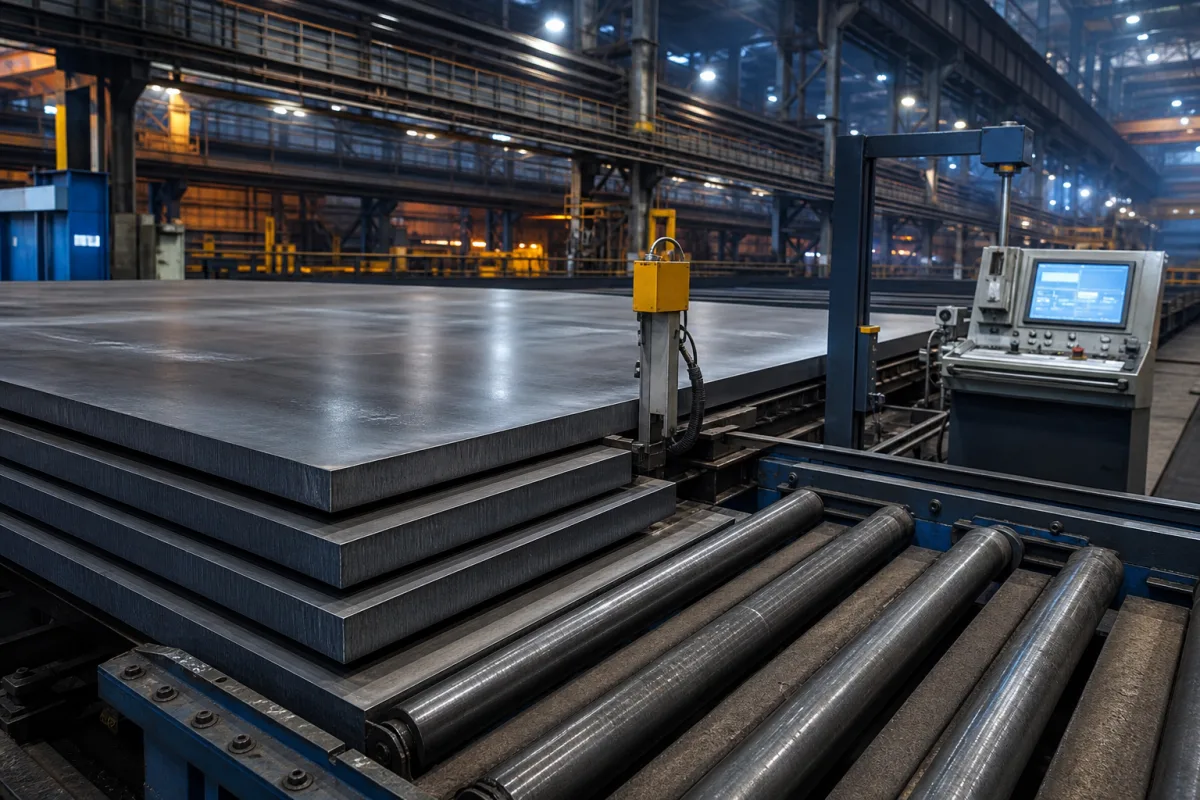
High-Strength Abrasion-Resistant Steel Plate

Based on aggregated insights from multiple verified factory profiles within the CNFX directory, the standard High-Strength Abrasion-Resistant Steel Plate used in the Machinery and Equipment Manufacturing sector typically supports operational capacities ranging from standard industrial configurations to heavy-duty production requirements.

Technical Definition & Core Assembly

A canonical High-Strength Abrasion-Resistant Steel Plate is characterized by the integration of Steel substrate and Hard phase particles. In industrial production environments, manufacturers listed on CNFX commonly emphasize Low-alloy steel construction to support stable, high-cycle operation across diverse manufacturing scenarios.

Specialized steel plate engineered for extreme wear resistance in heavy machinery applications
Product Specifications

Technical details and manufacturing context for High-Strength Abrasion-Resistant Steel Plate

Definition
High-strength abrasion-resistant steel plate is a specialized material manufactured through precise alloying and heat treatment processes to achieve exceptional hardness and toughness. It is specifically designed for components subjected to severe abrasive wear, impact, and high-stress conditions in industrial machinery. This material significantly extends the service life of critical parts in mining, construction, and material handling equipment by resisting deformation and material loss. Its balanced mechanical properties make it ideal for fabricating wear plates, liners, buckets, and structural components that require both durability and formability.
Working Principle
Achieves wear resistance through microstructural hardening via alloying elements (chromium, carbon, manganese) and controlled heat treatment to form martensitic/bainitic structures that resist plastic deformation and material removal
Common Materials
Low-alloy steel, Chromium carbide, Manganese
Technical Parameters
  • Brinell hardness number indicating surface wear resistance (HBW) Per Request
  • Minimum yield strength for structural integrity under load (MPa) Per Request
Components / BOM
  • Steel substrate
    Provides structural strength and toughness to the material
    Material: Low-alloy steel with precise chemical composition
  • Hard phase particles
    Creates wear-resistant microstructure through carbide formation
    Material: Chromium carbides and other hard compounds
  • Surface treatment layer Optional
    Optional coating for additional corrosion or wear protection
    Material: Zinc, epoxy, or ceramic coatings
Engineering Reasoning
Hardness: 400-600 HBW (Brinell), Yield strength: 900-1400 MPa, Operating temperature: -40°C to 250°C
Surface hardness degradation below 350 HBW, crack initiation at 0.5 mm depth with stress intensity factor K_IC exceeding 80 MPa·m^0.5
Design Rationale: Adhesive/abrasive wear mechanism exceeding material's hardness threshold, leading to subsurface plastic deformation and microcrack propagation via Paris' law (da/dN = C(ΔK)^m)
Risk Mitigation (FMEA)
Trigger Impact loading exceeding Charpy V-notch toughness of 40 J at -20°C
Mode: Brittle fracture initiation at stress concentrators (weld zones, bolt holes)
Strategy: Design with minimum Charpy toughness of 60 J at operating temperature, implement radius transitions >5 mm at stress concentrators
Trigger Cyclic surface stress exceeding fatigue limit of 450 MPa at 10^7 cycles
Mode: Surface spalling and delamination of carbide-rich surface layer
Strategy: Apply compressive residual stress of 300-500 MPa via shot peening, maintain surface roughness Ra < 1.6 μm

Industry Taxonomies & Aliases

Commonly used trade names and technical identifiers for High-Strength Abrasion-Resistant Steel Plate.

Industrial Ecosystem & Supply Chain DNA

Complementary Systems
Downstream Applications
Specialized Tooling

Application Fit & Sizing Matrix

Operational Limits
pressure: Up to 100 MPa static load
temperature: -40°C to 400°C
impact toughness: Minimum 20 J at -20°C
abrasion resistance: Brinell hardness 400-600 HBW
Media Compatibility
✓ Mining slurry transport systems ✓ Cement plant conveyor components ✓ Quarry crusher liners
Unsuitable: Chloride-rich marine environments (risk of pitting corrosion)
Sizing Data Required
  • Required wear life (hours/cycles)
  • Maximum impact energy (Joules)
  • Abrasive particle size distribution (mm)

Reliability & Engineering Risk Analysis

Failure Mode & Root Cause
Surface spalling and delamination
Cause: Excessive impact loading beyond the steel's yield strength, causing subsurface cracks that propagate and separate hardened surface layers from the substrate.
Edge cracking and fatigue fracture
Cause: Stress concentration at cut edges or weld zones due to improper machining/thermal cutting, leading to crack initiation and propagation under cyclic loading.
Maintenance Indicators
  • Visible surface pitting or cratering with exposed substrate material
  • Audible metallic ringing or cracking sounds during operation indicating internal fracture propagation
Engineering Tips
  • Implement controlled thermal cutting procedures (plasma/laser with pre-heat) and edge conditioning to minimize heat-affected zone microcracks
  • Apply engineered impact-absorbing liners or sacrificial wear plates in high-stress zones to redistribute loading away from critical areas

Compliance & Manufacturing Standards

Reference Standards
ASTM A514/A514M - Standard Specification for High-Yield-Strength, Quenched and Tempered Alloy Steel Plate, Suitable for Welding EN 10025-6 - Hot rolled products of structural steels - Part 6: Technical delivery conditions for flat products of high yield strength structural steels in the quenched and tempered condition ISO 4950-3 - High yield strength steel plates and wide flats - Part 3: Delivery conditions for thermomechanically rolled steels
Manufacturing Precision
  • Thickness: +/- 0.5mm for plates up to 10mm thickness
  • Flatness: 5mm maximum deviation per meter length
Quality Inspection
  • Hardness Test (Brinell or Rockwell scale to verify abrasion resistance)
  • Charpy V-Notch Impact Test (to assess toughness at specified temperatures)

Factories Producing High-Strength Abrasion-Resistant Steel Plate

Verified manufacturers with capability to produce this product in China

✓ 92% Supplier Capability Match Found

P Project Engineer from United States Jan 25, 2026
★★★★★
"Standard OEM quality for Machinery and Equipment Manufacturing applications. The High-Strength Abrasion-Resistant Steel Plate arrived with full certification."
Technical Specifications Verified
S Sourcing Manager from United Arab Emirates Jan 22, 2026
★★★★★
"Great transparency on the High-Strength Abrasion-Resistant Steel Plate components. Essential for our Machinery and Equipment Manufacturing supply chain."
Technical Specifications Verified
P Procurement Specialist from Australia Jan 19, 2026
★★★★★
"The High-Strength Abrasion-Resistant Steel Plate we sourced perfectly fits our Machinery and Equipment Manufacturing production line requirements."
Technical Specifications Verified
Verification Protocol

“Feedback is collected from verified sourcing managers during RFQ (Request for Quote) and factory evaluation processes on CNFX. These reports represent historical performance data and technical audit summaries from our B2B manufacturing network.”

18 sourcing managers are analyzing this specification now. Last inquiry for High-Strength Abrasion-Resistant Steel Plate from Brazil (1h ago).

Supply Chain Commonly Integrated Components

Vision System

An optical inspection subsystem that uses cameras, lighting, and image processing to detect defects in pharmaceutical vials.

Explore Specs →
Coating Pan

A rotating vessel used to apply uniform coating layers to pharmaceutical tablets through controlled spraying and drying processes.

Explore Specs →
Spray System

A precision fluid delivery subsystem that atomizes and applies coating solutions onto pharmaceutical tablets within an automated coating system.

Explore Specs →
Air Handling Unit

A device that conditions and circulates air as part of a heating, ventilation, and air conditioning (HVAC) system

Explore Specs →

Frequently Asked Questions

What makes this steel plate suitable for heavy machinery applications?

This steel plate is engineered with low-alloy steel, chromium carbide, and manganese to provide exceptional abrasion resistance and durability under extreme mechanical stress, making it ideal for heavy machinery components subject to constant wear.

How does the Brinell hardness affect performance in machinery?

The high Brinell hardness (HBW) ensures superior surface resistance to indentation and abrasion, extending the lifespan of machinery parts by reducing wear from friction, impact, and material handling in demanding industrial environments.

What are the key specifications for structural integrity in special-purpose machinery?

Key specifications include high tensile strength (MPa) and yield strength (MPa) for load-bearing capacity, optimal carbon equivalent (%) for weldability, impact toughness (J) for shock resistance, and plate thickness (mm) tailored to specific machinery designs.

Can I contact factories directly on CNFX?

CNFX is an open directory, not a transaction platform. Each factory profile provides direct contact information and production details to help you initiate direct inquiries with Chinese suppliers.

Get Quote for High-Strength Abrasion-Resistant Steel Plate

Request technical pricing, lead times, or customized specifications for High-Strength Abrasion-Resistant Steel Plate directly from verified manufacturing units.

Your business information is encrypted and only shared with verified High-Strength Abrasion-Resistant Steel Plate suppliers.

Thank you! Your message has been sent. We'll respond within 1–3 business days.

Need to Manufacture High-Strength Abrasion-Resistant Steel Plate?

Connect with verified factories specializing in this product category

Add Your Factory Contact Us
Previous Product
High-Speed Spindle Assembly
Next Product
High-Strength Aluminum Alloy Billet