Industry-Verified Manufacturing Data (2026)

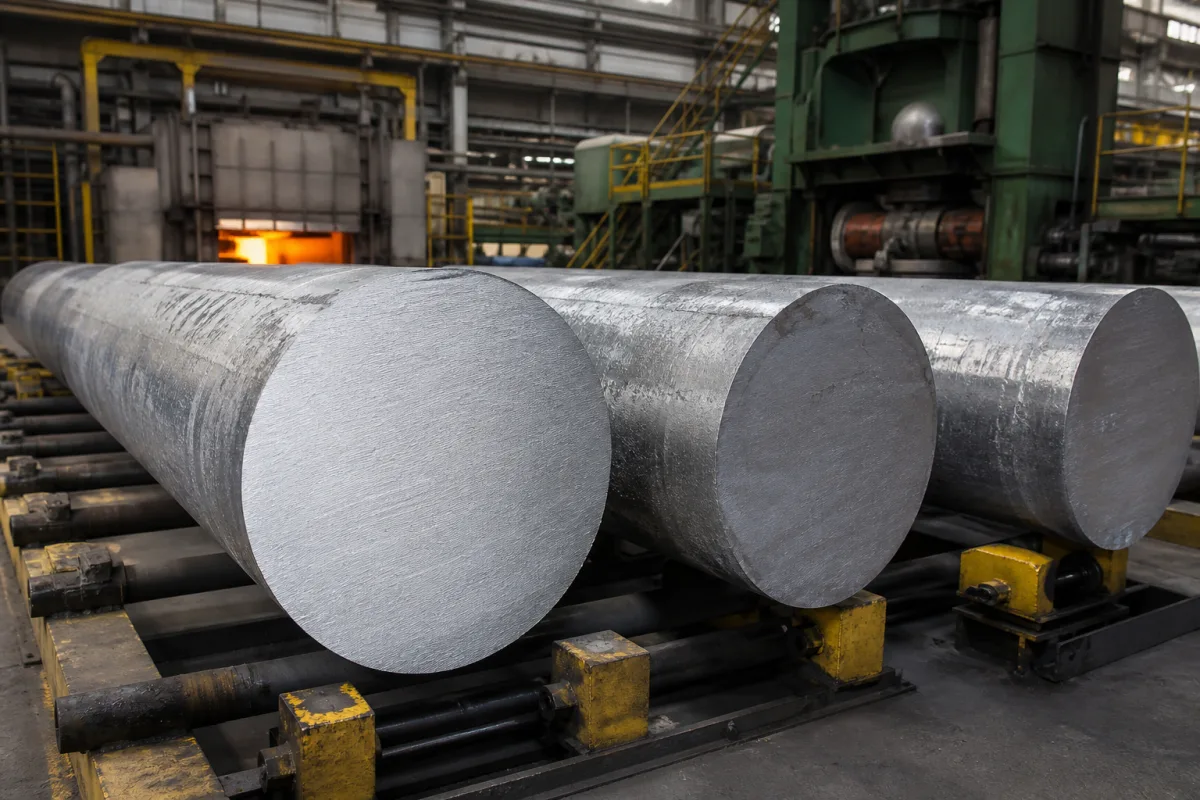
High-Strength Aluminum Alloy Billet

Based on aggregated insights from multiple verified factory profiles within the CNFX directory, the standard High-Strength Aluminum Alloy Billet used in the Machinery and Equipment Manufacturing sector typically supports operational capacities ranging from standard industrial configurations to heavy-duty production requirements.

Technical Definition & Core Assembly

A canonical High-Strength Aluminum Alloy Billet is characterized by the integration of Aluminum Matrix and Intermetallic Compounds. In industrial production environments, manufacturers listed on CNFX commonly emphasize Aluminum construction to support stable, high-cycle operation across diverse manufacturing scenarios.

Semi-finished aluminum alloy stock for precision machining

Product Specifications

Technical details and manufacturing context for High-Strength Aluminum Alloy Billet

Definition
High-strength aluminum alloy billet is a semi-finished industrial material produced through direct chill casting and homogenization processes. It serves as the foundational stock for manufacturing precision components in aerospace, automotive, and machinery sectors. The material offers excellent machinability, weldability, and corrosion resistance while maintaining high strength-to-weight ratios. Billets are typically supplied in standardized dimensions for subsequent extrusion, forging, or CNC machining operations.
Working Principle
As-cast aluminum alloy ingots are homogenized, scalped, and cut to precise dimensions to create uniform billets with consistent metallurgical properties throughout the cross-section.
Common Materials
Aluminum, Copper, Magnesium, Silicon
Technical Parameters
  • Permissible deviation from nominal length (mm) Customizable
  • Permissible deviation from nominal diameter (mm) Customizable
Components / BOM
  • Aluminum Matrix
    Primary metallic base providing structural integrity
    Material: Pure aluminum with alloying elements
  • Intermetallic Compounds
    Precipitation strengthening phases enhancing mechanical properties
    Material: CuAl2, Mg2Si, Al2CuMg
  • Grain Refiners Optional
    Control grain structure for improved mechanical properties
    Material: Titanium-boron master alloy
Engineering Reasoning
Yield strength: 250-550 MPa, Temperature: -50°C to 150°C, Strain rate: 0.001-0.1 s⁻¹
Ultimate tensile strength threshold: 600 MPa, Critical crack length: 2.5 mm, Critical temperature: 200°C
Design Rationale: Microvoid coalescence at grain boundaries due to dislocation pile-up exceeding Hall-Petch relationship limits, leading to ductile fracture initiation
Risk Mitigation (FMEA)
Trigger Quench rate deviation below 100°C/s during solution heat treatment
Mode: Precipitation of coarse θ-phase (Al₂Cu) particles at grain boundaries
Strategy: Implement real-time temperature monitoring with PID-controlled quenching system maintaining 120°C/s ±5%
Trigger Residual stress concentration exceeding 70% of yield strength at machining interfaces
Mode: Stress corrosion cracking initiation in chloride-containing environments
Strategy: Apply post-machining stress relief annealing at 250°C for 2 hours followed by controlled cooling at 30°C/hour

Industry Taxonomies & Aliases

Commonly used trade names and technical identifiers for High-Strength Aluminum Alloy Billet.

Industrial Ecosystem & Supply Chain DNA

Complementary Systems
Downstream Applications
Specialized Tooling

Application Fit & Sizing Matrix

Operational Limits
pressure: Not pressure-rated (structural component only)
other spec: Max tensile strength: 400-500 MPa, Yield strength: 350-450 MPa, Elongation: 8-12%
temperature: -50°C to 200°C continuous, 250°C peak (short-term)
Media Compatibility
✓ Aerospace structural components ✓ Automotive suspension parts ✓ Marine hardware
Unsuitable: Chloride-rich environments (accelerated pitting corrosion)
Sizing Data Required
  • Required final part dimensions (L x W x H)
  • Material removal percentage for machining
  • Required mechanical properties (tensile/yield strength)

Reliability & Engineering Risk Analysis

Failure Mode & Root Cause
Stress corrosion cracking
Cause: Exposure to chloride-containing environments combined with residual or applied tensile stresses, particularly in high-strength aluminum alloys susceptible to intergranular attack.
Fatigue fracture
Cause: Cyclic loading below yield strength leading to crack initiation and propagation, often exacerbated by surface defects, notches, or improper heat treatment affecting microstructure.
Maintenance Indicators
  • Visible surface discoloration or white powdery deposits indicating corrosion onset
  • Audible cracking or popping sounds during thermal cycling or load application
Engineering Tips
  • Implement controlled atmosphere storage or protective coatings to minimize exposure to corrosive agents, especially chlorides and moisture.
  • Apply shot peening or similar surface treatments to introduce compressive residual stresses, enhancing fatigue resistance and crack initiation threshold.

Compliance & Manufacturing Standards

Reference Standards
ISO 6362-2:2014 (Wrought aluminum and aluminum alloys - Extruded rods/bars, tubes and profiles - Part 2: Mechanical properties) ASTM B221-21 (Standard Specification for Aluminum and Aluminum-Alloy Extruded Bars, Rods, Wire, Profiles, and Tubes) DIN EN 755-2:2016 (Aluminum and aluminum alloys - Extruded rod/bar, tube and profiles - Part 2: Mechanical properties)
Manufacturing Precision
  • Diameter: +/-0.5mm
  • Straightness: 0.2mm per 100mm length
Quality Inspection
  • Ultrasonic Testing for internal defects
  • Chemical Composition Analysis via Optical Emission Spectrometry

Factories Producing High-Strength Aluminum Alloy Billet

Verified manufacturers with capability to produce this product in China

✓ 97% Supplier Capability Match Found

P Procurement Specialist from Canada Jan 27, 2026
★★★★★
"As a professional in the Machinery and Equipment Manufacturing sector, I confirm this High-Strength Aluminum Alloy Billet meets all ISO standards."
Technical Specifications Verified
T Technical Director from United States Jan 24, 2026
★★★★★
"Standard OEM quality for Machinery and Equipment Manufacturing applications. The High-Strength Aluminum Alloy Billet arrived with full certification."
Technical Specifications Verified
P Project Engineer from United Arab Emirates Jan 21, 2026
★★★★★
"Great transparency on the High-Strength Aluminum Alloy Billet components. Essential for our Machinery and Equipment Manufacturing supply chain."
Technical Specifications Verified
Verification Protocol

“Feedback is collected from verified sourcing managers during RFQ (Request for Quote) and factory evaluation processes on CNFX. These reports represent historical performance data and technical audit summaries from our B2B manufacturing network.”

11 sourcing managers are analyzing this specification now. Last inquiry for High-Strength Aluminum Alloy Billet from UAE (41m ago).

Supply Chain Commonly Integrated Components

Pumping System

A mechanical system designed to transport fluids through a continuous flow pharmaceutical reactor with precise control of flow rates and pressures.

Explore Specs →
Drive Motor

Electric motor that provides rotational power to drive the blending mechanism in pharmaceutical powder blending equipment

Explore Specs →
Vision System

An optical inspection subsystem that uses cameras, lighting, and image processing to detect defects in pharmaceutical vials.

Explore Specs →
Coating Pan

A rotating vessel used to apply uniform coating layers to pharmaceutical tablets through controlled spraying and drying processes.

Explore Specs →

Frequently Asked Questions

What are the key advantages of using this aluminum alloy billet in machinery manufacturing?

This high-strength aluminum alloy billet offers excellent machinability, superior strength-to-weight ratio, good thermal conductivity, and corrosion resistance, making it ideal for precision components in heavy machinery and equipment.

How does the material composition affect the billet's performance?

The aluminum-copper-magnesium-silicon alloy matrix, enhanced with grain refiners and intermetallic compounds, provides optimized mechanical properties including high tensile strength, improved hardness, and better elongation characteristics for demanding applications.

What machining processes are recommended for this aluminum billet?

This semi-finished billet is designed for precision CNC machining, milling, turning, and drilling operations. Its consistent microstructure ensures predictable tool wear and excellent surface finish for critical machinery components.

Can I contact factories directly on CNFX?

CNFX is an open directory, not a transaction platform. Each factory profile provides direct contact information and production details to help you initiate direct inquiries with Chinese suppliers.

Get Quote for High-Strength Aluminum Alloy Billet

Request technical pricing, lead times, or customized specifications for High-Strength Aluminum Alloy Billet directly from verified manufacturing units.

Your business information is encrypted and only shared with verified High-Strength Aluminum Alloy Billet suppliers.

Thank you! Your message has been sent. We'll respond within 1–3 business days.

Need to Manufacture High-Strength Aluminum Alloy Billet?

Connect with verified factories specializing in this product category

Add Your Factory Contact Us
Previous Product
High-Strength Abrasion-Resistant Steel Plate
Next Product
High-Vacuum Pump