Editorial Technical Reference

Coating Pan

This page explains how Coating Pan is classified within Machinery and Equipment Manufacturing. Technical values and manufacturer relationships are research references; confirm the current specification and supplier evidence for each order.

Technical Definition & Core Assembly

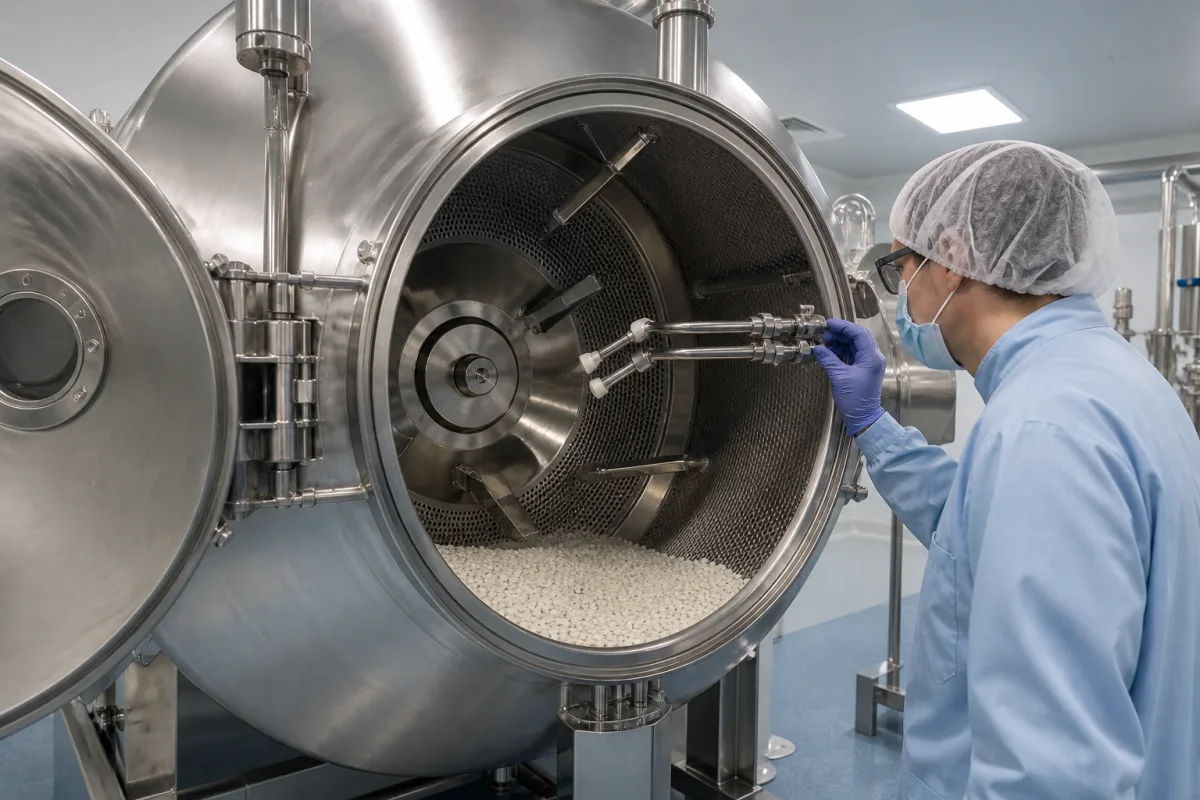
A rotating vessel used to apply uniform coating layers to pharmaceutical tablets through controlled spraying and drying processes.

Representative product image. Confirm appearance and specifications with the manufacturer.

Product Specifications

Technical details and manufacturing context for Coating Pan

Definition
The coating pan is a critical component within an automated pharmaceutical tablet coating system. It is a rotating vessel that holds tablets and facilitates the application of coating solutions. The pan is typically constructed from stainless steel 316L or food-grade polyurethane, materials chosen for their durability and compliance with pharmaceutical hygiene standards. The pan's internal diameter ranges from 800 to 2000 mm, and its working capacity varies from 50 to 500 liters, depending on the model. The rotation speed is adjustable between 2 and 20 rpm, and the pan can be tilted at an angle of 30 to 45 degrees to optimize tablet movement. The coating process involves loading tablets into the pan, which rotates to create a cascading motion. Coating solutions are atomized and sprayed onto the tumbling tablets at a rate of 0.5 to 5 L/min, while heated air at 40 to 80°C is introduced to facilitate drying. The drying air flow rate ranges from 1000 to 5000 m³/h. The motor power is between 1.5 and 7.5 kW, and the operating pressure for the spray system is 0.4 to 0.6 MPa. The supply voltage is 380 V, three-phase, 50/60 Hz, per IEC 60038. The noise level is ≤75 dB(A) at 1 m distance, measured according to ISO 3746. The machine weight varies from 800 to 3000 kg, depending on size and configuration. These parameters are reference ranges and must be verified for the specific model and application. The coating pan provides a controlled environment for uniform coating application, drying, and polishing of tablets, achieving desired release profiles, protection, and appearance. It is essential to confirm model-specific values and standards with the legal manufacturer or supplier before procurement or use.
Working Principle
Tablets are loaded into the rotating pan, which creates a cascading motion. Coating solutions are atomized and sprayed onto the tumbling tablets while heated air is introduced to facilitate drying. The rotation speed, spray rate, and temperature are precisely controlled to achieve uniform coating thickness. The pan's inclination angle and rotation speed are adjusted to ensure optimal tablet movement and coating distribution. The drying air temperature and flow rate are critical for efficient drying and to prevent over-wetting or sticking. The spray rate controls the coating thickness, and the operating pressure ensures proper atomization. The motor power drives the pan rotation, and the supply voltage must match the facility's electrical system. The noise level is monitored to ensure compliance with workplace safety standards. The coating process is continuous, with tablets tumbling and coating applied in layers until the desired thickness is achieved. The system is designed for batch processing, and the pan's capacity determines the batch size. Proper maintenance of the pan, including cleaning and inspection of the spray nozzles and air handling system, is essential for consistent performance.
Common Materials
Stainless Steel 316L, Food-Grade Polyurethane
Technical Parameters
ParameterTypical rangeNotes & selection driver
Pan DiameterRequired800–2000 mmInternal diameter of the coating pan
Rotation SpeedRequired2–20 rpmRotational speed of the coating pan
Working CapacityRequired50–500 litersMaximum volume of tablets the pan can process
Inclination Angle30–45 degreesAngle at which the pan is tilted for optimal tablet movement
Spray Rate0.5–5 L/minControls coating thickness
Drying Air Temperature40–80 °CCritical for drying efficiency
Drying Air Flow Rate1000–5000 m³/hEnsures proper drying
Motor Power1.5–7.5 kWDrives pan rotation
Supply Voltage380 VThree-phase, 50/60 HzIEC 60038
Operating Pressure0.4–0.6 MPaFor spray systemISO 5208
Noise Level≤75 dB(A)At 1 m distanceISO 3746
Machine Weight800–3000 kgDepends on size and configuration

Ranges are indicative industry figures for RFQ preparation, not a supplier commitment. Confirm every value and standard with the legal manufacturer before ordering.

Components / BOM
  • Pan Body Part
    Main rotating vessel that holds and tumbles tablets during coating process
    Material: Stainless Steel 316L
  • Drive System
    Provides controlled rotation to the pan at variable speeds
    Material: Stainless Steel with Food-Grade Lubricants
  • Spray System Mount
    Interface for mounting and positioning coating spray nozzles
    Material: Stainless Steel 316L
  • Baffles Part
    Internal plates that improve tablet mixing and prevent dead zones
    Material: Stainless Steel 316L
  • Observation Window Part
    Transparent panel for visual monitoring of coating process
    Material: Tempered Safety Glass

Industry Taxonomies & Aliases

Commonly used trade names and technical identifiers for Coating Pan.

Industrial Ecosystem & Supply Chain Structure

Complementary Systems
Downstream Applications
Specialized Tooling

Application Fit & Sizing Matrix

Operational Limits
pressure: Atmospheric to 0.5 bar (slight negative pressure for dust control)
flow rate: 0.5-5 L/min (spray rate for uniform coating)
temperature: Ambient to 80°C (typical coating process range)
slurry concentration: 5-25% solids (pharmaceutical coating suspensions)
Media Compatibility
✓ Aqueous film coatings (HPMC, PVA based) ✓ Organic solvent-based coatings (EC, acrylic polymers) ✓ Sugar coating solutions
Unsuitable: Highly corrosive acidic/alkaline slurries (pH <2 or >12)
Sizing Data Required
  • Batch size (kg of tablets)
  • Desired coating thickness (microns)
  • Required production throughput (batches/day)

Reliability & Engineering Risk Analysis

Failure Mode & Root Cause
Coating adhesion failure
Cause: Inadequate surface preparation, improper drying cycles, or contamination from previous batches leading to poor film formation and delamination.
Mechanical seal leakage
Cause: Wear from abrasive coating materials, thermal cycling causing seal hardening/cracking, or improper installation leading to product contamination and batch loss.
Maintenance Indicators
  • Visible coating buildup on pan walls or baffles exceeding 1/8 inch thickness
  • Abnormal vibration or irregular rotation sounds during operation indicating imbalance or bearing wear
Engineering Tips
  • Implement strict surface preparation protocols including proper cleaning, degreasing, and surface profiling before each coating application
  • Establish predictive maintenance program with regular vibration analysis on drive components and infrared thermography on heating/cooling systems

Indicative industry ranges for design and RFQ preparation. Confirm the exact figures and applicable standard with the manufacturer before specifying.

Compliance & Manufacturing Standards

Applicable Standards
ASTM D3359 - Standard Test Methods for Measuring Adhesion by Tape Test CE Marking - Machinery Directive 2006/42/EC

Quoted from the published standard.

Manufacturing Precision
  • Surface Roughness: Ra ≤ 0.8 μm
  • Concentricity: ±0.05 mm
Quality Inspection
  • Coating Thickness Measurement (Dry Film Thickness)
  • Adhesion Test (Cross-Cut Tape Test)

Manufacturers of Coating Pan

1 company lists this product among what they make. Company figures are quoted from each company's own website; every card states where the relationship came from.

Gusu Food Processing Machinery Suzhou Co., Ltd.
Suzhou, Jiangsu, CN
Founded 1969
Also makes: Storage Tank
Listed on the company's own website · profile compiled by CNFX from public sources

Manufacturer listings support early research and capability understanding. They are not certification, ranking, or transaction guarantees.

Technical documentation
Request current drawings, revision history, and a signed specification sheet.
Manufacturing capability
Verify equipment lists, process limits, capacity, and representative production evidence.
Inspection readiness
Confirm test methods, calibrated equipment, sampling plans, and traceable reports.
Supplier transparency
Check the legal entity, factory address, ownership, certifications, and direct contacts.

CNFX does not score or rank suppliers. Buyers must verify all claims and documents with the legal manufacturer before ordering.

Supply Chain Compatible Machinery & Devices

Heavy-Duty CNC Plasma Cutting Machine

The Heavy-Duty CNC Plasma Cutting Machine is a standalone industrial device designed for cutting conductive metals such as steel, stainless steel, aluminum, and copper alloys.

Explore Specs →
Automated Powder Coating System

Integrated industrial system for applying dry powder coatings to metal substrates.

Explore Specs →
Centrifugal Pump Impeller

The centrifugal pump impeller is a critical rotating component that converts mechanical energy from the motor into kinetic energy in fluid systems.

Explore Specs →
High-Precision CNC Laser Cutting Machine

Computer-controlled industrial machine using focused laser beams to cut sheet metal with micron-level accuracy.

Explore Specs →

Frequently Asked Questions

What materials are used for the coating pan?

The coating pan is typically made of stainless steel 316L or food-grade polyurethane. These materials are chosen for their durability and suitability for pharmaceutical applications. Always confirm the material grade with the manufacturer for your specific model.

What is the working capacity of the coating pan?

The working capacity ranges from 50 to 500 liters, depending on the model. This indicates the maximum volume of tablets the pan can process in a single batch. Verify the exact capacity for the specific pan you are considering.

How is the coating thickness controlled?

Coating thickness is controlled by adjusting the spray rate, which ranges from 0.5 to 5 L/min. The rotation speed and drying air temperature also influence the final coating. Precise control of these parameters ensures uniform coating thickness.

What standards apply to the coating pan?

The supply voltage is referenced to IEC 60038, and the noise level to ISO 3746. These standards are for verification purposes and do not imply certification. Always check compliance with the manufacturer.

Data Basis

Editorial classification, named public sources where available, and source-reviewed manufacturer records.

Preliminary Technical Classification
This page supports structured research, RFQ preparation, and supplier evaluation. It does not replace buyer-led supplier qualification, standards review, or technical approval.
Buyer enquiry

Request manufacturing insight for Coating Pan

Ask for use case, specification boundaries, supplier type, and RFQ preparation information for this product.

Where it goes
Straight to the CNFX editorial desk, and to the manufacturer if this product is linked to a claimed profile. Nothing is broadcast to a supplier list.
Your details stay here
We do not sell or rent enquiry data, and we do not add you to a mailing list. Used only to answer this request.
No commission, no middleman
CNFX is a directory. We take no cut of any order and never negotiate on a supplier's behalf.
What we don't claim
A listing is not an endorsement. Qualify every supplier and verify every figure yourself before ordering.

Your business information is used only to process this request.

Thank you! Your message has been sent. We'll respond within 1–3 business days.
Sorry, we couldn't send your message. Please try again, or email us at contact@cnfx.com.

Need to Manufacture Coating Pan?

Compare manufacturer profiles with relevant product and process capability.

Previous Product
Z-axis Ram/Spindle
Last Product
Get QuotesChat