Industry-Verified Manufacturing Data (2026)

Hydraulic or Electromechanical Actuator

Based on aggregated insights from multiple verified factory profiles within the CNFX directory, the standard Hydraulic or Electromechanical Actuator used in the Machinery and Equipment Manufacturing sector typically supports operational capacities ranging from standard industrial configurations to heavy-duty production requirements.

Technical Definition & Core Assembly

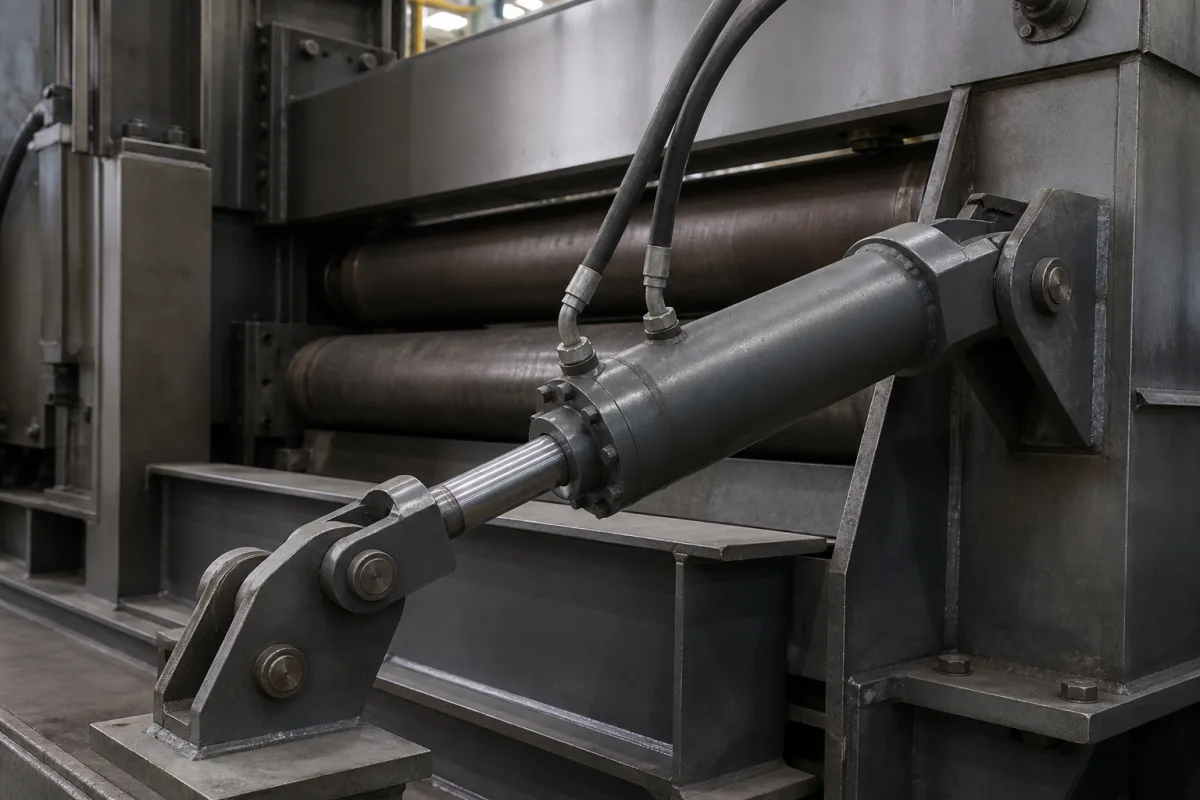
A canonical Hydraulic or Electromechanical Actuator is characterized by the integration of Cylinder Barrel (Hydraulic) and Piston & Rod. In industrial production environments, manufacturers listed on CNFX commonly emphasize Steel (cylinder/piston/housing) construction to support stable, high-cycle operation across diverse manufacturing scenarios.

A power conversion device that provides controlled linear or rotary motion to operate pinch rolls in industrial machinery.
Product Specifications

Technical details and manufacturing context for Hydraulic or Electromechanical Actuator

Definition
A hydraulic or electromechanical actuator is a critical component within a pinch roll assembly that converts hydraulic pressure or electrical energy into precise mechanical motion. It controls the opening, closing, and pressure application of pinch rolls to grip, feed, or tension materials such as metal sheets, paper, textiles, or plastics during processing operations like rolling, coating, or slitting.
Working Principle
Hydraulic actuators use pressurized fluid (typically oil) in a cylinder to move a piston, generating linear force. Electromechanical actuators use an electric motor coupled with a mechanical transmission (like a ball screw or gearbox) to convert rotary motion into linear or controlled rotary output. Both types receive control signals to adjust position, speed, and force applied to the pinch rolls.
Common Materials
Steel (cylinder/piston/housing), Aluminum alloy (lightweight housings), Bronze/brass (bearings/bushings), Seals (NBR, FKM, PTFE), Electrical windings (copper, for electromechanical)
Technical Parameters
  • Stroke length - the total linear travel distance of the actuator rod. (mm) Per Request
Components / BOM
  • Cylinder Barrel (Hydraulic)
    Contains the hydraulic fluid and houses the piston assembly.
    Material: Steel (seamless tube)
  • Piston & Rod
    Converts fluid pressure or motor torque into linear force and motion.
    Material: Hardened steel, chrome-plated
  • Seals & Gaskets
    Prevent fluid leakage in hydraulic actuators or protect internal components.
    Material: NBR, FKM, PTFE
  • Electric Motor (Electromechanical)
    Provides rotary power, typically servo or stepper motor for precision control.
    Material: Laminated steel, copper windings
  • Mechanical Transmission
    Converts motor rotation to linear motion (e.g., ball screw, lead screw, belt drive).
    Material: Steel (ball screw), aluminum (housing)
  • Position Feedback Sensor
    Provides real-time position data to the control system (e.g., encoder, potentiometer).
    Material: Plastic/ceramic, electronic components
Engineering Reasoning
Hydraulic: 50-350 bar pressure range, 0.01-2.0 m/s velocity range, -20°C to 80°C temperature range. Electromechanical: 24-480 VDC voltage range, 0.001-0.5 m/s velocity range, -10°C to 40°C temperature range.
Hydraulic: Seal failure at 400 bar pressure differential, bearing seizure at 90°C fluid temperature, cavitation at 0.5 bar absolute pressure. Electromechanical: Insulation breakdown at 600 VDC, thermal shutdown at 155°C winding temperature, encoder failure at 0.1 mm shaft misalignment.
Design Rationale: Hydraulic: Cavitation occurs when fluid pressure drops below vapor pressure (0.5 bar abs), causing vapor bubble formation and implosion damage. Electromechanical: Joule heating (P=I²R) causes thermal expansion mismatch between copper windings (17×10⁻⁶/°C) and steel laminations (12×10⁻⁶/°C), leading to insulation degradation.
Risk Mitigation (FMEA)
Trigger Hydraulic fluid contamination exceeding ISO 4406 18/16/13 cleanliness level
Mode: Servo valve spool erosion causing 15% position accuracy degradation
Strategy: Install 3 μm absolute beta₃≥200 filter with differential pressure monitoring at 2 bar
Trigger Electromechanical actuator experiencing 150% rated torque for 5 seconds
Mode: Permanent magnet demagnetization reducing torque constant by 40%
Strategy: Implement torque limiting algorithm with 110% threshold and thermal modeling using 155°C NEMA Class F insulation

Industry Taxonomies & Aliases

Commonly used trade names and technical identifiers for Hydraulic or Electromechanical Actuator.

Applied To / Applications

This component is essential for the following industrial systems and equipment:

Industrial Ecosystem & Supply Chain DNA

Complementary Systems
Downstream Applications
Specialized Tooling

Application Fit & Sizing Matrix

Operational Limits
pressure: Up to 300 bar hydraulic / 100 kN electromechanical force
other spec: Flow rate: 5-100 L/min hydraulic, Speed: 0.1-500 mm/s, Slurry concentration: ≤40% solids by weight
temperature: -20°C to +80°C (standard), -40°C to +120°C (extended range available)
Media Compatibility
✓ Hydraulic oil (ISO VG 32-68) ✓ Water-glycol hydraulic fluids ✓ Industrial process water
Unsuitable: Highly corrosive chemical environments (pH <4 or >10)
Sizing Data Required
  • Required force/thrust (kN)
  • Stroke length (mm)
  • Operating cycle frequency (cycles/hour)

Reliability & Engineering Risk Analysis

Failure Mode & Root Cause
Seal degradation and leakage
Cause: Contamination ingress (particles, moisture), thermal cycling, chemical incompatibility, or excessive pressure causing seal extrusion/blow-out
Solenoid valve failure (electromechanical) or spool sticking (hydraulic)
Cause: Contaminated fluid causing valve clogging, coil burnout from voltage spikes/overheating, or mechanical wear from abrasive particles
Maintenance Indicators
  • Audible: Unusual knocking, grinding, or hissing sounds during operation indicating internal component wear or fluid leakage
  • Visual: External hydraulic fluid leaks around seals/connections or erratic/uneven actuator movement during cycling
Engineering Tips
  • Implement strict fluid cleanliness control: Use high-efficiency filtration (ISO 4406 class 16/14/11 or better), regular fluid analysis, and moisture removal systems
  • Establish predictive maintenance: Monitor operating parameters (pressure spikes, temperature trends, cycle times) and conduct regular vibration analysis/ultrasonic leak detection

Compliance & Manufacturing Standards

Reference Standards
ISO 4413: Hydraulic fluid power - General rules and safety requirements for systems and their components ANSI/B93.5M: Hydraulic fluid power - Cylinders - Bore and rod area DIN 24342: Hydraulic cylinders - Mounting dimensions
Manufacturing Precision
  • Bore diameter: +/-0.02mm
  • Rod straightness: 0.1mm per meter length
Quality Inspection
  • Pressure testing: 1.5x operating pressure for 5 minutes
  • Dimensional verification: CMM measurement of critical features

Factories Producing Hydraulic or Electromechanical Actuator

Verified manufacturers with capability to produce this product in China

✓ 97% Supplier Capability Match Found

T Technical Director from Canada Feb 15, 2026
★★★★★
"Testing the Hydraulic or Electromechanical Actuator now; the technical reliability results are within 1% of the laboratory datasheet."
Technical Specifications Verified
P Project Engineer from United States Feb 12, 2026
★★★★☆
"Impressive build quality. Especially the technical reliability is very stable during long-term operation. (Delivery took slightly longer than expected, but technical support was excellent.)"
Technical Specifications Verified
S Sourcing Manager from United Arab Emirates Feb 09, 2026
★★★★★
"As a professional in the Machinery and Equipment Manufacturing sector, I confirm this Hydraulic or Electromechanical Actuator meets all ISO standards."
Technical Specifications Verified
Verification Protocol

“Feedback is collected from verified sourcing managers during RFQ (Request for Quote) and factory evaluation processes on CNFX. These reports represent historical performance data and technical audit summaries from our B2B manufacturing network.”

12 sourcing managers are analyzing this specification now. Last inquiry for Hydraulic or Electromechanical Actuator from India (22m ago).

Supply Chain Compatible Machinery & Devices

Automated Assembly Line System

Integrated production system for sequential component assembly operations

Explore Specs →
Automated Powder Coating System

Integrated industrial system for applying dry powder coatings to metal substrates.

Explore Specs →
Centrifugal Pump Impeller

Rotating component that transfers energy to fluid in centrifugal pumps.

Explore Specs →
High-Precision CNC Laser Cutting Machine

Computer-controlled industrial machine using focused laser beams to cut sheet metal with micron-level accuracy.

Explore Specs →

Frequently Asked Questions

What are the main differences between hydraulic and electromechanical actuators for pinch rolls?

Hydraulic actuators use fluid pressure for high-force linear motion, ideal for heavy-duty applications. Electromechanical actuators use electric motors and mechanical transmission for precise positioning with cleaner operation and easier maintenance.

What materials ensure durability in industrial actuator construction?

Steel cylinders/pistons provide strength, aluminum alloy housings reduce weight, bronze/brass bearings ensure smooth operation, and NBR/FKM/PTFE seals maintain pressure integrity in demanding environments.

How do position feedback sensors improve pinch roll operation?

Integrated sensors provide real-time position data, enabling precise control of roll gap, pressure, and alignment for consistent material processing and automated adjustment in production lines.

Can I contact factories directly on CNFX?

CNFX is an open directory, not a transaction platform. Each factory profile provides direct contact information and production details to help you initiate direct inquiries with Chinese suppliers.

Get Quote for Hydraulic or Electromechanical Actuator

Request technical pricing, lead times, or customized specifications for Hydraulic or Electromechanical Actuator directly from verified manufacturing units.

Your business information is encrypted and only shared with verified Hydraulic or Electromechanical Actuator suppliers.

Thank you! Your message has been sent. We'll respond within 1–3 business days.

Need to Manufacture Hydraulic or Electromechanical Actuator?

Connect with verified factories specializing in this product category

Add Your Factory Contact Us
Previous Product
Hydraulic Opening System
Next Product
Hydraulic Piston