Industry-Verified Manufacturing Data (2026)

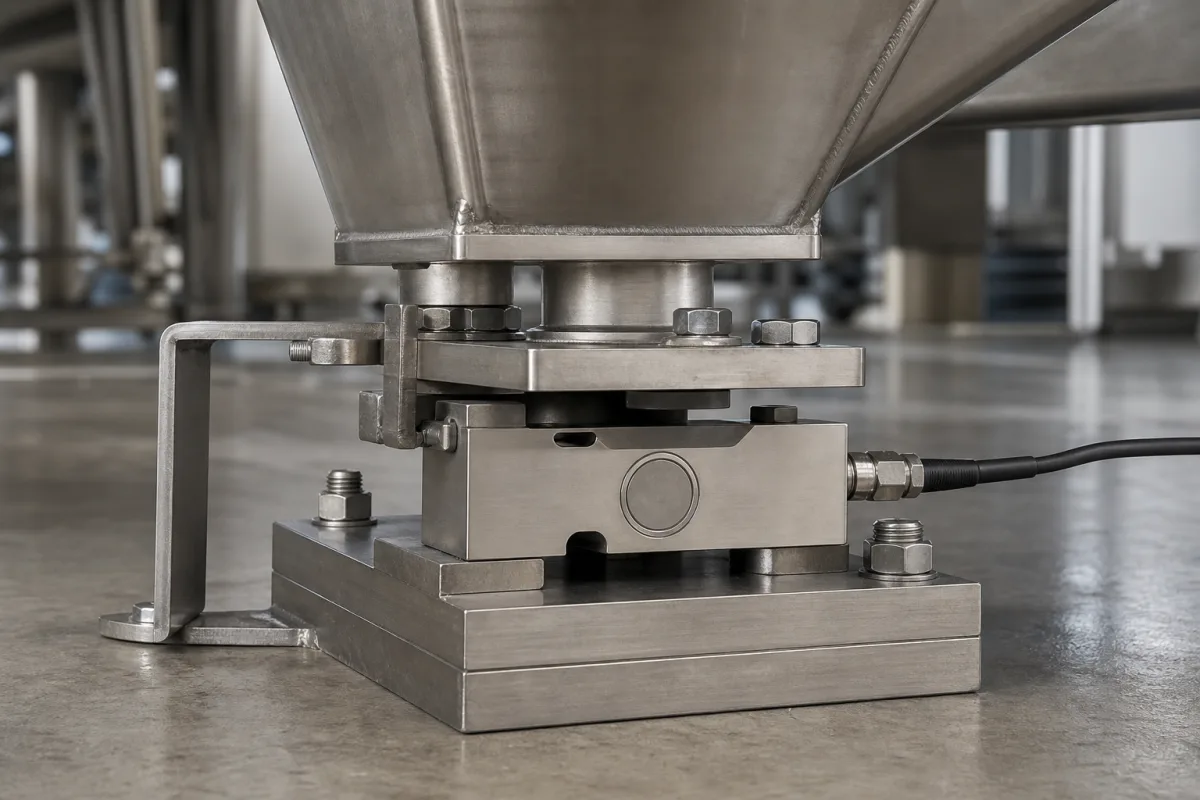
Load Cell Sensor

Based on aggregated insights from multiple verified factory profiles within the CNFX directory, the standard Load Cell Sensor used in the Machinery and Equipment Manufacturing sector typically supports operational capacities ranging from standard industrial configurations to heavy-duty production requirements.

Technical Definition & Core Assembly

A canonical Load Cell Sensor is characterized by the integration of Strain Gauge and Elastic Element. In industrial production environments, manufacturers listed on CNFX commonly emphasize Stainless Steel construction to support stable, high-cycle operation across diverse manufacturing scenarios.

A transducer that converts force or weight into an electrical signal for measurement.
Product Specifications

Technical details and manufacturing context for Load Cell Sensor

Definition
A critical component within a Load Cell System that detects and measures applied force or weight by converting mechanical deformation into proportional electrical output signals, typically using strain gauges bonded to a metal element.
Working Principle
Operates on the principle of strain gauge technology where applied force causes deformation in a metal element, changing the electrical resistance of bonded strain gauges in a Wheatstone bridge configuration, producing a measurable voltage output proportional to the force.
Common Materials
Stainless Steel, Aluminum Alloy
Technical Parameters
  • Maximum capacity rating (kg) Standard Spec
Components / BOM
  • Strain Gauge
    Detects deformation and converts it to electrical resistance change
    Material: Constantan or Karma alloy foil
  • Elastic Element
    Deforms under applied force to transmit strain to gauges
    Material: Stainless steel or aluminum alloy
  • Protective Housing
    Shields internal components from environmental damage
    Material: Stainless steel or aluminum
  • Cable/Connector
    Transmits electrical signals to measurement instrumentation
    Material: Shielded copper wire with PVC or TPE insulation
Engineering Reasoning
0-100 kN with 0.05% FS accuracy at 20°C
150% of rated capacity (150 kN) causes permanent deformation of strain gauge elements
Design Rationale: Exceeding the elastic limit of the strain gauge's constantan alloy (Young's modulus 162 GPa) leads to plastic deformation and hysteresis error exceeding 0.5% FS
Risk Mitigation (FMEA)
Trigger Moisture ingress exceeding 85% RH for 1000 hours
Mode: Corrosion-induced bridge imbalance causing 2.5 mV/V signal drift
Strategy: Hermetic sealing with IP68-rated epoxy encapsulation and desiccant cavity
Trigger Thermal cycling between -40°C and 85°C at 10°C/min gradient
Mode: Differential thermal expansion (CTE mismatch 14 ppm/°C) creating 0.1% FS/°C zero shift
Strategy: Temperature-compensated Wheatstone bridge with nickel alloy compensation resistors (TCR 5 ppm/°C)

Industry Taxonomies & Aliases

Commonly used trade names and technical identifiers for Load Cell Sensor.

Applied To / Applications

This component is essential for the following industrial systems and equipment:

Industrial Ecosystem & Supply Chain DNA

Complementary Systems
Downstream Applications
Specialized Tooling

Application Fit & Sizing Matrix

Operational Limits
pressure: Up to 150% of rated capacity (overload protection)
other spec: Humidity: 0-95% RH non-condensing, IP67/IP68 protection available
temperature: -40°C to +85°C (typical industrial range)
Media Compatibility
✓ Steel structures ✓ Concrete weighing platforms ✓ Food-grade stainless steel surfaces
Unsuitable: Highly corrosive chemical baths (e.g., concentrated acids)
Sizing Data Required
  • Maximum expected load (kg/lbs)
  • Required accuracy (% of full scale)
  • Mounting configuration (compression/tension/shear)

Reliability & Engineering Risk Analysis

Failure Mode & Root Cause
Strain gauge fatigue or fracture
Cause: Cyclic overloading, mechanical shock, or vibration exceeding design limits, leading to micro-cracks in the strain gauge or bonding failure.
Signal drift or electrical instability
Cause: Moisture ingress, temperature extremes, or corrosion compromising electrical connections, insulation, or the Wheatstone bridge circuit.
Maintenance Indicators
  • Erratic or unstable readings under consistent load (e.g., fluctuating output when weight is static)
  • Zero-point drift that persists after recalibration, or audible crackling from the sensor housing indicating internal damage
Engineering Tips
  • Implement regular calibration checks with traceable standards and environmental compensation (e.g., temperature and humidity monitoring) to detect early drift.
  • Ensure proper mechanical mounting with vibration isolation, overload protection (e.g., mechanical stops), and environmental sealing (e.g., IP-rated enclosures) to prevent physical and moisture damage.

Compliance & Manufacturing Standards

Reference Standards
ISO 376:2011 (Calibration of force-proving instruments) ASTM E74-18 (Standard Practice of Calibration of Force-Measuring Instruments) OIML R60:2000 (Metrological regulation for load cells)
Manufacturing Precision
  • Non-linearity: ≤±0.03% of rated output
  • Creep: ≤±0.02% of rated output over 30 minutes
Quality Inspection
  • Calibration verification against deadweight standards
  • Environmental testing (temperature compensation, humidity resistance)

Factories Producing Load Cell Sensor

Verified manufacturers with capability to produce this product in China

✓ 92% Supplier Capability Match Found

P Procurement Specialist from United States Feb 16, 2026
★★★★★
"Great transparency on the Load Cell Sensor components. Essential for our Machinery and Equipment Manufacturing supply chain."
Technical Specifications Verified
T Technical Director from United Arab Emirates Feb 13, 2026
★★★★★
"The Load Cell Sensor we sourced perfectly fits our Machinery and Equipment Manufacturing production line requirements."
Technical Specifications Verified
P Project Engineer from Australia Feb 10, 2026
★★★★★
"Found 23+ suppliers for Load Cell Sensor on CNFX, but this spec remains the most cost-effective."
Technical Specifications Verified
Verification Protocol

“Feedback is collected from verified sourcing managers during RFQ (Request for Quote) and factory evaluation processes on CNFX. These reports represent historical performance data and technical audit summaries from our B2B manufacturing network.”

7 sourcing managers are analyzing this specification now. Last inquiry for Load Cell Sensor from UAE (18m ago).

Supply Chain Compatible Machinery & Devices

Heavy-Duty CNC Plasma Cutting Machine

Industrial machine for precision metal cutting using plasma arc technology

Explore Specs →
Automated Assembly Line System

Integrated production system for sequential component assembly operations

Explore Specs →
Automated Powder Coating System

Integrated industrial system for applying dry powder coatings to metal substrates.

Explore Specs →
Centrifugal Pump Impeller

Rotating component that transfers energy to fluid in centrifugal pumps.

Explore Specs →

Frequently Asked Questions

What materials are used in your load cell sensors and why?

Our load cells feature stainless steel for corrosion resistance in harsh environments and aluminum alloy for lightweight applications requiring high precision. Both materials ensure durability and accurate force measurement.

How does the strain gauge in a load cell work?

The strain gauge is bonded to the elastic element and deforms under applied force. This deformation changes electrical resistance, creating a measurable signal proportional to the force, which is then converted for precise weight or force measurement.

What industries commonly use load cell sensors in machinery manufacturing?

Load cells are essential in industrial weighing systems, force monitoring in assembly lines, material testing equipment, process control systems, and quality assurance applications across automotive, aerospace, and heavy machinery sectors.

Can I contact factories directly on CNFX?

CNFX is an open directory, not a transaction platform. Each factory profile provides direct contact information and production details to help you initiate direct inquiries with Chinese suppliers.

Get Quote for Load Cell Sensor

Request technical pricing, lead times, or customized specifications for Load Cell Sensor directly from verified manufacturing units.

Your business information is encrypted and only shared with verified Load Cell Sensor suppliers.

Thank you! Your message has been sent. We'll respond within 1–3 business days.

Need to Manufacture Load Cell Sensor?

Connect with verified factories specializing in this product category

Add Your Factory Contact Us
Previous Product
Load Cell Assembly
Next Product
Load Cell System