Editorial Technical Reference

Material Storage Rack

This page explains how Material Storage Rack is classified within Machinery and Equipment Manufacturing. Technical values and manufacturer relationships are research references; confirm the current specification and supplier evidence for each order.

Technical Definition & Core Assembly

A structural component within an Automated Material Handling System designed to securely hold and organize materials, components, or products for temporary storage and retrieval.
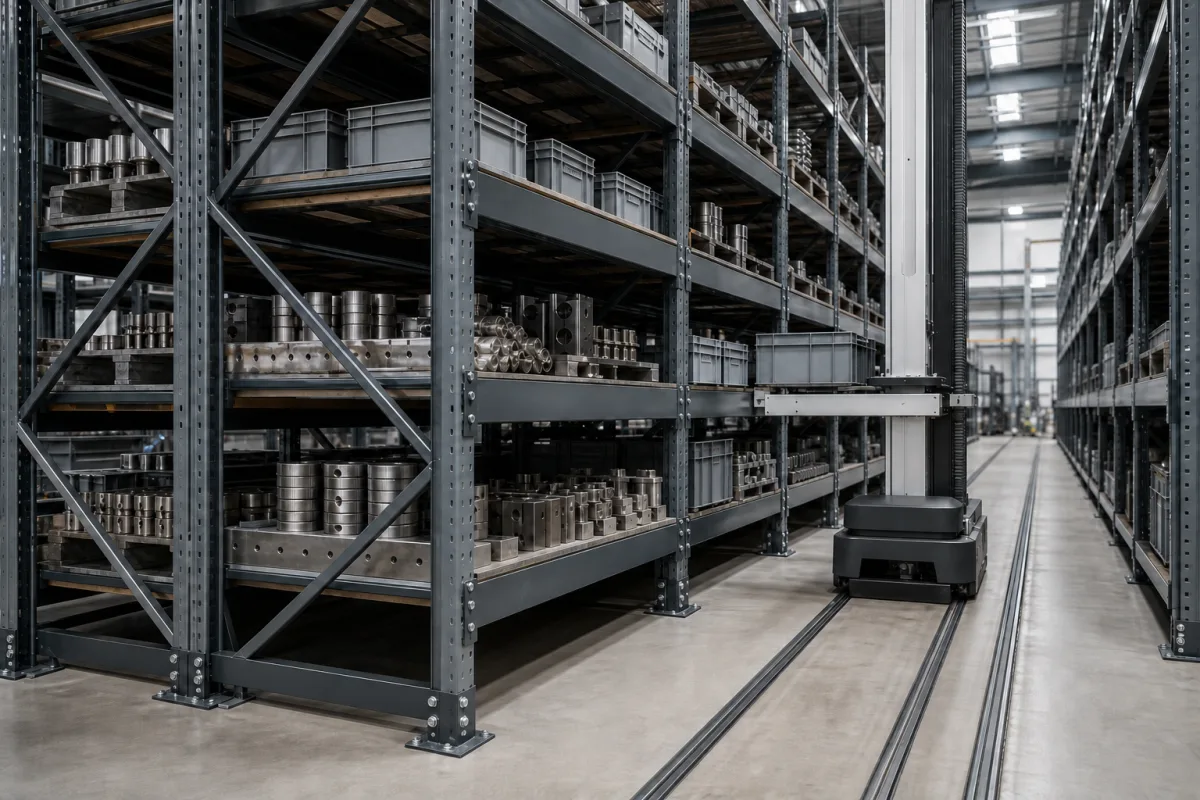
Representative product image. Confirm appearance and specifications with the manufacturer.

Product Specifications

Technical details and manufacturing context for Material Storage Rack

Definition
The Material Storage Rack is a critical part of an Automated Material Handling System (AMHS), providing organized, high-density storage for raw materials, work-in-progress, or finished goods. It interfaces with automated guided vehicles (AGVs), robotic arms, or conveyor systems to enable efficient put-away and picking operations, optimizing floor space and supporting just-in-time manufacturing workflows. The rack is typically constructed from steel or aluminum alloy, with a load capacity per shelf ranging from 500 to 2000 kg, depending on the configuration and reinforcement. Overall dimensions are customizable, with a standard example of 2000×1000×2500 mm (L×W×H), and shelf height adjustability in 50 mm increments for flexible storage. Positioning accuracy of ±0.5 mm is specified for automated retrieval systems, ensuring precise load handling. The operating temperature range is -10 to 50 °C, and humidity range is 20 to 80% RH (non-condensing), with higher humidity potentially causing corrosion. Ingress protection ratings of IP54 to IP65 (per IEC 60529) protect against dust and water jets. Material grade Q235B (per GB/T 700) is standard structural steel, with optional stainless steel for corrosive environments. Surface treatment includes hot-dip galvanizing with a coating thickness of 60–80 μm (per ISO 1461) for corrosion resistance. The rack weight ranges from 150 to 300 kg, and the maximum number of shelves is 6, limited by overall height and stability. The frame deflection limit under full load is L/200, ensuring structural rigidity. These specifications serve as reference ranges; actual values must be confirmed with the manufacturer for specific models and applications. The rack is designed to interface with WMS or MES for automated put-away and retrieval, and its performance should be verified through load testing and dimensional checks.
Working Principle
The rack provides a static, structured framework with designated locations (bays, shelves, or bins). An automated handling device (e.g., a shuttle, crane, or robot) receives instructions from the Warehouse Management System (WMS) or Manufacturing Execution System (MES), navigates to the specified rack location, and deposits or retrieves a load unit (like a pallet, tote, or bin) from the storage position. The rack's design ensures stable support and precise positioning, with adjustable shelves to accommodate varying load sizes. The system relies on accurate positioning and load capacity to prevent overloading and ensure safe operation. Maintenance signals include visible deformation, corrosion, or misalignment, which may indicate structural issues. Failure boundaries are defined by load capacity limits and deflection limits; exceeding these can lead to rack failure. Verification questions should address load testing, dimensional accuracy, and compliance with specified standards.
Common Materials
Steel, Aluminum Alloy
Technical Parameters
ParameterTypical rangeNotes & selection driver
Load Capacity per Shelf500–2000 kgUniformly distributed load; higher capacity requires reinforced structure.
Overall Dimensions (L×W×H)2000×1000×2500 mmCustomizable; must fit within facility layout.
Shelf Height Adjustability50 mmIncrements for flexible storage.
Positioning Accuracy±0.5 mmFor automated retrieval systems.
Operating Temperature Range-10–50 °COutside range may affect material properties.
Humidity Range20–80 % RHNon-condensing; higher humidity may cause corrosion.
Ingress Protection RatingIP54–IP65Protection against dust and water jets.IEC 60529
Material GradeQ235BStructural steel; optional stainless steel for corrosive environments.GB/T 700
Surface Treatment60–80 μmHot-dip galvanized coating thickness for corrosion resistance.ISO 1461
Weight150–300 kgDepends on configuration and load capacity.
Max Number of Shelves6Limited by overall height and stability.
Frame Deflection LimitL/200Under full load; ensures structural rigidity.

Ranges are indicative industry figures for RFQ preparation, not a supplier commitment. Confirm every value and standard with the legal manufacturer before ordering.

Components / BOM
  • Upright Frame Part
    Provides the primary vertical structural support for the entire rack, often featuring punched holes for adjustable shelf beam placement.
    Material: Steel
  • Shelf Beam Part
    Horizontal member that connects between upright frames to support the storage load at each level.
    Material: Steel
  • Load Support (Decking/Shelf) Part
    The surface (wire mesh, solid sheet, or rollers) upon which the actual storage load rests.
    Material: Steel
  • Base Plate Part
    Footing attached to the bottom of upright frames to provide stability and facilitate anchoring to the floor.
    Material: Steel

Applied To / Applications

This component is essential for the following industrial systems and equipment:

Industrial Ecosystem & Supply Chain Structure

Complementary Systems
Downstream Applications
Specialized Tooling

Application Fit & Sizing Matrix

Operational Limits
pressure: N/A (structural load only)
other spec: Max load capacity: 5000 kg per rack level, Max vibration: 0.5g at 10-100 Hz
temperature: -20°C to +80°C
Media Compatibility
✓ Metal components ✓ Plastic bins/containers ✓ Packaged goods in cartons
Unsuitable: Corrosive chemical storage without protective coating
Sizing Data Required
  • Total storage weight (kg)
  • Material dimensions (LxWxH per item)
  • Required storage density (items per m²)

Reliability & Engineering Risk Analysis

Failure Mode & Root Cause
Structural overload failure
Cause: Exceeding rated load capacity due to improper loading, uneven weight distribution, or accumulation of debris/snow on outdoor racks
Corrosion-induced weakening
Cause: Exposure to moisture, chemicals, or corrosive environments without proper protective coatings or maintenance
Maintenance Indicators
  • Visible deformation or bending of structural members
  • Audible creaking, popping, or groaning sounds during loading/unloading
Engineering Tips
  • Implement regular load capacity audits and enforce strict loading protocols with clear signage
  • Apply protective coatings (galvanization, powder coating) and establish routine corrosion inspection schedules

Indicative industry ranges for design and RFQ preparation. Confirm the exact figures and applicable standard with the manufacturer before specifying.

Compliance & Manufacturing Standards

Applicable Standards
ANSI MH16.1-2012 - Industrial and Commercial Steel Storage Racks CE Marking - EN 15620:2008 - Steel Static Storage Systems

Quoted from the published standard.

Manufacturing Precision
  • Vertical Upright Alignment: +/- 3mm per 3m height
  • Beam Connector Hole Spacing: +/- 1.5mm
Quality Inspection
  • Load Capacity Verification Test
  • Non-Destructive Testing (NDT) - Ultrasonic Weld Inspection

Manufacturers of Material Storage Rack

Manufacturer profiles associated with Material Storage Rack.

Sourcing Material Storage Rack from China?
Tell us your specification and target quantity — we will match it against manufacturer records and come back with the factories that fit.
Request manufacturers We manufacture this

Manufacturer listings support early research and capability understanding. They are not certification, ranking, or transaction guarantees.

Technical documentation
Request current drawings, revision history, and a signed specification sheet.
Manufacturing capability
Verify equipment lists, process limits, capacity, and representative production evidence.
Inspection readiness
Confirm test methods, calibrated equipment, sampling plans, and traceable reports.
Supplier transparency
Check the legal entity, factory address, ownership, certifications, and direct contacts.

CNFX does not score or rank suppliers. Buyers must verify all claims and documents with the legal manufacturer before ordering.

Supply Chain Compatible Machinery & Devices

Hydraulic Press

Industrial machine using hydraulic pressure to compress, form, or assemble materials

Explore Specs →
Heavy-Duty CNC Plasma Cutting Machine

The Heavy-Duty CNC Plasma Cutting Machine is a standalone industrial device designed for cutting conductive metals such as steel, stainless steel, aluminum, and copper alloys.

Explore Specs →
Automated Powder Coating System

Integrated industrial system for applying dry powder coatings to metal substrates.

Explore Specs →
Centrifugal Pump Impeller

The centrifugal pump impeller is a critical rotating component that converts mechanical energy from the motor into kinetic energy in fluid systems.

Explore Specs →

Frequently Asked Questions

What is the load capacity per shelf for this storage rack?

The load capacity per shelf is specified as 500–2000 kg, depending on the configuration and reinforcement. Higher capacity requires a reinforced structure. Always confirm the exact capacity for your specific model and application with the manufacturer.

What are the standard dimensions and adjustability options?

The overall dimensions are customizable, with a typical example of 2000×1000×2500 mm (L×W×H). Shelf height is adjustable in 50 mm increments to accommodate different load sizes. Ensure the dimensions fit within your facility layout.

What environmental conditions can this rack withstand?

The operating temperature range is -10 to 50 °C, and the humidity range is 20–80% RH (non-condensing). Higher humidity may cause corrosion. The ingress protection rating is IP54–IP65 per IEC 60529, protecting against dust and water jets. Verify these conditions for your environment.

What standards and materials are used in construction?

The material grade is Q235B structural steel per GB/T 700, with optional stainless steel for corrosive environments. Surface treatment includes hot-dip galvanizing with a coating thickness of 60–80 μm per ISO 1461. These standards serve as references; confirm compliance with the manufacturer.

Data Basis

Editorial classification, named public sources where available, and source-reviewed manufacturer records.

Preliminary Technical Classification
This page supports structured research, RFQ preparation, and supplier evaluation. It does not replace buyer-led supplier qualification, standards review, or technical approval.
Buyer enquiry

Request manufacturing insight for Material Storage Rack

Ask for use case, specification boundaries, supplier type, and RFQ preparation information for this product.

Where it goes
Straight to the CNFX editorial desk, and to the manufacturer if this product is linked to a claimed profile. Nothing is broadcast to a supplier list.
Your details stay here
We do not sell or rent enquiry data, and we do not add you to a mailing list. Used only to answer this request.
No commission, no middleman
CNFX is a directory. We take no cut of any order and never negotiate on a supplier's behalf.
What we don't claim
A listing is not an endorsement. Qualify every supplier and verify every figure yourself before ordering.

Your business information is used only to process this request.

Thank you! Your message has been sent. We'll respond within 1–3 business days.
Sorry, we couldn't send your message. Please try again, or email us at contact@cnfx.com.

Need to Manufacture Material Storage Rack?

Compare manufacturer profiles with relevant product and process capability.

Previous Product
Z-axis Ram/Spindle
Last Product
Get QuotesChat