Industry-Verified Manufacturing Data (2026)

Mechanical Housing & Interface

Based on aggregated insights from multiple verified factory profiles within the CNFX directory, the standard Mechanical Housing & Interface used in the Machinery and Equipment Manufacturing sector typically supports operational capacities ranging from standard industrial configurations to heavy-duty production requirements.

Technical Definition & Core Assembly

A canonical Mechanical Housing & Interface is characterized by the integration of Main Housing Body and Mounting Flange. In industrial production environments, manufacturers listed on CNFX commonly emphasize Aluminum Alloy construction to support stable, high-cycle operation across diverse manufacturing scenarios.

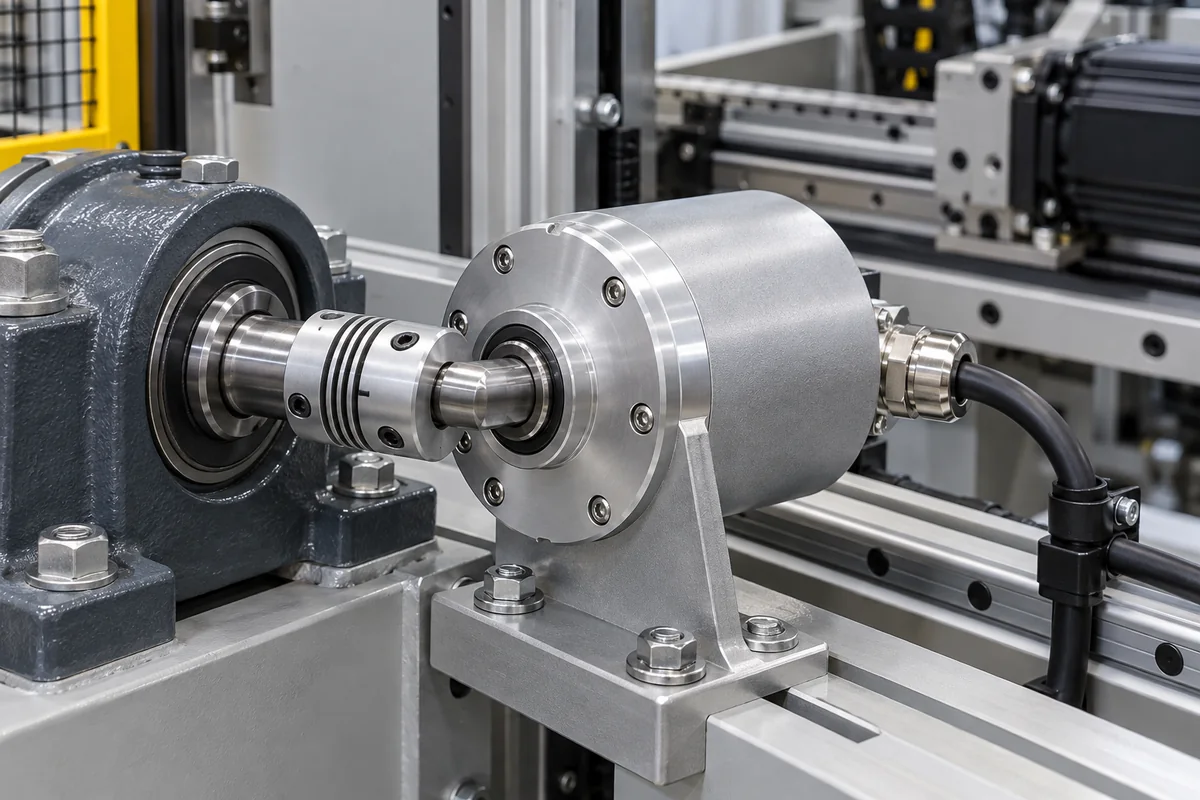
The protective enclosure and connection system for feedback sensor components.

Product Specifications

Technical details and manufacturing context for Mechanical Housing & Interface

Definition
A mechanical housing and interface is the structural component of a feedback sensor (such as an encoder) that provides physical protection for internal elements, ensures proper mounting and alignment, and establishes the connection points for mechanical attachment to other equipment. It serves as the physical bridge between the sensor's functional components and the external system.
Working Principle
The housing provides a rigid, sealed structure that protects sensitive internal components (like optical or magnetic elements) from environmental factors such as dust, moisture, vibration, and physical impact. The interface (mounting features, shaft connections, etc.) ensures precise mechanical alignment and secure attachment to the driven shaft or machine frame, allowing accurate position or speed measurement without introducing errors from misalignment or instability.
Common Materials
Aluminum Alloy, Stainless Steel, Engineering Plastic
Technical Parameters
  • Critical dimensions including overall housing size, mounting hole pattern, shaft bore diameter, and interface flange specifications. (mm) Per Request
Components / BOM
  • Main Housing Body
    Primary protective enclosure for internal sensor components.
    Material: Aluminum Alloy
  • Mounting Flange
    Interface for securing the housing to external equipment with bolt holes.
    Material: Stainless Steel
  • Shaft Coupling Interface
    Mechanical connection point for attachment to the rotating shaft being measured.
    Material: Steel
  • Cable Gland/Connector Port
    Sealed entry point for electrical cables or connectors.
    Material: Plastic or Rubber
Engineering Reasoning
0-150°C temperature, 0-1000 N·m torque, 0-100 MPa pressure
Material yield strength threshold: 250 MPa for aluminum alloys, 450 MPa for steel alloys; Thermal expansion mismatch >0.5 mm at 150°C; Vibration amplitude >2.5 g RMS at 100 Hz
Design Rationale: Thermal fatigue from cyclic temperature gradients exceeding material CTE limits; Stress corrosion cracking in chloride environments at >60°C; Fretting wear at bolted interfaces under >50 μm relative motion
Risk Mitigation (FMEA)
Trigger Thermal expansion coefficient mismatch between housing (23×10⁻⁶/°C aluminum) and sensor (17×10⁻⁶/°C stainless steel)
Mode: Interface stress concentration exceeding 180 MPa at mounting points
Strategy: Thermal expansion compensation design using Invar inserts (1.2×10⁻⁶/°C) at critical interfaces
Trigger Galvanic corrosion potential >0.25 V between dissimilar metals in humid environments
Mode: Electrical isolation breakdown with leakage current >10 μA
Strategy: Dielectric isolation layers with minimum 5 kV/mm breakdown strength and hermetic sealing at IP68 rating

Industry Taxonomies & Aliases

Commonly used trade names and technical identifiers for Mechanical Housing & Interface.

Applied To / Applications

This component is essential for the following industrial systems and equipment:

Industrial Ecosystem & Supply Chain DNA

Complementary Systems
Downstream Applications
Specialized Tooling

Application Fit & Sizing Matrix

Operational Limits
pressure: 0 to 10 bar (gauge)
other spec: IP67 ingress protection, vibration resistance up to 5g RMS
temperature: -40°C to +125°C
Media Compatibility
✓ hydraulic fluids (mineral oil-based) ✓ industrial lubricants ✓ dry air/gas systems
Unsuitable: high-concentration abrasive slurries (>15% solids by weight)
Sizing Data Required
  • sensor body diameter (mm)
  • required cable/conduit interface type
  • mounting configuration (flange/threaded/bracket)

Reliability & Engineering Risk Analysis

Failure Mode & Root Cause
Fatigue cracking
Cause: Cyclic loading from vibration, thermal expansion/contraction, or operational stresses exceeding material endurance limits, often exacerbated by stress concentrations at bolt holes or sharp corners.
Corrosion and fretting wear
Cause: Environmental exposure to moisture, chemicals, or contaminants combined with micro-motion at mating surfaces (e.g., flange interfaces), leading to material degradation and loss of dimensional integrity.
Maintenance Indicators
  • Visible cracks, especially radiating from bolt holes or weld seams, indicating structural compromise.
  • Abnormal vibration or audible knocking/rattling from the housing during operation, suggesting loose fasteners or internal component misalignment.
Engineering Tips
  • Implement regular torque checks and use thread-locking compounds on fasteners to maintain clamping force and prevent loosening from vibration.
  • Apply protective coatings or sealants at interfaces and ensure proper drainage to mitigate corrosion, and conduct periodic non-destructive testing (e.g., dye penetrant) for early crack detection.

Compliance & Manufacturing Standards

Reference Standards
ISO 2768-1: General tolerances for linear and angular dimensions ANSI B4.1: Preferred Limits and Fits for Cylindrical Parts DIN 7168: General tolerances for linear and angular dimensions
Manufacturing Precision
  • Bore diameter: +/-0.02mm
  • Flatness of mounting surfaces: 0.1mm
Quality Inspection
  • Dimensional verification using CMM (Coordinate Measuring Machine)
  • Dye penetrant testing for surface crack detection

Factories Producing Mechanical Housing & Interface

Verified manufacturers with capability to produce this product in China

✓ 97% Supplier Capability Match Found

T Technical Director from Canada Jan 10, 2026
★★★★★
"Testing the Mechanical Housing & Interface now; the technical reliability results are within 1% of the laboratory datasheet."
Technical Specifications Verified
P Project Engineer from United States Jan 07, 2026
★★★★☆
"Impressive build quality. Especially the technical reliability is very stable during long-term operation. (Delivery took slightly longer than expected, but technical support was excellent.)"
Technical Specifications Verified
S Sourcing Manager from United Arab Emirates Jan 04, 2026
★★★★★
"As a professional in the Machinery and Equipment Manufacturing sector, I confirm this Mechanical Housing & Interface meets all ISO standards."
Technical Specifications Verified
Verification Protocol

“Feedback is collected from verified sourcing managers during RFQ (Request for Quote) and factory evaluation processes on CNFX. These reports represent historical performance data and technical audit summaries from our B2B manufacturing network.”

13 sourcing managers are analyzing this specification now. Last inquiry for Mechanical Housing & Interface from Poland (1h ago).

Supply Chain Compatible Machinery & Devices

Automated Assembly Line System

Integrated production system for sequential component assembly operations

Explore Specs →
Automated Powder Coating System

Integrated industrial system for applying dry powder coatings to metal substrates.

Explore Specs →
Centrifugal Pump Impeller

Rotating component that transfers energy to fluid in centrifugal pumps.

Explore Specs →
High-Precision CNC Laser Cutting Machine

Computer-controlled industrial machine using focused laser beams to cut sheet metal with micron-level accuracy.

Explore Specs →

Frequently Asked Questions

What materials are used in the mechanical housing and interface?

The product is constructed from aluminum alloy, stainless steel, and engineering plastic, offering durability, corrosion resistance, and reliable protection for feedback sensor components in industrial environments.

What are the main components in the BOM for this housing system?

The bill of materials includes the main housing body, mounting flange, shaft coupling interface, and cable gland/connector port, providing a complete protective enclosure and connection solution.

How does this housing protect feedback sensors in machinery?

It serves as a protective enclosure that shields sensitive feedback sensor components from environmental factors like dust, moisture, and mechanical impacts while providing secure electrical connections through the interface system.

Can I contact factories directly on CNFX?

CNFX is an open directory, not a transaction platform. Each factory profile provides direct contact information and production details to help you initiate direct inquiries with Chinese suppliers.

Get Quote for Mechanical Housing & Interface

Request technical pricing, lead times, or customized specifications for Mechanical Housing & Interface directly from verified manufacturing units.

Your business information is encrypted and only shared with verified Mechanical Housing & Interface suppliers.

Thank you! Your message has been sent. We'll respond within 1–3 business days.

Need to Manufacture Mechanical Housing & Interface?

Connect with verified factories specializing in this product category

Add Your Factory Contact Us
Previous Product
Mechanical Claw Assembly
Next Product
Mechanical Seal