Industry-Verified Manufacturing Data (2026)

Optical Alignment Sensor

Based on aggregated insights from multiple verified factory profiles within the CNFX directory, the standard Optical Alignment Sensor used in the Machinery and Equipment Manufacturing sector typically supports operational capacities ranging from standard industrial configurations to heavy-duty production requirements.

Technical Definition & Core Assembly

A canonical Optical Alignment Sensor is characterized by the integration of Light Source Module and Photodetector Array. In industrial production environments, manufacturers listed on CNFX commonly emphasize Aluminum housing construction to support stable, high-cycle operation across diverse manufacturing scenarios.

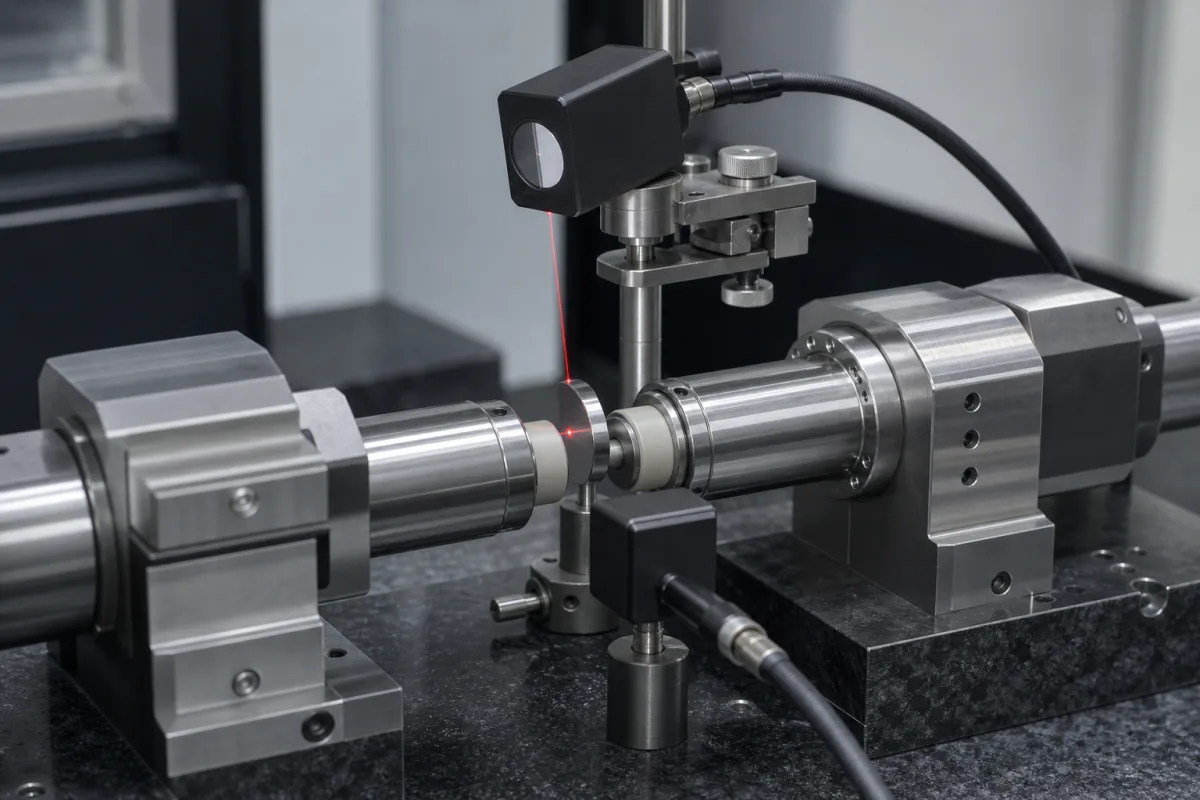
A sensor that uses optical technology to detect and ensure precise alignment of components during manufacturing processes.
Product Specifications

Technical details and manufacturing context for Optical Alignment Sensor

Definition
An optical alignment sensor is a critical component within the Precision Sole Attacher system that employs light-based detection methods to verify and maintain accurate positioning of shoe soles relative to uppers during the attachment process. It ensures proper alignment before adhesive application or stitching, preventing misalignment defects in footwear production.
Working Principle
The sensor emits a focused light beam (typically laser or LED) toward the target area. It then detects the reflected light pattern using photodiodes or a camera system. By analyzing the position, intensity, or pattern of the reflected light, the sensor determines whether the sole and upper are properly aligned within specified tolerances. Any deviation triggers corrective signals to the attacher's positioning mechanism.
Common Materials
Aluminum housing, Optical glass lenses, Semiconductor photodetectors, Electronic circuit boards
Technical Parameters
  • Alignment detection accuracy, typically ranging from ±0.01mm to ±0.1mm depending on sensor precision grade (mm) Per Request
Components / BOM
  • Light Source Module
    Generates the optical signal (laser or LED) for alignment detection
    Material: Semiconductor materials, optical glass
  • Photodetector Array
    Captures reflected light patterns and converts them to electrical signals
    Material: Silicon photodiodes
  • Signal Processing Circuit
    Analyzes detector signals to determine alignment status
    Material: Printed circuit board with microprocessors
  • Protective Housing
    Shields optical and electronic components from dust and mechanical damage
    Material: Anodized aluminum
Engineering Reasoning
0.5-1000 lux illumination range, 0.1-10 mm measurement distance, ±0.01 mm positional accuracy
Signal-to-noise ratio drops below 6 dB at illumination < 0.5 lux, measurement error exceeds ±0.05 mm at >10 mm distance, lens contamination reduces light transmission below 70%
Design Rationale: Photodiode quantum efficiency drops below 0.3 at low photon flux (Planck's constant h=6.626×10⁻³⁴ J·s), diffraction-limited resolution exceeds Rayleigh criterion at λ=650 nm, Fresnel reflection losses exceed 4% per surface at Brewster's angle
Risk Mitigation (FMEA)
Trigger Ambient light interference exceeding 10,000 lux causes photodiode saturation
Mode: Sensor output saturates at maximum voltage (5V), losing linear response
Strategy: Install optical bandpass filter centered at 650±10 nm with OD>3 attenuation
Trigger Lens surface contamination accumulation exceeding 0.1 mg/cm² particulate density
Mode: Light transmission loss >30%, measurement accuracy degrades beyond ±0.03 mm
Strategy: Implement nitrogen purge system maintaining 0.5 bar positive pressure with HEPA filtration

Industry Taxonomies & Aliases

Commonly used trade names and technical identifiers for Optical Alignment Sensor.

Applied To / Applications

This component is essential for the following industrial systems and equipment:

Industrial Ecosystem & Supply Chain DNA

Complementary Systems
Downstream Applications
Specialized Tooling

Application Fit & Sizing Matrix

Operational Limits
pressure: 0 to 1 bar (non-pressurized applications)
other spec: Ambient light immunity: up to 10,000 lux, Response time: <1 ms, Measurement range: 0.1-50 mm
temperature: -10°C to +60°C
Media Compatibility
✓ Metal components (steel, aluminum) ✓ Plastic/polymer surfaces ✓ Glass/transparent materials
Unsuitable: High-vibration environments (>5g RMS) or direct exposure to cutting fluids/oil mist
Sizing Data Required
  • Required alignment accuracy (in microns)
  • Target object size and surface reflectivity
  • Installation distance and mounting constraints

Reliability & Engineering Risk Analysis

Failure Mode & Root Cause
Lens Contamination
Cause: Accumulation of dust, oil mist, or particulates on optical surfaces, degrading signal transmission due to environmental exposure or inadequate sealing.
LED/Laser Source Degradation
Cause: Gradual output power decline from thermal stress, aging, or electrical overstress, leading to unreliable detection signals.
Maintenance Indicators
  • Intermittent or unstable readings despite stable target conditions
  • Visible condensation, residue, or scratches on the sensor lens surface
Engineering Tips
  • Implement regular cleaning with approved optical-grade solvents and lint-free wipes, following manufacturer environmental ratings (IP/NEMA).
  • Ensure stable power supply within specifications and avoid thermal cycling by maintaining consistent ambient temperatures.

Compliance & Manufacturing Standards

Reference Standards
ISO 10110-7:2017 (Optics and photonics - Preparation of drawings for optical elements and systems - Surface imperfection tolerances) ANSI/ASME B46.1-2019 (Surface Texture, Surface Roughness, Waviness, and Lay) DIN EN ISO 9001:2015 (Quality management systems - Requirements)
Manufacturing Precision
  • Alignment repeatability: +/-0.001 mm
  • Beam divergence: +/-0.05 degrees
Quality Inspection
  • Laser interferometry for optical alignment accuracy
  • Environmental testing per IEC 60068-2-6 (Vibration resistance)

Factories Producing Optical Alignment Sensor

Verified manufacturers with capability to produce this product in China

✓ 98% Supplier Capability Match Found

P Procurement Specialist from Singapore Jan 19, 2026
★★★★★
"Testing the Optical Alignment Sensor now; the technical reliability results are within 1% of the laboratory datasheet."
Technical Specifications Verified
T Technical Director from Germany Jan 16, 2026
★★★★★
"Impressive build quality. Especially the technical reliability is very stable during long-term operation."
Technical Specifications Verified
P Project Engineer from Brazil Jan 13, 2026
★★★★★
"As a professional in the Machinery and Equipment Manufacturing sector, I confirm this Optical Alignment Sensor meets all ISO standards."
Technical Specifications Verified
Verification Protocol

“Feedback is collected from verified sourcing managers during RFQ (Request for Quote) and factory evaluation processes on CNFX. These reports represent historical performance data and technical audit summaries from our B2B manufacturing network.”

7 sourcing managers are analyzing this specification now. Last inquiry for Optical Alignment Sensor from USA (1h ago).

Supply Chain Compatible Machinery & Devices

Automated Assembly Line System

Integrated production system for sequential component assembly operations

Explore Specs →
Automated Powder Coating System

Integrated industrial system for applying dry powder coatings to metal substrates.

Explore Specs →
Centrifugal Pump Impeller

Rotating component that transfers energy to fluid in centrifugal pumps.

Explore Specs →
High-Precision CNC Laser Cutting Machine

Computer-controlled industrial machine using focused laser beams to cut sheet metal with micron-level accuracy.

Explore Specs →

Frequently Asked Questions

What is the primary function of this optical alignment sensor?

The optical alignment sensor detects and ensures precise alignment of components during manufacturing processes using optical technology to maintain quality and accuracy in machinery production.

What materials are used in the construction of this sensor?

The sensor features an aluminum housing for durability, optical glass lenses for clear light transmission, semiconductor photodetectors for accurate detection, and electronic circuit boards for signal processing.

How does this sensor improve manufacturing efficiency?

By providing real-time, precise alignment detection, this sensor reduces errors, minimizes rework, increases production speed, and ensures consistent quality in automated manufacturing processes.

Can I contact factories directly on CNFX?

CNFX is an open directory, not a transaction platform. Each factory profile provides direct contact information and production details to help you initiate direct inquiries with Chinese suppliers.

Get Quote for Optical Alignment Sensor

Request technical pricing, lead times, or customized specifications for Optical Alignment Sensor directly from verified manufacturing units.

Your business information is encrypted and only shared with verified Optical Alignment Sensor suppliers.

Thank you! Your message has been sent. We'll respond within 1–3 business days.

Need to Manufacture Optical Alignment Sensor?

Connect with verified factories specializing in this product category

Add Your Factory Contact Us
Previous Product
Operator's Cab
Next Product
Optical Counting Sensor