Industry-Verified Manufacturing Data (2026)

Orientation Sensor

Based on aggregated insights from multiple verified factory profiles within the CNFX directory, the standard Orientation Sensor used in the Machinery and Equipment Manufacturing sector typically supports operational capacities ranging from standard industrial configurations to heavy-duty production requirements.

Technical Definition & Core Assembly

A canonical Orientation Sensor is characterized by the integration of Sensing Element and Signal Processor. In industrial production environments, manufacturers listed on CNFX commonly emphasize Plastic housing construction to support stable, high-cycle operation across diverse manufacturing scenarios.

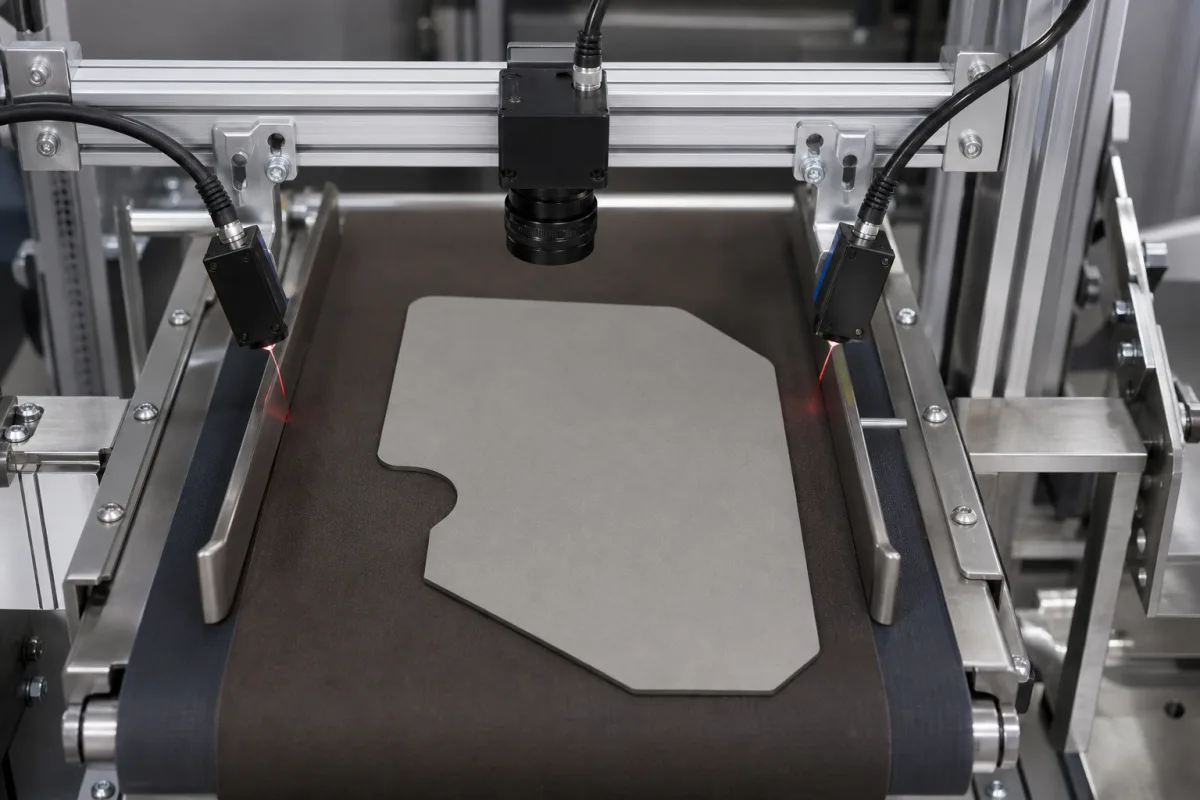
A sensor that detects and verifies the correct orientation of materials or components within a lamination feeder system.
Product Specifications

Technical details and manufacturing context for Orientation Sensor

Definition
An orientation sensor in a lamination feeder is a critical component that ensures materials (such as sheets, films, or substrates) are correctly aligned and positioned before they enter the lamination process. It detects orientation markers, edges, or specific features to prevent misalignment that could cause defects, jams, or production downtime.
Working Principle
The sensor typically uses optical, capacitive, or inductive sensing technologies to detect the position, angle, or alignment of materials. It compares the detected orientation against a predefined reference and sends a signal to the control system to accept, reject, or adjust the material feed accordingly.
Common Materials
Plastic housing, Electronic components (sensing element, PCB), Stainless steel mounting bracket
Technical Parameters
  • Detection range or sensing distance (mm) Standard Spec
Components / BOM
  • Sensing Element
    Detects physical orientation through optical, capacitive, or inductive means
    Material: Electronic components (photodiode, LED, etc.)
  • Signal Processor
    Processes raw sensor data and converts it into a usable output signal
    Material: PCB with integrated circuits
  • Mounting Bracket
    Secures the sensor in the correct position within the lamination feeder
    Material: Stainless steel
Engineering Reasoning
0-360 degrees angular measurement with ±0.1° accuracy at 25°C ambient temperature
Angular measurement error exceeding ±1.0° or response time degradation beyond 50ms from nominal 10ms
Design Rationale: Hall effect sensor misalignment due to thermal expansion coefficient mismatch (sensor substrate CTE 6.5 ppm/°C vs mounting bracket CTE 23 ppm/°C) causing magnetic field detection offset
Risk Mitigation (FMEA)
Trigger Electromagnetic interference from adjacent 480V AC motor drives generating 150MHz-1GHz noise
Mode: Signal-to-noise ratio degradation below 20dB causing false orientation detection
Strategy: Shielded twisted-pair cabling with ferrite chokes and 100MHz low-pass filtering at sensor input stage
Trigger Mechanical vibration at 120Hz resonance from feeder system exceeding 5g RMS acceleration
Mode: Optical encoder disk micro-slip causing cumulative angular error accumulation
Strategy: Vibration-isolated mounting with silicone damping pads (shore hardness 40A) and anti-backlash coupling

Industry Taxonomies & Aliases

Commonly used trade names and technical identifiers for Orientation Sensor.

Applied To / Applications

This component is essential for the following industrial systems and equipment:

Industrial Ecosystem & Supply Chain DNA

Complementary Systems
Downstream Applications
Specialized Tooling

Application Fit & Sizing Matrix

Operational Limits
pressure: 0 to 1 bar (non-pressurized environment)
other spec: Orientation accuracy: ±0.5°, Response time: <10ms, Vibration tolerance: up to 5g
temperature: -20°C to +85°C
Media Compatibility
✓ Paper sheets ✓ Plastic films ✓ Metal foils
Unsuitable: High-moisture or condensing environments
Sizing Data Required
  • Material thickness (mm)
  • Feeder speed (sheets/min)
  • Required detection distance (mm)

Reliability & Engineering Risk Analysis

Failure Mode & Root Cause
Signal Drift/Inaccuracy
Cause: Environmental contamination (dust, moisture, oil ingress) affecting sensing elements, or electronic component degradation from thermal cycling and vibration.
Complete Signal Loss/No Output
Cause: Electrical connection failure (corroded terminals, broken wires from flex fatigue), or internal circuit board damage from power surges or electrostatic discharge.
Maintenance Indicators
  • Intermittent or erratic readings on the monitoring system (e.g., values jumping or freezing)
  • Visible physical damage to the sensor housing, cable, or connector, or audible arcing/buzzing from the electrical enclosure
Engineering Tips
  • Ensure proper environmental sealing per IP rating and install in a location with minimal exposure to contaminants, vibration, and extreme temperature swings.
  • Implement a routine calibration and verification schedule using a known reference, and use shielded cables with proper grounding to protect against electrical noise and surges.

Compliance & Manufacturing Standards

Reference Standards
ISO 8727:2017 - Mechanical vibration - Rotor balancing ANSI/ISA-67.04.01-2006 - Setpoints for Nuclear Safety-Related Instrumentation DIN 19233:2016 - Electrical equipment for measurement, control and regulation - Process control engineering
Manufacturing Precision
  • Angular Accuracy: +/-0.1 degrees
  • Temperature Stability: +/-0.5% FS over operating range
Quality Inspection
  • Environmental Stress Screening (ESS) - Temperature/Humidity/Vibration
  • Functional Accuracy Verification with Certified Test Equipment

Factories Producing Orientation Sensor

Verified manufacturers with capability to produce this product in China

✓ 92% Supplier Capability Match Found

S Sourcing Manager from United States Feb 13, 2026
★★★★★
"The technical documentation for this Orientation Sensor is very thorough, especially regarding technical reliability."
Technical Specifications Verified
P Procurement Specialist from United Arab Emirates Feb 10, 2026
★★★★☆
"Reliable performance in harsh Machinery and Equipment Manufacturing environments. No issues with the Orientation Sensor so far. (Delivery took slightly longer than expected, but technical support was excellent.)"
Technical Specifications Verified
T Technical Director from Australia Feb 07, 2026
★★★★★
"Testing the Orientation Sensor now; the technical reliability results are within 1% of the laboratory datasheet."
Technical Specifications Verified
Verification Protocol

“Feedback is collected from verified sourcing managers during RFQ (Request for Quote) and factory evaluation processes on CNFX. These reports represent historical performance data and technical audit summaries from our B2B manufacturing network.”

9 sourcing managers are analyzing this specification now. Last inquiry for Orientation Sensor from Vietnam (14m ago).

Supply Chain Compatible Machinery & Devices

Heavy-Duty CNC Plasma Cutting Machine

Industrial machine for precision metal cutting using plasma arc technology

Explore Specs →
Automated Assembly Line System

Integrated production system for sequential component assembly operations

Explore Specs →
Automated Powder Coating System

Integrated industrial system for applying dry powder coatings to metal substrates.

Explore Specs →
Centrifugal Pump Impeller

Rotating component that transfers energy to fluid in centrifugal pumps.

Explore Specs →

Frequently Asked Questions

What materials are used in this orientation sensor's construction?

The sensor features a durable plastic housing, electronic components including a sensing element and PCB, and a stainless steel mounting bracket for secure installation in industrial environments.

How does this sensor verify correct orientation in lamination feeder systems?

The sensor detects the position of materials or components as they enter the feeder system, using its sensing element and signal processor to confirm proper alignment before lamination processes begin.

What are the main components in this sensor's BOM (Bill of Materials)?

The key components include the mounting bracket for secure attachment, the sensing element for detection, and the signal processor for analyzing and transmitting orientation data.

Can I contact factories directly on CNFX?

CNFX is an open directory, not a transaction platform. Each factory profile provides direct contact information and production details to help you initiate direct inquiries with Chinese suppliers.

Get Quote for Orientation Sensor

Request technical pricing, lead times, or customized specifications for Orientation Sensor directly from verified manufacturing units.

Your business information is encrypted and only shared with verified Orientation Sensor suppliers.

Thank you! Your message has been sent. We'll respond within 1–3 business days.

Need to Manufacture Orientation Sensor?

Connect with verified factories specializing in this product category

Add Your Factory Contact Us
Previous Product
Optimization Module
Next Product
Orientation Track & Tooling