Steam Distribution Header
View system integration details
This page explains how Outlet Branches is classified within Machinery and Equipment Manufacturing. Technical values and manufacturer relationships are research references; confirm the current specification and supplier evidence for each order.
Branching connections on a steam distribution header that divert steam flow to multiple downstream lines or equipment.
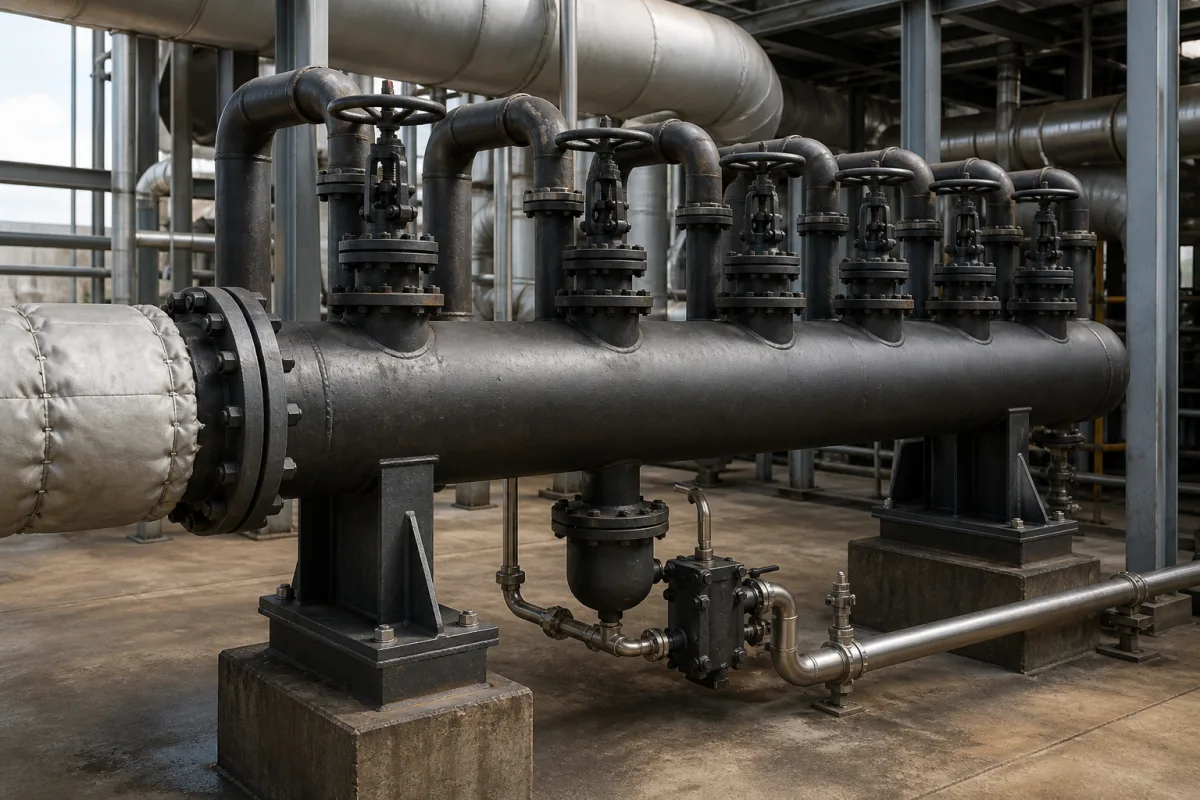
Technical details and manufacturing context for Outlet Branches
| Parameter | Typical range | Notes & selection driver |
|---|---|---|
| Nominal Diameter | DN15–DN300 mm | Matches header size and downstream line requirements.ISO 6708 |
| Operating Pressure | 1.0–1.6 MPa | |
| Operating Temperature | -10–200 °C | Above 200°C requires high-temperature gaskets. |
| Flow Capacity (Cv) | 5–120 Cv | Select based on required steam flow rate. |
| End Connection | DN15–DN300 mm | Flanged or welded ends per design.ISO 7005 |
| Material Grade | A105–F304 ASTM | Carbon steel for standard service; stainless for corrosive.ASTM A105 |
| Wall Thickness | 3.2–12.7 mm | Schedule 40–80 for pressure rating.ASME B36.10 |
| Leakage Rate | 0.01–0.1 % | |
| Weight | 2–50 kg | Depends on size and material. |
Ranges are indicative industry figures for RFQ preparation, not a supplier commitment. Confirm every value and standard with the legal manufacturer before ordering.
| pressure: | Up to 150 bar (2175 psi) |
| flow rate: | Dependent on branch size and header diameter, typically 0.5-50 m/s steam velocity |
| temperature: | -20°C to 400°C |
| slurry concentration: | Not applicable - designed for clean steam service only |
Indicative industry ranges for design and RFQ preparation. Confirm the exact figures and applicable standard with the manufacturer before specifying.
Quoted from the published standard.
A practical evidence checklist for RFQ preparation and supplier evaluation.
Compare the published product scope and source details, then include your specifications and quantity in an enquiry.
Manufacturer profiles associated with Outlet Branches.
Explore company information and manufacturing capabilities, then discuss the scope of your project with a relevant supplier.
Ask for use case, specification boundaries, supplier type, and RFQ preparation information for this product.
Outlet branches are commonly made from carbon steel or stainless steel. Carbon steel is suitable for standard service, while stainless steel is used for corrosive environments. The specific grade, such as ASTM A105 or F304, should be confirmed with the manufacturer based on the application.
The nominal diameter should match the header size and downstream line requirements. It ranges from DN15 to DN300 per ISO 6708. Consider the required steam flow rate and pressure drop to determine the appropriate size, and verify with engineering calculations.
The operating pressure range is 1.0 to 1.6 MPa, and the operating temperature range is -10°C to 200°C. Above 200°C, high-temperature gaskets are required. Always verify these limits with the manufacturer for the specific model.
Relevant standards include ISO 6708 for nominal diameters, ISO 7005 for end connections, ASME B36.10 for wall thickness, and ASTM A105 for material grades. These standards serve as references; compliance must be confirmed with the supplier.
This component is essential for the following industrial systems and equipment:
Editorial classification, named public sources where available, and source-reviewed manufacturer records.
Compare manufacturer profiles with relevant product and process capability.