Industry-Verified Manufacturing Data (2026)

Precision Injection Valve

Based on aggregated insights from multiple verified factory profiles within the CNFX directory, the standard Precision Injection Valve used in the Machinery and Equipment Manufacturing sector typically supports operational capacities ranging from standard industrial configurations to heavy-duty production requirements.

Technical Definition & Core Assembly

A canonical Precision Injection Valve is characterized by the integration of Valve Body and Stem and Seat. In industrial production environments, manufacturers listed on CNFX commonly emphasize Stainless Steel (e.g., 316L) construction to support stable, high-cycle operation across diverse manufacturing scenarios.

A high-precision valve designed to control the flow of cryogenic fluids in injection systems with exact metering and minimal leakage.
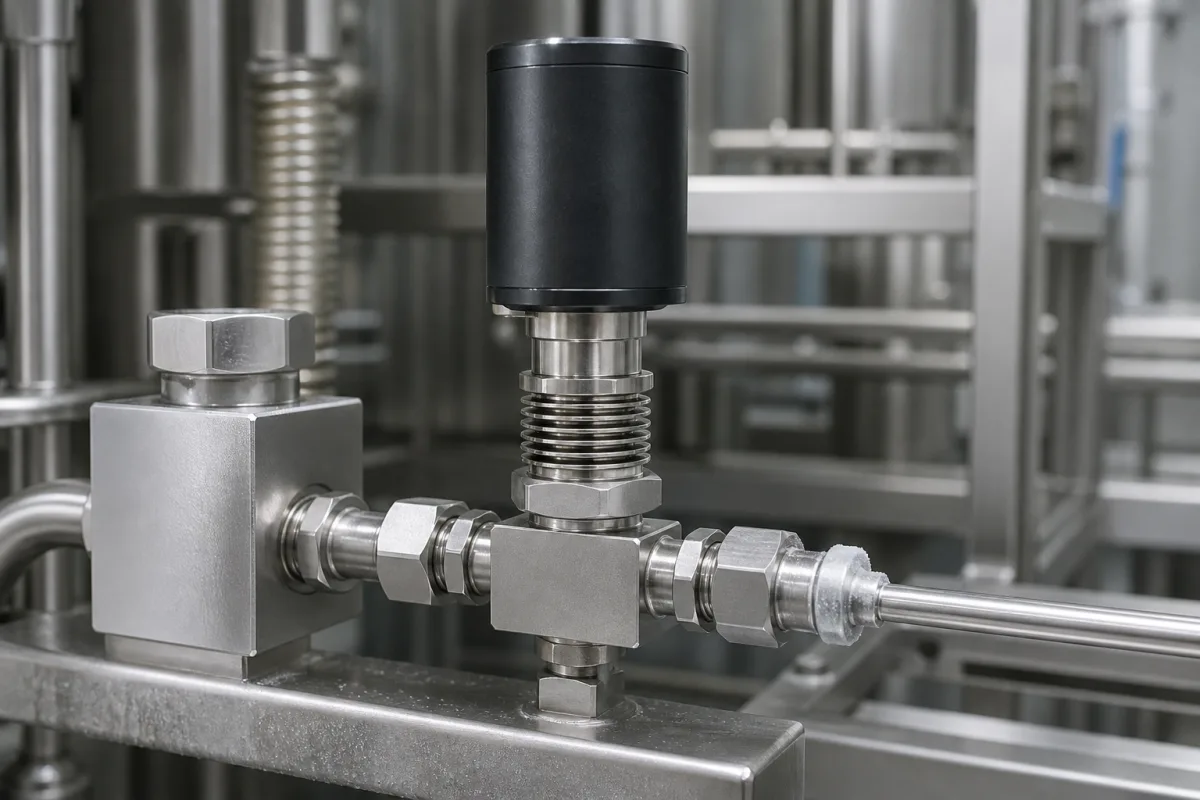
Product Specifications

Technical details and manufacturing context for Precision Injection Valve

Definition
A critical component within a Cryogenic Injection System that precisely regulates the injection of cryogenic fluids (such as liquid nitrogen or other liquefied gases) into a process or chamber. It ensures accurate flow rates, maintains system pressure integrity at extreme low temperatures, and enables controlled dosing for applications requiring thermal management, chemical reactions, or material processing.
Working Principle
Operates by using an actuator (pneumatic, hydraulic, or electric) to move a valve stem, which opens or closes an orifice to start or stop fluid flow. The precision is achieved through tight-tolerance machining of sealing surfaces, specialized low-temperature seals, and often feedback control systems to adjust position based on flow or pressure sensors, ensuring repeatable and accurate injection volumes even under cryogenic conditions.
Common Materials
Stainless Steel (e.g., 316L), Cryogenic-grade Elastomers (e.g., PTFE, Kalrez), Hardened Tool Steel
Technical Parameters
  • Orifice diameter, critical for determining flow capacity and precision. (mm) Per Request
Components / BOM
  • Valve Body
    Main structural housing that contains fluid and mounts to the system.
    Material: Stainless Steel
  • Stem and Seat
    Precision-machined components that form the sealing interface to control flow.
    Material: Hardened Tool Steel
  • Cryogenic Seal
    Specialized seal (e.g., bellows or spring-energized) that maintains integrity at low temperatures.
    Material: PTFE or Kalrez
Engineering Reasoning
0.1-150 bar at 77-293 K
Exceeds 180 bar differential pressure or temperature below 65 K
Design Rationale: Thermal contraction mismatch between Invar 36 (α=1.2×10⁻⁶/K) and 316L stainless steel (α=16×10⁻⁶/K) causing seal failure at cryogenic temperatures
Risk Mitigation (FMEA)
Trigger Cavitation at 0.35 bar vapor pressure of liquid nitrogen at 77 K
Mode: Erosion of tungsten carbide seat at 0.5 mm³/h material loss rate
Strategy: Downstream pressure maintained above 1.5 bar absolute via back-pressure regulator
Trigger Helium permeation through elastomer seals at 4.2 K with 10⁻⁷ cm³/s leak rate
Mode: Seal hardening and compression set exceeding 15% permanent deformation
Strategy: Metal-to-metal sealing with gold-plated Inconel 718 gasket at 70 N·m torque

Industry Taxonomies & Aliases

Commonly used trade names and technical identifiers for Precision Injection Valve.

Applied To / Applications

This component is essential for the following industrial systems and equipment:

Industrial Ecosystem & Supply Chain DNA

Complementary Systems
Downstream Applications
Specialized Tooling

Application Fit & Sizing Matrix

Operational Limits
pressure: 0 to 100 bar (0 to 1450 psi)
flow rate: 0.1 to 10 L/min (adjustable)
temperature: -196°C to +50°C (cryogenic to ambient)
slurry concentration: Up to 20% solids by weight (non-abrasive)
Media Compatibility
✓ Liquid nitrogen (LN2) ✓ Liquid argon ✓ High-purity liquid oxygen
Unsuitable: Corrosive or abrasive slurries with high particulate content
Sizing Data Required
  • Required flow rate (L/min)
  • System operating pressure (bar)
  • Fluid viscosity at operating temperature (cP)

Reliability & Engineering Risk Analysis

Failure Mode & Root Cause
Cavitation damage
Cause: Pressure drop below vapor pressure causing bubble formation and implosion, leading to pitting and erosion of valve surfaces, often due to improper system design, excessive flow velocity, or incorrect valve sizing.
Stiction and hysteresis
Cause: Accumulation of contaminants, wear particles, or chemical deposits on valve stem and seating surfaces, combined with inadequate lubrication, causing inconsistent positioning and response, leading to poor injection accuracy.
Maintenance Indicators
  • Audible high-frequency whistling or chattering during operation indicating cavitation or flow instability
  • Visible external leakage around stem seals or flange connections, or erratic pressure/flow readings on monitoring instruments
Engineering Tips
  • Implement proactive filtration and fluid cleanliness control with regular particle count analysis to prevent contaminant ingress and wear
  • Establish precision calibration and stroke testing routines with documented performance baselines to detect early degradation before functional failure

Compliance & Manufacturing Standards

Reference Standards
ISO 9001:2015 - Quality Management Systems ASME B16.34 - Valves - Flanged, Threaded, and Welding End DIN EN 12266-1 - Industrial valves - Testing of metallic valves
Manufacturing Precision
  • Bore diameter: +/-0.01mm
  • Surface finish: Ra 0.8μm max
Quality Inspection
  • Helium leak test for sealing integrity
  • Coordinate Measuring Machine (CMM) dimensional verification

Factories Producing Precision Injection Valve

Verified manufacturers with capability to produce this product in China

✓ 95% Supplier Capability Match Found

S Sourcing Manager from Brazil Jan 04, 2026
★★★★★
"Testing the Precision Injection Valve now; the technical reliability results are within 1% of the laboratory datasheet."
Technical Specifications Verified
P Procurement Specialist from Canada Jan 01, 2026
★★★★☆
"Impressive build quality. Especially the technical reliability is very stable during long-term operation. (Delivery took slightly longer than expected, but technical support was excellent.)"
Technical Specifications Verified
T Technical Director from United States Dec 29, 2025
★★★★★
"As a professional in the Machinery and Equipment Manufacturing sector, I confirm this Precision Injection Valve meets all ISO standards."
Technical Specifications Verified
Verification Protocol

“Feedback is collected from verified sourcing managers during RFQ (Request for Quote) and factory evaluation processes on CNFX. These reports represent historical performance data and technical audit summaries from our B2B manufacturing network.”

5 sourcing managers are analyzing this specification now. Last inquiry for Precision Injection Valve from Vietnam (1h ago).

Supply Chain Compatible Machinery & Devices

Automated Assembly Line System

Integrated production system for sequential component assembly operations

Explore Specs →
Automated Powder Coating System

Integrated industrial system for applying dry powder coatings to metal substrates.

Explore Specs →
Centrifugal Pump Impeller

Rotating component that transfers energy to fluid in centrifugal pumps.

Explore Specs →
High-Precision CNC Laser Cutting Machine

Computer-controlled industrial machine using focused laser beams to cut sheet metal with micron-level accuracy.

Explore Specs →

Frequently Asked Questions

What materials are used in the Precision Injection Valve to ensure durability in cryogenic applications?

The valve utilizes 316L stainless steel for corrosion resistance, cryogenic-grade elastomers like PTFE and Kalrez for sealing, and hardened tool steel for critical components to withstand extreme temperatures and pressures.

How does the Precision Injection Valve achieve minimal leakage in cryogenic fluid systems?

It features precision-machined stem and seat components with cryogenic seals designed to maintain integrity at low temperatures, ensuring tight shut-off and exact metering with leakage rates meeting industry standards.

What are the key components in the Bill of Materials (BOM) for this valve?

The primary BOM items include the cryogenic seal for temperature resilience, the stem and seat for flow control, and the valve body constructed from materials like stainless steel to house the assembly securely.

Can I contact factories directly on CNFX?

CNFX is an open directory, not a transaction platform. Each factory profile provides direct contact information and production details to help you initiate direct inquiries with Chinese suppliers.

Get Quote for Precision Injection Valve

Request technical pricing, lead times, or customized specifications for Precision Injection Valve directly from verified manufacturing units.

Your business information is encrypted and only shared with verified Precision Injection Valve suppliers.

Thank you! Your message has been sent. We'll respond within 1–3 business days.

Need to Manufacture Precision Injection Valve?

Connect with verified factories specializing in this product category

Add Your Factory Contact Us
Previous Product
Precision Gearbox/Coupling
Next Product
Precision Linear Guide / Bearing Block