Editorial Technical Reference

Cryogenic Injection System

This page explains how Cryogenic Injection System is classified within Food Manufacturing. Technical values and manufacturer relationships are research references; confirm the current specification and supplier evidence for each order.

Technical Definition & Core Assembly

A subsystem that injects cryogenic fluid into the grinding chamber to rapidly cool meat during processing.
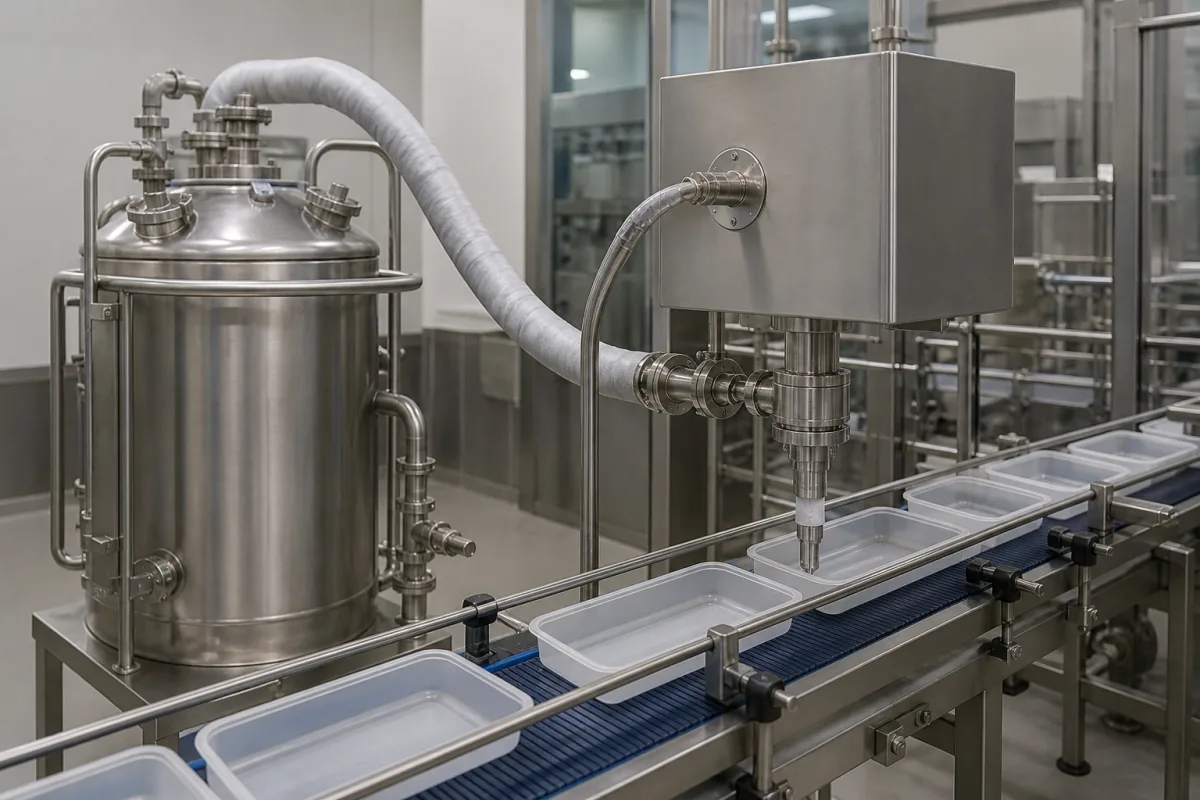
Representative product image. Confirm appearance and specifications with the manufacturer.

Product Specifications

Technical details and manufacturing context for Cryogenic Injection System

Definition
The Cryogenic Injection System is a critical component of the Industrial Meat Grinder with Cryogenic Cooling, responsible for precisely delivering liquid nitrogen or carbon dioxide into the grinding zone to maintain optimal temperature control, prevent bacterial growth, preserve texture, and improve product quality during high-volume meat processing operations. This subsystem is designed for integration into industrial grinding equipment, where it manages the controlled release of cryogenic fluids to achieve rapid cooling. The system operates within a specified pressure range of 1.0 to 1.6 MPa, with a flow rate adjustable between 5 and 20 L/min to match grinding throughput. The cryogenic fluid temperature typically ranges from -196°C to -150°C, with liquid nitrogen at -196°C being a common medium. Nozzle diameters from 1.0 to 3.0 mm influence the spray pattern and cooling rate, while a response time of ≤0.5 seconds ensures precise control. The system is powered by a 24 V DC control voltage (±10%) and consumes 50 to 150 W, including solenoid valves and sensors. Constructed from cryogenic-compatible stainless steel (SS304/316 per ASTM A240), the system features an IP65 ingress protection rating, making it dust-tight and protected against water jets. The operating temperature range for control electronics is -40°C to 85°C, while the fluid path handles cryogenic temperatures. The system weighs between 15 and 25 kg, depending on configuration, and uses BSP thread connections (1/2 to 1 inch) per ISO 228-1 for cryogenic lines. Materials on file include Stainless Steel 316L, cryogenic-grade seals, and insulated tubing. This directory entry provides reference parameters; actual values must be verified with the legal manufacturer for specific models and applications.
Working Principle
The system uses pressurized cryogenic fluid storage, precision valves, and injection nozzles to atomize and distribute the cryogen directly into the meat stream within the grinder, where rapid phase change from liquid to gas absorbs heat, achieving immediate temperature reduction. The operating pressure is 1.0–1.6 MPa, while the adjustable flow rate (5–20 L/min) allows matching cooling capacity to grinding throughput. Nozzle diameters of 1.0–3.0 mm determine the spray pattern and cooling rate, and a response time of ≤0.5 seconds enables fast valve actuation for precise control. The system is controlled via a 24 V DC signal, with power consumption of 50–150 W for solenoid valves and sensors. The cryogenic fluid temperature ranges from -196°C to -150°C, with liquid nitrogen at -196°C typical. The system is built with cryogenic-compatible stainless steel (SS304/316) and features IP65 protection, ensuring reliable operation in demanding environments.
Common Materials
Stainless Steel 316L, Cryogenic-grade Seals, Insulated Tubing
Technical Parameters
ParameterTypical rangeNotes & selection driver
Flow Rate5–20 L/minAdjustable to match grinding throughput
Cryogenic Fluid Temperature-196–-150 °CLN2 at -196°C typical
Nozzle Diameter1.0–3.0 mmAffects spray pattern and cooling rate
Response Time≤0.5 sFast valve actuation for precise control
Control Voltage24 ±10% V DCStandard industrial control voltage
Power Consumption50–150 WIncludes solenoid valves and sensors
MaterialSS304/316Cryogenic-compatible stainless steelASTM A240
Ingress ProtectionIP65Dust-tight and protected against water jetsIEC 60529
Operating Temperature Range-40–85 °CFor control electronics; fluid path is cryogenic
Weight15–25 kgDepends on configuration and materials
Connection Size1/2–1 inchBSP thread for cryogenic linesISO 228-1

Ranges are indicative industry figures for RFQ preparation, not a supplier commitment. Confirm every value and standard with the legal manufacturer before ordering.

Components / BOM
  • Cryogen Storage Vessel
    Holds and maintains cryogenic fluid at required pressure and temperature
    Material: Stainless Steel with Vacuum Insulation
  • Precision Injection Valve
    Controls flow rate and timing of cryogen release
    Material: Cryogenic-grade Stainless Steel
  • Distribution Nozzle Array
    Atomizes and evenly distributes cryogen into meat stream
    Material: Stainless Steel with Anti-clog Design
  • Temperature Sensors
    Monitors temperature for feedback control of injection rate
    Material: Cryogenic-resistant Electronics

Industrial Ecosystem & Supply Chain Structure

Complementary Systems
Downstream Applications
Specialized Tooling

Application Fit & Sizing Matrix

Operational Limits
pressure: Up to 10 bar (150 psi) maximum operating pressure
flow rate: 5-50 L/min adjustable injection flow
temperature: -196°C to -40°C (liquid nitrogen range)
slurry concentration: Up to 40% solids in meat slurry
Media Compatibility
✓ Beef processing slurry ✓ Poultry meat emulsion ✓ Pork grinding applications
Unsuitable: High-fat content meat slurries (>50% fat) due to potential solidification and clogging
Sizing Data Required
  • Required cooling capacity (kW)
  • Meat processing throughput (kg/hr)
  • Available cryogenic fluid supply pressure (bar)

Reliability & Engineering Risk Analysis

Failure Mode & Root Cause
Thermal fatigue cracking
Cause: Repeated thermal cycling from cryogenic temperatures to ambient conditions during operation and maintenance, leading to stress concentration and material embrittlement in components like valves, piping, and injection nozzles.
Cryogenic seal failure
Cause: Seal material contraction and loss of elasticity at extremely low temperatures, combined with improper installation or material selection, resulting in leaks of cryogenic fluids (e.g., liquid nitrogen or oxygen) at flange connections, valve stems, or pump shafts.
Maintenance Indicators
  • Unusual hissing or whistling sounds from piping or valves, indicating cryogenic fluid leaks or pressure imbalances.
  • Frost formation or ice buildup on external surfaces of pipes, valves, or connections, suggesting insulation failure or internal leaks.
Engineering Tips
  • Implement a thermal cycling management protocol, including gradual cooldown and warmup procedures, to minimize thermal shock and stress on system components.
  • Use specialized cryogenic-grade materials for seals and gaskets (e.g., PTFE or metal seals) and ensure proper torque sequencing during installation to maintain integrity at low temperatures.

Indicative industry ranges for design and RFQ preparation. Confirm the exact figures and applicable standard with the manufacturer before specifying.

Compliance & Manufacturing Standards

Applicable Standards
ISO 21029-1: Cryogenic vessels - Transportable vacuum insulated vessels of not more than 1000 litres volume ASME BPVC Section VIII: Rules for Construction of Pressure Vessels EN 13458-2: Cryogenic vessels - Static vacuum insulated vessels

Quoted from the published standard.

Manufacturing Precision
  • Nozzle alignment: +/- 0.5 mm
  • Pressure vessel wall thickness: +0/-10% of nominal thickness
Quality Inspection
  • Helium leak testing for vacuum integrity
  • Pressure cycling test per ISO 20421

Manufacturers of Cryogenic Injection System

Manufacturer profiles associated with Cryogenic Injection System.

Sourcing Cryogenic Injection System from China?
Tell us your specification and target quantity — we will match it against manufacturer records and come back with the factories that fit.
Request manufacturers We manufacture this

Manufacturer listings support early research and capability understanding. They are not certification, ranking, or transaction guarantees.

Technical documentation
Request current drawings, revision history, and a signed specification sheet.
Manufacturing capability
Verify equipment lists, process limits, capacity, and representative production evidence.
Inspection readiness
Confirm test methods, calibrated equipment, sampling plans, and traceable reports.
Supplier transparency
Check the legal entity, factory address, ownership, certifications, and direct contacts.

CNFX does not score or rank suppliers. Buyers must verify all claims and documents with the legal manufacturer before ordering.

Supply Chain Compatible Machinery & Devices

Control Panel

A centralized interface for monitoring and controlling industrial equipment and processes

Explore Specs →
High-Purity Sodium Nitrite Curing Salt

High-purity sodium nitrite curing salt is a critical raw material in industrial meat processing for preservation and color fixation.

Explore Specs →
Industrial Meat Grinder with Cryogenic Cooling

Industrial meat grinder with integrated cryogenic cooling system for temperature-controlled processing.

Explore Specs →
Industrial Fish Filleting Machine

Automated machine for precise filleting and portioning of fish in industrial processing lines.

Explore Specs →

Frequently Asked Questions

What is the operating pressure range of the cryogenic injection system?

The operating pressure is specified as 1.0–1.6 MPa.for proper valve sealing. Always verify the exact pressure requirements with the manufacturer for your specific model.

What cryogenic fluids can be used with this system?

The system is designed for liquid nitrogen or carbon dioxide. The cryogenic fluid temperature range is -196°C to -150°C, with liquid nitrogen at -196°C being typical. Confirm compatibility with the manufacturer.

What are the electrical requirements for the control system?

The control voltage is 24 V DC (±10%), and power consumption is 50–150 W, which includes solenoid valves and sensors. The operating temperature range for control electronics is -40°C to 85°C.

What materials are used in the construction?

The system uses cryogenic-compatible stainless steel (SS304/316 per ASTM A240), with materials on file including Stainless Steel 316L, cryogenic-grade seals, and insulated tubing. The ingress protection rating is IP65.

Data Basis

Editorial classification, named public sources where available, and source-reviewed manufacturer records.

Preliminary Technical Classification
This page supports structured research, RFQ preparation, and supplier evaluation. It does not replace buyer-led supplier qualification, standards review, or technical approval.
Buyer enquiry

Request manufacturing insight for Cryogenic Injection System

Ask for use case, specification boundaries, supplier type, and RFQ preparation information for this product.

Where it goes
Straight to the CNFX editorial desk, and to the manufacturer if this product is linked to a claimed profile. Nothing is broadcast to a supplier list.
Your details stay here
We do not sell or rent enquiry data, and we do not add you to a mailing list. Used only to answer this request.
No commission, no middleman
CNFX is a directory. We take no cut of any order and never negotiate on a supplier's behalf.
What we don't claim
A listing is not an endorsement. Qualify every supplier and verify every figure yourself before ordering.

Your business information is used only to process this request.

Thank you! Your message has been sent. We'll respond within 1–3 business days.
Sorry, we couldn't send your message. Please try again, or email us at contact@cnfx.com.

Need to Manufacture Cryogenic Injection System?

Compare manufacturer profiles with relevant product and process capability.

Previous Product
Tubular Heat Exchanger
Last Product
Get QuotesChat