Main Roller Assembly
View system integration details
This page explains how Roller Bearing Housing is classified within Machinery and Equipment Manufacturing. Technical values and manufacturer relationships are research references; confirm the current specification and supplier evidence for each order.
A structural component that houses and supports roller bearings within mechanical assemblies.
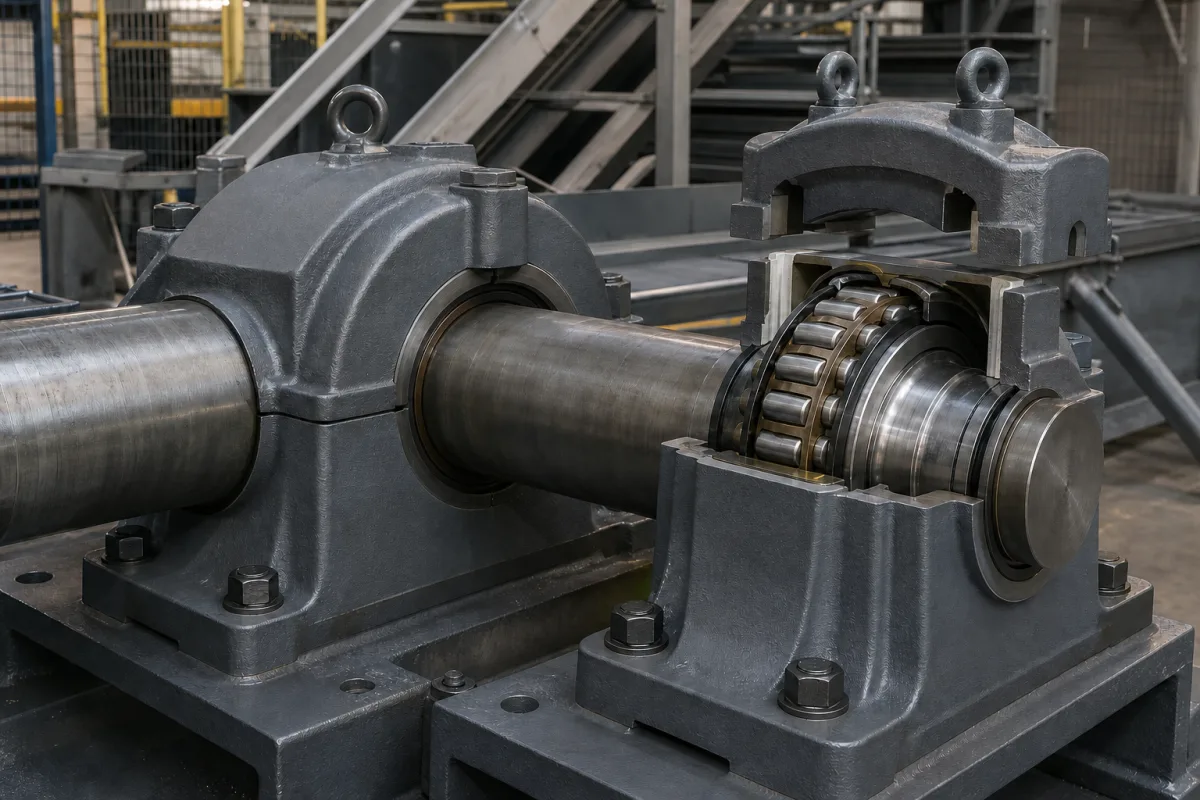
Technical details and manufacturing context for Roller Bearing Housing
| Parameter | Typical range | Notes & selection driver |
|---|---|---|
| Bore Diameter | 20–200 mm | Matches bearing outer diameterISO 15 |
| Overall Width | 30–300 mm | Determines housing footprint |
| Center Height | 40–200 mm | Critical for shaft alignmentISO 113 |
| Mounting Bolt Spacing | 80–400 mm | Must match baseplate holes |
| Static Load Rating | 10–500 kN | Maximum non-rotating loadISO 76 |
| Dynamic Load Rating | 8–400 kN | Bearing life calculationISO 281 |
| Operating Temperature | -20–120 °C | Exceeding range degrades seals |
| Material Grade | HT200–HT300 | Cast iron for strength and dampingGB/T 9439 |
| Surface Treatment | Paint or phosphating | Corrosion protection |
| Weight | 2–50 kg | Affects handling and installation |
Ranges are indicative industry figures for RFQ preparation, not a supplier commitment. Confirm every value and standard with the legal manufacturer before ordering.
| pressure: | Max 10 bar static housing pressure, bearing dependent on load rating |
| other spec: | Max shaft speed: 3000 RPM (lubrication dependent), contamination protection: IP65 standard |
| temperature: | -40°C to +120°C (standard), up to +200°C with special seals/lubrication |
Indicative industry ranges for design and RFQ preparation. Confirm the exact figures and applicable standard with the manufacturer before specifying.
Quoted from the published standard.
A practical evidence checklist for RFQ preparation and supplier evaluation.
Compare the published product scope and source details, then include your specifications and quantity in an enquiry.
Manufacturer profiles associated with Roller Bearing Housing.
Explore company information and manufacturing capabilities, then discuss the scope of your project with a relevant supplier.
Ask for use case, specification boundaries, supplier type, and RFQ preparation information for this product.
The primary function is to provide a rigid mounting structure that holds roller bearings in precise alignment relative to the shaft and machine frame. It transfers loads, protects bearings from contaminants, and maintains lubrication integrity.
Common materials include cast iron, steel, and aluminum alloy. The choice depends on application requirements such as strength, weight, and corrosion resistance.
Key parameters include bore diameter, overall width, center height, mounting bolt spacing, static and dynamic load ratings, operating temperature, material grade, surface treatment, and weight. These must match the bearing and application requirements.
No. Standards such as ISO 15, ISO 113, ISO 76, ISO 281, and GB/T 9439 are reference points for verification. They do not imply that a specific product is certified. Always confirm compliance with the manufacturer or supplier.
This component is essential for the following industrial systems and equipment:
Editorial classification, named public sources where available, and source-reviewed manufacturer records.
Compare manufacturer profiles with relevant product and process capability.