Editorial Technical Reference

Small Bore Cylinder/Piston

This page explains how Small Bore Cylinder/Piston is classified within Machinery and Equipment Manufacturing. Technical values and manufacturer relationships are research references; confirm the current specification and supplier evidence for each order.

Technical Definition & Core Assembly

A precision hydraulic or pneumatic component consisting of a cylinder with a small internal diameter and a matching piston that moves within it to generate or transmit pressure.
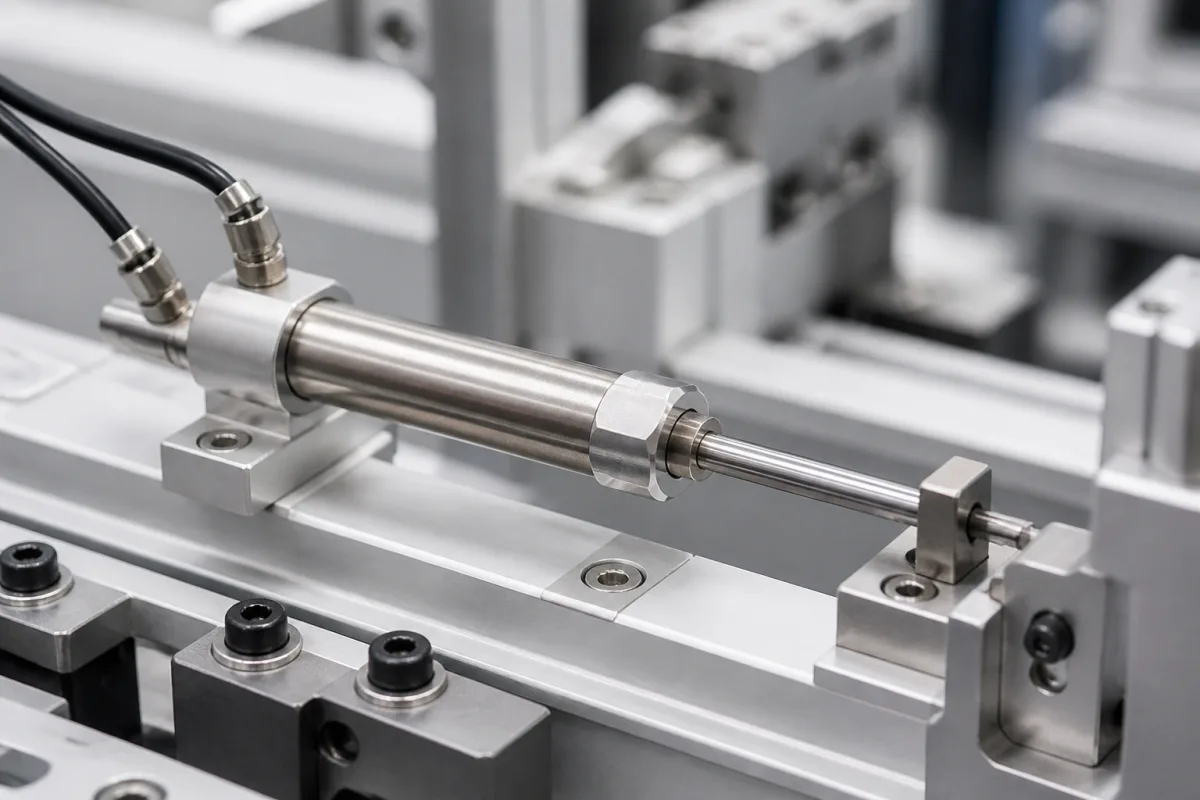
Representative product image. Confirm appearance and specifications with the manufacturer.

Product Specifications

Technical details and manufacturing context for Small Bore Cylinder/Piston

Definition
In a Pressure Intensifier system, the Small Bore Cylinder/Piston is a critical sub-assembly responsible for the initial or intermediate stage of pressure amplification. It typically features a cylinder with a reduced internal diameter (the 'small bore') and a closely fitted piston. This configuration allows a relatively small input force acting over the piston's area to generate a high-pressure output within the confined fluid volume of the cylinder bore, serving as a fundamental force-transmitting element in the intensification process. The component is available in materials such as hardened steel, stainless steel, and aluminum alloy, with the cylinder tube often made of 6061-T6 aluminum (ASTM B221) and the piston rod optionally of SUS304 stainless steel (ASTM A276). Standard parameters include bore diameters from 8 to 63 mm, stroke lengths from 10 to 500 mm, operating pressures from 0.1 to 1.0 MPa (pneumatic; higher for hydraulic), piston speeds from 50 to 500 mm/s, temperature ranges from -20 to 80°C, and piston rod diameters from 4 to 20 mm, all per ISO 6432 where applicable. The unit may weigh between 0.2 and 3.5 kg, has an IP65 rating (IEC 60529), and offers adjustable cushioning with rubber bumpers. Mounting types include clevis, flange, foot, and trunnion. Seal materials are typically NBR (DIN 53538) with FKM for high-temperature applications. These values are directory references and must be confirmed for the specific model and application with the legal manufacturer or supplier. The component is designed for use in pressure intensification systems, where it provides precise control and rapid response due to its small bore minimizing fluid volume. Verification of all specifications and standards is essential before procurement.
Working Principle
The piston is sealed within the cylinder bore. When hydraulic fluid or air is introduced on one side of the piston, the pressure acts on the piston's cross-sectional area, generating a linear force (Force = Pressure × Area). Due to the small bore (small area), a given fluid pressure results in a proportionally smaller force output from this stage compared to a larger bore. This force is then transmitted mechanically (e.g., via a rod) or hydraulically to a subsequent stage (like a larger area piston) to achieve final pressure intensification. The small bore minimizes the fluid volume required for displacement, allowing for rapid response and precise control in building pressure.
Common Materials
Hardened Steel, Stainless Steel, Aluminum Alloy
Technical Parameters
ParameterTypical rangeNotes & selection driver
Bore Diameter8–63 mmStandard series for small bore cylindersISO 6432
Stroke Length10–500 mmCustom strokes availableISO 6432
Operating Pressure0.1–1.0 MPaPneumatic; higher for hydraulicISO 6432
Piston Speed50–500 mm/sMax speed depends on seal and load
Temperature Range-20–80 °CFor standard NBR seals
Piston Rod Diameter4–20 mmMatched to bore sizeISO 6432
Cylinder Tube Material6061-T6 AluminumAnodized for corrosion resistanceASTM B221
Piston Rod MaterialSUS304 Stainless SteelHard chrome plated optionalASTM A276
Seal MaterialNBR RubberFKM for high tempDIN 53538
Cushioning TypeAdjustable TypeRubber bumpers standard
Mounting TypeClevis TypeFlange, foot, and trunnion availableISO 6432
Weight0.2–3.5 kgDepends on bore and stroke

Ranges are indicative industry figures for RFQ preparation, not a supplier commitment. Confirm every value and standard with the legal manufacturer before ordering.

Components / BOM
  • Cylinder Barrel
    Forms the pressure chamber and guides the piston.
    Material: Hardened Steel
  • Piston Part
    Seals and translates fluid pressure into linear force/motion.
    Material: Hardened Steel with Seals
  • Piston Seals Part
    Prevent fluid leakage between the piston and cylinder bore.
    Material: Polyurethane or Nitrile Rubber
  • End Caps Part
    Seal the ends of the cylinder barrel and provide porting for fluid.
    Material: Steel
  • Piston Rod
    Carries the small-bore stage force out to the next stage of the intensifier.

Industry Taxonomies & Aliases

Commonly used trade names and technical identifiers for Small Bore Cylinder/Piston.

Applied To / Applications

This component is essential for the following industrial systems and equipment:

Industrial Ecosystem & Supply Chain Structure

Complementary Systems
Downstream Applications
Specialized Tooling

Application Fit & Sizing Matrix

Operational Limits
pressure: Up to 300 bar hydraulic, 10 bar pneumatic (typical)
flow rate: 0.1-5 L/min hydraulic, 10-100 NL/min pneumatic
temperature: -40°C to 120°C (standard), up to 200°C with special seals
slurry concentration: Not recommended for slurries; maximum 5% particulate if filtered
Media Compatibility
✓ Hydraulic oil (ISO VG 32-68) ✓ Compressed air (filtered, lubricated) ✓ Water-glycol fluids
Unsuitable: Abrasive slurries or corrosive chemicals without special coatings
Sizing Data Required
  • Required force/thrust (N)
  • Operating pressure (bar)
  • Stroke length (mm)

Reliability & Engineering Risk Analysis

Failure Mode & Root Cause
Seal degradation and leakage
Cause: Contamination ingress (particles, moisture), improper lubrication, or chemical incompatibility leading to seal hardening, cracking, or extrusion.
Piston rod scoring and wear
Cause: Misalignment, side-loading, inadequate rod wiper function allowing abrasive contaminants to enter, or corrosion from environmental exposure.
Maintenance Indicators
  • Audible hissing or irregular operation indicating air leakage past seals
  • Visible fluid leakage (hydraulic oil or pneumatic condensate) around rod or cylinder ends
Engineering Tips
  • Implement strict filtration (5 micron or better for hydraulic, 40 micron for pneumatic) and moisture control in fluid/air supply lines
  • Ensure proper rod alignment and use appropriate rod wipers/scrapers; apply corrosion-resistant coatings or materials in harsh environments

Indicative industry ranges for design and RFQ preparation. Confirm the exact figures and applicable standard with the manufacturer before specifying.

Compliance & Manufacturing Standards

Applicable Standards
ISO 4394-1: Hydraulic fluid power - Cylinders - Bore and rod area ratios ANSI B93.5M: Hydraulic fluid power - Cylinders - Bore and rod area ratios DIN 24334: Hydraulic cylinders - Bore and rod area ratios

Quoted from the published standard.

Manufacturing Precision
  • Bore diameter: +/-0.02mm
  • Piston diameter: +/-0.01mm
Quality Inspection
  • Dimensional inspection with coordinate measuring machine (CMM)
  • Leakage test under pressure (e.g., 150% of working pressure)

Manufacturers of Small Bore Cylinder/Piston

Manufacturer profiles associated with Small Bore Cylinder/Piston.

Sourcing Small Bore Cylinder/Piston from China?
Tell us your specification and target quantity — we will match it against manufacturer records and come back with the factories that fit.
Request manufacturers We manufacture this

Manufacturer listings support early research and capability understanding. They are not certification, ranking, or transaction guarantees.

Technical documentation
Request current drawings, revision history, and a signed specification sheet.
Manufacturing capability
Verify equipment lists, process limits, capacity, and representative production evidence.
Inspection readiness
Confirm test methods, calibrated equipment, sampling plans, and traceable reports.
Supplier transparency
Check the legal entity, factory address, ownership, certifications, and direct contacts.

CNFX does not score or rank suppliers. Buyers must verify all claims and documents with the legal manufacturer before ordering.

Supply Chain Compatible Machinery & Devices

Automated Powder Coating System

Integrated industrial system for applying dry powder coatings to metal substrates.

Explore Specs →
Centrifugal Pump Impeller

The centrifugal pump impeller is a critical rotating component that converts mechanical energy from the motor into kinetic energy in fluid systems.

Explore Specs →
High-Precision CNC Laser Cutting Machine

Computer-controlled industrial machine using focused laser beams to cut sheet metal with micron-level accuracy.

Explore Specs →
Industrial-Grade Hydraulic Cylinder Piston Rod

This industrial-grade piston rod is a precision-ground cylindrical component designed for use in hydraulic cylinders.

Explore Specs →

Frequently Asked Questions

What is the typical bore diameter range for this component?

According to the directory reference, the bore diameter ranges from 8 to 63 mm, per ISO 6432. However, you must confirm the exact value for your specific model with the manufacturer or supplier.

What materials are available for the cylinder and piston rod?

The cylinder tube is typically made of 6061-T6 aluminum (ASTM B221), and the piston rod can be SUS304 stainless steel (ASTM A276) with optional hard chrome plating. Other materials like hardened steel and aluminum alloy are also listed. Always verify material suitability for your application.

What is the operating pressure range?

The directory lists an operating pressure range of 0.1 to 1.0 MPa for pneumatic applications, with higher pressures possible for hydraulic use. Confirm the exact pressure rating with the manufacturer for your intended fluid and conditions.

What standards apply to this component?

Key standards referenced include ISO 6432 for dimensions, ASTM B221 for aluminum, ASTM A276 for stainless steel, DIN 53538 for seals, and IEC 60529 for IP rating. These are procurement references; compliance must be verified with the supplier.

Data Basis

Editorial classification, named public sources where available, and source-reviewed manufacturer records.

Preliminary Technical Classification
This page supports structured research, RFQ preparation, and supplier evaluation. It does not replace buyer-led supplier qualification, standards review, or technical approval.
Buyer enquiry

Request manufacturing insight for Small Bore Cylinder/Piston

Ask for use case, specification boundaries, supplier type, and RFQ preparation information for this product.

Where it goes
Straight to the CNFX editorial desk, and to the manufacturer if this product is linked to a claimed profile. Nothing is broadcast to a supplier list.
Your details stay here
We do not sell or rent enquiry data, and we do not add you to a mailing list. Used only to answer this request.
No commission, no middleman
CNFX is a directory. We take no cut of any order and never negotiate on a supplier's behalf.
What we don't claim
A listing is not an endorsement. Qualify every supplier and verify every figure yourself before ordering.

Your business information is used only to process this request.

Thank you! Your message has been sent. We'll respond within 1–3 business days.
Sorry, we couldn't send your message. Please try again, or email us at contact@cnfx.com.

Need to Manufacture Small Bore Cylinder/Piston?

Compare manufacturer profiles with relevant product and process capability.

Previous Product
Z-axis Ram/Spindle
Last Product
Get QuotesChat