Industry-Verified Manufacturing Data (2026)

Tension Brake Assembly

Based on aggregated insights from multiple verified factory profiles within the CNFX directory, the standard Tension Brake Assembly used in the Machinery and Equipment Manufacturing sector typically supports operational capacities ranging from standard industrial configurations to heavy-duty production requirements.

Technical Definition & Core Assembly

A canonical Tension Brake Assembly is characterized by the integration of Brake Drum/Disc and Brake Pad/Shoe. In industrial production environments, manufacturers listed on CNFX commonly emphasize Steel construction to support stable, high-cycle operation across diverse manufacturing scenarios.

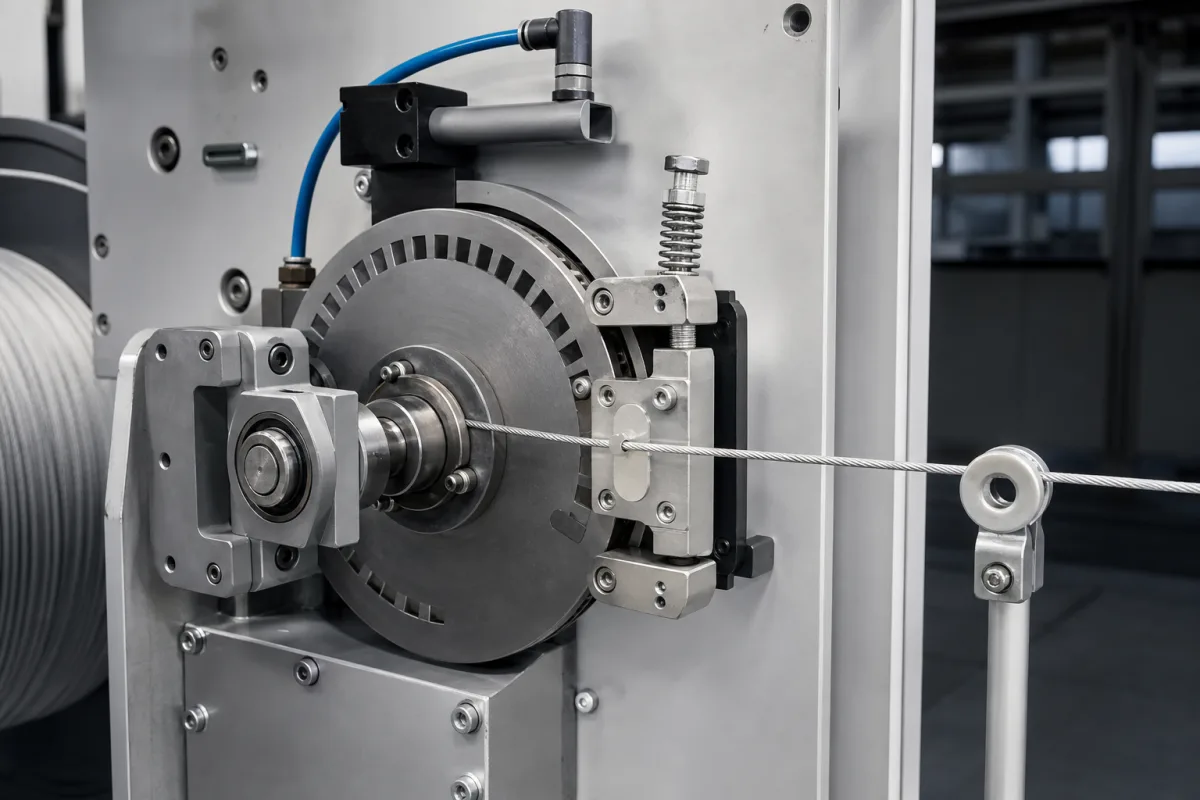
A mechanical assembly within a wire tensioner that applies controlled braking force to regulate wire tension.
Product Specifications

Technical details and manufacturing context for Tension Brake Assembly

Definition
The Tension Brake Assembly is a critical sub-component of a Wire Tensioner system. Its primary function is to provide a controlled, adjustable braking force to the wire or cable as it is being fed, wound, or processed. This precise braking action is essential for maintaining consistent and accurate tension, preventing slack, over-tensioning, or wire breakage during manufacturing, spooling, or assembly operations.
Working Principle
The assembly typically consists of a brake pad or shoe that is pressed against a rotating drum, disc, or the wire spool itself. The braking force is applied via a mechanical, pneumatic, or electromagnetic actuator. The applied force creates friction, which resists the rotation of the spool or drum, thereby controlling the tension on the wire being pulled from it. The braking force is often adjustable to accommodate different wire types, diameters, and required tension levels.
Common Materials
Steel, Friction Material (e.g., sintered metal, composite), Aluminum Alloy
Technical Parameters
  • Maximum braking torque capacity of the assembly. (N·m) Per Request
Components / BOM
  • Brake Drum/Disc
    The rotating surface against which the brake pad applies friction to generate braking torque.
    Material: steel
  • Brake Pad/Shoe
    The friction element that contacts the brake drum/disc to create the braking force.
    Material: friction material (e.g., sintered metal, composite)
  • Actuator (e.g., Pneumatic Cylinder, Solenoid)
    Applies the force that presses the brake pad against the drum/disc.
    Material: steel, aluminum
  • Mounting Bracket/Housing
    Provides structural support and alignment for the entire assembly within the tensioner.
    Material: steel, cast iron
Engineering Reasoning
0.5-12.0 kN braking force, 20-120°C operating temperature, 0.1-2.0 m/s wire speed
Braking force exceeds 15.0 kN causing permanent deformation of friction pads, temperature exceeds 150°C causing thermal degradation of friction material, wear depth exceeds 3.0 mm on friction surfaces
Design Rationale: Frictional heat generation exceeding material thermal limits (Q = μ·F·v where μ=0.35-0.45, F=braking force, v=wire speed), exceeding yield strength of pad backing plate (σ_y = 250 MPa), abrasive wear exceeding Archard wear coefficient (K = 5×10⁻⁵ mm³/N·m)
Risk Mitigation (FMEA)
Trigger Contaminant ingress (oil, dust) between friction surfaces
Mode: Coefficient of friction reduction from 0.40 to <0.15
Strategy: Sealed labyrinth design with IP67 rating, sacrificial wear indicator grooves
Trigger Cyclic loading at 5-15 Hz exceeding 10⁷ cycles
Mode: Fatigue crack initiation in spring steel components
Strategy: Shot peening to induce compressive residual stress of -400 MPa, design for infinite life at 8 kN maximum load

Industry Taxonomies & Aliases

Commonly used trade names and technical identifiers for Tension Brake Assembly.

Applied To / Applications

This component is essential for the following industrial systems and equipment:

Industrial Ecosystem & Supply Chain DNA

Complementary Systems
Downstream Applications
Specialized Tooling

Application Fit & Sizing Matrix

Operational Limits
pressure: 0 to 10 bar
other spec: Max wire tension: 5000 N, Brake torque range: 5-100 Nm
temperature: -20°C to 120°C
Media Compatibility
✓ Steel wire/cable ✓ Polymer-coated wire ✓ Stainless steel wire
Unsuitable: Abrasive slurry environments
Sizing Data Required
  • Required wire tension (N)
  • Wire diameter (mm)
  • Operating speed (m/s)

Reliability & Engineering Risk Analysis

Failure Mode & Root Cause
Brake pad delamination
Cause: Thermal degradation from excessive friction heat, often due to over-tensioning or prolonged heavy braking cycles, leading to adhesive failure between friction material and backing plate.
Hydraulic fluid leakage
Cause: Seal degradation from contamination (moisture, particulates) or improper fluid compatibility, compounded by high-pressure cycling and temperature fluctuations causing seal hardening or cracking.
Maintenance Indicators
  • Audible high-pitched squealing or grinding during braking, indicating worn friction surfaces or contamination
  • Visual fluid streaks or pooling around hydraulic connections or actuator housings, signaling seal or fitting failures
Engineering Tips
  • Implement torque-controlled tensioning procedures with calibrated tools to prevent overloading and ensure even pad contact pressure distribution
  • Establish strict fluid cleanliness protocols (ISO 4406 standards) and regular fluid analysis to monitor for moisture ingress, particulate contamination, and additive depletion

Compliance & Manufacturing Standards

Reference Standards
ISO 9001:2015 - Quality Management Systems ANSI/ASME B107.300 - Hand Tools - Wrenches and Wrench Sets DIN 3121 - Wrenches - Open-ended wrenches, double-ended
Manufacturing Precision
  • Bore Diameter: +/-0.02mm
  • Surface Flatness: 0.1mm per 100mm
Quality Inspection
  • Dye Penetrant Test for surface defects
  • Torque Calibration Test for braking performance

Factories Producing Tension Brake Assembly

Verified manufacturers with capability to produce this product in China

✓ 98% Supplier Capability Match Found

P Procurement Specialist from Singapore Jan 07, 2026
★★★★★
"Standard OEM quality for Machinery and Equipment Manufacturing applications. The Tension Brake Assembly arrived with full certification."
Technical Specifications Verified
T Technical Director from Germany Jan 04, 2026
★★★★★
"Great transparency on the Tension Brake Assembly components. Essential for our Machinery and Equipment Manufacturing supply chain."
Technical Specifications Verified
P Project Engineer from Brazil Jan 01, 2026
★★★★★
"The Tension Brake Assembly we sourced perfectly fits our Machinery and Equipment Manufacturing production line requirements."
Technical Specifications Verified
Verification Protocol

“Feedback is collected from verified sourcing managers during RFQ (Request for Quote) and factory evaluation processes on CNFX. These reports represent historical performance data and technical audit summaries from our B2B manufacturing network.”

6 sourcing managers are analyzing this specification now. Last inquiry for Tension Brake Assembly from UAE (51m ago).

Supply Chain Compatible Machinery & Devices

Automated Assembly Line System

Integrated production system for sequential component assembly operations

Explore Specs →
Automated Powder Coating System

Integrated industrial system for applying dry powder coatings to metal substrates.

Explore Specs →
Centrifugal Pump Impeller

Rotating component that transfers energy to fluid in centrifugal pumps.

Explore Specs →
High-Precision CNC Laser Cutting Machine

Computer-controlled industrial machine using focused laser beams to cut sheet metal with micron-level accuracy.

Explore Specs →

Frequently Asked Questions

What materials are used in the tension brake assembly for durability?

Our tension brake assembly is constructed from high-grade steel, aluminum alloy for lightweight strength, and specialized friction materials like sintered metal or composites for optimal braking performance and longevity in industrial environments.

How does the tension brake assembly regulate wire tension in machinery?

The assembly applies controlled braking force through components like brake drums/discs and pads/shoes, activated by pneumatic cylinders or solenoids, to precisely adjust and maintain wire tension during manufacturing processes.

What are the key components in the tension brake assembly BOM?

The bill of materials includes an actuator (e.g., pneumatic cylinder or solenoid), brake drum/disc, brake pad/shoe, and mounting bracket/housing, all designed for seamless integration into wire tensioning systems.

Can I contact factories directly on CNFX?

CNFX is an open directory, not a transaction platform. Each factory profile provides direct contact information and production details to help you initiate direct inquiries with Chinese suppliers.

Get Quote for Tension Brake Assembly

Request technical pricing, lead times, or customized specifications for Tension Brake Assembly directly from verified manufacturing units.

Your business information is encrypted and only shared with verified Tension Brake Assembly suppliers.

Thank you! Your message has been sent. We'll respond within 1–3 business days.

Need to Manufacture Tension Brake Assembly?

Connect with verified factories specializing in this product category

Add Your Factory Contact Us
Previous Product
Tension Adjustment System
Next Product
Tension Brake/Actuator