Industry-Verified Manufacturing Data (2026)

X-ray Target

Based on aggregated insights from multiple verified factory profiles within the CNFX directory, the standard X-ray Target used in the Machinery and Equipment Manufacturing sector typically supports operational capacities ranging from standard industrial configurations to heavy-duty production requirements.

Technical Definition & Core Assembly

A canonical X-ray Target is characterized by the integration of Target disc and Cooling system interface. In industrial production environments, manufacturers listed on CNFX commonly emphasize Tungsten construction to support stable, high-cycle operation across diverse manufacturing scenarios.

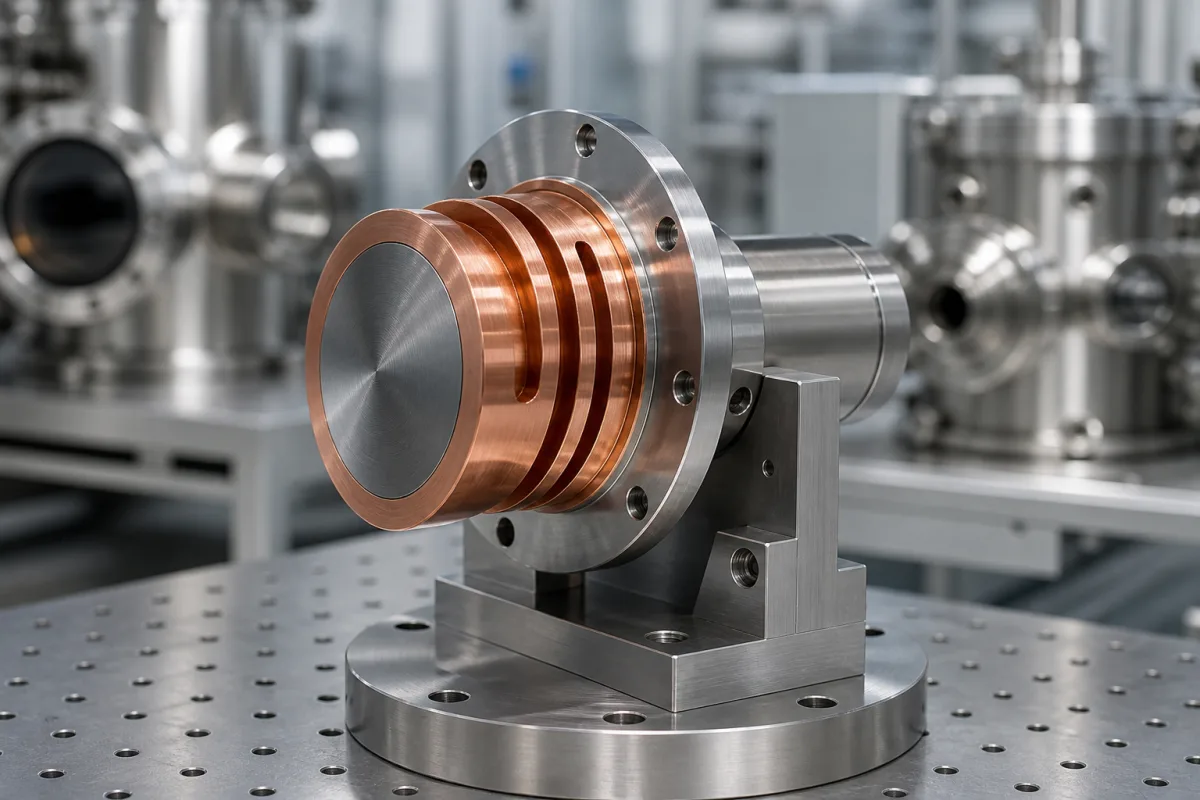
A component in a medical linear accelerator that generates X-rays when bombarded by high-energy electrons.
Product Specifications

Technical details and manufacturing context for X-ray Target

Definition
The X-ray target is a critical component within a medical linear accelerator (LINAC) used in radiation therapy. It serves as the conversion point where high-energy electrons from the accelerator are directed to produce therapeutic X-rays through bremsstrahlung radiation. This component is typically located in the treatment head assembly and is essential for generating the photon beams used in external beam radiation therapy for cancer treatment.
Working Principle
High-energy electrons from the linear accelerator are focused and accelerated toward the X-ray target. When these electrons strike the dense material of the target, they decelerate rapidly, converting their kinetic energy into X-ray photons through the bremsstrahlung (braking radiation) process. The resulting X-ray beam is then collimated and shaped for precise delivery to the treatment area.
Common Materials
Tungsten, Tungsten alloy, Tantalum
Technical Parameters
  • Target thickness and diameter, typically ranging from 1-10mm thickness and 10-50mm diameter depending on accelerator design and energy requirements (mm) Standard Spec
Components / BOM
  • Target disc
    Primary material that converts electron energy to X-rays through bremsstrahlung radiation
    Material: Tungsten or tungsten alloy
  • Cooling system interface
    Manages heat dissipation from the target during operation to prevent overheating and damage
    Material: Copper or aluminum with cooling channels
  • Mounting assembly
    Secures the target in precise alignment with the electron beam path
    Material: Stainless steel or titanium
Engineering Reasoning
Electron energy: 6-25 MeV, Beam current: 50-500 μA, Power density: 1.5-3.0 kW/cm²
Target surface temperature exceeds 2800°C (melting point of tungsten), Localized thermal stress exceeds 400 MPa (yield strength of tungsten-rhenium alloy)
Design Rationale: Thermal fatigue from cyclic electron bombardment (10-100 Hz pulse frequency) causing microcrack initiation at grain boundaries, followed by creep deformation at sustained temperatures above 2000°C
Risk Mitigation (FMEA)
Trigger Electron beam misalignment exceeding 0.5 mm radial offset
Mode: Localized overheating leading to tungsten recrystallization and embrittlement
Strategy: Active beam steering with Hall-effect sensors and electrostatic deflectors maintaining alignment within 0.1 mm tolerance
Trigger Coolant flow reduction below 2.0 L/min (water) or 15 m/s (helium gas cooling)
Mode: Thermal runaway causing target blistering and delamination
Strategy: Redundant cooling loops with vortex flow meters and thermocouple arrays triggering beam shutdown at 1500°C

Industry Taxonomies & Aliases

Commonly used trade names and technical identifiers for X-ray Target.

Industrial Ecosystem & Supply Chain DNA

Complementary Systems
Downstream Applications
Specialized Tooling

Application Fit & Sizing Matrix

Operational Limits
pressure: High vacuum environment (10^-6 to 10^-8 Torr) required in accelerator chamber
other spec: Electron beam energy: 6-25 MeV typical, power density: up to 10 kW/cm², cooling water flow: 2-10 L/min depending on design
temperature: Up to 1500°C (target surface during operation), cooling required to maintain <100°C base temperature
Media Compatibility
✓ High vacuum environment ✓ Medical-grade cooling water systems ✓ Electron beam bombardment in linear accelerator
Unsuitable: Atmospheric pressure with oxygen exposure (causes oxidation and degradation)
Sizing Data Required
  • Required X-ray energy spectrum (determines target material/thickness)
  • Electron beam power and spot size (determines heat load and cooling requirements)
  • Desired focal spot size and X-ray output intensity

Reliability & Engineering Risk Analysis

Failure Mode & Root Cause
Thermal fatigue cracking
Cause: Cyclic heating and cooling from repeated X-ray generation causes thermal expansion/contraction stresses, leading to crack initiation and propagation in the target material (typically tungsten or molybdenum).
Target material erosion/pitting
Cause: High-energy electron bombardment during X-ray production causes localized melting, vaporization, or sputtering of the target surface, gradually thinning the material and reducing X-ray output efficiency.
Maintenance Indicators
  • Gradual or sudden drop in X-ray output intensity at constant power settings
  • Unusual arcing sounds or visible sparking within the X-ray tube housing
Engineering Tips
  • Implement strict thermal management protocols including adequate cooling system maintenance and controlled ramp-up/ramp-down cycles to minimize thermal shock.
  • Use proper filtration and collimation to reduce unnecessary electron bombardment on non-target areas, and regularly calibrate beam alignment to ensure focused electron impact on the optimal target zone.

Compliance & Manufacturing Standards

Reference Standards
ISO 17636-1: Non-destructive testing of welds - Radiographic testing ASTM E142: Standard Method for Controlling Quality of Radiographic Testing IEC 60601-2-54: Medical electrical equipment - Part 2-54: Particular requirements for the basic safety and essential performance of X-ray equipment for radiography and radioscopy
Manufacturing Precision
  • Focal spot size tolerance: +/-10% of nominal value
  • Target surface flatness: ≤0.05mm over entire surface
Quality Inspection
  • X-ray focal spot measurement test (pinhole or slit camera method)
  • Material purity verification through spectrographic analysis

Factories Producing X-ray Target

Verified manufacturers with capability to produce this product in China

✓ 96% Supplier Capability Match Found

T Technical Director from Australia Feb 07, 2026
★★★★★
"The technical documentation for this X-ray Target is very thorough, especially regarding technical reliability."
Technical Specifications Verified
P Project Engineer from Singapore Feb 04, 2026
★★★★☆
"Reliable performance in harsh Machinery and Equipment Manufacturing environments. No issues with the X-ray Target so far. (Delivery took slightly longer than expected, but technical support was excellent.)"
Technical Specifications Verified
S Sourcing Manager from Germany Feb 01, 2026
★★★★★
"Testing the X-ray Target now; the technical reliability results are within 1% of the laboratory datasheet."
Technical Specifications Verified
Verification Protocol

“Feedback is collected from verified sourcing managers during RFQ (Request for Quote) and factory evaluation processes on CNFX. These reports represent historical performance data and technical audit summaries from our B2B manufacturing network.”

15 sourcing managers are analyzing this specification now. Last inquiry for X-ray Target from Germany (1h ago).

Supply Chain Compatible Machinery & Devices

Heavy-Duty CNC Plasma Cutting Machine

Industrial machine for precision metal cutting using plasma arc technology

Explore Specs →
Automated Assembly Line System

Integrated production system for sequential component assembly operations

Explore Specs →
Automated Powder Coating System

Integrated industrial system for applying dry powder coatings to metal substrates.

Explore Specs →
Centrifugal Pump Impeller

Rotating component that transfers energy to fluid in centrifugal pumps.

Explore Specs →

Frequently Asked Questions

What materials are used in X-ray targets for medical linear accelerators?

Our X-ray targets are manufactured using premium tungsten, tungsten alloys, and tantalum materials, selected for their high density and thermal properties to withstand intense electron bombardment in medical radiation therapy equipment.

What components are included in the X-ray target assembly?

The complete X-ray target assembly includes the target disc (primary radiation-generating component), mounting assembly for secure installation, and cooling system interface to manage heat dissipation during operation in medical linear accelerators.

How does an X-ray target function in medical equipment manufacturing?

In medical linear accelerators, the X-ray target generates therapeutic radiation when bombarded by high-energy electrons. This component is critical for radiation therapy machines used in cancer treatment, requiring precise engineering and durable materials.

Can I contact factories directly on CNFX?

CNFX is an open directory, not a transaction platform. Each factory profile provides direct contact information and production details to help you initiate direct inquiries with Chinese suppliers.

Get Quote for X-ray Target

Request technical pricing, lead times, or customized specifications for X-ray Target directly from verified manufacturing units.

Your business information is encrypted and only shared with verified X-ray Target suppliers.

Thank you! Your message has been sent. We'll respond within 1–3 business days.

Need to Manufacture X-ray Target?

Connect with verified factories specializing in this product category

Add Your Factory Contact Us
Previous Product
X-Axis Rails & Drive
Next Product
Y-Axis Carriage & Drive