Editorial Technical Reference

Industrial-Grade High-Purity Zinc Alloy Continuous Casting Billet

This page explains how Industrial-Grade High-Purity Zinc Alloy Continuous Casting Billet is classified within Non-Ferrous Metal Production. Technical values and manufacturer relationships are research references; confirm the current specification and supplier evidence for each order.

Technical Definition & Core Assembly

High-purity zinc alloy billet produced via continuous casting for industrial applications
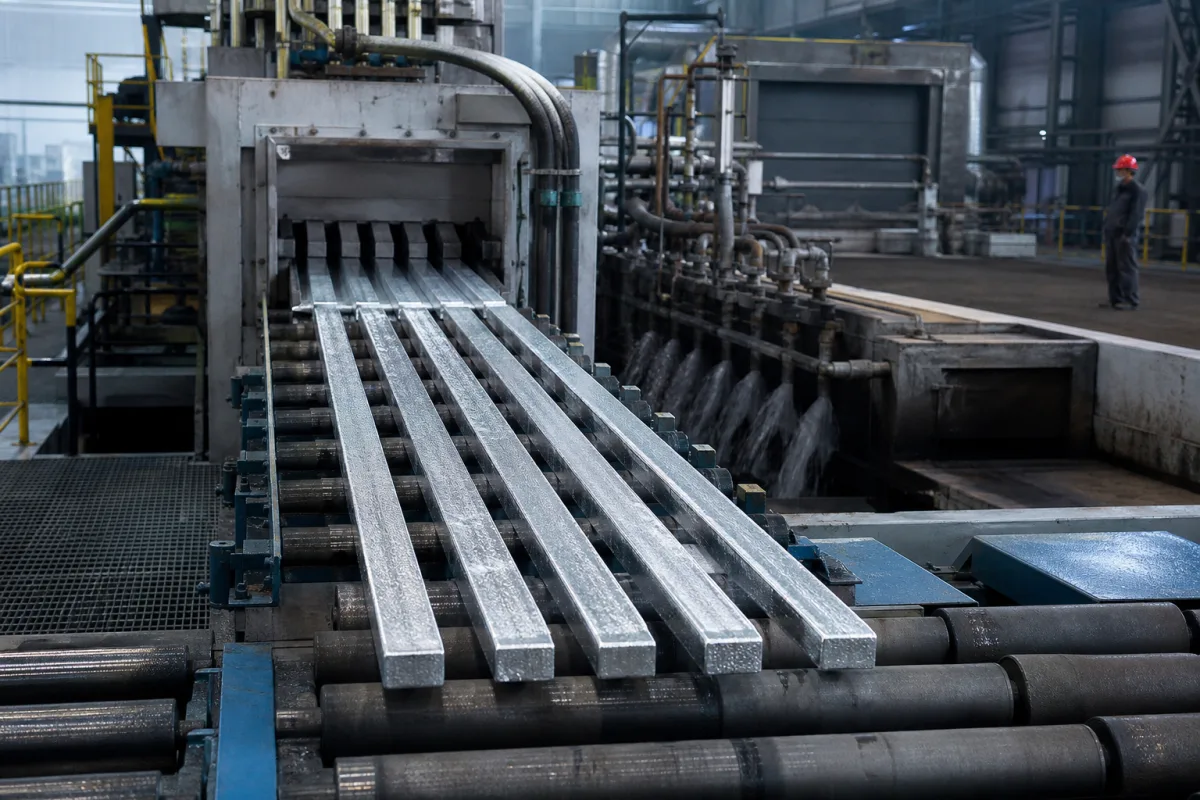
Industrial-Grade High-Purity Zinc Alloy Continuous Casting Billet in a manufacturing environment
Representative product image. Confirm appearance and specifications with the manufacturer.

Product Specifications

Technical details and manufacturing context for Industrial-Grade High-Purity Zinc Alloy Continuous Casting Billet

Definition
Industrial-grade high-purity zinc alloy continuous casting billet is a semi-finished material produced through continuous casting processes, specifically designed for high-performance industrial applications. This material serves as the foundational feedstock for manufacturing components requiring excellent corrosion resistance, good machinability, and consistent metallurgical properties. The continuous casting process ensures uniform microstructure and chemical composition throughout the billet length, making it ideal for subsequent extrusion, forging, or machining operations. It represents a critical intermediate product in the non-ferrous metal production chain, bridging primary metal production and finished component manufacturing. The billet is characterized by a minimum zinc purity of 99.995% per GB/T 470-2008, with controlled levels of lead, iron, cadmium, and copper. Standard diameters range from 80 to 300 mm, with length tolerance of ±5 mm and surface roughness up to Ra 1.6. Mechanical properties include a minimum tensile strength of 250 MPa and Brinell hardness of 30–40 HB. Electrical conductivity is 28.3 MS/m per IEC 60028, and density is 7.14 g/cm³ per GB/T 1423-1996. Weight per meter varies from 35 to 500 kg depending on diameter. Operating temperature for continuous casting is -20 to 120°C. These parameters serve as reference ranges; actual values must be confirmed with the manufacturer for specific applications. The billet is suitable for further processing into components for automotive, construction, and electrical industries, where corrosion resistance and machinability are critical. Verification of compliance with standards such as GB/T 470-2008, GB/T 1031-2009, GB/T 228.1-2010, and GB/T 231.1-2018 should be conducted through material test certificates and supplier documentation.
Working Principle
Molten high-purity zinc alloy is continuously poured through a water-cooled mold, solidifying into a continuous billet that is cut to specified lengths. The process ensures uniform solidification and consistent chemical composition along the billet's length. The cooling rate and mold design influence the microstructure, which in turn affects mechanical properties and machinability. The continuous casting method minimizes segregation and porosity, resulting in a dense, homogeneous product suitable for downstream processing. The billet is then cut to length, with tolerances controlled to meet specified requirements. This principle is fundamental to producing high-quality feedstock for extrusion, forging, and machining operations.
Common Materials
High-purity zinc (Zn > 99.95%), Alloying elements (Al, Cu, Mg)
Technical Parameters
ParameterTypical rangeNotes & selection driver
Zinc PurityRequired99.995 %Minimum zinc content percentageGB/T 470-2008
Billet DiameterRequired80–300 mmStandard billet cross-sectional diameter
Length ToleranceRequired±5 mmAllowable deviation from specified lengthGB/T 470-2008
Surface RoughnessRequired≤1.6 RaMaximum surface roughness valueGB/T 1031-2009
Tensile StrengthRequired≥250 MPaMinimum tensile strength specificationGB/T 228.1-2010
Chemical Composition RangeRequiredZn≥99.995, Pb≤0.003, Fe≤0.002, Cd≤0.001, Cu≤0.001 wt%Allowable variation in alloying elementsGB/T 470-2008
Operating Temperature-20–120 °CFor continuous casting process
Density7.14 g/cm³Standard zinc densityGB/T 1423-1996
Electrical Conductivity28.3 MS/mFor electrical applicationsIEC 60028
Hardness30–40 HBBrinell hardnessGB/T 231.1-2018
Weight per Meter35–500 kg/mDepends on diameter

Ranges are indicative industry figures for RFQ preparation, not a supplier commitment. Confirm every value and standard with the legal manufacturer before ordering.

Components / BOM
  • Zinc Alloy Matrix Part
    Primary metallic structure providing base properties
    Material: High-purity zinc with alloying elements
  • Surface Oxide Layer Part
    Protective coating preventing further oxidation
    Material: Zinc oxide (ZnO)
  • Internal Microstructure Part
    Grain structure determining mechanical properties
    Material: Crystalline zinc alloy phases

Industry Taxonomies & Aliases

Commonly used trade names and technical identifiers for Industrial-Grade High-Purity Zinc Alloy Continuous Casting Billet.

Industrial Ecosystem & Supply Chain Structure

Complementary Systems
Downstream Applications
Specialized Tooling

Application Fit & Sizing Matrix

Operational Limits
pressure: Atmospheric to 1.5 MPa (for casting process control)
flow rate: Continuous casting speed: 0.5-3.0 m/min (adjustable based on billet diameter)
temperature: Ambient to 450°C (melting point dependent on alloy composition)
purity level: 99.99% Zn minimum, alloying elements <0.01% total impurities
slurry concentration: Not applicable (solid billet product)
Media Compatibility
✓ Galvanizing baths (zinc coating applications) ✓ Die casting alloys for automotive components ✓ Sacrificial anodes for cathodic protection systems
Unsuitable: Chloride-rich or highly acidic environments (accelerated corrosion)
Sizing Data Required
  • Required billet diameter (mm)
  • Annual production volume (metric tons)
  • Alloy specification (e.g., Zn-Al, Zn-Cu composition)

Reliability & Engineering Risk Analysis

Failure Mode & Root Cause
Thermal fatigue cracking
Cause: Repeated thermal cycling from casting temperature variations causes stress concentration at grain boundaries, leading to micro-crack initiation and propagation in the zinc alloy matrix.
Surface oxidation and contamination
Cause: Exposure to oxygen and moisture during casting or storage leads to zinc oxide formation and surface impurities, compromising purity and mechanical properties of the billet.
Maintenance Indicators
  • Visible surface discoloration or white powdery deposits indicating oxidation
  • Audible cracking or popping sounds during cooling cycles suggesting internal stress or micro-fractures
Engineering Tips
  • Implement controlled cooling protocols with gradual temperature reduction to minimize thermal shock and residual stresses in the billet structure.
  • Maintain inert atmosphere (argon or nitrogen) during casting and storage to prevent surface oxidation and preserve alloy purity.

Indicative industry ranges for design and RFQ preparation. Confirm the exact figures and applicable standard with the manufacturer before specifying.

Compliance & Manufacturing Standards

Applicable Standards
ASTM B69 - Standard Specification for Rolled Zinc ISO 752 - Zinc and zinc alloys - Ingots and castings EN 1774 - Zinc and zinc alloys - Alloys for foundry purposes - Ingots and liquid

Quoted from the published standard.

Manufacturing Precision
  • Diameter: +/- 0.5% of nominal diameter
  • Straightness: 1.0 mm per meter length
Quality Inspection
  • Chemical Composition Analysis via Optical Emission Spectrometry
  • Ultrasonic Testing for internal defects and homogeneity

Manufacturers of Industrial-Grade High-Purity Zinc Alloy Continuous Casting Billet

Manufacturer profiles associated with Industrial-Grade High-Purity Zinc Alloy Continuous Casting Billet.

Sourcing Industrial-Grade High-Purity Zinc Alloy Continuous Casting Billet from China?
Tell us your specification and target quantity — we will match it against manufacturer records and come back with the factories that fit.
Request manufacturers We manufacture this

Manufacturer listings support early research and capability understanding. They are not certification, ranking, or transaction guarantees.

Share this page
Technical documentation
Request current drawings, revision history, and a signed specification sheet.
Manufacturing capability
Verify equipment lists, process limits, capacity, and representative production evidence.
Inspection readiness
Confirm test methods, calibrated equipment, sampling plans, and traceable reports.
Supplier transparency
Check the legal entity, factory address, ownership, certifications, and direct contacts.

CNFX does not score or rank suppliers. Buyers must verify all claims and documents with the legal manufacturer before ordering.

Frequently Asked Questions

What is the minimum zinc purity of this billet?

The minimum zinc purity is 99.995% as per GB/T 470-2008. This ensures high corrosion resistance and consistent properties for demanding applications.

What are the typical diameter and length tolerances?

Standard diameters range from 80 to 300 mm, with a length tolerance of ±5 mm. These values are reference ranges and should be confirmed with the manufacturer for specific orders.

What mechanical properties can be expected?

The billet has a minimum tensile strength of 250 MPa and a Brinell hardness of 30–40 HB. These values are based on GB/T 228.1-2010 and GB/T 231.1-2018, respectively, and should be verified with material test certificates.

How is the billet produced?

The billet is produced via continuous casting, where molten zinc alloy is poured into a water-cooled mold, solidifies, and is cut to length. This process ensures uniform microstructure and chemical composition.

Data Basis

Editorial classification, named public sources where available, and source-reviewed manufacturer records.

Preliminary Technical Classification
This page supports structured research, RFQ preparation, and supplier evaluation. It does not replace buyer-led supplier qualification, standards review, or technical approval.
Buyer enquiry

Request manufacturing insight for Industrial-Grade High-Purity Zinc Alloy Continuous Casting Billet

Ask for use case, specification boundaries, supplier type, and RFQ preparation information for this product.

Where it goes
Straight to the CNFX editorial desk, and to the manufacturer if this product is linked to a claimed profile. Nothing is broadcast to a supplier list.
Your details stay here
We do not sell or rent enquiry data, and we do not add you to a mailing list. Used only to answer this request.
No commission, no middleman
CNFX is a directory. We take no cut of any order and never negotiate on a supplier's behalf.
What we don't claim
A listing is not an endorsement. Qualify every supplier and verify every figure yourself before ordering.

Your business information is used only to process this request.

Thank you! Your message has been sent. We'll respond within 1–3 business days.
Sorry, we couldn't send your message. Please try again, or email us at [email protected].

Need to Manufacture Industrial-Grade High-Purity Zinc Alloy Continuous Casting Billet?

Compare manufacturer profiles with relevant product and process capability.

Previous Product
Non-Ferrous Metal Induction Melting Furnace
Last Product
Get QuotesChat