Industry-Verified Manufacturing Data (2026)

Actuator (Brake/Clutch/Drive)

Based on aggregated insights from multiple verified factory profiles within the CNFX directory, the standard Actuator (Brake/Clutch/Drive) used in the Textile Manufacturing sector typically supports operational capacities ranging from standard industrial configurations to heavy-duty production requirements.

Technical Definition & Core Assembly

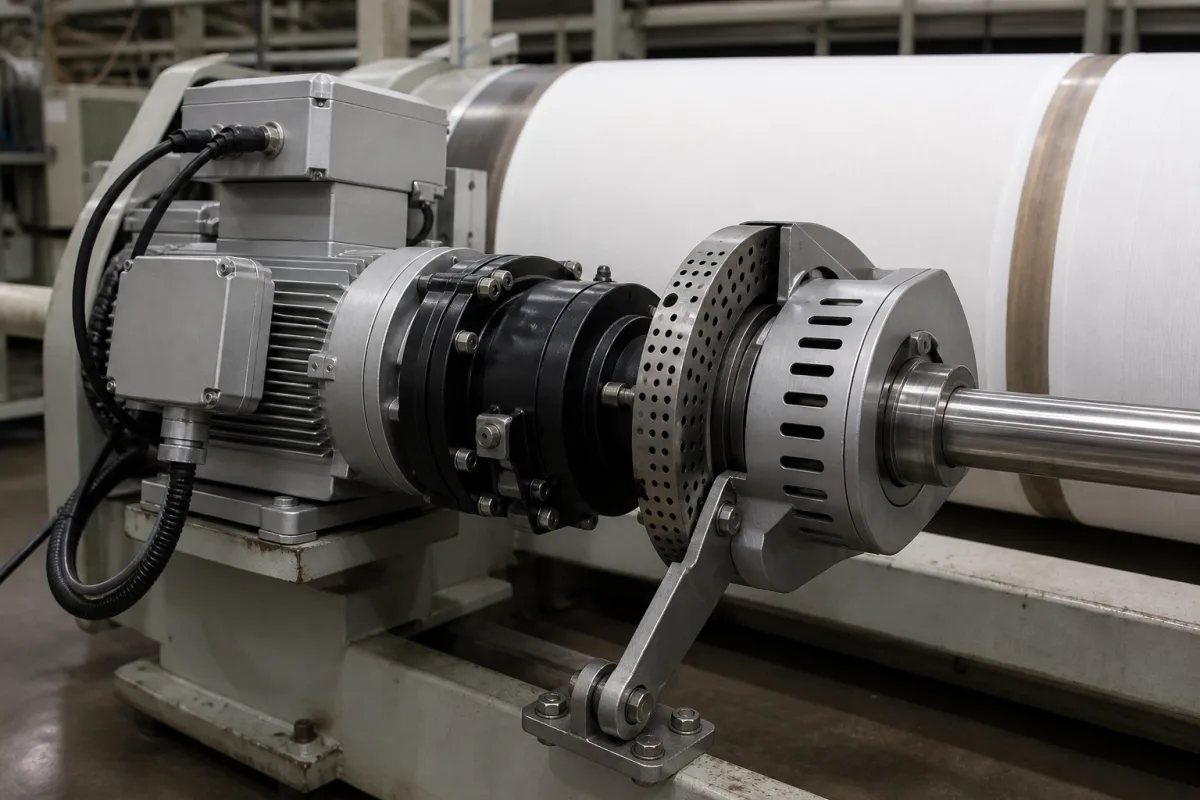
A canonical Actuator (Brake/Clutch/Drive) is characterized by the integration of Force generation unit and Actuation arm/rod. In industrial production environments, manufacturers listed on CNFX commonly emphasize Steel construction to support stable, high-cycle operation across diverse manufacturing scenarios.

A mechanical or electromechanical device that applies, releases, or modulates force to control fabric tension in textile manufacturing systems.
Product Specifications

Technical details and manufacturing context for Actuator (Brake/Clutch/Drive)

Definition
In fabric tension control systems, the actuator (brake/clutch/drive) is a critical component responsible for precisely regulating the tension applied to fabric webs during processing. It functions by converting control signals into mechanical force to engage, disengage, or adjust braking, clutching, or driving mechanisms, ensuring consistent fabric quality and preventing defects like stretching, wrinkling, or tearing.
Working Principle
The actuator receives tension feedback signals from sensors in the fabric web. Based on this input, it adjusts its output force through electromagnetic, pneumatic, or hydraulic means to control a brake, clutch, or drive mechanism. This modulates the rotational resistance or torque applied to rollers, maintaining the desired fabric tension throughout the production process.
Common Materials
Steel, Aluminum alloy, Electromagnetic coils, Friction materials
Technical Parameters
  • Maximum torque capacity of the actuator (Nm) Standard Spec
Components / BOM
  • Force generation unit
    Converts control signals into mechanical force through electromagnetic, pneumatic, or hydraulic means
    Material: Steel/Electromagnetic materials
  • Actuation arm/rod
    Transmits generated force to the brake, clutch, or drive mechanism
    Material: Steel
  • Position sensor
    Monitors the actuator's position or displacement for feedback control
    Material: Electronic components
Engineering Reasoning
0.5-6.0 N·m torque output, 24-48 VDC supply voltage, 0.1-2.0 mm stroke length
Exceeds 8.0 N·m static torque rating, operates above 85°C winding temperature, exceeds 10⁶ actuation cycles at maximum load
Design Rationale: Permanent magnet demagnetization occurs at 150°C Curie temperature, solenoid coil insulation breakdown at 1000 V/mm dielectric strength limit, mechanical fatigue failure at 350 MPa yield strength of 17-4PH stainless steel
Risk Mitigation (FMEA)
Trigger Electromagnetic interference induces 200 V transient voltage in control wiring
Mode: Hall effect position sensor IC (Allegro A1324) latch-up and permanent damage
Strategy: Implement π-filter network with 10 μF tantalum capacitors and 100 Ω ferrite beads on all signal lines
Trigger Continuous duty cycle at 95% PWM causes 120°C winding temperature
Mode: Class H insulation system degradation and 50% reduction in magnetic flux density
Strategy: Integrate PT100 temperature sensor with PID-controlled forced air cooling maintaining 65°C maximum

Industry Taxonomies & Aliases

Commonly used trade names and technical identifiers for Actuator (Brake/Clutch/Drive).

Applied To / Applications

This component is essential for the following industrial systems and equipment:

Industrial Ecosystem & Supply Chain DNA

Complementary Systems
Downstream Applications
Specialized Tooling

Application Fit & Sizing Matrix

Operational Limits
pressure: 0 to 10 bar
other spec: Max fabric tension: 5000 N, Response time: <100 ms
temperature: -20°C to +80°C
Media Compatibility
✓ Textile fibers (cotton, polyester, nylon) ✓ Clean dry air ✓ Industrial lubricants (ISO VG32-68)
Unsuitable: Corrosive chemical environments or abrasive particulate contamination
Sizing Data Required
  • Required tension force (N)
  • Fabric width and speed (mm, m/min)
  • System response time requirement (ms)

Reliability & Engineering Risk Analysis

Failure Mode & Root Cause
Brake lining/plate wear and degradation
Cause: Excessive heat generation from frequent engagement/disengagement cycles, contamination from oil/grease ingress, or misalignment causing uneven contact pressure leading to accelerated material loss and reduced braking torque.
Actuator solenoid/coil failure
Cause: Electrical overstress from voltage spikes or sustained overcurrent, thermal degradation due to poor ventilation or ambient heat, moisture ingress causing short circuits or corrosion, leading to loss of electromagnetic actuation capability.
Maintenance Indicators
  • Audible grinding, screeching, or excessive noise during engagement/disengagement indicating worn friction surfaces or misalignment
  • Visual signs of overheating such as discoloration (blueing/browning) of brake components or housing, or smell of burnt insulation/linings
Engineering Tips
  • Implement regular alignment checks and thermal monitoring using infrared cameras to detect abnormal heat patterns before catastrophic failure
  • Establish preventive maintenance schedule for cleaning ventilation paths, checking electrical connections for corrosion, and verifying lubrication levels while ensuring no contamination of friction surfaces

Compliance & Manufacturing Standards

Reference Standards
ISO 13849-1: Safety of machinery - Safety-related parts of control systems ANSI/ASME B5.54: Standard for Machine Tools - Spindle Noses and Tool Shanks DIN 5480: Involute splines based on reference diameters
Manufacturing Precision
  • Bore diameter: +/-0.015mm
  • Surface flatness: 0.05mm per 100mm
Quality Inspection
  • Hardness testing (Rockwell C scale)
  • Dimensional verification with coordinate measuring machine (CMM)

Factories Producing Actuator (Brake/Clutch/Drive)

Verified manufacturers with capability to produce this product in China

✓ 93% Supplier Capability Match Found

S Sourcing Manager from Germany Feb 25, 2026
★★★★★
"The technical documentation for this Actuator (Brake/Clutch/Drive) is very thorough, especially regarding technical reliability."
Technical Specifications Verified
P Procurement Specialist from Brazil Feb 22, 2026
★★★★☆
"Reliable performance in harsh Textile Manufacturing environments. No issues with the Actuator (Brake/Clutch/Drive) so far. (Delivery took slightly longer than expected, but technical support was excellent.)"
Technical Specifications Verified
T Technical Director from Canada Feb 19, 2026
★★★★★
"Testing the Actuator (Brake/Clutch/Drive) now; the technical reliability results are within 1% of the laboratory datasheet."
Technical Specifications Verified
Verification Protocol

“Feedback is collected from verified sourcing managers during RFQ (Request for Quote) and factory evaluation processes on CNFX. These reports represent historical performance data and technical audit summaries from our B2B manufacturing network.”

15 sourcing managers are analyzing this specification now. Last inquiry for Actuator (Brake/Clutch/Drive) from India (1h ago).

Frequently Asked Questions

How does this actuator maintain consistent fabric tension in textile manufacturing?

The actuator uses a force generation unit with position sensors to precisely apply, release, or modulate force, ensuring uniform fabric tension throughout production processes.

What materials make this actuator suitable for textile manufacturing environments?

Constructed from durable steel and aluminum alloy components with electromagnetic coils and friction materials, it withstands the demands of textile production while providing reliable performance.

Can this actuator be integrated into existing textile machinery systems?

Yes, with its standard actuation arm/rod and modular BOM components, it's designed for seamless integration into various textile manufacturing setups for brake, clutch, or drive applications.

Can I contact factories directly on CNFX?

CNFX is an open directory, not a transaction platform. Each factory profile provides direct contact information and production details to help you initiate direct inquiries with Chinese suppliers.

Get Quote for Actuator (Brake/Clutch/Drive)

Request technical pricing, lead times, or customized specifications for Actuator (Brake/Clutch/Drive) directly from verified manufacturing units.

Your business information is encrypted and only shared with verified Actuator (Brake/Clutch/Drive) suppliers.

Thank you! Your message has been sent. We'll respond within 1–3 business days.

Need to Manufacture Actuator (Brake/Clutch/Drive)?

Connect with verified factories specializing in this product category

Add Your Factory Contact Us
First Product
Next Product
Automated Fabric Inspection System