Industry-Verified Manufacturing Data (2026)

Force generation unit

Based on aggregated insights from multiple verified factory profiles within the CNFX directory, the standard Force generation unit used in the Machinery and Equipment Manufacturing sector typically supports operational capacities ranging from standard industrial configurations to heavy-duty production requirements.

Technical Definition & Core Assembly

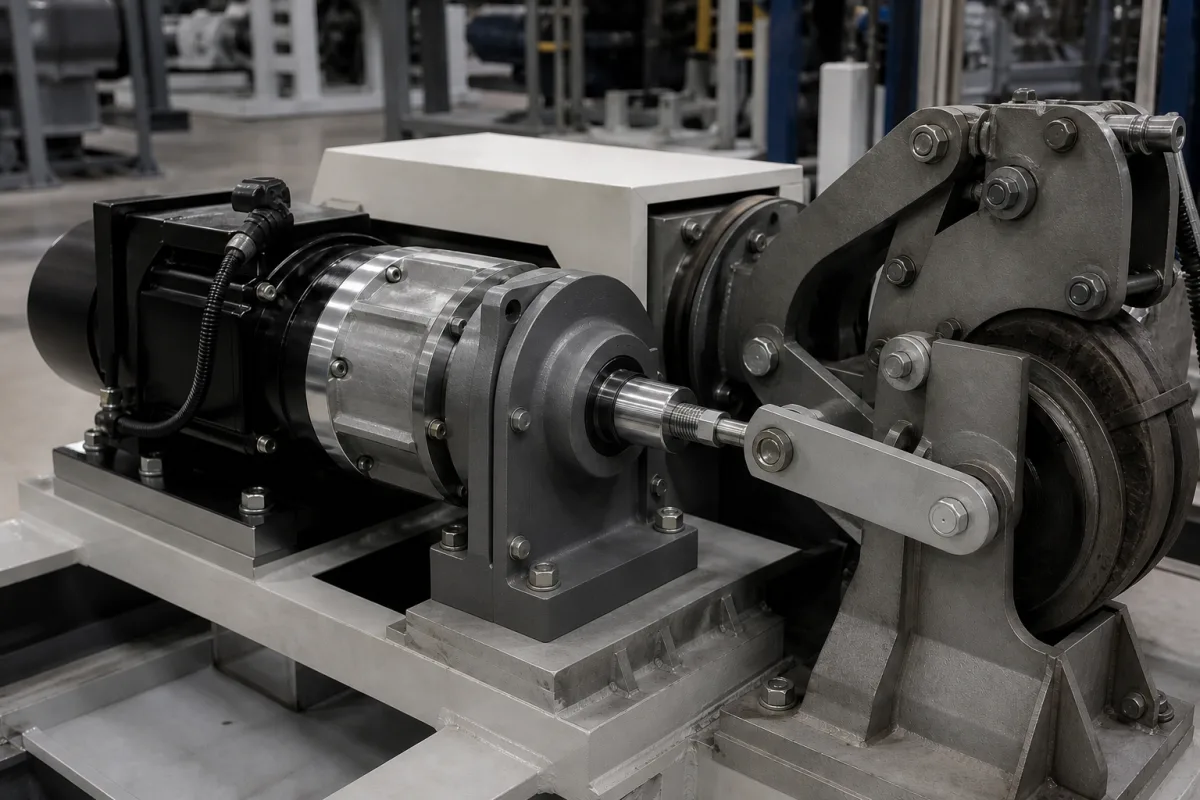
A canonical Force generation unit is characterized by the integration of Force transmission rod and Coil assembly. In industrial production environments, manufacturers listed on CNFX commonly emphasize Steel alloys construction to support stable, high-cycle operation across diverse manufacturing scenarios.

A mechanical or electromechanical component within an actuator system that produces the required force for braking, clutching, or driving operations.
Product Specifications

Technical details and manufacturing context for Force generation unit

Definition
The force generation unit is a critical sub-component of actuators used in brake, clutch, and drive systems. It converts input energy (typically electrical, hydraulic, or pneumatic) into mechanical force that enables the actuator to perform its intended function, such as applying braking pressure, engaging/disengaging a clutch, or transmitting driving torque. This unit directly determines the actuator's force output capabilities and response characteristics.
Working Principle
The force generation unit operates by converting an input energy source into linear or rotational mechanical force. Common mechanisms include electromagnetic solenoids (converting electrical energy to magnetic force), hydraulic pistons (converting fluid pressure to linear force), pneumatic cylinders (using compressed air), or mechanical linkages with amplification. The generated force is then transmitted to the actuator's output mechanism.
Common Materials
Steel alloys, Aluminum alloys, Copper windings, Polymer seals
Technical Parameters
  • Maximum output force capacity (N) Standard Spec
Components / BOM
  • Force transmission rod
    Transmits generated force to the actuator mechanism
    Material: Steel alloy
  • Coil assembly
    Generates electromagnetic field in solenoid-type units
    Material: Copper windings with insulation
  • Piston
    Converts fluid pressure to mechanical force in hydraulic/pneumatic units
    Material: Aluminum or steel with polymer seals
  • Return spring
    Returns the unit to neutral position when force generation ceases
    Material: Spring steel
Engineering Reasoning
50-300 N·m torque output, 0.1-2.0 m/s linear velocity, 12-48 VDC input
350 N·m torque threshold for permanent deformation, 85°C winding temperature limit, 0.5 mm backlash tolerance
Design Rationale: Hysteresis heating in magnetic circuits exceeding Curie temperature (770°C for iron), gear tooth bending stress exceeding yield strength (250 MPa for 4140 steel)
Risk Mitigation (FMEA)
Trigger Armature current density exceeding 6 A/mm²
Mode: Copper winding insulation breakdown at 180°C
Strategy: Embedded NTC thermistors with 150°C cutoff, forced air cooling at 15 CFM minimum
Trigger Lubricant viscosity drop below ISO VG 32 at 100°C
Mode: Worm gear pitting fatigue at 10⁷ cycles under 200 N·m load
Strategy: Synthetic PAO lubricant with 0.5% MoS₂ additive, hardened 8620 steel gears with 60 HRC surface

Industry Taxonomies & Aliases

Commonly used trade names and technical identifiers for Force generation unit.

Applied To / Applications

This component is essential for the following industrial systems and equipment:

Industrial Ecosystem & Supply Chain DNA

Complementary Systems
Downstream Applications
Specialized Tooling

Application Fit & Sizing Matrix

Operational Limits
pressure: Up to 300 bar
other spec: Max flow rate: 50 L/min, Max slurry concentration: 15% solids by weight
temperature: -40°C to +120°C
Media Compatibility
✓ Hydraulic oil (ISO VG 32-68) ✓ Compressed air (dry, filtered) ✓ Water-glycol mixtures
Unsuitable: Corrosive chemical environments (e.g., strong acids, chlorides)
Sizing Data Required
  • Required force output (N)
  • Operating pressure (bar)
  • Stroke length (mm)

Reliability & Engineering Risk Analysis

Failure Mode & Root Cause
Bearing fatigue failure
Cause: Cyclic loading from unbalanced rotating components, improper lubrication leading to metal-to-metal contact, or contamination ingress causing surface degradation and eventual spalling.
Seal leakage and degradation
Cause: Thermal cycling causing elastomer hardening/cracking, misalignment creating uneven wear surfaces, or chemical incompatibility with process fluids leading to seal material breakdown.
Maintenance Indicators
  • High-frequency vibration accompanied by audible whining or grinding noises from the housing
  • Visible fluid leakage around shaft seals or casing joints with temperature anomalies at connection points
Engineering Tips
  • Implement precision laser alignment during installation and re-alignment after maintenance to minimize bearing loads and seal wear from misalignment forces.
  • Establish condition-based lubrication program using oil analysis to monitor contamination levels and additive depletion, adjusting intervals based on actual operating conditions rather than fixed time schedules.

Compliance & Manufacturing Standards

Reference Standards
ISO 9001:2015 - Quality management systems ASME B46.1-2019 - Surface Texture EN 1090-2:2018 - Execution of steel structures
Manufacturing Precision
  • Bore diameter: +/-0.025 mm
  • Surface flatness: 0.05 mm per 100 mm
Quality Inspection
  • Dimensional verification with CMM
  • Hydrostatic pressure test at 1.5x operating pressure

Factories Producing Force generation unit

Verified manufacturers with capability to produce this product in China

✓ 97% Supplier Capability Match Found

S Sourcing Manager from Canada Feb 13, 2026
★★★★★
"Impressive build quality. Especially the technical reliability is very stable during long-term operation."
Technical Specifications Verified
P Procurement Specialist from United States Feb 10, 2026
★★★★☆
"As a professional in the Machinery and Equipment Manufacturing sector, I confirm this Force generation unit meets all ISO standards. (Delivery took slightly longer than expected, but technical support was excellent.)"
Technical Specifications Verified
T Technical Director from United Arab Emirates Feb 07, 2026
★★★★★
"Standard OEM quality for Machinery and Equipment Manufacturing applications. The Force generation unit arrived with full certification."
Technical Specifications Verified
Verification Protocol

“Feedback is collected from verified sourcing managers during RFQ (Request for Quote) and factory evaluation processes on CNFX. These reports represent historical performance data and technical audit summaries from our B2B manufacturing network.”

9 sourcing managers are analyzing this specification now. Last inquiry for Force generation unit from Vietnam (1h ago).

Supply Chain Compatible Machinery & Devices

Heavy-Duty CNC Plasma Cutting Machine

Industrial machine for precision metal cutting using plasma arc technology

Explore Specs →
Automated Assembly Line System

Integrated production system for sequential component assembly operations

Explore Specs →
Automated Powder Coating System

Integrated industrial system for applying dry powder coatings to metal substrates.

Explore Specs →
Centrifugal Pump Impeller

Rotating component that transfers energy to fluid in centrifugal pumps.

Explore Specs →

Frequently Asked Questions

What is the primary function of a force generation unit in machinery?

The force generation unit produces controlled mechanical or electromechanical force required for critical operations like braking, clutching, and driving within actuator systems in industrial machinery.

What materials ensure durability in force generation units?

High-strength steel alloys for structural components, aluminum alloys for lightweight parts, copper windings for electromagnetic efficiency, and polymer seals for reliable operation in demanding environments.

How does the BOM contribute to force generation unit performance?

The force transmission rod transfers force, coil assembly enables electromagnetic operation, piston ensures precise movement, and return spring provides consistent resetting for repeated cycles in machinery applications.

Can I contact factories directly on CNFX?

CNFX is an open directory, not a transaction platform. Each factory profile provides direct contact information and production details to help you initiate direct inquiries with Chinese suppliers.

Get Quote for Force generation unit

Request technical pricing, lead times, or customized specifications for Force generation unit directly from verified manufacturing units.

Your business information is encrypted and only shared with verified Force generation unit suppliers.

Thank you! Your message has been sent. We'll respond within 1–3 business days.

Need to Manufacture Force generation unit?

Connect with verified factories specializing in this product category

Add Your Factory Contact Us
Previous Product
Force Control System
Next Product
Force Monitoring System