Industry-Verified Manufacturing Data (2026)

Slag Separation Unit

Based on aggregated insights from multiple verified factory profiles within the CNFX directory, the standard Slag Separation Unit used in the Basic Metal Manufacturing sector typically supports operational capacities ranging from standard industrial configurations to heavy-duty production requirements.

Technical Definition & Core Assembly

A canonical Slag Separation Unit is characterized by the integration of Separation Chamber / Launder and Slag Skimming Mechanism. In industrial production environments, manufacturers listed on CNFX commonly emphasize Refractory Lined Steel construction to support stable, high-cycle operation across diverse manufacturing scenarios.

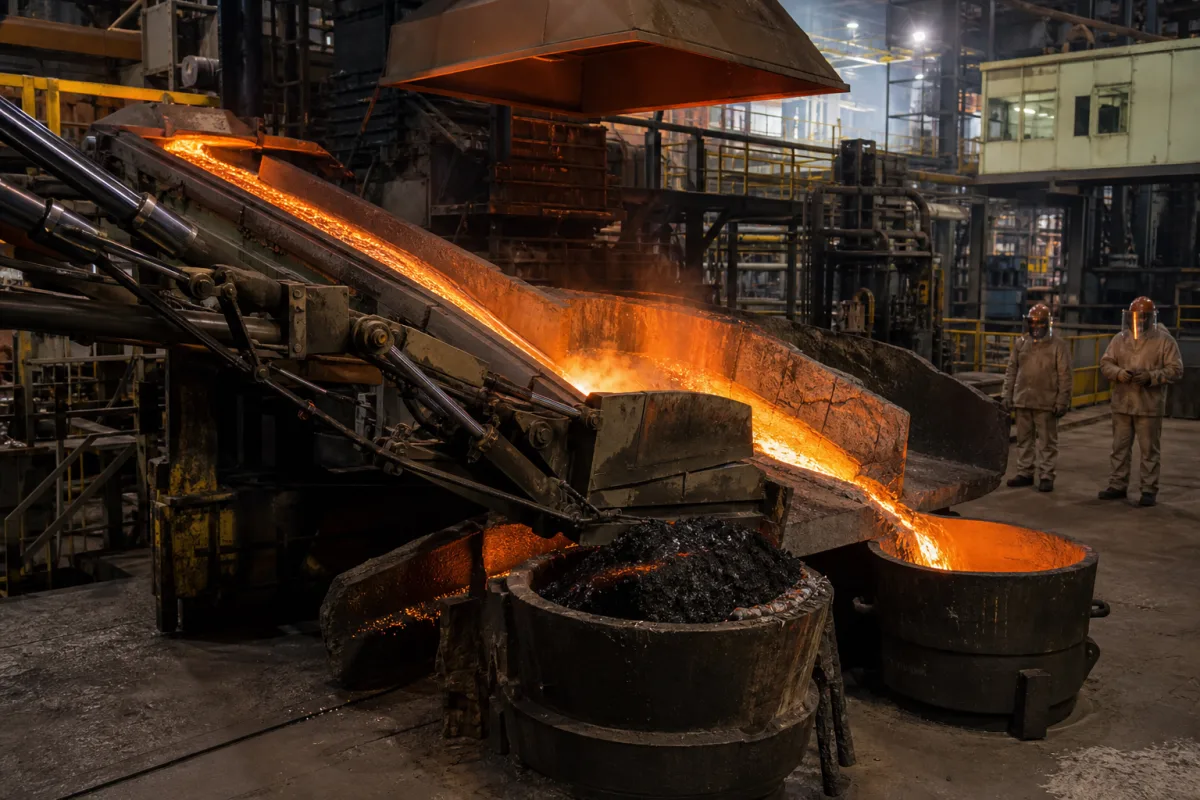
A component within the Integrated Hot Metal Desulfurization and Slag Treatment System that physically separates molten slag from desulfurized hot metal after the desulfurization process.
Product Specifications

Technical details and manufacturing context for Slag Separation Unit

Definition
The Slag Separation Unit is a critical component of the Integrated Hot Metal Desulfurization and Slag Treatment System. Following the injection of desulfurizing agents (typically lime-based powders) into the hot metal, this unit facilitates the physical separation of the resulting sulfur-rich slag from the purified molten iron. It ensures efficient removal of the waste slag layer, preventing recontamination of the metal and preparing the slag for subsequent cooling, granulation, or treatment processes within the integrated system.
Working Principle
The unit operates by leveraging the difference in density and immiscibility between molten iron and slag. After desulfurization, the mixture is directed into a separation chamber or launder designed to allow the lighter slag to float to the surface. Mechanical rakes, tilting mechanisms, or weirs are then employed to skim off, drain, or divert the separated slag layer into a dedicated slag handling system, while the cleaned hot metal flows onward for further processing or casting.
Common Materials
Refractory Lined Steel
Technical Parameters
  • Typical internal dimensions (length/width/depth) of the separation chamber or launder. (mm) Standard Spec
Components / BOM
  • Separation Chamber / Launder
    Holds the metal-slag mixture, providing residence time and surface area for separation.
    Material: Steel shell with refractory lining
  • Slag Skimming Mechanism
    Mechanical device (e.g., rake, tilting frame) to remove the separated slag layer from the metal surface.
    Material: Heat-resistant alloy steel
  • Slag Outlet / Chute
    Channels the removed slag away from the separation unit to the slag treatment system.
    Material: Refractory lined steel
Engineering Reasoning
0.1-0.5 bar differential pressure across separation baffle, 1450-1550°C operating temperature
Baffle deformation exceeding 15mm deflection at 1550°C, refractory erosion depth >50mm, slag viscosity <0.5 Pa·s at operating temperature
Design Rationale: Thermal creep deformation of Inconel 617 baffle material above 0.4Tm (melting point 1330°C), coupled with CaO-SiO₂-Al₂O₃ slag corrosion at oxygen partial pressure >10⁻⁸ atm
Risk Mitigation (FMEA)
Trigger Thermal cycling between 800-1550°C exceeding 20 cycles/hour
Mode: Refractory lining spallation due to differential thermal expansion mismatch (α_refractory=6.5×10⁻⁶/°C vs α_shell=12×10⁻⁶/°C)
Strategy: Monolithic refractory installation with expansion joints every 1.2m, preheating protocol maintaining 200°C minimum during downtime
Trigger Slag basicity (CaO/SiO₂ ratio) dropping below 1.2
Mode: Increased slag fluidity causing carryover of 3-5% metal droplets into slag stream
Strategy: Real-time XRF composition monitoring with automated lime addition to maintain basicity at 1.3-1.5

Industry Taxonomies & Aliases

Commonly used trade names and technical identifiers for Slag Separation Unit.

Industrial Ecosystem & Supply Chain DNA

Complementary Systems
Downstream Applications
Specialized Tooling

Application Fit & Sizing Matrix

Operational Limits
pressure: Atmospheric to 0.5 bar gauge (minimal pressure differential)
flow rate: 50-500 tons/hour (hot metal throughput)
temperature: 1300-1600°C (hot metal processing range)
slag concentration: 5-25% by volume in metal stream
Media Compatibility
✓ Molten iron with calcium-based desulfurization slag ✓ Hot metal with magnesium-based treatment residues ✓ Steelmaking slags containing CaO-SiO2-Al2O3 systems
Unsuitable: Chloride-containing slags or environments (causes severe refractory corrosion)
Sizing Data Required
  • Hot metal throughput rate (tons/hour)
  • Required slag removal efficiency (%)
  • Available installation footprint (length × width)

Reliability & Engineering Risk Analysis

Failure Mode & Root Cause
Abrasive wear of separation plates/screens
Cause: Continuous exposure to high-velocity slag particles with varying hardness and sharp edges, leading to material degradation and loss of separation efficiency.
Thermal fatigue cracking in structural components
Cause: Cyclic thermal stresses from repeated heating/cooling cycles during slag processing, combined with mechanical loading, causing crack initiation and propagation.
Maintenance Indicators
  • Unusual vibration or grinding noises from the separation chamber, indicating component wear or imbalance
  • Visible slag leakage or bypass around separation elements, suggesting seal failure or structural compromise
Engineering Tips
  • Implement real-time particle size monitoring and adjust feed rates to prevent oversize particles from accelerating abrasive wear
  • Apply thermal barrier coatings on critical structural components and establish controlled cooling procedures to minimize thermal cycling stresses

Compliance & Manufacturing Standards

Reference Standards
ISO 9001:2015 Quality Management Systems ASTM E94 Standard Guide for Radiographic Testing CE Machinery Directive 2006/42/EC
Manufacturing Precision
  • Bore Diameter: +/-0.05mm
  • Surface Flatness: 0.15mm per meter
Quality Inspection
  • Ultrasonic Thickness Testing
  • Hardness Testing (Rockwell C Scale)

Factories Producing Slag Separation Unit

Verified manufacturers with capability to produce this product in China

✓ 95% Supplier Capability Match Found

S Sourcing Manager from Brazil Feb 01, 2026
★★★★★
"Great transparency on the Slag Separation Unit components. Essential for our Basic Metal Manufacturing supply chain."
Technical Specifications Verified
P Procurement Specialist from Canada Jan 29, 2026
★★★★☆
"The Slag Separation Unit we sourced perfectly fits our Basic Metal Manufacturing production line requirements. (Delivery took slightly longer than expected, but technical support was excellent.)"
Technical Specifications Verified
T Technical Director from United States Jan 26, 2026
★★★★★
"Found 38+ suppliers for Slag Separation Unit on CNFX, but this spec remains the most cost-effective."
Technical Specifications Verified
Verification Protocol

“Feedback is collected from verified sourcing managers during RFQ (Request for Quote) and factory evaluation processes on CNFX. These reports represent historical performance data and technical audit summaries from our B2B manufacturing network.”

7 sourcing managers are analyzing this specification now. Last inquiry for Slag Separation Unit from Mexico (1h ago).

Supply Chain Compatible Machinery & Devices

Electromagnetic Induction Heater

Industrial heating device using electromagnetic induction for metal processing

Explore Specs →
Vacuum Induction Melting Furnace

Industrial furnace for melting metals under vacuum using electromagnetic induction

Explore Specs →
Electroslag Remelting Furnace

Secondary refining furnace for high-quality metal ingots

Explore Specs →
Molten Metal Flow Control Valve

Precision valve for regulating molten metal flow in casting and pouring operations.

Explore Specs →

Frequently Asked Questions

What is the primary function of a slag separation unit in hot metal desulfurization?

The slag separation unit physically separates molten slag from desulfurized hot metal after the desulfurization process, ensuring clean metal transfer to downstream processes while efficiently removing waste slag.

What materials are used in constructing slag separation units for high-temperature applications?

Slag separation units are typically constructed from refractory-lined steel to withstand extreme temperatures and corrosive molten slag environments in basic metal manufacturing operations.

What are the key components of a standard slag separation unit?

Key components include a separation chamber/launder for metal-slag interface, a slag outlet/chute for waste removal, and a slag skimming mechanism for efficient separation of molten slag from hot metal.

Can I contact factories directly on CNFX?

CNFX is an open directory, not a transaction platform. Each factory profile provides direct contact information and production details to help you initiate direct inquiries with Chinese suppliers.

Get Quote for Slag Separation Unit

Request technical pricing, lead times, or customized specifications for Slag Separation Unit directly from verified manufacturing units.

Your business information is encrypted and only shared with verified Slag Separation Unit suppliers.

Thank you! Your message has been sent. We'll respond within 1–3 business days.

Need to Manufacture Slag Separation Unit?

Connect with verified factories specializing in this product category

Add Your Factory Contact Us
Previous Product
Slag Outlet / Chute
Next Product
Slag Skimming Mechanism