Industry-Verified Manufacturing Data (2026)

High-Purity Industrial Adhesive Base Resin

Based on aggregated insights from multiple verified factory profiles within the CNFX directory, the standard High-Purity Industrial Adhesive Base Resin used in the Chemical Manufacturing sector typically supports operational capacities ranging from standard industrial configurations to heavy-duty production requirements.

Technical Definition & Core Assembly

A canonical High-Purity Industrial Adhesive Base Resin is characterized by the integration of Polymer backbone and Reactive functional groups. In industrial production environments, manufacturers listed on CNFX commonly emphasize Epoxy monomers construction to support stable, high-cycle operation across diverse manufacturing scenarios.

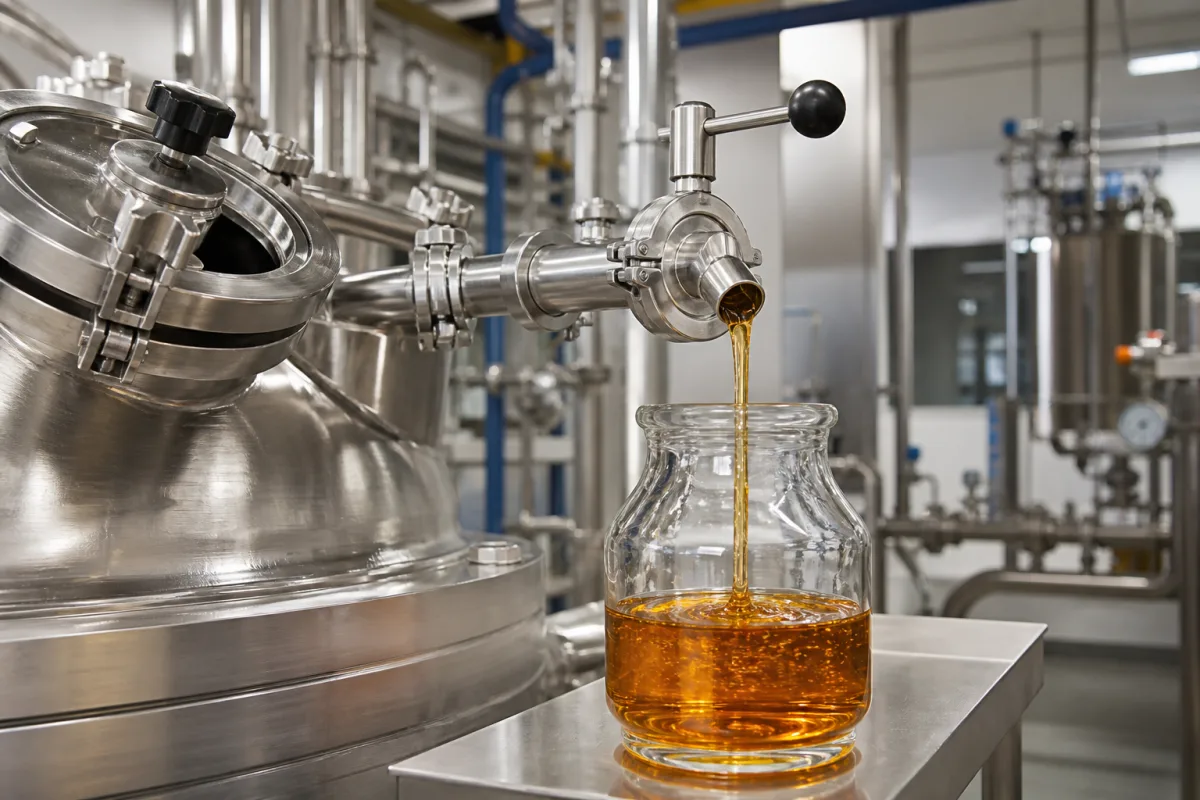
Semi-finished polymer resin for industrial adhesive formulations.

Product Specifications

Technical details and manufacturing context for High-Purity Industrial Adhesive Base Resin

Definition
High-purity industrial adhesive base resin is a specialized polymer material manufactured as a semi-finished chemical product for downstream adhesive production. This material serves as the foundational component in B2B supply chains for industrial adhesive manufacturers, providing consistent chemical properties and performance characteristics. It enables formulation of structural adhesives, sealants, and bonding compounds across multiple industrial sectors. The material undergoes controlled polymerization and purification processes to ensure batch-to-battle consistency and compatibility with various curing agents and additives.
Working Principle
Polymer chains provide cohesive strength and adhesion through molecular entanglement and chemical bonding when combined with curing agents.
Common Materials
Epoxy monomers, Acrylic monomers, Polyurethane prepolymers
Technical Parameters
  • Flow characteristics at processing temperature (cP) Standard Spec
  • Temperature at which polymer transitions from glassy to rubbery state (°C) Standard Spec
Components / BOM
  • Polymer backbone
    Provides structural integrity and mechanical properties
    Material: Synthetic polymer chains
  • Reactive functional groups
    Enable cross-linking with curing agents
    Material: Epoxy, hydroxyl, or acrylic groups
  • Stabilizer package Optional
    Prevents premature polymerization and degradation
    Material: Antioxidants and inhibitors
  • Rheology modifiers Optional
    Controls viscosity and flow characteristics
    Material: Fumed silica or thickeners
Engineering Reasoning
0.1-15 MPa at 20-80°C
Viscosity exceeds 5000 cP at 25°C or glass transition temperature exceeds 120°C
Design Rationale: Polymer chain scission due to thermal degradation at >150°C or crosslinking density reduction below 0.5 mol/m³
Risk Mitigation (FMEA)
Trigger Moisture absorption exceeding 0.5% w/w during storage
Mode: Premature curing during adhesive formulation
Strategy: Hermetic sealing with desiccant packs maintaining <10% RH
Trigger Shear rate exceeding 1000 s⁻¹ during mixing
Mode: Molecular weight degradation reducing bond strength by >40%
Strategy: Progressive shear mixing with maximum 500 s⁻¹ limit

Industry Taxonomies & Aliases

Commonly used trade names and technical identifiers for High-Purity Industrial Adhesive Base Resin.

Industrial Ecosystem & Supply Chain DNA

Complementary Systems
Downstream Applications
Specialized Tooling

Application Fit & Sizing Matrix

Operational Limits
pressure: Atmospheric to 50 psi (3.4 bar) max
flow rate: 0.1-5.0 L/min for pumping applications
temperature: -40°C to 150°C continuous, 180°C peak
slurry concentration: Up to 60% solids by weight
Media Compatibility
✓ Metals (steel, aluminum, stainless) ✓ Plastics (ABS, PVC, polycarbonate) ✓ Glass and ceramics
Unsuitable: Strong oxidizing acids (e.g., concentrated nitric acid)
Sizing Data Required
  • Required bond strength (MPa or psi)
  • Substrate surface area to be bonded (m² or ft²)
  • Cure time requirements (minutes to hours)

Reliability & Engineering Risk Analysis

Failure Mode & Root Cause
Polymerization and solidification
Cause: Exposure to ambient moisture or temperature fluctuations causing premature curing, often due to inadequate storage conditions or contamination during handling.
Viscosity degradation and phase separation
Cause: Thermal cycling or prolonged storage leading to molecular breakdown or ingredient stratification, typically from improper temperature control or exceeding shelf life.
Maintenance Indicators
  • Visible crystallization, gelling, or skin formation on the resin surface indicating moisture ingress or contamination
  • Audible hissing or bubbling sounds from storage containers suggesting chemical reaction or off-gassing due to thermal runaway or contamination
Engineering Tips
  • Implement strict moisture control with nitrogen blanketing in storage tanks and use desiccant breathers to prevent atmospheric humidity from initiating premature polymerization
  • Maintain precise temperature control within ±2°C of manufacturer's specified range using jacketed vessels with automated thermal regulation to prevent viscosity changes and phase separation

Compliance & Manufacturing Standards

Reference Standards
ISO 10993-5: Biological evaluation of medical devices - Tests for in vitro cytotoxicity ASTM D1002: Standard Test Method for Apparent Shear Strength of Single-Lap-Joint Adhesively Bonded Metal Specimens by Tension Loading (Metal-to-Metal) CE Marking: Compliance with EU Regulation (EU) 2017/745 on medical devices for adhesive applications in medical settings
Manufacturing Precision
  • Viscosity: +/- 5% of specified value at 25°C
  • Moisture content: ≤ 0.1% by weight
Quality Inspection
  • Gel Permeation Chromatography (GPC) for molecular weight distribution analysis
  • Fourier Transform Infrared Spectroscopy (FTIR) for chemical composition verification

Factories Producing High-Purity Industrial Adhesive Base Resin

Verified manufacturers with capability to produce this product in China

✓ 94% Supplier Capability Match Found

P Project Engineer from United Arab Emirates Feb 22, 2026
★★★★★
"The technical documentation for this High-Purity Industrial Adhesive Base Resin is very thorough, especially regarding Viscosity at 25°C (cP)."
Technical Specifications Verified
S Sourcing Manager from Australia Feb 19, 2026
★★★★★
"Reliable performance in harsh Chemical Manufacturing environments. No issues with the High-Purity Industrial Adhesive Base Resin so far."
Technical Specifications Verified
P Procurement Specialist from Singapore Feb 16, 2026
★★★★★
"Testing the High-Purity Industrial Adhesive Base Resin now; the Viscosity at 25°C (cP) results are within 1% of the laboratory datasheet."
Technical Specifications Verified
Verification Protocol

“Feedback is collected from verified sourcing managers during RFQ (Request for Quote) and factory evaluation processes on CNFX. These reports represent historical performance data and technical audit summaries from our B2B manufacturing network.”

5 sourcing managers are analyzing this specification now. Last inquiry for High-Purity Industrial Adhesive Base Resin from Turkey (1h ago).

Supply Chain Commonly Integrated Components

Temperature Control Unit

A precision thermal management component that regulates and maintains specific temperature conditions within a continuous flow pharmaceutical reactor system.

Explore Specs →
Process Analytics

Real-time monitoring and analysis system for pharmaceutical manufacturing processes

Explore Specs →
Dust Containment System

A safety and environmental control system designed to capture, contain, and prevent the escape of airborne pharmaceutical powder particles during blending operations.

Explore Specs →
Feed Tank & Pump

A combined unit consisting of a storage tank and pump for feeding solvent into an automated recovery and purification system.

Explore Specs →

Frequently Asked Questions

What is the typical pot life for this industrial adhesive base resin?

The pot life varies by formulation but typically ranges from 2-8 hours at room temperature, allowing sufficient working time for industrial adhesive manufacturing processes.

Can this resin be customized for specific viscosity requirements?

Yes, the rheology modifiers in the BOM allow viscosity adjustment from 500 to 50,000 cP at 25°C to meet various application and processing needs.

What industries commonly use this type of adhesive base resin?

This resin is used in automotive, aerospace, construction, electronics, and packaging industries for manufacturing structural adhesives, sealants, and bonding compounds.

Can I contact factories directly on CNFX?

CNFX is an open directory, not a transaction platform. Each factory profile provides direct contact information and production details to help you initiate direct inquiries with Chinese suppliers.

Get Quote for High-Purity Industrial Adhesive Base Resin

Request technical pricing, lead times, or customized specifications for High-Purity Industrial Adhesive Base Resin directly from verified manufacturing units.

Your business information is encrypted and only shared with verified High-Purity Industrial Adhesive Base Resin suppliers.

Thank you! Your message has been sent. We'll respond within 1–3 business days.

Need to Manufacture High-Purity Industrial Adhesive Base Resin?

Connect with verified factories specializing in this product category

Add Your Factory Contact Us
Previous Product
High-Pressure Nozzle Array
Next Product
Honeycomb Structure