Editorial Technical Reference

Microreactor Unit

This page explains how Microreactor Unit is classified within Chemical Manufacturing. Technical values and manufacturer relationships are research references; confirm the current specification and supplier evidence for each order.

Technical Definition & Core Assembly

A microreactor unit is a single, self-contained reactor cell designed as a building block for microreactor array systems.
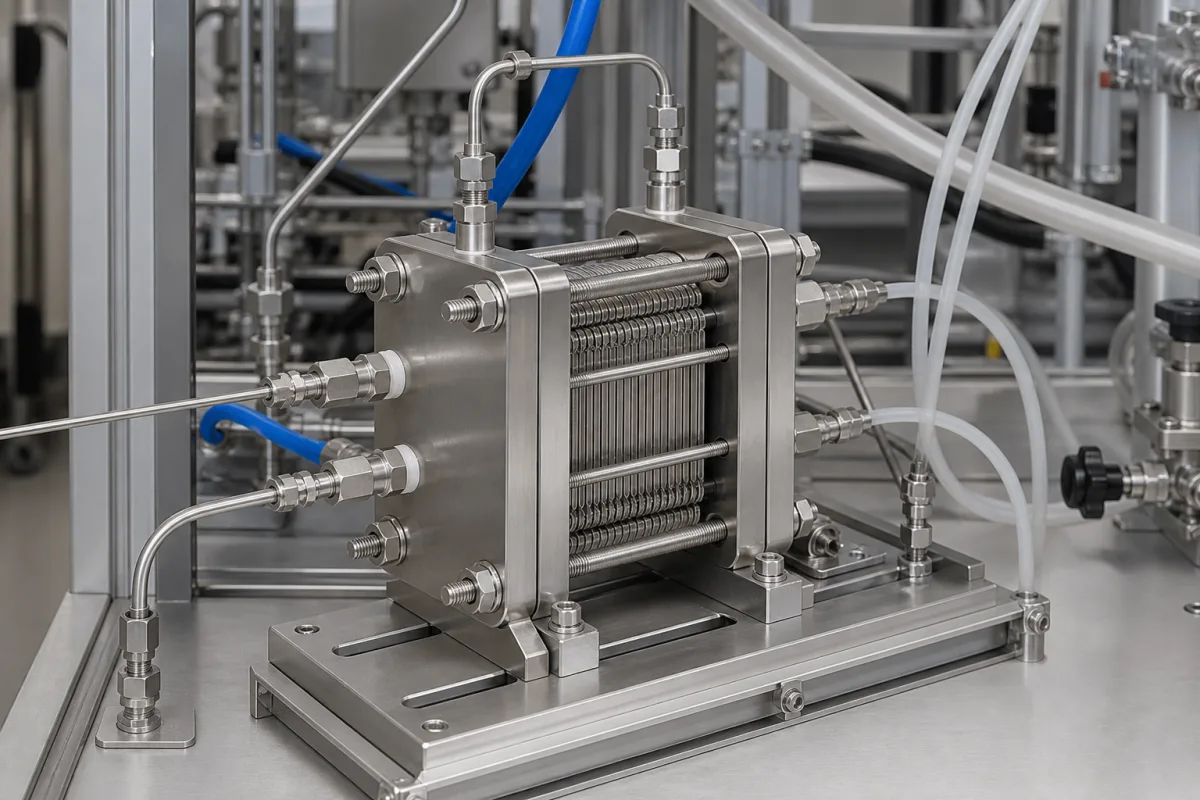
Representative product image. Confirm appearance and specifications with the manufacturer.

Product Specifications

Technical details and manufacturing context for Microreactor Unit

Definition
A microreactor unit is a single, self-contained reactor cell designed as a building block for microreactor array systems. It enables precise chemical reactions, mixing, or processing at microscale volumes, with enhanced heat and mass transfer characteristics. The unit typically features microscale channels and structures that allow for fine control over residence time, temperature, and mixing, making it suitable for applications requiring rapid and efficient reactions. Common materials include stainless steel, silicon, and glass, each offering different chemical compatibility and thermal properties. Key parameters include reactor volume (0.1–10 mL), channel width (0.1–1.0 mm), channel depth (0.1–0.5 mm), surface area to volume ratio (10,000–50,000 m²/m³), operating temperature (-20 to 200 °C), operating pressure (1.0–1.6 MPa), flow rate range (0.1–100 mL/min), residence time (0.1–60 s), heat transfer coefficient (1000–5000 W/(m²·K)), material (316L stainless steel per ASTM A240), sealing material (FFKM per ASTM D1418), dimensions (50×50×20 mm), weight (0.5–1.5 kg), and leak rate (≤1×10⁻⁶ Pa·m³/s per ISO 15848-1). These values are reference ranges and must be verified for the specific model and application. The unit is designed for modular integration, allowing scalability and flexibility in process development. It is essential to confirm all specifications with the legal manufacturer or supplier before procurement.
Working Principle
The microreactor unit operates by directing fluids through microscale channels where chemical reactions or mixing occur. The small dimensions increase the surface area to volume ratio, enhancing heat and mass transfer. Precise control over flow rates and residence times allows for optimized reaction kinetics. The modular design enables integration into larger arrays for increased throughput.
Common Materials
Stainless Steel, Silicon, Glass
Technical Parameters
ParameterTypical rangeNotes & selection driver
Reactor Volume0.1–10 mLDetermines throughput and residence time
Channel Width0.1–1.0 mmAffects mixing and heat transfer
Channel Depth0.1–0.5 mmInfluences pressure drop and residence time distribution
Surface Area to Volume Ratio10000–50000 m²/m³Higher ratio improves heat and mass transfer
Operating Temperature-20–200 °CLimited by sealing materials and chemical compatibility
Flow Rate Range0.1–100 mL/minDepends on channel dimensions and pressure drop
Residence Time0.1–60 sCritical for reaction kinetics
Heat Transfer Coefficient1000–5000 W/(m²·K)High values enable precise temperature control
Material316LStainless steel for corrosion resistanceASTM A240
Sealing MaterialFFKMPerfluoroelastomer for chemical compatibilityASTM D1418
Dimensions (L×W×H)50×50×20 mmCompact footprint for modular integration
Weight0.5–1.5 kgLightweight for easy handling
Leak Rate≤1×10⁻⁶ Pa·m³/sEnsures safety and process integrityISO 15848-1

Ranges are indicative industry figures for RFQ preparation, not a supplier commitment. Confirm every value and standard with the legal manufacturer before ordering.

Components / BOM
  • Microchannel Structure Part
    Primary flow path for reactants and products
    Material: Silicon or Stainless Steel
  • Heat Exchange Layer Part
    Temperature control through integrated cooling/heating channels
    Material: Stainless Steel
  • Inlet/Outlet Ports Part
    Connection points for fluid input and output
    Material: Stainless Steel
  • Sealing Interface Part
    Ensures leak-proof connection between units in array
    Material: PTFE or Viton

Applied To / Applications

This component is essential for the following industrial systems and equipment:

Industrial Ecosystem & Supply Chain Structure

Complementary Systems
Downstream Applications
Specialized Tooling

Application Fit & Sizing Matrix

Operational Limits
pressure: 0 to 10 bar
flow rate: 0.1 to 10 mL/min
temperature: -20°C to 200°C
slurry concentration: Up to 20% solids by volume
Media Compatibility
✓ Organic solvents (e.g., ethanol, acetone) ✓ Aqueous solutions with pH 2-12 ✓ Gas-liquid mixtures (e.g., hydrogenation reactions)
Unsuitable: Highly corrosive media (e.g., concentrated sulfuric acid, hydrofluoric acid)
Sizing Data Required
  • Required residence time (seconds to minutes)
  • Target production rate (mass or volume per unit time)
  • Reaction kinetics data (rate constants, activation energy)

Reliability & Engineering Risk Analysis

Failure Mode & Root Cause
Catalyst deactivation or fouling
Cause: Accumulation of impurities, thermal degradation, or poisoning from feed contaminants, leading to reduced reaction efficiency and potential blockages.
Microchannel clogging or erosion
Cause: Particulate buildup from feed streams, corrosion products, or abrasive wear due to high-velocity flows, resulting in flow maldistribution or leakage.
Maintenance Indicators
  • Unexplained pressure drop increase or flow rate decrease across the reactor, indicating potential blockages or fouling.
  • Abnormal temperature profiles or hot spots detected by thermal imaging, suggesting localized catalyst degradation or flow issues.
Engineering Tips
  • Implement rigorous feed pretreatment (e.g., filtration, purification) to minimize contaminants that cause fouling, corrosion, or catalyst poisoning.
  • Establish a proactive thermal monitoring and cleaning schedule (e.g., decoking, chemical flushing) based on operational cycles to prevent irreversible damage.

Indicative industry ranges for design and RFQ preparation. Confirm the exact figures and applicable standard with the manufacturer before specifying.

Compliance & Manufacturing Standards

Applicable Standards
ASME BPVC Section VIII - Pressure Vessel Standards IEC 61508 - Functional Safety of Electrical/Electronic/Programmable Electronic Safety-related Systems

Quoted from the published standard.

Manufacturing Precision
  • Channel Dimensions: +/-0.01mm
  • Surface Roughness: Ra ≤ 0.8μm
Quality Inspection
  • Helium Leak Testing (ASTM E499/E499M)
  • Material Composition Verification via XRF Analysis

Manufacturers of Microreactor Unit

Manufacturer profiles associated with Microreactor Unit.

Sourcing Microreactor Unit from China?
Tell us your specification and target quantity — we will match it against manufacturer records and come back with the factories that fit.
Request manufacturers We manufacture this

Manufacturer listings support early research and capability understanding. They are not certification, ranking, or transaction guarantees.

Technical documentation
Request current drawings, revision history, and a signed specification sheet.
Manufacturing capability
Verify equipment lists, process limits, capacity, and representative production evidence.
Inspection readiness
Confirm test methods, calibrated equipment, sampling plans, and traceable reports.
Supplier transparency
Check the legal entity, factory address, ownership, certifications, and direct contacts.

CNFX does not score or rank suppliers. Buyers must verify all claims and documents with the legal manufacturer before ordering.

Supply Chain Compatible Machinery & Devices

Continuous Flow Reactor System

A modular, automated chemical processing system designed for continuous flow synthesis of chemical products.

Explore Specs →
Automated Batch Crystallization System

Automated system for controlled crystallization of chemical compounds in batch processes.

Explore Specs →
Automated pH Monitoring and Dosing System

Automated system for continuous pH monitoring and chemical dosing in process streams.

Explore Specs →
Automated Powder Dispensing and Blending System

Automated system for precise dispensing and homogeneous blending of powdered chemicals.

Explore Specs →

Frequently Asked Questions

What is a microreactor unit used for?

It is used for precise chemical reactions, mixing, or processing at microscale volumes, often in research or small-scale production.

What materials are available?

Common materials include stainless steel, silicon, and glass, each with different chemical compatibility and thermal properties.

What are the typical operating conditions?

Operating temperature ranges from -20 to 200 °C, and pressure from 1.0 to 1.6 MPa, but these must be verified for the specific model.

How do I verify the specifications?

Always check the datasheet and confirm all parameters with the legal manufacturer or supplier, as values may vary by model.

Data Basis

Editorial classification, named public sources where available, and source-reviewed manufacturer records.

Preliminary Technical Classification
This page supports structured research, RFQ preparation, and supplier evaluation. It does not replace buyer-led supplier qualification, standards review, or technical approval.
Buyer enquiry

Request manufacturing insight for Microreactor Unit

Ask for use case, specification boundaries, supplier type, and RFQ preparation information for this product.

Where it goes
Straight to the CNFX editorial desk, and to the manufacturer if this product is linked to a claimed profile. Nothing is broadcast to a supplier list.
Your details stay here
We do not sell or rent enquiry data, and we do not add you to a mailing list. Used only to answer this request.
No commission, no middleman
CNFX is a directory. We take no cut of any order and never negotiate on a supplier's behalf.
What we don't claim
A listing is not an endorsement. Qualify every supplier and verify every figure yourself before ordering.

Your business information is used only to process this request.

Thank you! Your message has been sent. We'll respond within 1–3 business days.
Sorry, we couldn't send your message. Please try again, or email us at contact@cnfx.com.

Need to Manufacture Microreactor Unit?

Compare manufacturer profiles with relevant product and process capability.

Previous Product
Twin-Screw Polymer Compounding Extruder
Last Product
Get QuotesChat