Industry-Verified Manufacturing Data (2026)

Tail Gas Heater

Based on aggregated insights from multiple verified factory profiles within the CNFX directory, the standard Tail Gas Heater used in the Chemical Manufacturing sector typically supports operational capacities ranging from standard industrial configurations to heavy-duty production requirements.

Technical Definition & Core Assembly

A canonical Tail Gas Heater is characterized by the integration of Tube Bundle / Plate Pack and Shell / Casing. In industrial production environments, manufacturers listed on CNFX commonly emphasize Stainless Steel (e.g., 304L, 316L) construction to support stable, high-cycle operation across diverse manufacturing scenarios.

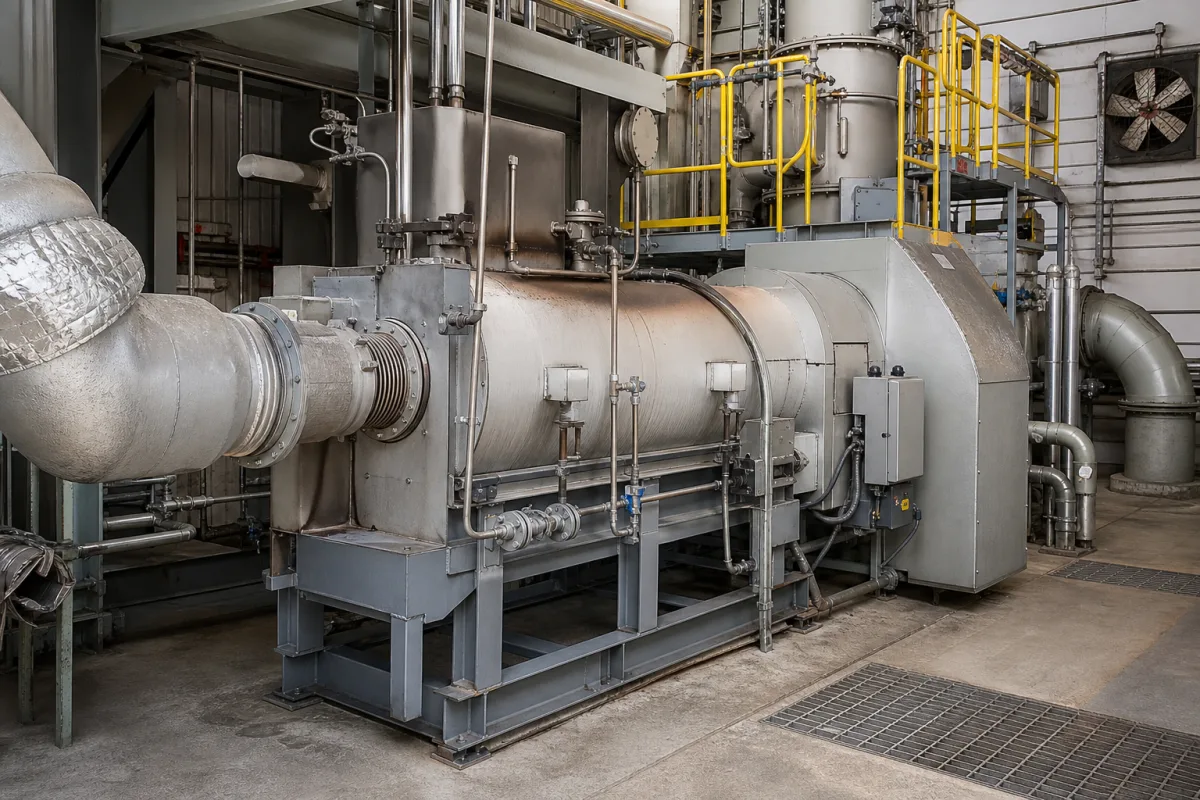
A heat exchanger that recovers thermal energy from nitric acid plant tail gases to improve system efficiency.
Product Specifications

Technical details and manufacturing context for Tail Gas Heater

Definition
The Tail Gas Heater is a critical component within the Integrated Nitric Acid Production and Concentration System, specifically designed to recover waste heat from the tail gas stream exiting the absorption column. It transfers this thermal energy to incoming process streams, typically the air feed to the ammonia oxidation reactor or other process fluids, thereby reducing overall energy consumption and improving the thermal efficiency of the nitric acid plant.
Working Principle
Hot tail gas (primarily nitrogen, oxygen, and residual NOx) from the absorption column flows through one side of the heat exchanger. A cooler process stream (e.g., combustion air) flows on the opposite side. Heat is transferred from the tail gas to the process stream through conduction across the heat exchanger tubes or plates, preheating the incoming fluid before it enters subsequent process stages.
Common Materials
Stainless Steel (e.g., 304L, 316L), Nickel Alloys (for high-temperature/corrosive sections)
Technical Parameters
  • Tube diameter and length, or plate dimensions, defining the heat transfer surface area. (mm) Standard Spec
Components / BOM
  • Tube Bundle / Plate Pack
    Provides the primary surface for conductive heat transfer between the two fluid streams.
    Material: Stainless Steel or Nickel Alloy
  • Shell / Casing
    Encloses the tube bundle or plates, contains the shell-side fluid, and provides structural support.
    Material: Carbon Steel or Stainless Steel
  • Tube Sheets / Headers
    Secures the ends of the tubes or channels the plate-side fluid, separating the two fluid streams.
    Material: Stainless Steel or Forged Carbon Steel
Engineering Reasoning
0.5-2.0 bar pressure, 150-400°C gas inlet temperature, 80-200°C gas outlet temperature
Tube wall temperature exceeding 550°C causes material creep, pressure differential exceeding 2.5 bar causes tube rupture, gas velocity exceeding 25 m/s causes erosion-corrosion
Design Rationale: Thermal fatigue from cyclic temperature gradients exceeding 300°C/hour, stress corrosion cracking from nitric acid condensation below 120°C dew point, fouling resistance exceeding 0.0005 m²·K/W
Risk Mitigation (FMEA)
Trigger Catalyst bed temperature exceeding 900°C producing NO₂ concentration above 2000 ppm
Mode: Nitric acid condensation in tubes causing stress corrosion cracking
Strategy: Install gas preheater maintaining inlet temperature above 150°C, apply Inconel 625 cladding on tube surfaces
Trigger Ammonia slip exceeding 50 ppm forming ammonium nitrate deposits
Mode: Fouling layer thickness exceeding 2 mm reducing heat transfer coefficient below 50 W/m²·K
Strategy: Implement online sootblowing system with 30 bar steam injection, install electrostatic precipitator upstream

Industry Taxonomies & Aliases

Commonly used trade names and technical identifiers for Tail Gas Heater.

Industrial Ecosystem & Supply Chain DNA

Complementary Systems
Downstream Applications
Specialized Tooling

Application Fit & Sizing Matrix

Operational Limits
pressure: Up to 10 bar (145 psi) operating pressure
flow rate: 10,000-100,000 Nm³/h (5,900-59,000 SCFM)
temperature: Up to 600°C (1112°F) inlet, typical ΔT 100-300°C
slurry concentration: Not applicable - gas phase only, particulate loading <50 mg/Nm³
Media Compatibility
✓ Nitric acid tail gas (NOx, N2, O2, H2O) ✓ Process air preheating applications ✓ Steam generation systems
Unsuitable: Chloride-containing gases (risk of stress corrosion cracking)
Sizing Data Required
  • Tail gas flow rate and composition
  • Required temperature lift/heat recovery target
  • Available pressure drop allowance

Reliability & Engineering Risk Analysis

Failure Mode & Root Cause
High-temperature corrosion
Cause: Sulfidation or oxidation due to sulfur compounds and oxygen in tail gas at elevated temperatures, accelerated by thermal cycling and material degradation.
Tube fouling and blockage
Cause: Accumulation of particulates, coke, or salts from the tail gas stream, leading to reduced heat transfer efficiency, increased pressure drop, and potential overheating.
Maintenance Indicators
  • Visible hotspots or discoloration on the heater casing indicating uneven heating or internal tube failure
  • Abnormal increase in stack gas temperature or decrease in process outlet temperature signaling fouling or insulation issues
Engineering Tips
  • Implement regular infrared thermography surveys to detect early signs of tube wall thinning, hotspots, or refractory damage
  • Optimize soot-blowing frequency and use online monitoring of flue gas oxygen and combustion parameters to minimize fouling and corrosion rates

Compliance & Manufacturing Standards

Reference Standards
ISO 13705:2012 (Petroleum, petrochemical and natural gas industries - Fired heaters for general refinery service) ASME B31.3 (Process Piping) DIN EN 12952 (Water-tube boilers and auxiliary installations)
Manufacturing Precision
  • Tube wall thickness: +/-10% of nominal thickness
  • Tube straightness: 0.5mm per meter length
Quality Inspection
  • Hydrostatic pressure test (1.5x design pressure)
  • Radiographic testing of critical welds

Factories Producing Tail Gas Heater

Verified manufacturers with capability to produce this product in China

✓ 92% Supplier Capability Match Found

S Sourcing Manager from United States Jan 08, 2026
★★★★★
"Great transparency on the Tail Gas Heater components. Essential for our Chemical Manufacturing supply chain."
Technical Specifications Verified
P Procurement Specialist from United Arab Emirates Jan 05, 2026
★★★★☆
"The Tail Gas Heater we sourced perfectly fits our Chemical Manufacturing production line requirements. (Delivery took slightly longer than expected, but technical support was excellent.)"
Technical Specifications Verified
T Technical Director from Australia Jan 02, 2026
★★★★★
"Found 32+ suppliers for Tail Gas Heater on CNFX, but this spec remains the most cost-effective."
Technical Specifications Verified
Verification Protocol

“Feedback is collected from verified sourcing managers during RFQ (Request for Quote) and factory evaluation processes on CNFX. These reports represent historical performance data and technical audit summaries from our B2B manufacturing network.”

15 sourcing managers are analyzing this specification now. Last inquiry for Tail Gas Heater from Germany (1h ago).

Supply Chain Compatible Machinery & Devices

Modular Distillation Column System

Pre-engineered modular system for continuous separation of chemical mixtures via distillation.

Explore Specs →
Automated Batch Crystallization System

Automated system for controlled crystallization of chemical compounds in batch processes.

Explore Specs →
Automated pH Monitoring and Dosing System

Automated system for continuous pH monitoring and chemical dosing in process streams.

Explore Specs →
Automated Powder Dispensing and Blending System

Automated system for precise dispensing and homogeneous blending of powdered chemicals.

Explore Specs →

Frequently Asked Questions

What materials are best for tail gas heaters in corrosive nitric acid plant environments?

Stainless steel grades like 304L or 316L are standard, while nickel alloys are recommended for high-temperature or highly corrosive sections to ensure durability and performance.

How does a tail gas heater improve nitric acid plant efficiency?

It recovers thermal energy from exhaust tail gases that would otherwise be wasted, reducing fuel consumption and lowering operating costs while maintaining optimal process temperatures.

What are the key components of a tail gas heater system?

The main components include the shell/casing, tube bundle or plate pack for heat transfer, and tube sheets/headers to manage gas flow and thermal exchange.

Can I contact factories directly on CNFX?

CNFX is an open directory, not a transaction platform. Each factory profile provides direct contact information and production details to help you initiate direct inquiries with Chinese suppliers.

Get Quote for Tail Gas Heater

Request technical pricing, lead times, or customized specifications for Tail Gas Heater directly from verified manufacturing units.

Your business information is encrypted and only shared with verified Tail Gas Heater suppliers.

Thank you! Your message has been sent. We'll respond within 1–3 business days.

Need to Manufacture Tail Gas Heater?

Connect with verified factories specializing in this product category

Add Your Factory Contact Us
Previous Product
System Control Unit (PLC/HMI)
Next Product
Tapping/Tilting Mechanism