Industry-Verified Manufacturing Data (2026)

Tower Shell

Based on aggregated insights from multiple verified factory profiles within the CNFX directory, the standard Tower Shell used in the Chemical Manufacturing sector typically supports operational capacities ranging from standard industrial configurations to heavy-duty production requirements.

Technical Definition & Core Assembly

A canonical Tower Shell is characterized by the integration of Shell Plates/Cylinders and Structural Stiffeners/Rings. In industrial production environments, manufacturers listed on CNFX commonly emphasize Carbon Steel construction to support stable, high-cycle operation across diverse manufacturing scenarios.

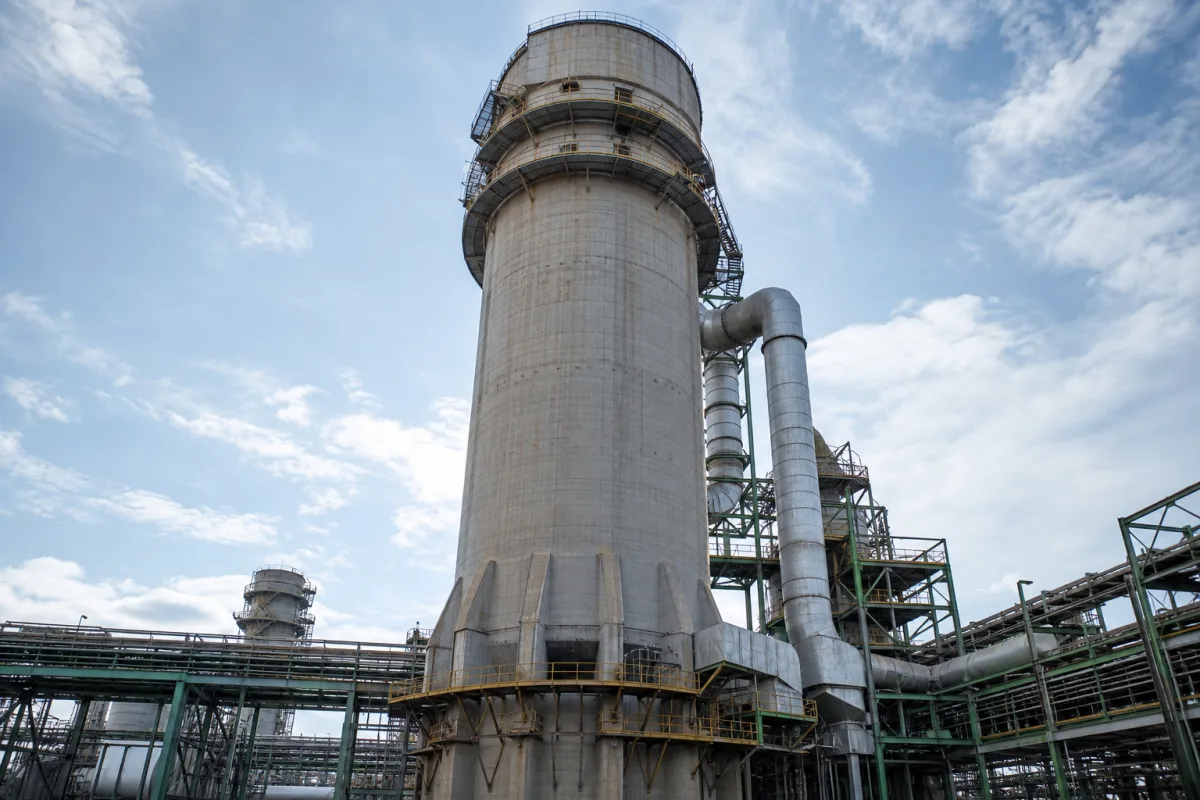
The outer cylindrical or conical structural enclosure of a prilling tower that contains the prilling process.
Product Specifications

Technical details and manufacturing context for Tower Shell

Definition
The tower shell is the primary structural component of a prilling tower, forming the vertical chamber in which molten material is sprayed and solidified into prills (small spherical particles) through contact with a cooling medium (typically air). It provides containment, structural support, and defines the residence time for particle solidification and cooling.
Working Principle
The shell acts as a containment vessel and structural frame. Process air flows through it, either co-currently or counter-currently to the falling molten droplets. The shell's height and diameter are designed to provide sufficient residence time for the droplets to solidify completely into solid prills before collection at the bottom.
Common Materials
Carbon Steel, Stainless Steel (e.g., 304, 316L)
Technical Parameters
  • Inner diameter and height of the cylindrical/conical section. (mm) Standard Spec
Components / BOM
  • Shell Plates/Cylinders
    Form the primary cylindrical or conical wall of the tower.
    Material: Steel (Carbon or Stainless)
  • Structural Stiffeners/Rings
    Provide circumferential rigidity and prevent buckling under load.
    Material: Steel
  • Insulation Layer
    Reduces heat loss, maintains internal temperature, and prevents condensation (if applicable).
    Material: Mineral Wool, Ceramic Fiber
  • Cladding
    Protects the insulation and provides an external finish.
    Material: Aluminum, Stainless Steel Sheet
Engineering Reasoning
0-150°C internal temperature, 0-1.5 bar internal pressure differential
Material yield strength exceeded at 250 MPa stress or 200°C sustained temperature
Design Rationale: Thermal stress-induced fatigue from cyclic heating/cooling during prilling process, following Δσ = EαΔT where E=200 GPa (steel), α=12×10⁻⁶/°C
Risk Mitigation (FMEA)
Trigger Corrosion from ammonium nitrate condensation at pH<4
Mode: Wall thickness reduction below 6 mm design minimum
Strategy: 316L stainless steel cladding with 2 mm minimum thickness
Trigger Structural resonance at 15-25 Hz matching prilling bucket rotation frequency
Mode: Fatigue cracking at weld joints
Strategy: Stiffening rings at 2 meter intervals to increase natural frequency to 35+ Hz

Industry Taxonomies & Aliases

Commonly used trade names and technical identifiers for Tower Shell.

Applied To / Applications

This component is essential for the following industrial systems and equipment:

Industrial Ecosystem & Supply Chain DNA

Complementary Systems
Downstream Applications
Specialized Tooling

Application Fit & Sizing Matrix

Operational Limits
pressure: Atmospheric to 0.5 bar gauge (typically near atmospheric)
flow rate: Dependent on tower diameter and process design
temperature: -20°C to 150°C (typical), up to 200°C with special materials
slurry concentration: Up to 75% solids by weight (process dependent)
Media Compatibility
✓ Urea melt prilling ✓ Ammonium nitrate prilling ✓ Chemical fertilizer granulation
Unsuitable: Highly corrosive acidic environments (e.g., sulfuric acid production)
Sizing Data Required
  • Required production capacity (tons/hour)
  • Tower height for required cooling/drying time
  • Material properties of product being prilled

Reliability & Engineering Risk Analysis

Failure Mode & Root Cause
Corrosion-induced thinning
Cause: Exposure to corrosive process fluids, atmospheric moisture, or chemical spills leading to material loss and reduced structural integrity.
Fatigue cracking at weld seams or stress concentrations
Cause: Cyclic thermal expansion/contraction, vibration from internal components, or wind loading causing progressive crack initiation and propagation.
Maintenance Indicators
  • Visible bulging, distortion, or localized thinning detected during visual inspection
  • Audible cracking or popping sounds during thermal cycles or pressure changes
Engineering Tips
  • Implement regular ultrasonic thickness testing at critical zones (bottom courses, weld areas, nozzles) to monitor corrosion rates and schedule proactive repairs
  • Install expansion joints or flexible connections at piping interfaces to reduce thermal stress transfer to the shell, and ensure proper foundation leveling to prevent uneven loading

Compliance & Manufacturing Standards

Reference Standards
ISO 9001:2015 - Quality management systems ASTM A572 - Standard Specification for High-Strength Low-Alloy Columbium-Vanadium Structural Steel EN 1090-2 - Execution of steel structures and aluminium structures
Manufacturing Precision
  • Diameter: +/- 5 mm per 10 m height
  • Verticality: 0.1% of total height
Quality Inspection
  • Ultrasonic Testing (UT) for weld integrity
  • Dimensional Verification with laser scanning

Factories Producing Tower Shell

Verified manufacturers with capability to produce this product in China

✓ 97% Supplier Capability Match Found

S Sourcing Manager from Canada Jan 20, 2026
★★★★★
"Impressive build quality. Especially the technical reliability is very stable during long-term operation."
Technical Specifications Verified
P Procurement Specialist from United States Jan 17, 2026
★★★★☆
"As a professional in the Chemical Manufacturing sector, I confirm this Tower Shell meets all ISO standards. (Delivery took slightly longer than expected, but technical support was excellent.)"
Technical Specifications Verified
T Technical Director from United Arab Emirates Jan 14, 2026
★★★★★
"Standard OEM quality for Chemical Manufacturing applications. The Tower Shell arrived with full certification."
Technical Specifications Verified
Verification Protocol

“Feedback is collected from verified sourcing managers during RFQ (Request for Quote) and factory evaluation processes on CNFX. These reports represent historical performance data and technical audit summaries from our B2B manufacturing network.”

6 sourcing managers are analyzing this specification now. Last inquiry for Tower Shell from Poland (1h ago).

Supply Chain Compatible Machinery & Devices

Modular Distillation Column System

Pre-engineered modular system for continuous separation of chemical mixtures via distillation.

Explore Specs →
Automated Batch Crystallization System

Automated system for controlled crystallization of chemical compounds in batch processes.

Explore Specs →
Automated pH Monitoring and Dosing System

Automated system for continuous pH monitoring and chemical dosing in process streams.

Explore Specs →
Automated Powder Dispensing and Blending System

Automated system for precise dispensing and homogeneous blending of powdered chemicals.

Explore Specs →

Frequently Asked Questions

What materials are commonly used for tower shells in chemical prilling towers?

Tower shells are typically constructed from carbon steel or stainless steel grades like 304 and 316L, chosen for their corrosion resistance and structural integrity in chemical environments.

What are the key components of a tower shell assembly?

A complete tower shell assembly includes shell plates/cylinders, structural stiffeners or rings for support, insulation layers for temperature control, and protective cladding.

How does the tower shell contribute to the prilling process efficiency?

The tower shell provides a contained environment for the prilling process, maintaining proper temperature and airflow conditions while protecting the process from external contaminants.

Can I contact factories directly on CNFX?

CNFX is an open directory, not a transaction platform. Each factory profile provides direct contact information and production details to help you initiate direct inquiries with Chinese suppliers.

Get Quote for Tower Shell

Request technical pricing, lead times, or customized specifications for Tower Shell directly from verified manufacturing units.

Your business information is encrypted and only shared with verified Tower Shell suppliers.

Thank you! Your message has been sent. We'll respond within 1–3 business days.

Need to Manufacture Tower Shell?

Connect with verified factories specializing in this product category

Add Your Factory Contact Us
Previous Product
Thermowell Assemblies
Next Product
Trays (e.g., Sieve, Valve)