Processor Unit
View system integration details
This page explains how Central Processing Core is classified within Computer, Electronic and Optical Product Manufacturing. Technical values and manufacturer relationships are research references; confirm the current specification and supplier evidence for each order.
The primary computational and control unit within a processor that executes instructions and manages data flow.
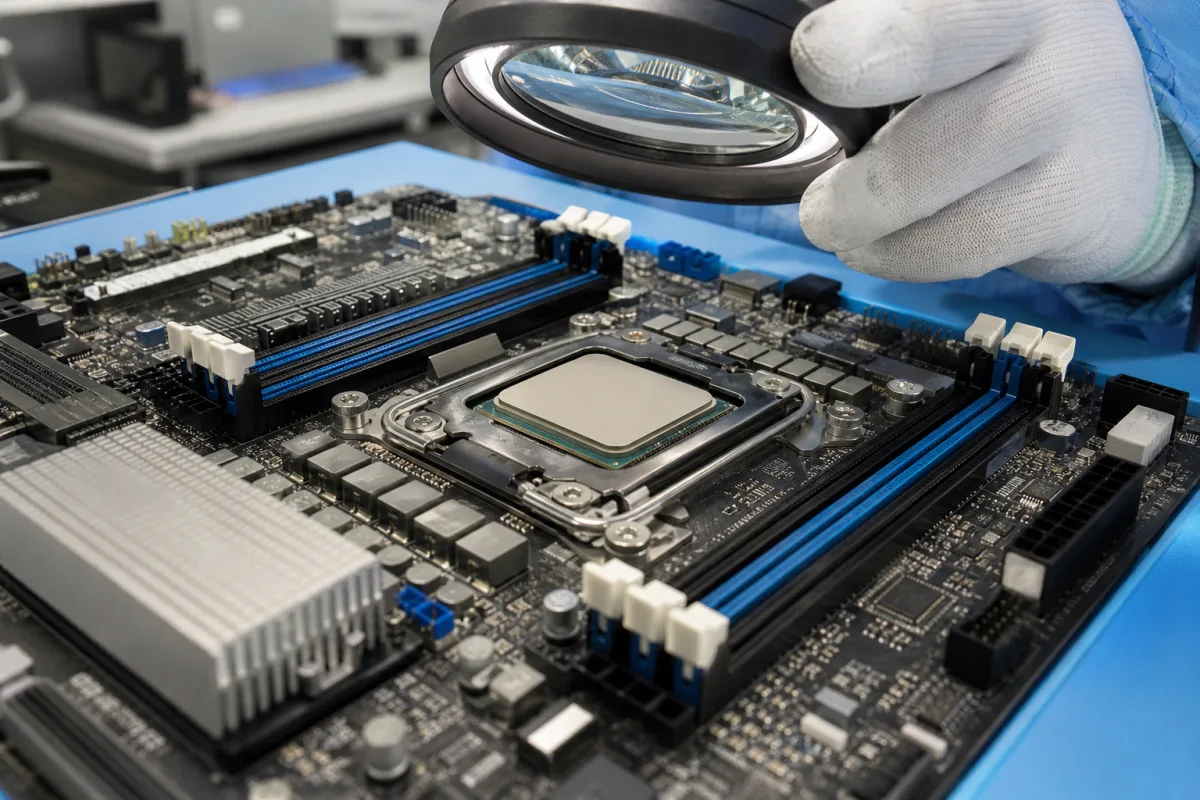
Technical details and manufacturing context for Central Processing Core
| Parameter | Typical range | Notes & selection driver |
|---|---|---|
| Clock Speed | 2.0–4.0 GHz | Higher speeds increase performance but also power consumption. |
| Core Count | 4–64 cores | More cores improve multitasking and parallel processing. |
| Cache Size | 8–128 MB | Larger cache reduces memory latency. |
| Power Consumption (TDP) | 65–280 W | Affects cooling and power supply requirements. |
| Operating Temperature | 0–85 °C | Exceeding limits may cause thermal throttling or damage. |
| Supply Voltage | 0.9–1.8 V | Lower voltage reduces power but may affect stability. |
| Process Node | 7–14 nm | Smaller nodes offer better efficiency and density. |
| Max Memory Bandwidth | 50–200 GB/s | Higher bandwidth reduces data bottlenecks. |
| Package Dimensions | 37.5–45 mm | Must fit motherboard socket and cooling solution. |
| Weight | 20–60 g | Affects handling and mounting. |
| ESD Protection | ±2000 V | Ensures robustness during handling.IEC 61000-4-2 |
| MTBF | 100000–500000 hours | Reliability indicator for industrial applications. |
Ranges are indicative industry figures for RFQ preparation, not a supplier commitment. Confirm every value and standard with the legal manufacturer before ordering.
This component is essential for the following industrial systems and equipment:
| voltage: | 0.8V to 1.2V |
| temperature: | 0°C to +85°C |
| clock frequency: | Up to 5 GHz |
| power dissipation: | Max 150W |
Indicative industry ranges for design and RFQ preparation. Confirm the exact figures and applicable standard with the manufacturer before specifying.
Quoted from the published standard.
Manufacturer profiles associated with Central Processing Core.
Manufacturer listings support early research and capability understanding. They are not certification, ranking, or transaction guarantees.
A practical evidence checklist for RFQ preparation and supplier evaluation.
CNFX does not score or rank suppliers. Buyers must verify all claims and documents with the legal manufacturer before ordering.
The Central Processing Core executes program instructions, performs arithmetic and logic operations, and coordinates data flow within a processor. It is the primary computational and control unit.
Typical parameters include clock speed (2.0–4.0 GHz), core count (4–64), cache size (8–128 MB), power consumption (65–280 W TDP), operating temperature (0–85 °C), supply voltage (0.9–1.8 V), process node (7–14 nm), and more. These are reference ranges; verify for specific models.
More cores enable better multitasking and parallel processing, allowing the processor to handle multiple tasks simultaneously. However, software must be optimized to utilize multiple cores effectively.
Consider the required computational performance, power and thermal constraints, compatibility with the motherboard and cooling solution, and environmental operating conditions. Always verify specifications with the manufacturer.
Editorial classification, named public sources where available, and source-reviewed manufacturer records.
Ask for use case, specification boundaries, supplier type, and RFQ preparation information for this product.
Compare manufacturer profiles with relevant product and process capability.