Editorial Technical Reference

Central Control and Data Acquisition Unit

This page explains how Central Control and Data Acquisition Unit is classified within Computer, Electronic and Optical Product Manufacturing. Technical values and manufacturer relationships are research references; confirm the current specification and supplier evidence for each order.

Technical Definition & Core Assembly

The Central Control and Data Acquisition Unit is a component designed for integration into multi-sensor camera systems, commonly used in industrial vision applications.
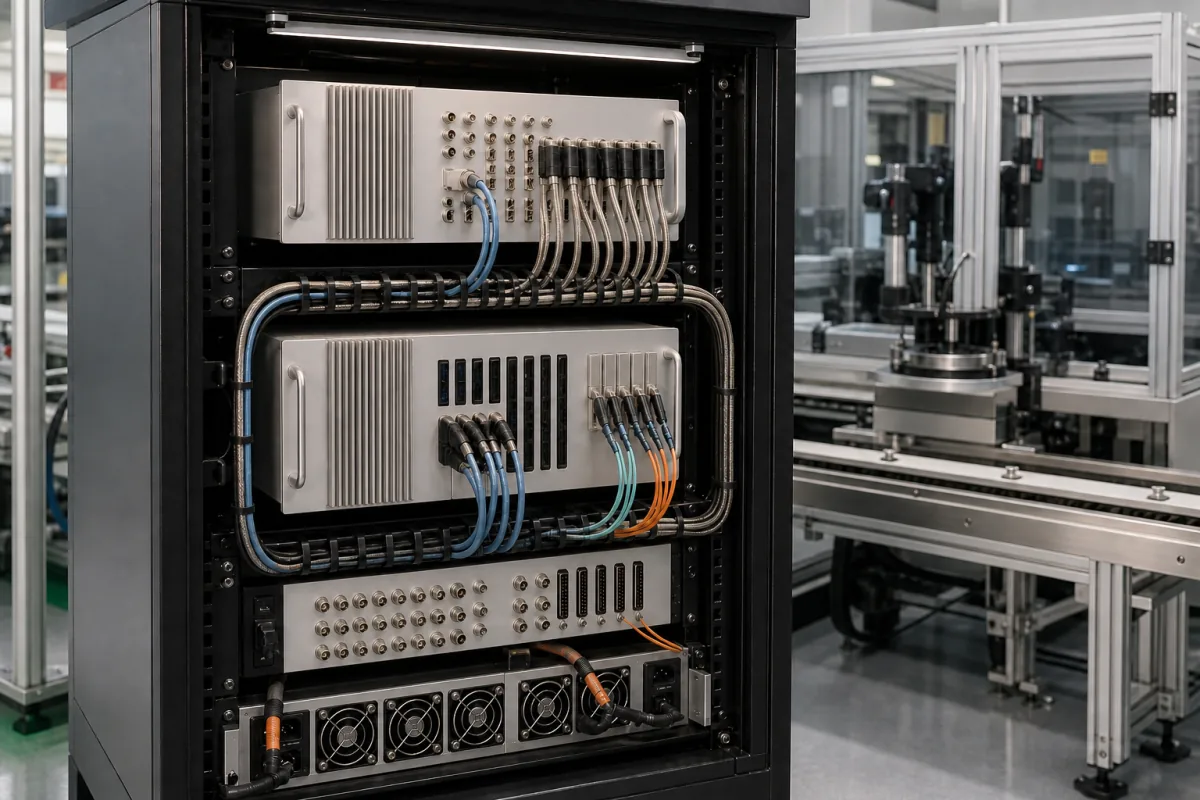
Representative product image. Confirm appearance and specifications with the manufacturer.

Product Specifications

Technical details and manufacturing context for Central Control and Data Acquisition Unit

Definition
The Central Control and Data Acquisition Unit is a component designed for integration into multi-sensor camera systems, commonly used in industrial vision applications. It functions as the primary processing hub within an Integrated Multi-Sensor Camera Module Assembly and Calibration System, coordinating data streams from multiple sensors, performing real-time processing and calibration, managing system synchronization, and interfacing with external control systems. The unit receives raw data inputs from camera sensors through high-speed interfaces such as GigE, USB 3.0, and CAN, applies calibration algorithms and image processing routines, synchronizes timing across all sensors, performs data fusion when required, and outputs processed data to downstream systems while maintaining system control and monitoring functions. Key specifications include a processor clock speed of 1.2–2.0 GHz, RAM capacity of 4–16 GB, storage capacity of 128–512 GB (eMMC or SSD), input power voltage of 9–36 V DC, power consumption of 15–30 W, operating temperature range of -40 to 85 °C, ingress protection rating of IP54–IP65 (per IEC 60529), weight of 0.5–1.5 kg, dimensions of 150×100×50 mm, ADC resolution of 12–16 bits, and sampling rate of 1–10 kHz per channel. The unit is typically constructed with an FR-4 PCB substrate, surface-mount electronic components, and an aluminum alloy housing. These specifications are reference ranges and must be verified for the specific model and application with the legal manufacturer or supplier. The unit is intended for use in industrial environments where reliable data acquisition and processing are critical. It is not a standalone product but a component that requires integration into a larger system. Buyers should confirm compatibility with their sensor suite and control interfaces. The listed ingress protection rating is a procurement reference and does not guarantee that a particular unit is certified or compliant; verification is required.
Working Principle
The unit receives raw data from multiple camera sensors via high-speed interfaces (GigE, USB 3.0, CAN). It applies calibration algorithms and image processing routines to the incoming data, synchronizes timing across all sensors to ensure coherent capture, and performs data fusion when required. Processed data is then output to downstream systems via the same interfaces. The unit also manages system control and monitoring functions, such as power management and status reporting. The processor clock speed and RAM capacity determine the ability to handle real-time multi-sensor fusion. The ADC resolution and sampling rate affect the precision and fidelity of analog sensor data acquisition. The unit operates within specified temperature and power ranges, and its ingress protection rating indicates suitability for dusty or wet environments.
Common Materials
FR-4 PCB substrate, Surface-mount electronic components, Aluminum alloy housing
Technical Parameters
ParameterTypical rangeNotes & selection driver
Processor Clock Speed1.2–2.0 GHzHigher speed enables real-time multi-sensor fusion.
RAM Capacity4–16 GBSufficient for buffering high-resolution image streams.
Storage Capacity128–512 GBeMMC or SSD for data logging.
Input Power Voltage9–36 V DCWide range for automotive/industrial use.
Power Consumption15–30 WDepends on processor load and peripherals.
Operating Temperature-40–85 °CIndustrial grade; extended range available.
Ingress Protection RatingIP54–IP65Protection against dust and water jets.IEC 60529
Weight0.5–1.5 kgDepends on enclosure and interfaces.
Dimensions (W x H x D)150×100×50 mmCompact for integration.
Data InterfaceGigE, USB 3.0, CANMultiple options for sensor connectivity.
ADC Resolution12–16 bitHigher resolution for precise analog sensor data.
Sampling Rate1–10 kHzPer channel; sufficient for dynamic signals.

Ranges are indicative industry figures for RFQ preparation, not a supplier commitment. Confirm every value and standard with the legal manufacturer before ordering.

Components / BOM
  • Main Processor Board
    Executes control algorithms and data processing routines
    Material: FR-4 PCB with embedded processors
  • Data Interface Module
    Manages high-speed communication with camera sensors and external systems
    Material: High-frequency PCB with interface controllers
  • Power Regulation Circuit
    Provides stable power supply to all internal components and connected sensors
    Material: Surface-mount power components on PCB
  • Thermal Management System
    Maintains optimal operating temperature through heat dissipation
    Material: Aluminum heat sink with thermal interface material
  • ADC Module
    Digitizes the analog sensor channels; its resolution and sampling rate set the acquisition fidelity.
  • System RAM
    Holds the multi-sensor frames being fused; its capacity bounds real-time throughput.

Industrial Ecosystem & Supply Chain Structure

Complementary Systems
Downstream Applications
Specialized Tooling

Application Fit & Sizing Matrix

Operational Limits
pressure: N/A (enclosed unit)
other spec: IP65 rating, 24VDC ±10% power input
temperature: -40°C to +85°C
Media Compatibility
✓ Indoor industrial environments ✓ Outdoor weather-protected enclosures ✓ Clean room facilities
Unsuitable: Direct exposure to corrosive chemicals or conductive dust
Sizing Data Required
  • Number of camera sensors to be managed
  • Maximum data throughput requirement (GB/hour)
  • Required processing latency (ms)

Reliability & Engineering Risk Analysis

Failure Mode & Root Cause
Overheating and thermal degradation
Cause: Inadequate ventilation, dust accumulation on heat sinks, or excessive ambient temperature causing component failure, particularly in microprocessors and power supplies.
Corrosion and electrical contact failure
Cause: Exposure to moisture, corrosive atmospheres (e.g., H2S, chlorine), or condensation leading to oxidation of connectors, circuit boards, and terminal blocks.
Maintenance Indicators
  • Intermittent or complete loss of communication with field devices (e.g., sensors, PLCs) despite network checks.
  • Unusual audible buzzing or clicking from internal power supplies or cooling fans, or visible discoloration/smell from overheating components.
Engineering Tips
  • Implement strict environmental controls: maintain ambient temperature within 15–25°C, humidity below 60% RH, and use filtered positive-pressure air to prevent dust ingress.
  • Schedule periodic firmware updates and configuration backups, and perform infrared thermography scans during operation to detect early-stage overheating.

Indicative industry ranges for design and RFQ preparation. Confirm the exact figures and applicable standard with the manufacturer before specifying.

Compliance & Manufacturing Standards

Applicable Standards
IEC 61000-6-2 - Electromagnetic compatibility (EMC) for industrial environments UL 61010-1 - Safety requirements for electrical equipment for measurement, control, and laboratory use

Quoted from the published standard.

Manufacturing Precision
  • PCB trace width: +/-0.05mm
  • Enclosure flatness: 0.2mm per meter
Quality Inspection
  • Environmental stress screening (ESS) - temperature and vibration testing
  • Functional test - verification of all input/output channels and communication protocols

Manufacturers of Central Control and Data Acquisition Unit

Manufacturer profiles associated with Central Control and Data Acquisition Unit.

Sourcing Central Control and Data Acquisition Unit from China?
Tell us your specification and target quantity — we will match it against manufacturer records and come back with the factories that fit.
Request manufacturers We manufacture this

Manufacturer listings support early research and capability understanding. They are not certification, ranking, or transaction guarantees.

Technical documentation
Request current drawings, revision history, and a signed specification sheet.
Manufacturing capability
Verify equipment lists, process limits, capacity, and representative production evidence.
Inspection readiness
Confirm test methods, calibrated equipment, sampling plans, and traceable reports.
Supplier transparency
Check the legal entity, factory address, ownership, certifications, and direct contacts.

CNFX does not score or rank suppliers. Buyers must verify all claims and documents with the legal manufacturer before ordering.

Supply Chain Compatible Machinery & Devices

Industrial Smart Camera Module

The Industrial Smart Camera Module is a compact, self-contained vision processing unit designed for integration into industrial machinery and production lines.

Explore Specs →
Surface Mount Resistor

Passive electronic component for current limiting and voltage division in circuits

Explore Specs →
Surface Mount Capacitor

A surface mount capacitor is a fundamental electronic component used for energy storage, filtering, coupling, and decoupling in electronic circuits.

Explore Specs →
Surface Mount Technology (SMT) Pick-and-Place Machine

Automated machine that precisely places electronic components onto printed circuit boards.

Explore Specs →

Frequently Asked Questions

What is the primary function of the Central Control and Data Acquisition Unit?

It serves as the processing hub in a multi-sensor camera system, coordinating data from multiple sensors, performing real-time processing and calibration, synchronizing timing, and interfacing with external control systems.

Which data interfaces does the unit support?

The unit supports GigE, USB 3.0, and CAN interfaces for sensor connectivity and data output, as listed in the specifications.

What are the operating temperature and power requirements?

The unit operates within -40 to 85 °C and requires an input power voltage of 9–36 V DC, with power consumption of 15–30 W. These are reference ranges; verify for the specific model.

Is the unit certified to the IP rating mentioned?

The IP54–IP65 rating is listed as a reference per IEC 60529. It is not proof of certification for a specific unit; you must verify compliance with the manufacturer or supplier.

Data Basis

Editorial classification, named public sources where available, and source-reviewed manufacturer records.

Preliminary Technical Classification
This page supports structured research, RFQ preparation, and supplier evaluation. It does not replace buyer-led supplier qualification, standards review, or technical approval.
Buyer enquiry

Request manufacturing insight for Central Control and Data Acquisition Unit

Ask for use case, specification boundaries, supplier type, and RFQ preparation information for this product.

Where it goes
Straight to the CNFX editorial desk, and to the manufacturer if this product is linked to a claimed profile. Nothing is broadcast to a supplier list.
Your details stay here
We do not sell or rent enquiry data, and we do not add you to a mailing list. Used only to answer this request.
No commission, no middleman
CNFX is a directory. We take no cut of any order and never negotiate on a supplier's behalf.
What we don't claim
A listing is not an endorsement. Qualify every supplier and verify every figure yourself before ordering.

Your business information is used only to process this request.

Thank you! Your message has been sent. We'll respond within 1–3 business days.
Sorry, we couldn't send your message. Please try again, or email us at contact@cnfx.com.

Need to Manufacture Central Control and Data Acquisition Unit?

Compare manufacturer profiles with relevant product and process capability.

Previous Product
XY Positioning Stage
Last Product
Get QuotesChat