Editorial Technical Reference

Input Stage

This page explains how Input Stage is classified within Computer, Electronic and Optical Product Manufacturing. Technical values and manufacturer relationships are research references; confirm the current specification and supplier evidence for each order.

Technical Definition & Core Assembly

The initial signal processing section of a power amplifier that receives and conditions the input signal.
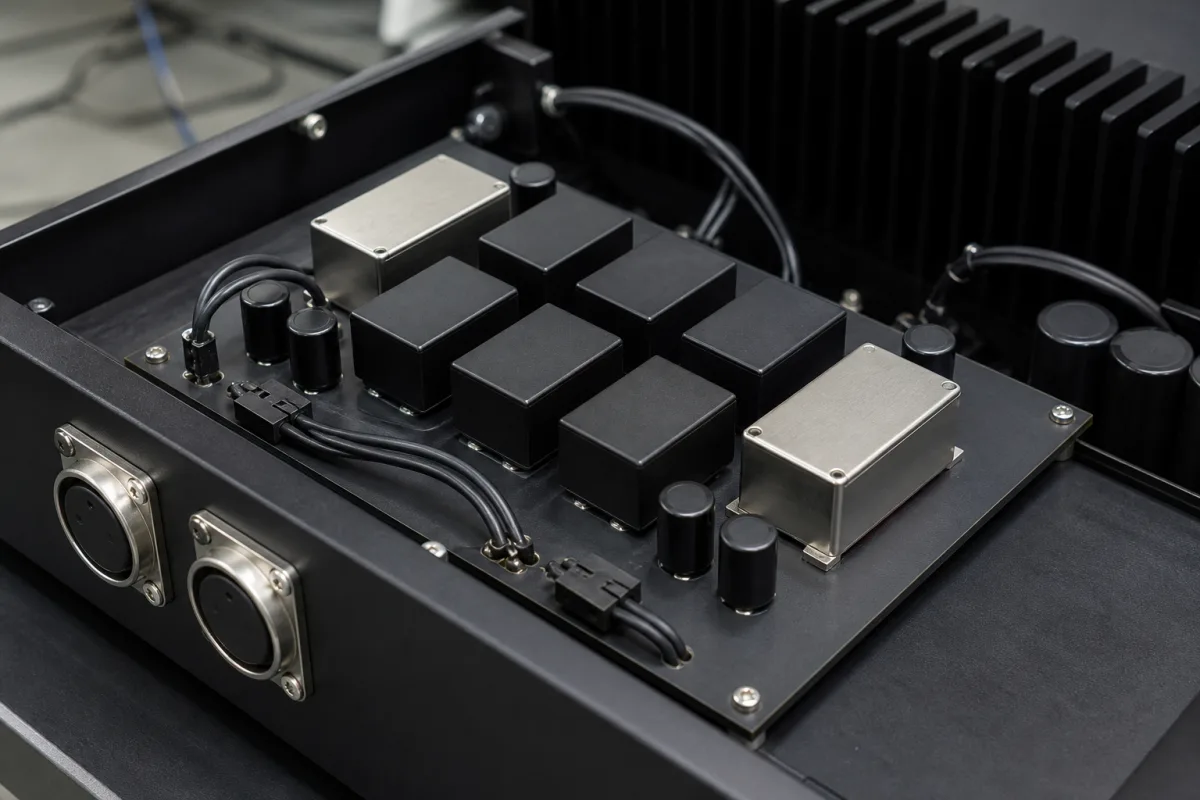
Representative product image. Confirm appearance and specifications with the manufacturer.

Product Specifications

Technical details and manufacturing context for Input Stage

Definition
The input stage is the first functional block within a power amplifier's signal chain. It is responsible for receiving the low-level input signal from a source device (such as a preamplifier, mixer, or instrument), providing appropriate impedance matching, and performing initial amplification and conditioning (e.g., buffering, gain adjustment, filtering) to prepare the signal for further processing by the driver and output stages. Its performance is critical for determining the amplifier's input sensitivity, noise floor, and overall signal fidelity. The input stage typically employs low-noise transistors (bipolar junction transistors or field-effect transistors) or operational amplifiers configured in a circuit that provides high input impedance to minimize loading on the source, low output impedance to drive subsequent stages, and controlled voltage gain. It stabilizes the signal level and often includes protection circuits against overvoltage or radio frequency interference. This directory entry covers the generic component type; specific models may vary in design and performance. Key parameters to verify with the manufacturer include input voltage range (0.5–2.0 V RMS), input impedance (10–100 kΩ), gain (20–40 dB), bandwidth (20–20000 Hz), total harmonic distortion (≤0.01% at 1 kHz, rated output, per IEC 60268-3), signal-to-noise ratio (≥100 dB A-weighted, referenced to full output, per IEC 60268-3), input overload margin (≥20 dB above rated input before clipping), operating temperature (-20–70°C, ambient, derate above 50°C, per IEC 60068-2-1/2), storage temperature (-40–85°C, non-operating, per IEC 60068-2-1/2), relative humidity (5–95% RH, non-condensing, per IEC 60068-2-78), power supply voltage (±15–±25 V DC, dual supply, ±18 V typical), power consumption (1–5 W quiescent, depends on class), input connector type (XLR, RCA, balanced/unbalanced, per IEC 60268-12), and dimensions (100×60×30 mm typical PCB module). Materials typically include semiconductor (silicon/gallium arsenide), printed circuit board (FR-4), copper, solder, and encapsulant/epoxy. Always confirm model-specific values and standards with the legal manufacturer or supplier before procurement.
Working Principle
The input stage operates by presenting a high input impedance to the source, typically 10–100 kΩ, to minimize loading. It uses low-noise transistors or operational amplifiers to provide controlled voltage gain (20–40 dB) and buffering. The circuit stabilizes the signal level, rejects common-mode noise (if balanced), and includes protection against overvoltage and RF interference. The output impedance is kept low to drive subsequent stages effectively. The stage's bandwidth covers the full audio range (20–20000 Hz) with low distortion (≤0.01% THD).
Common Materials
Semiconductor (Silicon/Gallium Arsenide), Printed Circuit Board (FR-4), Copper, Solder, Encapsulant/Epoxy
Technical Parameters
ParameterTypical rangeNotes & selection driver
Input Voltage Range0.5–2.0 V RMSTypical line-level input; higher may clip.
Input Impedance10–100 Higher reduces loading on source.
Gain20–40 dBAdjustable; affects sensitivity.
Bandwidth20–20000 HzFull audio range; -3 dB points.
Total Harmonic Distortion≤0.01 %At 1 kHz, rated output.IEC 60268-3
Signal-to-Noise Ratio≥100 dBA-weighted, referenced to full output.IEC 60268-3
Input Overload Margin≥20 dBAbove rated input before clipping.
Operating Temperature-20–70 °CAmbient; derate above 50°C.IEC 60068-2-1/2
Storage Temperature-40–85 °CNon-operating.IEC 60068-2-1/2
Relative Humidity5–95 % RHNon-condensing.IEC 60068-2-78
Power Supply Voltage±15–±25 V DCDual supply; ±18 V typical.
Power Consumption1–5 WQuiescent; depends on class.
Input Connector TypeXLR, RCABalanced/unbalanced.IEC 60268-12
Dimensions100×60×30 mmTypical PCB module size.

Ranges are indicative industry figures for RFQ preparation, not a supplier commitment. Confirm every value and standard with the legal manufacturer before ordering.

Components / BOM
  • Input Buffer Part
    Provides high input impedance and low output impedance to isolate the source from the amplifier's internal circuitry.
    Material: Semiconductor (e.g., JFET, Op-amp)
  • Gain Stage Transistor Part
    Amplifies the voltage of the input signal to a level suitable for the driver stage.
    Material: Semiconductor (BJT or MOSFET)
  • Bias Network Part
    Sets the DC operating point (quiescent current/voltage) of the active components for linear amplification.
    Material: Resistors, Capacitors
  • Input Protection Circuit Part
    Safeguards the sensitive input components from voltage spikes, electrostatic discharge, or RF interference.
    Material: Diodes, Resistors, Ferrite Beads

Applied To / Applications

This component is essential for the following industrial systems and equipment:

Industrial Ecosystem & Supply Chain Structure

Complementary Systems
Downstream Applications
Specialized Tooling

Application Fit & Sizing Matrix

Operational Limits
voltage: ±15V max
temperature: -40°C to +85°C
signal range: ±10V max input
frequency response: DC to 100kHz
Media Compatibility
✓ audio signals ✓ instrumentation signals ✓ control voltage signals
Unsuitable: high-voltage power lines
Sizing Data Required
  • input signal voltage range
  • required bandwidth/frequency response
  • input impedance requirements

Reliability & Engineering Risk Analysis

Failure Mode & Root Cause
Abrasive erosion
Cause: Presence of solid particles in the fluid causing material removal from surfaces
Cavitation
Cause: Rapid formation and collapse of vapor bubbles due to pressure fluctuations, leading to surface pitting
Maintenance Indicators
  • Unusual vibration or audible knocking sounds during operation
  • Visible leaks, discoloration, or abnormal temperature rise on the component
Engineering Tips
  • Implement proper filtration systems to remove contaminants and maintain fluid cleanliness
  • Ensure correct operating parameters (pressure, temperature, flow rates) within design specifications through regular monitoring

Indicative industry ranges for design and RFQ preparation. Confirm the exact figures and applicable standard with the manufacturer before specifying.

Compliance & Manufacturing Standards

Applicable Standards
ANSI B46.1 DIN 8580

Quoted from the published standard.

Manufacturing Precision
  • Bore: +/-0.02mm
  • Flatness: 0.1mm
Quality Inspection
  • Dye Penetrant Test
  • Spectrographic Analysis

Manufacturers of Input Stage

Manufacturer profiles associated with Input Stage.

Sourcing Input Stage from China?
Tell us your specification and target quantity — we will match it against manufacturer records and come back with the factories that fit.
Request manufacturers We manufacture this

Manufacturer listings support early research and capability understanding. They are not certification, ranking, or transaction guarantees.

Technical documentation
Request current drawings, revision history, and a signed specification sheet.
Manufacturing capability
Verify equipment lists, process limits, capacity, and representative production evidence.
Inspection readiness
Confirm test methods, calibrated equipment, sampling plans, and traceable reports.
Supplier transparency
Check the legal entity, factory address, ownership, certifications, and direct contacts.

CNFX does not score or rank suppliers. Buyers must verify all claims and documents with the legal manufacturer before ordering.

Supply Chain Compatible Machinery & Devices

Industrial Smart Camera Module

The Industrial Smart Camera Module is a compact, self-contained vision processing unit designed for integration into industrial machinery and production lines.

Explore Specs →
Surface Mount Resistor

Passive electronic component for current limiting and voltage division in circuits

Explore Specs →
Surface Mount Capacitor

A surface mount capacitor is a fundamental electronic component used for energy storage, filtering, coupling, and decoupling in electronic circuits.

Explore Specs →
Surface Mount Technology (SMT) Pick-and-Place Machine

Automated machine that precisely places electronic components onto printed circuit boards.

Explore Specs →

Frequently Asked Questions

What is the typical input voltage range for this input stage?

The typical input voltage range is 0.5–2.0 V RMS. Higher levels may cause clipping. Confirm the exact range for your model with the manufacturer.

What input impedance does the input stage present?

The input impedance is typically 10–100 kΩ. Higher impedance reduces loading on the source. Verify the specific value for your application.

What is the total harmonic distortion (THD) specification?

The THD is ≤0.01% at 1 kHz, rated output, per IEC 60268-3. This is a reference value; check the actual model's datasheet.

What power supply voltage is required?

The power supply voltage is typically ±15–±25 V DC, dual supply, with ±18 V typical. Confirm the required supply for your unit.

Data Basis

Editorial classification, named public sources where available, and source-reviewed manufacturer records.

Preliminary Technical Classification
This page supports structured research, RFQ preparation, and supplier evaluation. It does not replace buyer-led supplier qualification, standards review, or technical approval.
Buyer enquiry

Request manufacturing insight for Input Stage

Ask for use case, specification boundaries, supplier type, and RFQ preparation information for this product.

Where it goes
Straight to the CNFX editorial desk, and to the manufacturer if this product is linked to a claimed profile. Nothing is broadcast to a supplier list.
Your details stay here
We do not sell or rent enquiry data, and we do not add you to a mailing list. Used only to answer this request.
No commission, no middleman
CNFX is a directory. We take no cut of any order and never negotiate on a supplier's behalf.
What we don't claim
A listing is not an endorsement. Qualify every supplier and verify every figure yourself before ordering.

Your business information is used only to process this request.

Thank you! Your message has been sent. We'll respond within 1–3 business days.
Sorry, we couldn't send your message. Please try again, or email us at contact@cnfx.com.

Need to Manufacture Input Stage?

Compare manufacturer profiles with relevant product and process capability.

Previous Product
XY Positioning Stage
Last Product
Get QuotesChat