Industry-Verified Manufacturing Data (2026)

Main Control Unit (MCU)

Based on aggregated insights from multiple verified factory profiles within the CNFX directory, the standard Main Control Unit (MCU) used in the Computer, Electronic and Optical Product Manufacturing sector typically supports operational capacities ranging from standard industrial configurations to heavy-duty production requirements.

Technical Definition & Core Assembly

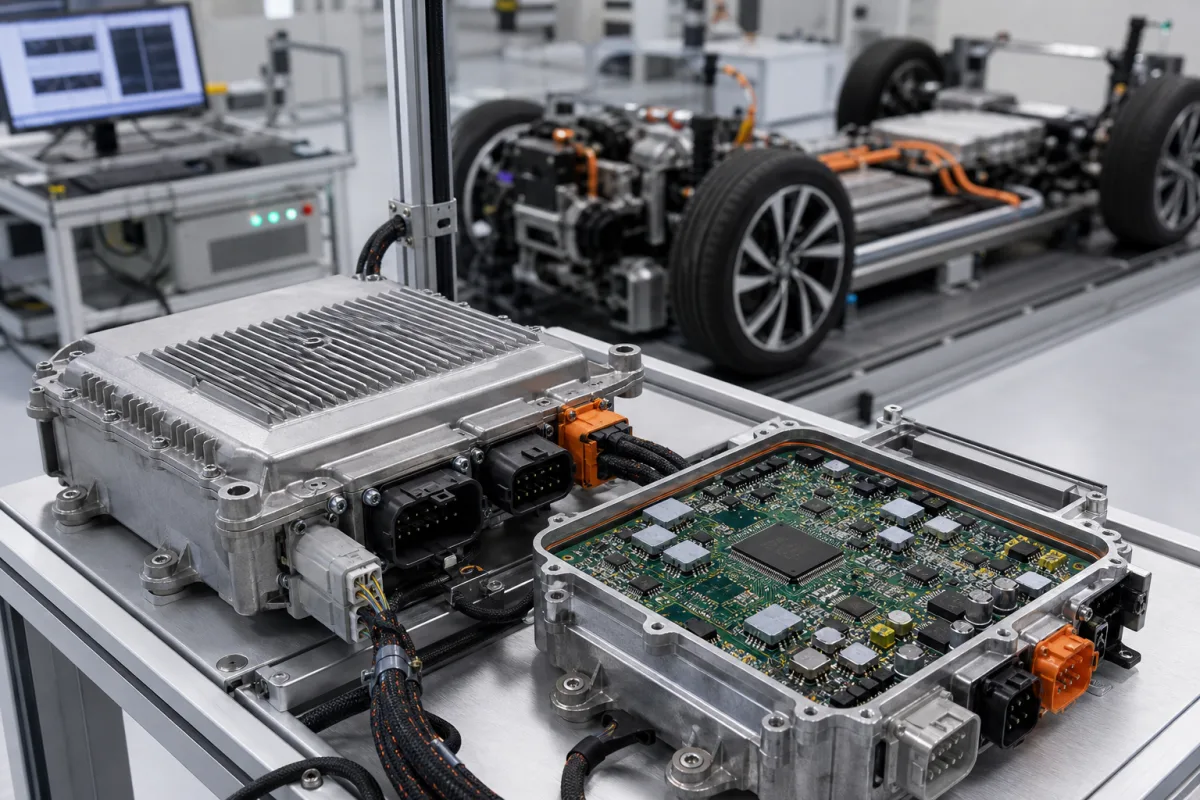
A canonical Main Control Unit (MCU) is characterized by the integration of Microprocessor/Microcontroller and Memory Module (RAM/Flash). In industrial production environments, manufacturers listed on CNFX commonly emphasize FR-4 PCB construction to support stable, high-cycle operation across diverse manufacturing scenarios.

The central processing and control component of an industrial system that manages and coordinates all operational functions.
Product Specifications

Technical details and manufacturing context for Main Control Unit (MCU)

Definition
The Main Control Unit (MCU) serves as the computational and command hub within an Industrial System. It receives input signals from various sensors and interfaces, processes this data according to programmed logic and algorithms, and outputs control signals to actuators, drives, and other subsystems to execute precise operational sequences, maintain process parameters, and ensure system safety and efficiency.
Working Principle
The MCU physically functions by housing a microprocessor or microcontroller on a printed circuit board (PCB). It operates by receiving electrical signals from input modules (e.g., sensors, switches), processing these signals through its integrated circuits using embedded firmware, and then sending out corresponding electrical control signals via output modules to physical components like motors, valves, and relays, thereby directly governing the mechanical and electrical actions of the Industrial System.
Common Materials
FR-4 PCB, Silicon Microprocessor, Copper Traces, Solder, Plastic/Composite Housing
Technical Parameters
  • Clock speed of the central processing unit, indicating its computational speed. (MHz) Standard Spec
Components / BOM
  • Microprocessor/Microcontroller
    Executes the control program and performs all computational tasks.
    Material: Silicon
  • Memory Module (RAM/Flash)
    Stores the operating system, application program, and temporary runtime data.
    Material: Silicon
  • Input/Output Interface Circuitry
    Conditions and routes electrical signals between the MCU and external field devices.
    Material: Copper, Semiconductor components
  • Communication Interface
    Provides physical ports and logic for network communication with other controllers or HMI.
    Material: Copper, Plastic (connectors)
  • Power Supply Circuit
    Regulates and distributes power from the external source to internal components.
    Material: Copper, Capacitors, Voltage Regulators
Engineering Reasoning
0-85°C ambient temperature, 85-264 VAC input voltage, 0-95% relative humidity non-condensing
Ambient temperature > 105°C sustained for >30 minutes, input voltage > 275 VAC sustained for >100 ms, relative humidity > 95% sustained for >24 hours
Design Rationale: Thermal runaway in power MOSFETs due to junction temperature exceeding 150°C, dielectric breakdown in electrolytic capacitors at >105°C, electromigration in copper traces at >100°C sustained operation
Risk Mitigation (FMEA)
Trigger Voltage transient > 400 VAC for >10 μs
Mode: Gate oxide breakdown in power MOSFETs causing short circuit
Strategy: TVS diode array with 350 V clamping voltage and 6000 A surge rating
Trigger Ambient temperature > 85°C sustained for >8 hours
Mode: Electrolytic capacitor electrolyte evaporation causing capacitance drop > 20%
Strategy: Polymer aluminum capacitors with 5000-hour lifespan at 105°C and 125°C maximum operating temperature

Industry Taxonomies & Aliases

Commonly used trade names and technical identifiers for Main Control Unit (MCU).

Applied To / Applications

This component is essential for the following industrial systems and equipment:

Industrial Ecosystem & Supply Chain DNA

Complementary Systems
Downstream Applications
Specialized Tooling

Application Fit & Sizing Matrix

Operational Limits
pressure: 0 to 10 bar
other spec: Flow Rate: 0-100 L/min, Slurry Concentration: ≤5% solids by weight
temperature: -40°C to +85°C
Media Compatibility
✓ Clean process water ✓ Industrial lubricants ✓ Compressed air systems
Unsuitable: Highly corrosive chemical environments (e.g., concentrated acids)
Sizing Data Required
  • System I/O count (digital/analog)
  • Required processing speed (MHz/GHz)
  • Communication protocol requirements (e.g., Modbus, Profibus, Ethernet/IP)

Reliability & Engineering Risk Analysis

Failure Mode & Root Cause
Overheating
Cause: Inadequate cooling due to dust accumulation, poor ventilation, or fan failure, leading to thermal stress on components like processors and capacitors.
Electrical surge damage
Cause: Voltage spikes from power supply fluctuations, lightning strikes, or improper grounding, resulting in fried circuits, blown capacitors, or corrupted firmware.
Maintenance Indicators
  • Unusual audible alarms or beeping patterns from the MCU indicating fault codes or temperature warnings.
  • Visible signs like LED status lights flashing error codes, smoke, or burning smells from the unit enclosure.
Engineering Tips
  • Implement regular preventive maintenance: Clean air filters and cooling fans quarterly, ensure proper ventilation, and monitor ambient temperature to prevent overheating.
  • Install surge protection devices (SPDs) and uninterruptible power supplies (UPS) to shield the MCU from electrical surges and ensure stable power input.

Compliance & Manufacturing Standards

Reference Standards
ISO 9001:2015 Quality Management Systems IEC 61508 Functional Safety of Electrical/Electronic/Programmable Electronic Safety-related Systems CE Marking (EU Machinery Directive 2006/42/EC)
Manufacturing Precision
  • PCB Trace Width: +/-10%
  • Component Placement: +/-0.1mm
Quality Inspection
  • In-Circuit Test (ICT)
  • Environmental Stress Screening (ESS)

Factories Producing Main Control Unit (MCU)

Verified manufacturers with capability to produce this product in China

✓ 95% Supplier Capability Match Found

T Technical Director from Brazil Feb 19, 2026
★★★★★
"The technical documentation for this Main Control Unit (MCU) is very thorough, especially regarding technical reliability."
Technical Specifications Verified
P Project Engineer from Canada Feb 16, 2026
★★★★☆
"Reliable performance in harsh Computer, Electronic and Optical Product Manufacturing environments. No issues with the Main Control Unit (MCU) so far. (Delivery took slightly longer than expected, but technical support was excellent.)"
Technical Specifications Verified
S Sourcing Manager from United States Feb 13, 2026
★★★★★
"Testing the Main Control Unit (MCU) now; the technical reliability results are within 1% of the laboratory datasheet."
Technical Specifications Verified
Verification Protocol

“Feedback is collected from verified sourcing managers during RFQ (Request for Quote) and factory evaluation processes on CNFX. These reports represent historical performance data and technical audit summaries from our B2B manufacturing network.”

8 sourcing managers are analyzing this specification now. Last inquiry for Main Control Unit (MCU) from Poland (13m ago).

Supply Chain Commonly Integrated Components

Optical Spectrometer

An analytical instrument that measures the intensity of light as a function of wavelength to determine the elemental composition of materials.

Explore Specs →
Stereo Camera Array

A multi-camera system that captures synchronized images from multiple perspectives to enable 3D depth perception and pattern recognition.

Explore Specs →
Structured Light Projector

Optical device that projects precisely controlled light patterns onto surfaces for 3D scanning applications

Explore Specs →
Main Processor Board

The central computing and control unit of a 5-axis CNC controller that processes motion commands, executes algorithms, and coordinates all system operations.

Explore Specs →

Frequently Asked Questions

What is the primary function of a Main Control Unit (MCU) in industrial systems?

The MCU serves as the central processing and control component that manages and coordinates all operational functions within an industrial system, ensuring seamless integration and communication between different subsystems.

What materials are commonly used in manufacturing industrial MCUs?

Industrial MCUs typically use FR-4 PCB for the circuit board, silicon microprocessors for processing, copper traces for conductivity, solder for connections, and plastic/composite housing for protection against environmental factors.

What key components are included in a typical MCU Bill of Materials (BOM)?

A standard MCU BOM includes communication interfaces, input/output interface circuitry, memory modules (RAM/Flash), microprocessor/microcontroller units, and power supply circuits to ensure reliable operation in industrial environments.

Can I contact factories directly on CNFX?

CNFX is an open directory, not a transaction platform. Each factory profile provides direct contact information and production details to help you initiate direct inquiries with Chinese suppliers.

Get Quote for Main Control Unit (MCU)

Request technical pricing, lead times, or customized specifications for Main Control Unit (MCU) directly from verified manufacturing units.

Your business information is encrypted and only shared with verified Main Control Unit (MCU) suppliers.

Thank you! Your message has been sent. We'll respond within 1–3 business days.

Need to Manufacture Main Control Unit (MCU)?

Connect with verified factories specializing in this product category

Add Your Factory Contact Us
Previous Product
Main Control Board
Next Product
Main Grinding Spindle