Industry-Verified Manufacturing Data (2026)

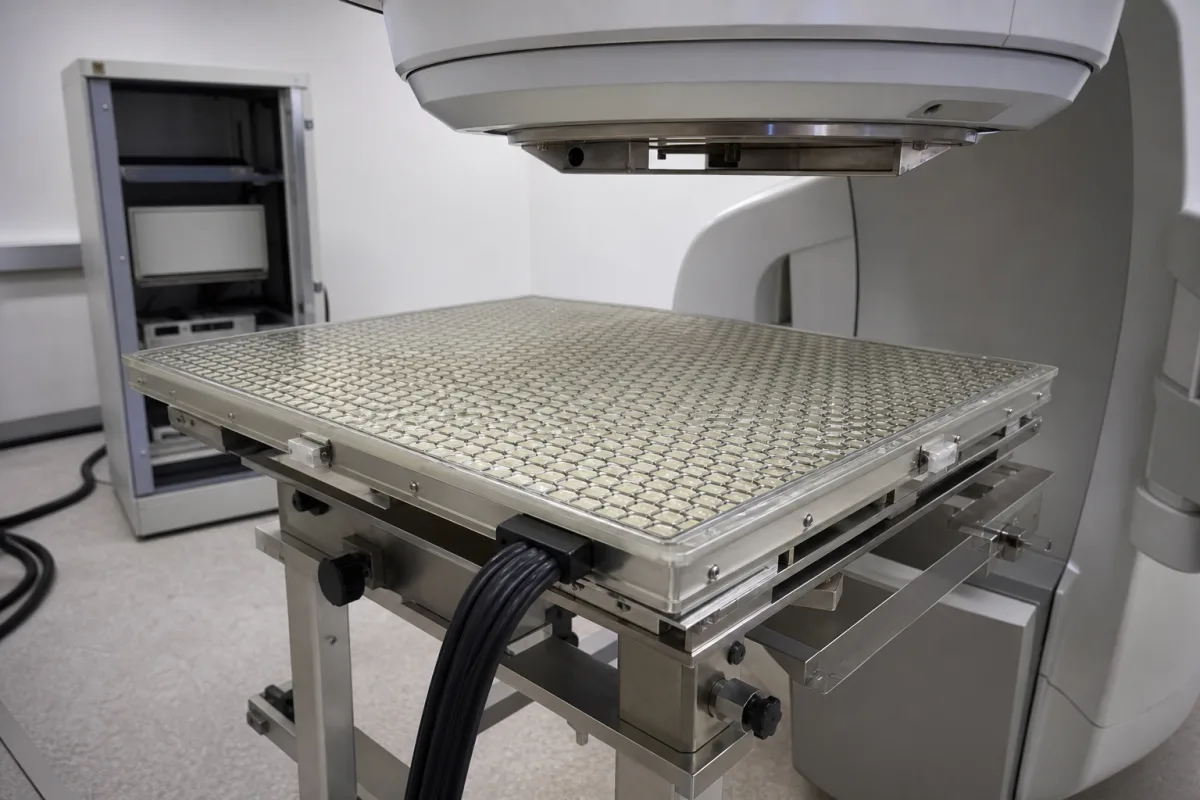
Radiation Detector Array

Based on aggregated insights from multiple verified factory profiles within the CNFX directory, the standard Radiation Detector Array used in the Computer, Electronic and Optical Product Manufacturing sector typically supports operational capacities ranging from standard industrial configurations to heavy-duty production requirements.

Technical Definition & Core Assembly

A canonical Radiation Detector Array is characterized by the integration of Radiation Sensing Element and Signal Processing Circuit. In industrial production environments, manufacturers listed on CNFX commonly emphasize Scintillation crystals (e.g., NaI, CsI) construction to support stable, high-cycle operation across diverse manufacturing scenarios.

A multi-sensor assembly designed to detect and measure ionizing radiation levels across multiple points simultaneously.

Product Specifications

Technical details and manufacturing context for Radiation Detector Array

Definition
A critical component of a Dose Monitoring System consisting of multiple radiation detectors arranged in a specific configuration to provide comprehensive spatial monitoring of radiation exposure. It enables real-time detection, measurement, and mapping of radiation fields for safety monitoring in various environments.
Working Principle
Utilizes multiple radiation-sensitive elements (such as scintillation crystals, semiconductor detectors, or gas-filled tubes) that convert incident radiation into electrical signals. These signals are processed to determine radiation type, energy, and intensity across the monitored area.
Common Materials
Scintillation crystals (e.g., NaI, CsI), Semiconductor materials (e.g., Si, Ge), Photomultiplier tubes, Electronic circuit boards
Technical Parameters
  • Array dimensions and detector spacing (mm) Standard Spec
Components / BOM
  • Radiation Sensing Element
    Converts incident radiation into measurable signals
    Material: Scintillation crystal or semiconductor
  • Signal Processing Circuit
    Amplifies and processes detector signals for analysis
    Material: Electronic components on PCB
  • Array Housing
    Protects detectors and provides structural support
    Material: Radiation-resistant polymer or aluminum
  • Connector Interface
    Provides electrical connection to monitoring system
    Material: Stainless steel with gold-plated contacts
Engineering Reasoning
0.1 μSv/h to 10 mSv/h
Radiation flux exceeding 100 mSv/h causes sensor saturation and permanent lattice displacement damage in semiconductor detectors
Design Rationale: High-energy photon bombardment induces Frenkel defect pairs in germanium crystal lattice, creating permanent charge trapping centers that degrade charge collection efficiency below 70%
Risk Mitigation (FMEA)
Trigger Thermal cycling between -40°C and +85°C at 5°C/min gradient
Mode: Solder joint fatigue cracking at detector-to-PCB interface
Strategy: Implementation of copper-invar-copper thermal expansion matched substrates with SAC305 solder alloy
Trigger Electromagnetic interference at 2.4 GHz exceeding 10 V/m field strength
Mode: False positive radiation detection events due to RF rectification in preamplifier stage
Strategy: Triple-layer Faraday cage shielding with 0.5 mm aluminum and 0.1 mm mu-metal, combined with π-filter network at power inputs

Industry Taxonomies & Aliases

Commonly used trade names and technical identifiers for Radiation Detector Array.

Applied To / Applications

This component is essential for the following industrial systems and equipment:

Industrial Ecosystem & Supply Chain DNA

Complementary Systems
Downstream Applications
Specialized Tooling

Application Fit & Sizing Matrix

Operational Limits
pressure: 0 to 1.5 bar absolute
other spec: Radiation detection range: 0.1 μSv/h to 10 Sv/h, Humidity: 0-95% non-condensing
temperature: -20°C to +70°C
Media Compatibility
✓ Nuclear power plant coolant systems ✓ Medical isotope production facilities ✓ Industrial radiography inspection areas
Unsuitable: High-vibration environments (e.g., near heavy machinery without isolation)
Sizing Data Required
  • Required detection area coverage (m²)
  • Maximum expected radiation dose rate (Sv/h)
  • Required number of simultaneous measurement points

Reliability & Engineering Risk Analysis

Failure Mode & Root Cause
Sensor drift or calibration loss
Cause: Prolonged exposure to radiation causing degradation of sensor materials (e.g., scintillation crystals or semiconductor detectors), temperature fluctuations affecting electronic components, or contamination buildup on detector surfaces.
Electronic component failure
Cause: Thermal cycling leading to solder joint fatigue, moisture ingress causing corrosion or short circuits, electromagnetic interference (EMI) from nearby equipment, or power supply fluctuations damaging sensitive circuitry.
Maintenance Indicators
  • Inconsistent or erratic readings compared to baseline measurements, indicating potential sensor degradation or calibration issues.
  • Unusual audible alarms (e.g., continuous beeping or failure to sound during test cycles) or visual indicators (e.g., flickering LEDs or error codes on display panels) suggesting electronic or communication faults.
Engineering Tips
  • Implement a routine calibration and verification schedule using traceable radiation sources, and maintain environmental controls (stable temperature/humidity) to minimize sensor drift and electronic stress.
  • Use shielded cables and proper grounding practices to reduce EMI, and install protective enclosures with desiccants or seals to prevent moisture ingress and contamination.

Compliance & Manufacturing Standards

Reference Standards
ISO 4037-1:2019 (X and gamma reference radiation for calibrating dosemeters and doserate meters) ANSI N42.34 (American National Standard for Performance Criteria for Hand-Held Instruments for the Detection and Identification of Radionuclides) CE marking under EU Directive 2013/59/EURATOM (Basic Safety Standards for protection against dangers from ionising radiation)
Manufacturing Precision
  • Energy response: +/- 15% across specified range (e.g., 50 keV to 3 MeV)
  • Geometric alignment of detector elements: +/- 0.5 degrees
Quality Inspection
  • Energy calibration verification using certified radioactive sources (e.g., Cs-137, Co-60)
  • Environmental testing per IEC 60068-2 (vibration, temperature, humidity)

Factories Producing Radiation Detector Array

Verified manufacturers with capability to produce this product in China

✓ 94% Supplier Capability Match Found

P Procurement Specialist from United Arab Emirates Jan 11, 2026
★★★★★
"Great transparency on the Radiation Detector Array components. Essential for our Computer, Electronic and Optical Product Manufacturing supply chain."
Technical Specifications Verified
T Technical Director from Australia Jan 08, 2026
★★★★★
"The Radiation Detector Array we sourced perfectly fits our Computer, Electronic and Optical Product Manufacturing production line requirements."
Technical Specifications Verified
P Project Engineer from Singapore Jan 05, 2026
★★★★★
"Found 49+ suppliers for Radiation Detector Array on CNFX, but this spec remains the most cost-effective."
Technical Specifications Verified
Verification Protocol

“Feedback is collected from verified sourcing managers during RFQ (Request for Quote) and factory evaluation processes on CNFX. These reports represent historical performance data and technical audit summaries from our B2B manufacturing network.”

12 sourcing managers are analyzing this specification now. Last inquiry for Radiation Detector Array from Thailand (1h ago).

Supply Chain Compatible Machinery & Devices

Modular Industrial Edge Computing Device

Rugged computing platform for industrial data processing at the network edge

Explore Specs →
Industrial Smart Camera Module

Embedded vision system for industrial automation and quality inspection.

Explore Specs →
Industrial Wireless Power Transfer Module

Wireless power transfer module for industrial equipment applications

Explore Specs →
Industrial Smart Sensor Module

Modular industrial sensor with embedded processing and wireless connectivity

Explore Specs →

Frequently Asked Questions

What types of radiation can this detector array measure?

This array detects ionizing radiation including gamma rays and X-rays using scintillation crystals (NaI, CsI) and semiconductor materials (Si, Ge) for accurate measurement across multiple points.

How does the multi-sensor design benefit electronic manufacturing?

The simultaneous multi-point detection allows for comprehensive radiation monitoring across production areas, ensuring safety compliance and protecting sensitive electronic components from radiation exposure.

What maintenance is required for the radiation sensing elements?

Scintillation crystals and semiconductor materials require periodic calibration and protection from physical damage, while photomultiplier tubes and circuit boards need standard electronic maintenance and environmental protection.

Can I contact factories directly on CNFX?

CNFX is an open directory, not a transaction platform. Each factory profile provides direct contact information and production details to help you initiate direct inquiries with Chinese suppliers.

Get Quote for Radiation Detector Array

Request technical pricing, lead times, or customized specifications for Radiation Detector Array directly from verified manufacturing units.

Your business information is encrypted and only shared with verified Radiation Detector Array suppliers.

Thank you! Your message has been sent. We'll respond within 1–3 business days.

Need to Manufacture Radiation Detector Array?

Connect with verified factories specializing in this product category

Add Your Factory Contact Us
Previous Product
Queue Management Unit
Next Product
Radiation Shield Housing