Dose Monitoring System
View system integration details
This page explains how Radiation Shield Housing is classified within Computer, Electronic and Optical Product Manufacturing. Technical values and manufacturer relationships are research references; confirm the current specification and supplier evidence for each order.
Protective enclosure for radiation detection components within a dose monitoring system
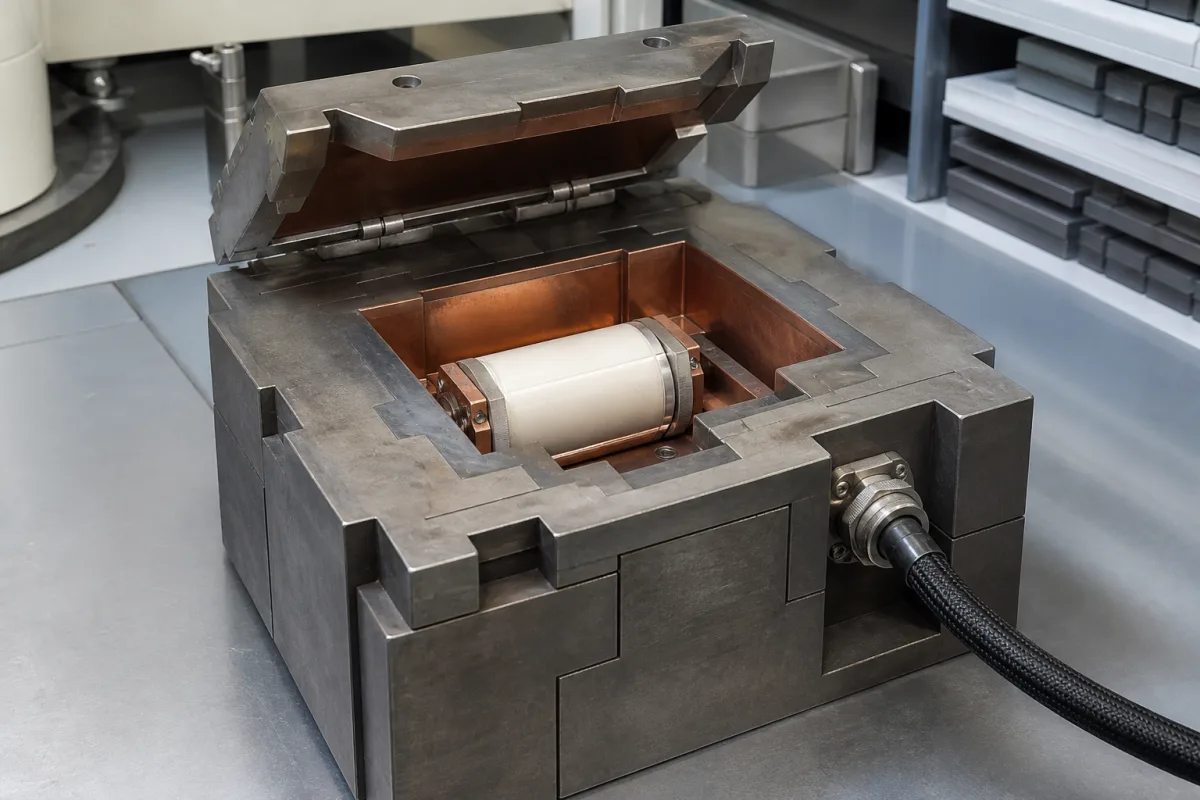
Technical details and manufacturing context for Radiation Shield Housing
| Parameter | Typical range | Notes & selection driver |
|---|---|---|
| Shielding Material | Lead (Pb) 99.9% | High density for effective gamma shieldingASTM B29 |
| Lead Thickness | 3–10 mm | Determines shielding effectiveness |
| Housing Material | Stainless Steel 304 | Corrosion resistance and structural integrityASTM A240 |
| Wall Thickness | 2–5 mm | Mechanical strength and weight |
| Dimensions (L×W×H) | 100×100×100 – 500×500×500 mm | Customizable to fit detector size |
| Weight | 5–50 kg | Depends on size and lead thickness |
| Operating Temperature | -20–60 °C | Outside range may affect sealing and material properties |
| IP Rating | IP54–IP65 | Protection against dust and water jetsIEC 60529 |
| Surface Finish | Ra 0.8–1.6 μm | Smooth finish for cleanability and corrosion resistanceISO 1302 |
| Tolerance (Machining) | ±0.1 mm | Ensures proper fit of componentsISO 2768-m |
| Leak Rate | ≤1×10^-6 Pa·m³/s | Ensures hermetic seal for sensitive electronicsISO 20485 |
| Operating Pressure | 1.0–1.6 MPa |
Ranges are indicative industry figures for RFQ preparation, not a supplier commitment. Confirm every value and standard with the legal manufacturer before ordering.
This component is essential for the following industrial systems and equipment:
| pressure: | 0 to 2 bar (gauge) |
| other spec: | Radiation shielding: Up to 10 mSv/h dose rate attenuation |
| temperature: | -40°C to +85°C |
Indicative industry ranges for design and RFQ preparation. Confirm the exact figures and applicable standard with the manufacturer before specifying.
Quoted from the published standard.
Manufacturer profiles associated with Radiation Shield Housing.
Manufacturer listings support early research and capability understanding. They are not certification, ranking, or transaction guarantees.
A practical evidence checklist for RFQ preparation and supplier evaluation.
CNFX does not score or rank suppliers. Buyers must verify all claims and documents with the legal manufacturer before ordering.
The housing protects radiation detection electronics and sensors from environmental factors, electromagnetic interference, and physical damage while allowing controlled radiation exposure for accurate dose measurement.
Materials on file include aluminum alloy, stainless steel, and lead composite shielding. Specific grades, such as stainless steel 304, are listed as reference standards and must be verified for the actual model.
Key parameters include lead thickness, housing material, wall thickness, dimensions, weight, operating temperature, IP rating, surface finish, tolerance, leak rate, and operating pressure. These are reference ranges and must be confirmed for the specific application.
Verify model-specific values and standards with the legal manufacturer or supplier. Check material certifications, dimensional compliance, and sealing performance. Ensure the housing is compatible with your detector size and environmental conditions.
Editorial classification, named public sources where available, and source-reviewed manufacturer records.
Ask for use case, specification boundaries, supplier type, and RFQ preparation information for this product.
Compare manufacturer profiles with relevant product and process capability.