Editorial Technical Reference

RF Shield Assembly Station

This page explains how RF Shield Assembly Station is classified within Computer, Electronic and Optical Product Manufacturing. Technical values and manufacturer relationships are research references; confirm the current specification and supplier evidence for each order.

Technical Definition & Core Assembly

A specialized assembly station for precisely installing RF shielding components onto 5G base station modules to prevent electromagnetic interference.
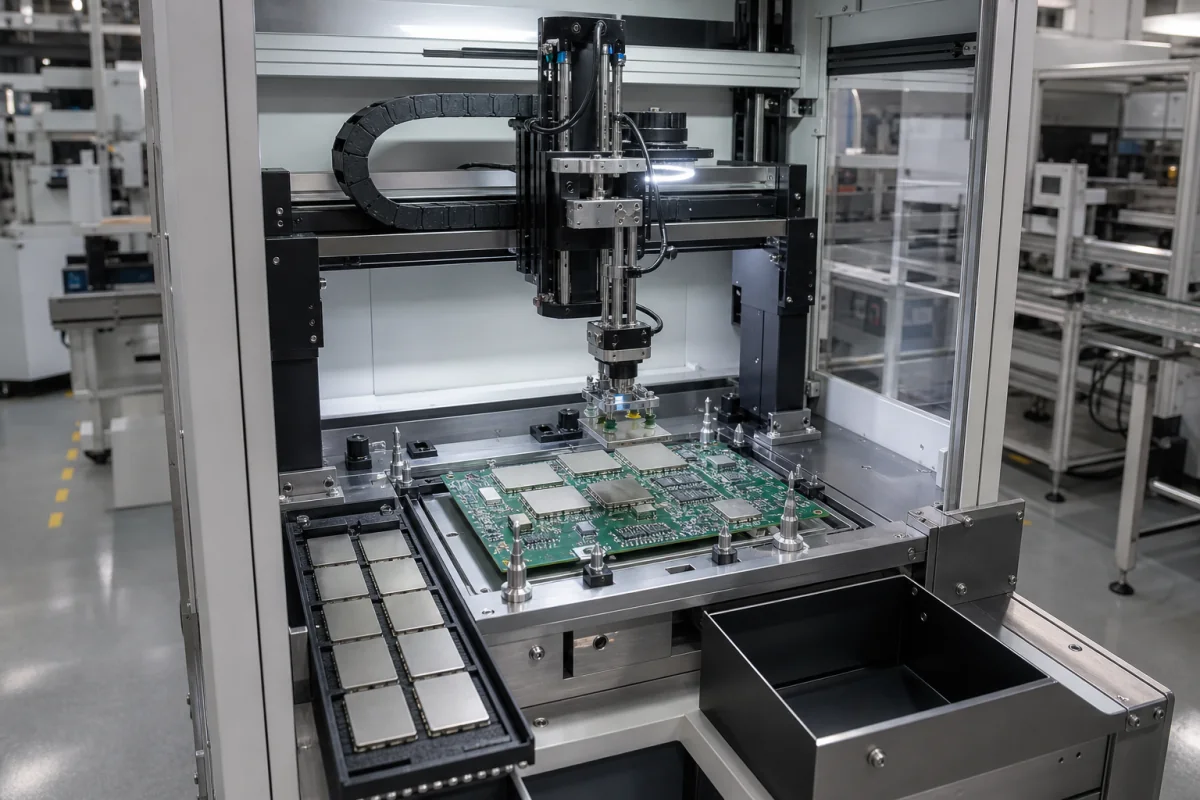
RF Shield Assembly Station in a manufacturing environment
Representative product image. Confirm appearance and specifications with the manufacturer.

Product Specifications

Technical details and manufacturing context for RF Shield Assembly Station

Definition
The RF Shield Assembly Station is a critical component within the Modular 5G Base Station Production System. It is a dedicated workstation designed for the accurate, high-precision assembly and attachment of radio frequency (RF) shielding enclosures, covers, or gaskets onto the electronic modules of a 5G base station. Its primary role is to ensure the integrity of the electromagnetic shielding, which is essential for preventing signal interference between internal components and complying with stringent electromagnetic compatibility (EMC) regulations for 5G telecommunications equipment. The station typically provides a controlled environment (often with ESD protection) and utilizes precision tooling, fixtures, and sometimes automated or semi-automated mechanisms (like pneumatic presses or robotic arms) to correctly position and secure the RF shield onto the target module. This ensures proper alignment, contact, and sealing to create an effective Faraday cage effect around sensitive circuits. The station is designed for integration into a production line, with a cycle time of 15–30 seconds per assembly cycle, including placement and fastening. Placement accuracy is ±0.05 mm relative to fiducial marks on the module. For screw fastening, the torque range is 0.5–2.0 N·m with an accuracy of ±5% of set value. Pneumatic actuators operate at an air pressure of 0.5–0.7 MPa. The station requires a single-phase 220 V AC (±10%) power supply at 50/60 Hz. It operates in ambient temperatures of 10–40 °C and non-condensing humidity of 30–80% RH. The ingress protection rating is IP54 per IEC 60529. Machine weight ranges from 800–1200 kg depending on configuration, with approximate dimensions of 2000×1500×1800 mm (L×W×H). Materials on file include aluminum alloy for shield frames, conductive elastomer for gaskets, and stainless steel for tooling and fixtures. These specifications are reference ranges; verify model-specific values with the manufacturer.
Working Principle
The station provides a controlled environment, often with ESD protection, and uses precision tooling, fixtures, and sometimes automated or semi-automated mechanisms such as pneumatic presses or robotic arms. It positions and secures the RF shield onto the target module, ensuring proper alignment, contact, and sealing to create an effective Faraday cage effect around sensitive circuits. The process involves placing the shield, aligning it relative to fiducial marks, and fastening it with screws or other methods, with torque control for consistent results.
Common Materials
Aluminum alloy (for shield frames), Conductive elastomer (for gaskets), Stainless steel (for tooling and fixtures)
Technical Parameters
ParameterTypical rangeNotes & selection driver
Cycle Time15–30 sPer assembly cycle, including placement and fastening
Placement Accuracy±0.05 mmRelative to fiducial marks on the module
Torque Range0.5–2.0 N·mFor screw fastening of shields
Torque Accuracy±5 %Of set value
Operating Air Pressure0.5–0.7 MPaFor pneumatic actuators
Power Supply220 ±10% V ACSingle phase, 50/60 Hz
Operating Temperature10–40 °CAmbient
Humidity Range30–80 % RHNon-condensing
Ingress ProtectionIP54Dust and splash water protectionIEC 60529
Machine Weight800–1200 kgDepending on configuration
Footprint (L×W×H)2000×1500×1800 mmApproximate dimensions

Ranges are indicative industry figures for RFQ preparation, not a supplier commitment. Confirm every value and standard with the legal manufacturer before ordering.

Components / BOM
  • Precision Fixture
    Holds the 5G base station module securely in the correct orientation for shield assembly.
    Material: Stainless steel / Aluminum
  • Shield Placement Mechanism
    A guided tool, arm, or automated head that picks, aligns, and places the RF shield onto the module.
    Material: Aluminum alloy / Engineering plastic
  • Fastening Tool
    Applies the correct torque or force to secure the shield using screws, clips, or adhesive.
    Material: Steel / Carbide
  • ESD-Safe Work Surface
    Provides a grounded, static-dissipative surface to protect sensitive electronic components during assembly.
    Material: Conductive laminate / Stainless steel
  • Fiducial Alignment System
    Reads the module fiducials and positions the shield against them before fastening.

Industrial Ecosystem & Supply Chain Structure

Complementary Systems
Downstream Applications
Specialized Tooling

Application Fit & Sizing Matrix

Operational Limits
pressure: 0.5-2.0 bar (assembly force control)
other spec: Humidity: 30-60% RH, Cleanroom Class: ISO 7 or better, Vibration: <0.5g RMS
temperature: +10°C to +40°C
Media Compatibility
✓ EMI shielding gaskets (conductive silicone/foam) ✓ RF shield cans (tin-plated steel) ✓ Conductive adhesives (silver/epoxy)
Unsuitable: Corrosive chemical environments (acid/alkaline vapors)
Sizing Data Required
  • Module dimensions (LxWxH)
  • Shielding component placement density (components/cm²)
  • Required throughput (modules/hour)

Reliability & Engineering Risk Analysis

Failure Mode & Root Cause
Shielding Integrity Degradation
Cause: Mechanical wear from repeated assembly/disassembly cycles, improper gasket seating, or contamination buildup compromising RF seal effectiveness.
Electrical Contact Failure
Cause: Corrosion of conductive surfaces due to environmental exposure, fretting wear from vibration, or insufficient contact pressure leading to intermittent connections.
Maintenance Indicators
  • Increased RF leakage readings beyond specified thresholds during routine testing
  • Audible arcing or visible sparking during operation, indicating compromised shielding or grounding
Engineering Tips
  • Implement regular torque verification procedures for all fasteners and connections to maintain proper gasket compression and electrical contact pressure
  • Establish a contamination control protocol including scheduled cleaning of contact surfaces and gaskets with approved solvents, along with environmental monitoring for humidity and particulate levels

Indicative industry ranges for design and RFQ preparation. Confirm the exact figures and applicable standard with the manufacturer before specifying.

Compliance & Manufacturing Standards

Applicable Standards
CE Marking - EU Directive 2014/35/EU (Low Voltage Directive)

Quoted from the published standard.

Manufacturing Precision
  • Shielding Effectiveness: +/- 2 dB across 30 MHz to 18 GHz
  • Enclosure Gap: ≤ 0.5 mm continuous
Quality Inspection
  • RF Leakage Test (using TEM cell or reverberation chamber)
  • Visual Inspection for Surface Defects and Proper Grounding

Manufacturers of RF Shield Assembly Station

Manufacturer profiles associated with RF Shield Assembly Station.

Sourcing RF Shield Assembly Station from China?
Tell us your specification and target quantity — we will match it against manufacturer records and come back with the factories that fit.
Request manufacturers We manufacture this

Manufacturer listings support early research and capability understanding. They are not certification, ranking, or transaction guarantees.

Share this page
Technical documentation
Request current drawings, revision history, and a signed specification sheet.
Manufacturing capability
Verify equipment lists, process limits, capacity, and representative production evidence.
Inspection readiness
Confirm test methods, calibrated equipment, sampling plans, and traceable reports.
Supplier transparency
Check the legal entity, factory address, ownership, certifications, and direct contacts.

CNFX does not score or rank suppliers. Buyers must verify all claims and documents with the legal manufacturer before ordering.

Supply Chain Compatible Machinery & Devices

Industrial IoT Gateway

The Industrial IoT Gateway is a ruggedized edge computing device designed for industrial environments.

Explore Specs →
Modular Industrial Edge Computing Device

This modular industrial edge computing device is a ruggedized system designed for deployment in harsh industrial environments to perform real-time data processing, analytics, and control functions at the network edge.

Explore Specs →
Industrial Smart Camera Module

The Industrial Smart Camera Module is a compact, self-contained vision processing unit designed for integration into industrial machinery and production lines.

Explore Specs →
Surface Mount Resistor

Passive electronic component for current limiting and voltage division in circuits

Explore Specs →

Frequently Asked Questions

What is the typical cycle time for this assembly station?

The cycle time is 15–30 seconds per assembly cycle, including placement and fastening. This is a reference range; the actual cycle time may vary depending on the specific configuration and module design.

What placement accuracy can be expected?

The placement accuracy is ±0.05 mm relative to fiducial marks on the module. This ensures precise alignment of the RF shield for effective electromagnetic shielding.

What are the power and air pressure requirements?

The station requires a single-phase 220 V AC (±10%) power supply at 50/60 Hz, and pneumatic actuators operate at an air pressure of 0.5–0.7 MPa. Verify these values with the manufacturer for your specific model.

What environmental conditions can the station operate in?

The station operates in ambient temperatures of 10–40 °C and non-condensing humidity of 30–80% RH. It has an ingress protection rating of IP54 per IEC 60529, providing dust and splash water protection.

Data Basis

Editorial classification, named public sources where available, and source-reviewed manufacturer records.

Preliminary Technical Classification
This page supports structured research, RFQ preparation, and supplier evaluation. It does not replace buyer-led supplier qualification, standards review, or technical approval.
Buyer enquiry

Request manufacturing insight for RF Shield Assembly Station

Ask for use case, specification boundaries, supplier type, and RFQ preparation information for this product.

Where it goes
Straight to the CNFX editorial desk, and to the manufacturer if this product is linked to a claimed profile. Nothing is broadcast to a supplier list.
Your details stay here
We do not sell or rent enquiry data, and we do not add you to a mailing list. Used only to answer this request.
No commission, no middleman
CNFX is a directory. We take no cut of any order and never negotiate on a supplier's behalf.
What we don't claim
A listing is not an endorsement. Qualify every supplier and verify every figure yourself before ordering.

Your business information is used only to process this request.

Thank you! Your message has been sent. We'll respond within 1–3 business days.
Sorry, we couldn't send your message. Please try again, or email us at [email protected].

Need to Manufacture RF Shield Assembly Station?

Compare manufacturer profiles with relevant product and process capability.

Previous Product
XY Positioning Stage
Last Product
Get QuotesChat