Industry-Verified Manufacturing Data (2026)

Slurry Dispersion System

Based on aggregated insights from multiple verified factory profiles within the CNFX directory, the standard Slurry Dispersion System used in the Computer, Electronic and Optical Product Manufacturing sector typically supports operational capacities ranging from standard industrial configurations to heavy-duty production requirements.

Technical Definition & Core Assembly

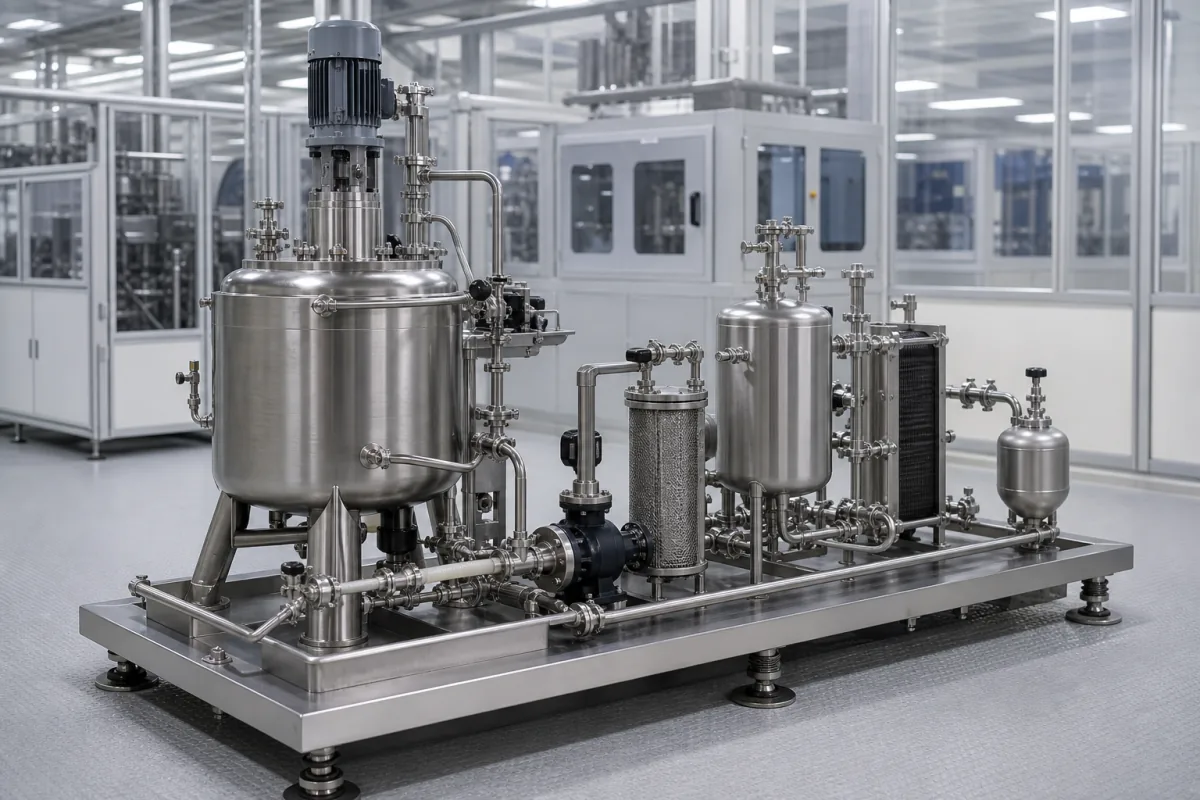
A canonical Slurry Dispersion System is characterized by the integration of Slurry Reservoir/Tank and Agitator/Stirrer. In industrial production environments, manufacturers listed on CNFX commonly emphasize Stainless Steel (wetted parts) construction to support stable, high-cycle operation across diverse manufacturing scenarios.

A subsystem that uniformly mixes and distributes polishing slurry onto hard drive platters during the polishing process.

Product Specifications

Technical details and manufacturing context for Slurry Dispersion System

Definition
The Slurry Dispersion System is a critical component within the Automated Computer Hard Drive Platter Polishing Machine. It is responsible for preparing, agitating, and precisely delivering a homogeneous mixture of abrasive particles (slurry) to the polishing interface. This ensures consistent material removal rates, surface finish quality, and prevents particle settling or agglomeration that could cause defects on the platter surface.
Working Principle
The system typically consists of a reservoir, an agitation mechanism (e.g., mechanical stirrer or ultrasonic mixer), and a delivery subsystem (e.g., pumps, valves, nozzles). The slurry is continuously or periodically agitated to maintain suspension. A controlled flow is then pumped through filters and distribution lines to one or more application points (nozzles or pads) directly above or in contact with the rotating platter. The flow rate, pressure, and agitation intensity are precisely regulated.
Common Materials
Stainless Steel (wetted parts), Chemical-resistant polymers (seals, tubing), Ceramic (abrasive particles in slurry)
Technical Parameters
  • Slurry flow rate to the polishing head (L/min) Customizable
Components / BOM
  • Slurry Reservoir/Tank
    Holds and contains the polishing slurry mixture.
    Material: Stainless Steel
  • Agitator/Stirrer
    Mechanically mixes the slurry to prevent particle settling and ensure homogeneity.
    Material: Stainless Steel (shaft), PTFE (impeller)
  • Dispersion Pump
    Creates pressure to move slurry from the reservoir through the delivery lines to the application point.
    Material: Stainless Steel, Ceramic
  • Distribution Manifold & Nozzles
    Directs and controls the flow of slurry onto specific areas of the platter surface.
    Material: Stainless Steel, Sapphire (nozzle orifice)
Engineering Reasoning
0.5-3.0 bar at 20-40°C with 15-45% solid content by weight
Pressure drop below 0.3 bar causes insufficient slurry distribution; pressure above 3.5 bar causes nozzle erosion exceeding 0.1 mm/year; temperature above 60°C initiates slurry particle agglomeration
Design Rationale: Bernoulli's principle governs slurry flow through nozzles; failure occurs when Reynolds number drops below 2000 (laminar flow) or exceeds 4000 (turbulent flow), disrupting uniform dispersion. Particle sedimentation follows Stokes' law (v = 2r²(ρ_p-ρ_f)g/9η) where velocity < 0.01 m/s causes settling.
Risk Mitigation (FMEA)
Trigger Abrasive particle size distribution shift beyond 20-80 nm range
Mode: Nozzle clogging with pressure increase to 4.2 bar and flow reduction to 30% of nominal
Strategy: Install in-line laser diffraction particle analyzer with automatic bypass valve activation at D90 > 85 nm
Trigger pH drift beyond 8.5-10.5 range due to slurry decomposition
Mode: Corrosion-induced pitting on 316L stainless steel components exceeding 0.05 mm depth per 1000 hours
Strategy: Implement real-time pH monitoring with automated citric acid injection system maintaining pH at 9.5±0.3

Industry Taxonomies & Aliases

Commonly used trade names and technical identifiers for Slurry Dispersion System.

Industrial Ecosystem & Supply Chain DNA

Complementary Systems
Downstream Applications
Specialized Tooling

Application Fit & Sizing Matrix

Operational Limits
pressure: 0.5-3.0 bar (system pressure)
flow rate: 10-100 L/min (adjustable)
temperature: 15-35°C (operating range)
particle size: 0.1-5.0 μm (compatible range)
slurry concentration: 5-30% solids by weight
Media Compatibility
✓ Ceria-based polishing slurries ✓ Silica-based colloidal suspensions ✓ Alumina-based abrasive media
Unsuitable: Highly acidic or alkaline slurries (pH < 2 or > 12)
Sizing Data Required
  • Platter diameter and production throughput (platters/hour)
  • Required slurry delivery rate (L/min per platter)
  • Desired slurry uniformity specification (e.g., ±5% concentration variance)

Reliability & Engineering Risk Analysis

Failure Mode & Root Cause
Abrasive erosion
Cause: High concentration of solid particles in slurry causing wear on impeller, casing, and wear rings due to repeated impact and friction.
Cavitation
Cause: Insufficient Net Positive Suction Head (NPSH) leading to vapor bubble formation and collapse, causing pitting and material loss on impeller surfaces.
Maintenance Indicators
  • Unusual vibration or noise indicating impeller imbalance or bearing wear
  • Decreased flow rate or pressure output suggesting internal wear or blockage
Engineering Tips
  • Implement regular particle size analysis and maintain optimal slurry concentration to minimize abrasive wear
  • Ensure proper NPSH margins through system design and operational controls to prevent cavitation damage

Compliance & Manufacturing Standards

Reference Standards
ISO 9001:2015 - Quality management systems ANSI/ASME B31.3 - Process piping DIN EN 1092-1 - Flanges and their joints
Manufacturing Precision
  • Impeller diameter: +/-0.05mm
  • Shaft runout: 0.02mm maximum
Quality Inspection
  • Hydrostatic pressure test
  • Material composition verification via XRF analysis

Factories Producing Slurry Dispersion System

Verified manufacturers with capability to produce this product in China

✓ 94% Supplier Capability Match Found

P Project Engineer from United Arab Emirates Jan 22, 2026
★★★★★
"Reliable performance in harsh Computer, Electronic and Optical Product Manufacturing environments. No issues with the Slurry Dispersion System so far."
Technical Specifications Verified
S Sourcing Manager from Australia Jan 19, 2026
★★★★★
"Testing the Slurry Dispersion System now; the technical reliability results are within 1% of the laboratory datasheet."
Technical Specifications Verified
P Procurement Specialist from Singapore Jan 16, 2026
★★★★★
"Impressive build quality. Especially the technical reliability is very stable during long-term operation."
Technical Specifications Verified
Verification Protocol

“Feedback is collected from verified sourcing managers during RFQ (Request for Quote) and factory evaluation processes on CNFX. These reports represent historical performance data and technical audit summaries from our B2B manufacturing network.”

16 sourcing managers are analyzing this specification now. Last inquiry for Slurry Dispersion System from Poland (13m ago).

Supply Chain Compatible Machinery & Devices

Industrial IoT Gateway

Edge computing device connecting industrial equipment to cloud platforms.

Explore Specs →
Modular Industrial Edge Computing Device

Rugged computing platform for industrial data processing at the network edge

Explore Specs →
Industrial Smart Camera Module

Embedded vision system for industrial automation and quality inspection.

Explore Specs →
Industrial Wireless Power Transfer Module

Wireless power transfer module for industrial equipment applications

Explore Specs →

Frequently Asked Questions

What materials are used in the wetted parts of this slurry dispersion system?

All wetted components are constructed from 316L stainless steel for corrosion resistance, with chemical-resistant polymers for seals and tubing to ensure compatibility with polishing slurries.

How does this system ensure uniform slurry distribution on hard drive platters?

The system utilizes a precision distribution manifold with calibrated nozzles and an agitator/stirrer that maintains consistent slurry particle suspension throughout the polishing process.

What maintenance is required for the slurry reservoir and dispersion components?

Regular cleaning of the stainless steel reservoir and inspection of polymer seals are recommended. The ceramic abrasive particles in the slurry require no maintenance as they're consumable components.

Can I contact factories directly on CNFX?

CNFX is an open directory, not a transaction platform. Each factory profile provides direct contact information and production details to help you initiate direct inquiries with Chinese suppliers.

Get Quote for Slurry Dispersion System

Request technical pricing, lead times, or customized specifications for Slurry Dispersion System directly from verified manufacturing units.

Your business information is encrypted and only shared with verified Slurry Dispersion System suppliers.

Thank you! Your message has been sent. We'll respond within 1–3 business days.

Need to Manufacture Slurry Dispersion System?

Connect with verified factories specializing in this product category

Add Your Factory Contact Us
Previous Product
Slit Mount/Housing
Next Product
Smart Home Air Quality Monitor