Industry-Verified Manufacturing Data (2026)

Dispersion Pump

Based on aggregated insights from multiple verified factory profiles within the CNFX directory, the standard Dispersion Pump used in the Chemical Manufacturing sector typically supports operational capacities ranging from standard industrial configurations to heavy-duty production requirements.

Technical Definition & Core Assembly

A canonical Dispersion Pump is characterized by the integration of Impeller and Casing. In industrial production environments, manufacturers listed on CNFX commonly emphasize Stainless Steel construction to support stable, high-cycle operation across diverse manufacturing scenarios.

A specialized pump designed to handle and transport slurry mixtures while maintaining particle dispersion.
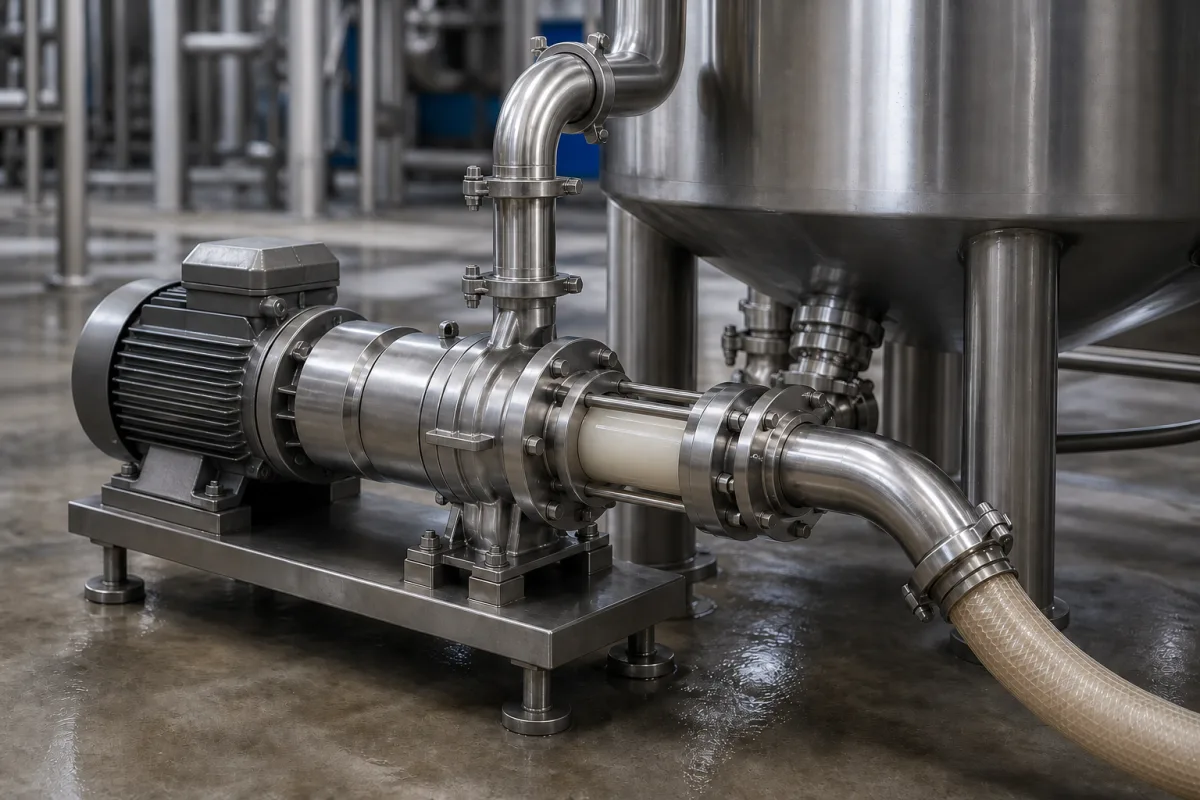
Product Specifications

Technical details and manufacturing context for Dispersion Pump

Definition
The dispersion pump is a critical component within slurry dispersion systems, responsible for pumping viscous slurry mixtures containing suspended solid particles. It ensures consistent flow while preventing particle settling or agglomeration during transport through the dispersion system, maintaining the homogeneous characteristics required for downstream processing.
Working Principle
Utilizes impeller or positive displacement mechanisms to create flow while incorporating design features (such as specific clearances, flow patterns, or mixing elements) that maintain particle suspension and prevent sedimentation during pumping operations.
Common Materials
Stainless Steel, High-Wear Alloy
Technical Parameters
  • Clearance between rotating and stationary parts to prevent particle damage while maintaining dispersion (mm) Customizable
Components / BOM
  • Impeller
    Creates centrifugal force to move slurry while maintaining particle suspension
    Material: High-chrome alloy steel
  • Casing
    Contains and directs slurry flow with wear-resistant design
    Material: Stainless steel
  • Shaft
    Transmits rotational power from motor to impeller
    Material: Carbon steel with protective coating
  • Seal Assembly
    Prevents slurry leakage while allowing shaft rotation
    Material: Ceramic/carbon composite
Engineering Reasoning
0.5-15 bar differential pressure, 1-100 m³/h flow rate, 5-40°C fluid temperature
Cavitation occurs at NPSHa < NPSHr + 0.5 m, bearing failure at >120°C, impeller erosion at >3 m/s slurry velocity
Design Rationale: Cavitation from vapor pressure drop below 0.023 bar at 20°C, abrasive wear from particle impact energy >0.1 J, thermal expansion mismatch exceeding 15 μm/m·K differential
Risk Mitigation (FMEA)
Trigger Solid particle concentration exceeding 40% by volume
Mode: Impeller erosion rate exceeding 0.5 mm/1000h causing imbalance
Strategy: Hardened tungsten carbide coating with 1500 HV hardness, particle size limitation to <2 mm
Trigger Inadequate NPSH margin below 0.5 m at pump inlet
Mode: Cavitation erosion at vapor collapse pressures exceeding 1000 bar
Strategy: Double-suction impeller design with NPSHr < 2.5 m at BEP, minimum inlet pressure of 1.2 bar absolute

Industry Taxonomies & Aliases

Commonly used trade names and technical identifiers for Dispersion Pump.

Applied To / Applications

This component is essential for the following industrial systems and equipment:

Industrial Ecosystem & Supply Chain DNA

Complementary Systems
Downstream Applications
Specialized Tooling

Application Fit & Sizing Matrix

Operational Limits
pressure: Up to 10 bar
flow rate: 5-500 m³/h
temperature: -20°C to 120°C
slurry concentration: Up to 40% solids by weight
Media Compatibility
✓ Mining tailings slurry ✓ Ceramic slip ✓ Chemical process slurries
Unsuitable: High-purity pharmaceutical solutions requiring zero contamination risk
Sizing Data Required
  • Required flow rate (m³/h)
  • Slurry solids concentration (% by weight)
  • Maximum particle size in slurry (mm)

Reliability & Engineering Risk Analysis

Failure Mode & Root Cause
Cavitation
Cause: Insufficient Net Positive Suction Head (NPSH) leading to vapor bubble formation and implosion, damaging impeller and casing surfaces.
Bearing failure
Cause: Lubrication breakdown or contamination, misalignment, or excessive radial/axial loads causing overheating and premature wear.
Maintenance Indicators
  • Excessive vibration or unusual noise (grinding, knocking) indicating mechanical imbalance or bearing issues
  • Sudden drop in flow rate or pressure output with increased power consumption, suggesting internal wear or blockage
Engineering Tips
  • Maintain proper NPSH margins and avoid operating near shut-off conditions to prevent cavitation damage
  • Implement precision alignment during installation and use condition monitoring (vibration analysis, oil analysis) for predictive maintenance

Compliance & Manufacturing Standards

Reference Standards
ISO 28580:2011 (Vacuum technology - Acceptance specifications for rotary pumps) ANSI/ASME B73.1 (Specification for Horizontal End Suction Centrifugal Pumps for Chemical Process) DIN 28400-1 (Vacuum technology - Acceptance specifications - Part 1: Measurement of performance characteristics)
Manufacturing Precision
  • Impeller Balance: G2.5 per ISO 1940-1
  • Shaft Runout: ≤0.02mm TIR at bearing journals
Quality Inspection
  • Helium Leak Test (≤1×10⁻⁸ mbar·L/s)
  • Performance Curve Verification (Flow vs. Pressure)

Factories Producing Dispersion Pump

Verified manufacturers with capability to produce this product in China

✓ 93% Supplier Capability Match Found

P Procurement Specialist from Germany Feb 08, 2026
★★★★★
"Reliable performance in harsh Chemical Manufacturing environments. No issues with the Dispersion Pump so far."
Technical Specifications Verified
T Technical Director from Brazil Feb 05, 2026
★★★★★
"Testing the Dispersion Pump now; the technical reliability results are within 1% of the laboratory datasheet."
Technical Specifications Verified
P Project Engineer from Canada Feb 02, 2026
★★★★★
"Impressive build quality. Especially the technical reliability is very stable during long-term operation."
Technical Specifications Verified
Verification Protocol

“Feedback is collected from verified sourcing managers during RFQ (Request for Quote) and factory evaluation processes on CNFX. These reports represent historical performance data and technical audit summaries from our B2B manufacturing network.”

17 sourcing managers are analyzing this specification now. Last inquiry for Dispersion Pump from USA (1h ago).

Supply Chain Compatible Machinery & Devices

Continuous Flow Reactor System

Automated chemical synthesis system for continuous production.

Explore Specs →
Modular Distillation Column System

Pre-engineered modular system for continuous separation of chemical mixtures via distillation.

Explore Specs →
Automated Batch Crystallization System

Automated system for controlled crystallization of chemical compounds in batch processes.

Explore Specs →
Automated pH Monitoring and Dosing System

Automated system for continuous pH monitoring and chemical dosing in process streams.

Explore Specs →

Frequently Asked Questions

What materials are used in this dispersion pump for chemical manufacturing?

This dispersion pump is constructed from stainless steel and high-wear alloy materials, specifically chosen for their corrosion resistance and durability when handling abrasive slurry mixtures in chemical processing environments.

How does this pump maintain particle dispersion in slurry mixtures?

The pump features a specialized impeller and casing design that prevents particle settling and agglomeration during transport, ensuring consistent slurry mixture quality and preventing clogging or separation in chemical manufacturing processes.

What are the key components in this dispersion pump's BOM?

The bill of materials includes a durable impeller, robust casing, reinforced shaft, and reliable seal assembly - all engineered to withstand the demanding conditions of chemical slurry handling while maintaining optimal dispersion performance.

Can I contact factories directly on CNFX?

CNFX is an open directory, not a transaction platform. Each factory profile provides direct contact information and production details to help you initiate direct inquiries with Chinese suppliers.

Get Quote for Dispersion Pump

Request technical pricing, lead times, or customized specifications for Dispersion Pump directly from verified manufacturing units.

Your business information is encrypted and only shared with verified Dispersion Pump suppliers.

Thank you! Your message has been sent. We'll respond within 1–3 business days.

Need to Manufacture Dispersion Pump?

Connect with verified factories specializing in this product category

Add Your Factory Contact Us
Previous Product
Demister/Mist Eliminator
Next Product
Distillation Chamber