Solder Paste Printer
View system integration details
This page explains how Squeegee Assembly is classified within Computer, Electronic and Optical Product Manufacturing. Technical values and manufacturer relationships are research references; confirm the current specification and supplier evidence for each order.
A component in solder paste printing that spreads and deposits solder paste onto printed circuit boards through controlled blade movement.
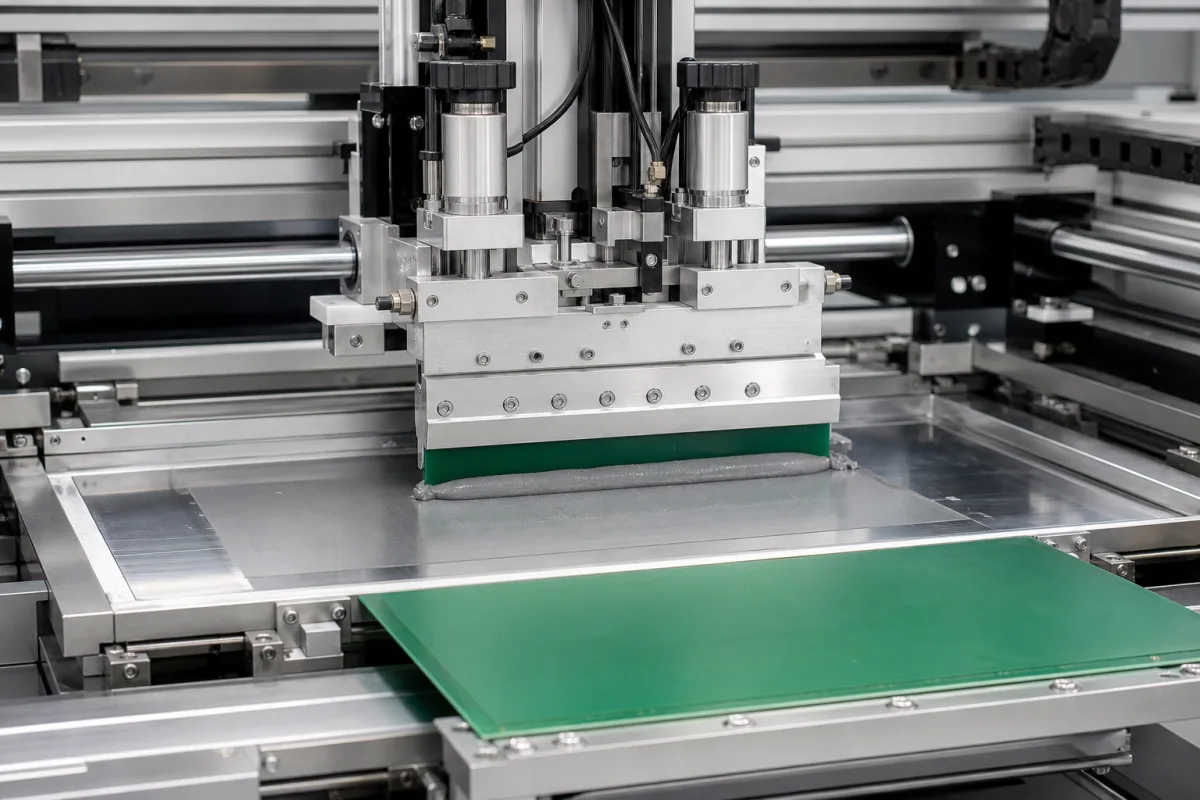
Technical details and manufacturing context for Squeegee Assembly
| Parameter | Typical range | Notes & selection driver |
|---|---|---|
| Blade Material | SUS304 | Corrosion-resistant stainless steelASTM A240 |
| Blade Hardness | 45–55 HRC | Ensures wear resistanceASTM E18 |
| Blade Thickness | 0.15–0.25 mm | Affects flexibility and print quality |
| Blade Length | 200–600 mm | Match PCB width |
| Blade Angle | 45–60 ° | Optimal paste transfer |
| Print Speed | 10–150 mm/s | Higher speed reduces paste deposit |
| Blade Flatness | ±0.02 mm | Ensures uniform pressureISO 1101 |
| Blade Edge Radius | 0.01–0.05 mm | Sharp edge for fine pitch |
| Operating Temperature | 15–35 °C | Outside range affects paste viscosity |
| Weight | 1.5–3.0 kg | Affects handling and mounting |
Ranges are indicative industry figures for RFQ preparation, not a supplier commitment. Confirm every value and standard with the legal manufacturer before ordering.
This component is essential for the following industrial systems and equipment:
| pressure: | 0.5-3.0 bar (blade contact pressure) |
| other spec: | Solder paste viscosity: 500-1500 kcps, Blade speed: 10-150 mm/s, Squeegee angle: 45-60° |
| temperature: | 15-35°C (operating), -10 to 60°C (storage) |
Indicative industry ranges for design and RFQ preparation. Confirm the exact figures and applicable standard with the manufacturer before specifying.
Quoted from the published standard.
1 company lists this product among what they make. Company figures are quoted from each company's own website; every card states where the relationship came from.
Manufacturer listings support early research and capability understanding. They are not certification, ranking, or transaction guarantees.
A practical evidence checklist for RFQ preparation and supplier evaluation.
CNFX does not score or rank suppliers. Buyers must verify all claims and documents with the legal manufacturer before ordering.
The blade material is typically stainless steel, with a reference grade of SUS304 per ASTM A240. However, the actual material should be confirmed with the manufacturer for the specific model.
The reference hardness range is 45–55 HRC per ASTM E18. This range is intended to ensure wear resistance, but the exact hardness should be verified for your application.
Blade angle influences paste transfer and stencil release. The reference range is 45–60 degrees. Optimal angle depends on paste type and PCB design, so it should be set according to the printer's guidelines.
The reference operating pressure range is 1.0–1.6 MPa. Pressures below 1.0 MPa may result in insufficient paste deposition. Always verify the required pressure for your specific printer and stencil.
Editorial classification, named public sources where available, and source-reviewed manufacturer records.
Ask for use case, specification boundaries, supplier type, and RFQ preparation information for this product.
Compare manufacturer profiles with relevant product and process capability.