Editorial Technical Reference

Vehicle Height Sensor

This page explains how Vehicle Height Sensor is classified within Computer, Electronic and Optical Product Manufacturing. Technical values and manufacturer relationships are research references; confirm the current specification and supplier evidence for each order.

Technical Definition & Core Assembly

A sensor that measures the vertical distance between a vehicle's chassis and the ground or reference point.
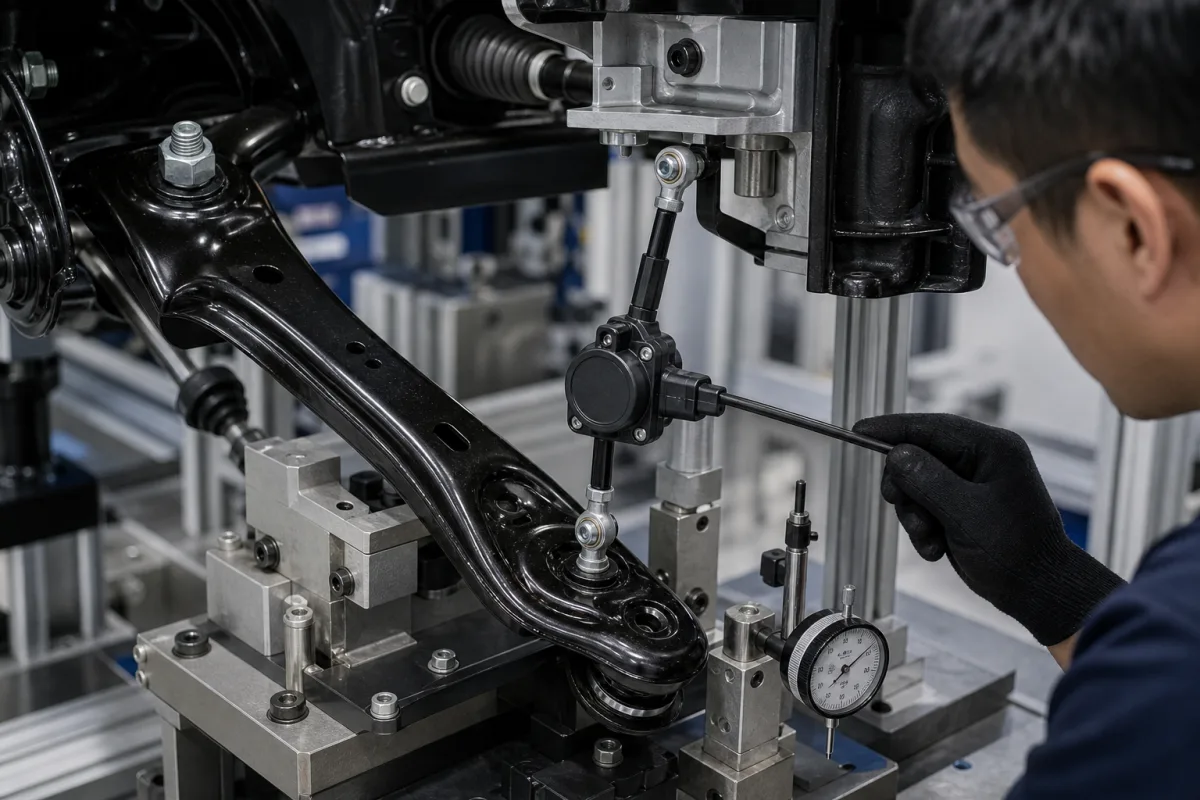
Vehicle Height Sensor in a manufacturing environment
Representative product image. Confirm appearance and specifications with the manufacturer.

Product Specifications

Technical details and manufacturing context for Vehicle Height Sensor

Definition
The vehicle height sensor is a component used in industrial systems to monitor and report the vertical position of a vehicle's chassis relative to a fixed reference point, such as the ground or a platform. It is commonly applied in automated loading and unloading systems, vehicle alignment processes, and safety monitoring applications to ensure proper clearance and positioning. The sensor operates by detecting the distance between the chassis and the reference point using ultrasonic, laser, or mechanical linkage mechanisms. As the vehicle height changes due to loading, unloading, or suspension movement, the sensor measures this displacement and converts it into an electrical signal that is processed by a control system. This signal can be used to trigger actions, provide feedback, or alert operators to potential issues. The sensor is typically housed in a stainless steel or glass-fiber reinforced nylon enclosure, with electronic sensing elements inside. It operates within a supply voltage range of 5–12 V DC and provides an analog ratiometric output of 0.5–4.5 V. The measurement range is 100–300 mm, with an accuracy of ±1.5% of full scale and a resolution of 0.1 mm. It is designed to operate in temperatures from -40°C to 85°C and has an ingress protection rating of IP67, indicating dust-tight and waterproof characteristics. The sensor draws a supply current of ≤20 mA at 12 V and requires a minimum output load resistance of ≥10 kΩ for accurate output. It uses a common automotive connector type (Amp 3-pin) and weighs ≤150 g without cable. These specifications are typical for automotive applications, but actual values may vary by model and application. Always verify model-specific parameters and standards with the legal manufacturer or supplier before procurement or installation.
Working Principle
The vehicle height sensor measures the distance between the vehicle chassis and a fixed reference point using ultrasonic, laser, or mechanical linkage mechanisms. When the vehicle height changes due to loading or suspension movement, the sensor detects this displacement and converts it into an electrical signal. The signal is typically analog ratiometric, proportional to the measured distance, and is sent to a control system for processing. The control system uses this information to adjust operations, ensure proper clearance, or trigger safety alerts. The sensor's output is affected by factors such as supply voltage, temperature, and load resistance, so proper electrical integration is essential for accurate measurement.
Common Materials
Stainless Steel Housing, Electronic Sensing Elements
Technical Parameters
ParameterTypical rangeNotes & selection driver
Operating Voltage5–12 V DCTypical automotive supply range
Output Signal0.5–4.5 VAnalog ratiometric output
Measurement Range100–300 mmVertical travel range
Accuracy±1.5 %FSFull scale accuracy
Resolution0.1 mmMinimum detectable change
Operating Temperature-40–85 °CAutomotive temperature range
Ingress ProtectionIP67Dust-tight and waterproofIEC 60529
Supply Current≤20 mAAt 12 V supply
Output Load Resistance≥10 Minimum load for accurate output
Housing MaterialPA66+30%GFGlass-fiber reinforced nylon
Connector TypeAmp 3-pinCommon automotive connector
Weight≤150 gWithout cable

Ranges are indicative industry figures for RFQ preparation, not a supplier commitment. Confirm every value and standard with the legal manufacturer before ordering.

Components / BOM
  • Sensing Element Part
    Detects physical distance changes and converts to electrical signals
    Material: Piezoelectric crystal or optical sensor
  • Signal Processor
    Processes raw sensor data and outputs standardized height measurements
    Material: Integrated circuit board
  • Protective Housing Part
    Shields internal components from environmental factors and mechanical damage
    Material: Corrosion-resistant metal alloy

Industry Taxonomies & Aliases

Commonly used trade names and technical identifiers for Vehicle Height Sensor.

Applied To / Applications

This component is essential for the following industrial systems and equipment:

Industrial Ecosystem & Supply Chain Structure

Complementary Systems
Downstream Applications
Specialized Tooling

Application Fit & Sizing Matrix

Operational Limits
pressure: 0 to 5 bar (non-pressurized environment)
other spec: Vibration resistance: 10g, IP67 ingress protection, Measurement range: 0-300mm, Accuracy: ±1mm
temperature: -40°C to +125°C
Media Compatibility
✓ Automotive suspension systems ✓ Heavy-duty truck leveling systems ✓ Agricultural equipment height control
Unsuitable: Submerged or high-pressure hydraulic fluid environments
Sizing Data Required
  • Vehicle suspension travel range (mm)
  • Required measurement accuracy (±mm)
  • Mounting location and clearance constraints

Reliability & Engineering Risk Analysis

Failure Mode & Root Cause
Signal drift or inaccuracy
Cause: Environmental contamination (moisture, dirt, road salt ingress) leading to sensor element corrosion or electrical contact degradation, or mechanical wear from vibration causing misalignment
Complete signal loss or intermittent operation
Cause: Electrical connector corrosion or loosening due to vibration, internal circuit board failure from thermal cycling or voltage spikes, or wiring harness damage from abrasion or rodent activity
Maintenance Indicators
  • Erratic or incorrect vehicle height readings displayed on dashboard or suspension control system
  • Audible warning chime or visual warning light indicating suspension/height system malfunction
Engineering Tips
  • Implement regular protective maintenance: Clean sensor mounting area and electrical connectors during service intervals, apply dielectric grease to connectors, and inspect wiring harness for chafing or damage
  • Enhance environmental protection: Ensure proper sealing of sensor housing, use vibration-resistant mounting hardware, and consider adding protective shielding in high-exposure areas (wheel wells)

Indicative industry ranges for design and RFQ preparation. Confirm the exact figures and applicable standard with the manufacturer before specifying.

Compliance & Manufacturing Standards

Applicable Standards
ISO 26262:2018 (Functional Safety for Road Vehicles) ISO 16750-3:2012 (Electrical and Electronic Equipment Environmental Conditions and Testing) ECE R13-H (UN Regulation on Braking Systems for Passenger Cars)

Quoted from the published standard.

Manufacturing Precision
  • Height Measurement Accuracy: +/- 1.5 mm over operating range
  • Output Signal Linearity: +/- 2% of full scale
Quality Inspection
  • Environmental Stress Screening (Temperature Cycling & Vibration)
  • Signal Accuracy Verification with Certified Calibration Fixtures

Manufacturers of Vehicle Height Sensor

Manufacturer profiles associated with Vehicle Height Sensor.

Sourcing Vehicle Height Sensor from China?
Tell us your specification and target quantity — we will match it against manufacturer records and come back with the factories that fit.
Request manufacturers We manufacture this

Manufacturer listings support early research and capability understanding. They are not certification, ranking, or transaction guarantees.

Share this page
Technical documentation
Request current drawings, revision history, and a signed specification sheet.
Manufacturing capability
Verify equipment lists, process limits, capacity, and representative production evidence.
Inspection readiness
Confirm test methods, calibrated equipment, sampling plans, and traceable reports.
Supplier transparency
Check the legal entity, factory address, ownership, certifications, and direct contacts.

CNFX does not score or rank suppliers. Buyers must verify all claims and documents with the legal manufacturer before ordering.

Supply Chain Commonly Integrated Components

Wireless Radio Module

A hardware component that enables wireless communication by transmitting and receiving radio frequency signals.

Explore Specs →
Vision Alignment System

A computer vision-based subsystem that ensures precise alignment of components during automated chassis assembly.

Explore Specs →
Ethernet Magnetics

Passive electronic component that provides electrical isolation, signal conditioning, and EMI filtering for Ethernet interfaces

Explore Specs →
Industrial Touchscreen Display

A ruggedized touchscreen interface component designed for industrial environments, providing visual output and user input capabilities.

Explore Specs →

Frequently Asked Questions

What is the typical operating voltage range for this vehicle height sensor?

The typical operating voltage range is 5–12 V DC, as listed in the product parameters. However, always confirm the exact voltage requirements for your specific model and application with the manufacturer or supplier.

What is the measurement range and accuracy of the sensor?

The measurement range is 100–300 mm, with an accuracy of ±1.5% of full scale. The resolution is 0.1 mm. These values are typical for automotive applications; verify the actual specifications for your intended use.

What is the ingress protection rating, and what does it mean?

The ingress protection rating is IP67, according to IEC 60529. This means the sensor is dust-tight and protected against temporary immersion in water. It is suitable for outdoor or harsh environments, but installation conditions should be checked.

What output signal does the sensor provide?

The sensor provides an analog ratiometric output of 0.5–4.5 V, which is proportional to the measured height. This signal can be read by a control system or PLC. Ensure the input impedance of the receiving device is at least 10 kΩ for accurate readings.

Data Basis

Editorial classification, named public sources where available, and source-reviewed manufacturer records.

Preliminary Technical Classification
This page supports structured research, RFQ preparation, and supplier evaluation. It does not replace buyer-led supplier qualification, standards review, or technical approval.
Buyer enquiry

Request manufacturing insight for Vehicle Height Sensor

Ask for use case, specification boundaries, supplier type, and RFQ preparation information for this product.

Where it goes
Straight to the CNFX editorial desk, and to the manufacturer if this product is linked to a claimed profile. Nothing is broadcast to a supplier list.
Your details stay here
We do not sell or rent enquiry data, and we do not add you to a mailing list. Used only to answer this request.
No commission, no middleman
CNFX is a directory. We take no cut of any order and never negotiate on a supplier's behalf.
What we don't claim
A listing is not an endorsement. Qualify every supplier and verify every figure yourself before ordering.

Your business information is used only to process this request.

Thank you! Your message has been sent. We'll respond within 1–3 business days.
Sorry, we couldn't send your message. Please try again, or email us at [email protected].

Need to Manufacture Vehicle Height Sensor?

Compare manufacturer profiles with relevant product and process capability.

Previous Product
XY Positioning Stage
Last Product
Get QuotesChat