This page explains how Wireless Communication Board is classified within Computer, Electronic and Optical Product Manufacturing. Technical values and manufacturer relationships are research references; confirm the current specification and supplier evidence for each order.
A printed circuit board (PCB) that enables wireless communication capabilities for smart home electrical systems.
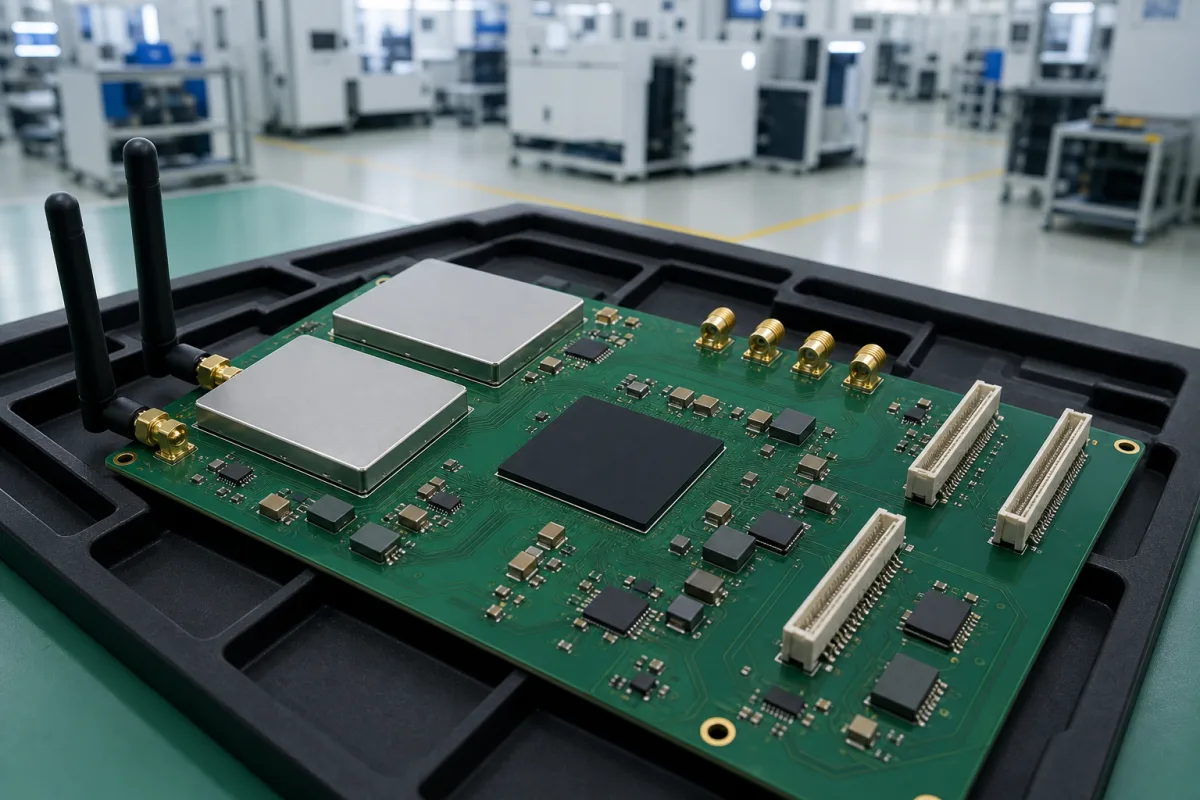
Technical details and manufacturing context for Wireless Communication Board
| Parameter | Typical range | Notes & selection driver |
|---|---|---|
| Operating Frequency | 2.4–2.4835 GHz | ISM band for Wi-Fi/BluetoothIEEE 802.11 |
| Transmit Power | 20–30 dBm | Max EIRP for indoor useETSI EN 300 328 |
| Receiver Sensitivity | -90–-100 dBm | Lower is better for weak signals |
| Data Rate | 1–300 Mbps | Depends on modulation and bandwidthIEEE 802.11n |
| Supply Voltage | 3.3–5 V DC | Typical for logic and RF circuits |
| Current Consumption | 80–300 mA | At max transmit power |
| Operating Temperature | -40–85 °C | Industrial gradeIEC 60068-2-1 |
| Humidity Range | 5–95 % RH | Non-condensingIEC 60068-2-78 |
| Ingress Protection | IP40–IP65 | For enclosure, not bare boardIEC 60529 |
| Board Dimensions | 25×40–50×80 mm | Customizable per design |
| Weight | 10–30 g | Including shield and connectors |
| Antenna Gain | 2–5 dBi | For PCB trace antenna |
Ranges are indicative industry figures for RFQ preparation, not a supplier commitment. Confirm every value and standard with the legal manufacturer before ordering.
| pressure: | N/A (atmospheric) |
| other spec: | Humidity: 10-90% non-condensing, Power Supply: 3.3V DC ±5% |
| temperature: | -20°C to +85°C |
Indicative industry ranges for design and RFQ preparation. Confirm the exact figures and applicable standard with the manufacturer before specifying.
Quoted from the published standard.
Manufacturer profiles associated with Wireless Communication Board.
Manufacturer listings support early research and capability understanding. They are not certification, ranking, or transaction guarantees.
A practical evidence checklist for RFQ preparation and supplier evaluation.
CNFX does not score or rank suppliers. Buyers must verify all claims and documents with the legal manufacturer before ordering.
The board operates in the 2.4–2.4835 GHz ISM band, as per IEEE 802.11 standards. This range is typical for Wi-Fi and Bluetooth applications. Verify the exact frequency for your model with the manufacturer.
The maximum EIRP for indoor use is 20–30 dBm, according to ETSI EN 300 328. This is a reference range; the actual transmit power may vary by model and regional regulations. Confirm with the supplier.
The board requires a DC supply voltage of 3.3–5 V. Current consumption is 80–300 mA at maximum transmit power. Ensure your power supply meets these requirements and verify with the manufacturer.
The board is rated for industrial-grade operating temperatures from -40°C to 85°C, per IEC 60068-2-1. This range is suitable for most indoor and outdoor installations. Always check the datasheet for your specific model.
Editorial classification, named public sources where available, and source-reviewed manufacturer records.
Ask for use case, specification boundaries, supplier type, and RFQ preparation information for this product.
Compare manufacturer profiles with relevant product and process capability.