Editorial Technical Reference

Wireless Transceiver Module

This page explains how Wireless Transceiver Module is classified within Computer, Electronic and Optical Product Manufacturing. Technical values and manufacturer relationships are research references; confirm the current specification and supplier evidence for each order.

Technical Definition & Core Assembly

A compact electronic component that enables wireless transmission and reception of audio signals in multi-room speaker systems.
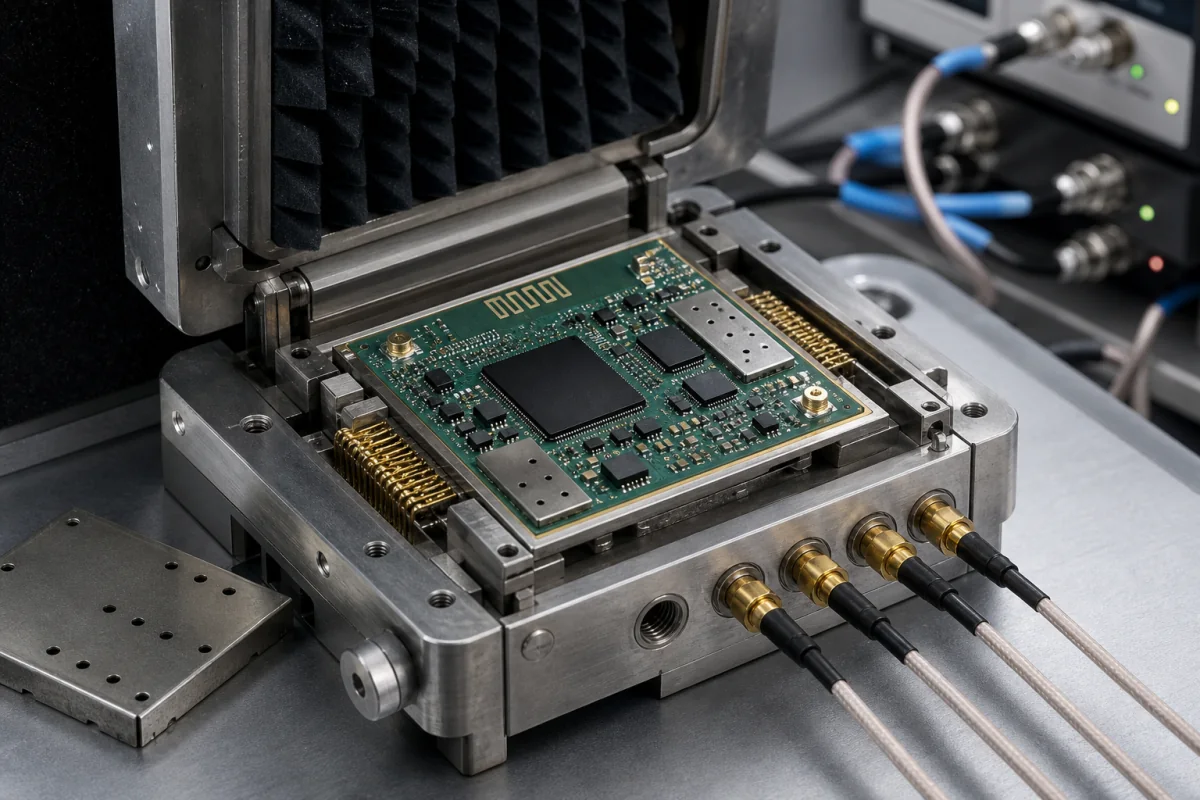
Wireless Transceiver Module in a manufacturing environment
Representative product image. Confirm appearance and specifications with the manufacturer.

Product Specifications

Technical details and manufacturing context for Wireless Transceiver Module

Definition
This wireless transceiver module is a specialized electronic component designed for use in multi-room audio speaker systems. It handles both transmission and reception of digital audio signals, enabling synchronized playback across multiple speakers without physical connections. The module serves as the core communication interface between the audio source and individual speakers, converting digital audio into radio frequency (RF) signals for transmission and performing the reverse process for reception. It typically uses protocols such as Wi-Fi, Bluetooth, or proprietary wireless standards, and includes modulation/demodulation circuits, RF amplifiers, and digital signal processing components to maintain audio quality and synchronization across multiple rooms. The module is intended for integration into speaker systems by original equipment manufacturers (OEMs) and system integrators. It is not a finished consumer product but a component that requires proper design-in and validation. Key parameters include an operating frequency in the 2.4–2.4835 GHz ISM band, adjustable transmission power from 0 to 20 dBm, receiver sensitivity from -90 to -95 dBm, and data rates from 1 to 3 Mbps. It operates on a supply voltage of 1.8–3.6 V DC, with current consumption ranging from 40–180 mA during transmission and 20–40 mA during reception. The module is rated for industrial-grade operating temperatures from -40 to 85 °C and a non-condensing humidity range of 10–90% RH. It offers digital audio and control interfaces including UART, I2S, and SPI, and supports both PCB and external antennas via an IPEX connector. The compact SMD package measures 13.5 × 13.5 × 2.0 mm and weighs approximately 1.5 g. Certifications such as FCC, CE, and IC are listed as references for market access, but actual compliance must be verified for the specific model and application. Always confirm model-specific values and standards with the legal manufacturer or supplier before procurement.
Working Principle
The module converts digital audio signals into radio frequency (RF) signals for transmission and performs the reverse process for reception. It uses modulation/demodulation circuits, RF amplifiers, and digital signal processing components to maintain audio quality and synchronization. The operating frequency is in the 2.4 GHz ISM band, and it supports adaptive frequency hopping to mitigate interference. The module can operate in both transmit and receive modes, with adjustable transmission power to balance range and power consumption. It interfaces with a host processor via UART, I2S, or SPI for digital audio and control data. The antenna can be either a PCB trace or an external antenna connected via an IPEX connector. The module's performance parameters, such as receiver sensitivity and data rate, are specified for reference and must be validated in the target system.
Common Materials
Printed Circuit Board (PCB), RF integrated circuits, Antenna elements, Ceramic capacitors, Surface-mount components
Technical Parameters
ParameterTypical rangeNotes & selection driver
Operating Frequency2.4–2.4835 GHzISM band, worldwide unlicensedIEEE 802.15.1
Transmission Power0–20 dBmAdjustable, higher power increases rangeETSI EN 300 328
Receiver Sensitivity-90–-95 dBmAt 1 Mbps, lower is better
Data Rate1–3 MbpsAdaptive frequency hoppingIEEE 802.15.1
Supply Voltage1.8–3.6 V DCTypical 3.3 V
Current Consumption (TX)40–180 mAAt 0 dBm output
Current Consumption (RX)20–40 mAAt 1 Mbps
Operating Temperature-40–85 °CIndustrial gradeIEC 60068-2-1, IEC 60068-2-2
Humidity Range10–90 % RHNon-condensingIEC 60068-2-78
InterfaceUART/I2S/SPIDigital audio and control
Antenna TypePCB/ExternalExternal via IPEX connector
Dimensions13.5 × 13.5 × 2.0 mmCompact SMD package
Weight1.5 gLightweight for portable devices
CertificationsFCC/CE/ICRequired for market accessFCC Part 15, RED 2014/53/EU

Ranges are indicative industry figures for RFQ preparation, not a supplier commitment. Confirm every value and standard with the legal manufacturer before ordering.

Components / BOM
  • RF Transceiver IC
    Handles radio frequency signal transmission and reception
    Material: Semiconductor silicon
  • Antenna Part
    Radiates and receives electromagnetic waves for wireless communication
    Material: Copper trace on PCB
  • Power Amplifier
    Boosts RF signal strength for transmission
    Material: Gallium arsenide semiconductor
  • Digital Signal Processor
    Processes audio data and manages wireless protocols
    Material: Integrated circuit
  • Host Interface
    Carries digital audio and control data to and from the host processor over UART / I2S / SPI.

Applied To / Applications

This component is essential for the following industrial systems and equipment:

Industrial Ecosystem & Supply Chain Structure

Complementary Systems
Downstream Applications
Specialized Tooling

Application Fit & Sizing Matrix

Operational Limits
voltage: 3.3V ±10%
humidity: 5% to 95% non-condensing
temperature: -40°C to +85°C
frequency range: 2.4GHz ISM band (2400-2483.5MHz)
transmission power: ≤20dBm
Media Compatibility
✓ Indoor residential environments ✓ Multi-room audio systems with standard speaker wiring ✓ Home automation networks using Wi-Fi or Bluetooth protocols
Unsuitable: Industrial environments with heavy electromagnetic interference (e.g., near large motors, arc welders, or high-power radio transmitters)
Sizing Data Required
  • Required audio quality/bitrate (e.g., 16-bit/44.1kHz for CD quality)
  • Number of simultaneous audio streams/channels needed
  • Maximum transmission distance between modules in the installation environment

Reliability & Engineering Risk Analysis

Failure Mode & Root Cause
Thermal degradation
Cause: Overheating due to poor ventilation, high ambient temperatures, or excessive power draw leading to solder joint fatigue, component drift, and eventual signal loss or complete failure.
Moisture ingress and corrosion
Cause: Inadequate sealing or exposure to high humidity/condensation causing short circuits, oxidation of connectors/PCB traces, and degradation of RF performance.
Maintenance Indicators
  • Intermittent or complete loss of signal transmission/reception despite power indication
  • Audible buzzing or crackling from the module, or visible signs of overheating (discoloration, melting) on the housing
Engineering Tips
  • Ensure proper thermal management: Install heat sinks if needed, maintain clear airflow, and avoid mounting near other heat-generating equipment.
  • Implement environmental protection: Use conformal coating on PCBs, verify IP ratings for enclosures, and install desiccant packs in sealed housings in humid environments.

Indicative industry ranges for design and RFQ preparation. Confirm the exact figures and applicable standard with the manufacturer before specifying.

Compliance & Manufacturing Standards

Applicable Standards
ANSI C63.4 - Methods of measurement of radio-noise emissions CE Marking - EMC Directive 2014/30/EU

Quoted from the published standard.

Manufacturing Precision
  • RF Output Power: +/- 1.5 dB
  • Frequency Stability: +/- 10 ppm
Quality Inspection
  • Radiated Spurious Emissions Test
  • Temperature Cycling Endurance Test

Manufacturers of Wireless Transceiver Module

1 company lists this product among what they make. Company figures are quoted from each company's own website; every card states where the relationship came from.

Chengdu Ebyte Electronic Technology Co.,Ltd.
Chengdu, Sichuan, CN
Also makes: Wireless Module, Modbus Gateway, Power Module and 4 more
Listed on the company's own website · profile compiled by CNFX from public sources
Listed there as: “wireless transceiver module”
View source page ↗ ebyteiot.com · checked 2026-09-15

Manufacturer listings support early research and capability understanding. They are not certification, ranking, or transaction guarantees.

Share this page
Technical documentation
Request current drawings, revision history, and a signed specification sheet.
Manufacturing capability
Verify equipment lists, process limits, capacity, and representative production evidence.
Inspection readiness
Confirm test methods, calibrated equipment, sampling plans, and traceable reports.
Supplier transparency
Check the legal entity, factory address, ownership, certifications, and direct contacts.

CNFX does not score or rank suppliers. Buyers must verify all claims and documents with the legal manufacturer before ordering.

Supply Chain Compatible Machinery & Devices

Modular Industrial Edge Computing Device

This modular industrial edge computing device is a ruggedized system designed for deployment in harsh industrial environments to perform real-time data processing, analytics, and control functions at the network edge.

Explore Specs →
Industrial Smart Camera Module

The Industrial Smart Camera Module is a compact, self-contained vision processing unit designed for integration into industrial machinery and production lines.

Explore Specs →
Surface Mount Resistor

Passive electronic component for current limiting and voltage division in circuits

Explore Specs →
Surface Mount Capacitor

A surface mount capacitor is a fundamental electronic component used for energy storage, filtering, coupling, and decoupling in electronic circuits.

Explore Specs →

Frequently Asked Questions

What is the operating frequency range of this module?

The module operates in the 2.4–2.4835 GHz ISM band, which is unlicensed worldwide. This range is specified in the source data and should be verified for the specific model.

What interfaces does the module support?

The module supports UART, I2S, and SPI interfaces for digital audio and control data. These interfaces allow connection to a host processor or audio codec.

What is the typical supply voltage?

The supply voltage range is 1.8–3.6 V DC, with a typical value of 3.3 V. Always check the module's datasheet for exact requirements.

What certifications are listed for this module?

The source data lists FCC, CE, and IC as reference certifications. However, actual certification status must be confirmed with the manufacturer for the specific model and target market.

Data Basis

Editorial classification, named public sources where available, and source-reviewed manufacturer records.

Preliminary Technical Classification
This page supports structured research, RFQ preparation, and supplier evaluation. It does not replace buyer-led supplier qualification, standards review, or technical approval.
Buyer enquiry

Request manufacturing insight for Wireless Transceiver Module

Ask for use case, specification boundaries, supplier type, and RFQ preparation information for this product.

Where it goes
Straight to the CNFX editorial desk, and to the manufacturer if this product is linked to a claimed profile. Nothing is broadcast to a supplier list.
Your details stay here
We do not sell or rent enquiry data, and we do not add you to a mailing list. Used only to answer this request.
No commission, no middleman
CNFX is a directory. We take no cut of any order and never negotiate on a supplier's behalf.
What we don't claim
A listing is not an endorsement. Qualify every supplier and verify every figure yourself before ordering.

Your business information is used only to process this request.

Thank you! Your message has been sent. We'll respond within 1–3 business days.
Sorry, we couldn't send your message. Please try again, or email us at [email protected].

Need to Manufacture Wireless Transceiver Module?

Compare manufacturer profiles with relevant product and process capability.

Previous Product
XY Positioning Stage
Last Product
Get QuotesChat