Industry-Verified Manufacturing Data (2026)

Power Regulation Circuit

Based on aggregated insights from multiple verified factory profiles within the CNFX directory, the standard Power Regulation Circuit used in the Computer, Electronic and Optical Product Manufacturing sector typically supports operational capacities ranging from standard industrial configurations to heavy-duty production requirements.

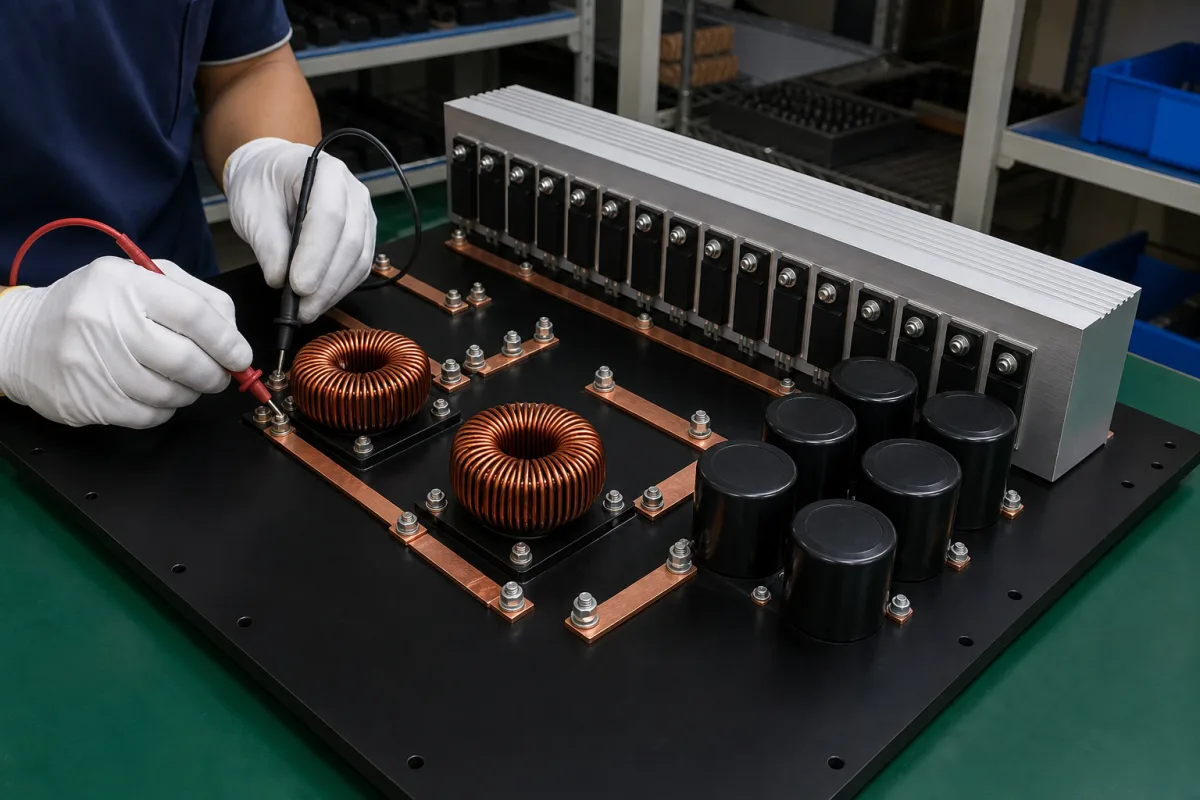
Technical Definition & Core Assembly

A canonical Power Regulation Circuit is characterized by the integration of Voltage Regulator IC and Filter Capacitors. In industrial production environments, manufacturers listed on CNFX commonly emphasize Printed Circuit Board (PCB) construction to support stable, high-cycle operation across diverse manufacturing scenarios.

A specialized electronic circuit within an Image Processing Unit that regulates and stabilizes power supply to ensure consistent voltage and current for image processing components.
Product Specifications

Technical details and manufacturing context for Power Regulation Circuit

Definition
The Power Regulation Circuit is a critical subsystem within an Image Processing Unit responsible for managing electrical power distribution. It converts, filters, and stabilizes incoming power to provide clean, regulated voltage and current to sensitive image processing components such as sensors, processors, and display drivers. This circuit prevents voltage fluctuations, noise, and power surges that could degrade image quality or damage electronic components.
Working Principle
The circuit typically employs voltage regulators (linear or switching), capacitors for filtering, inductors for noise suppression, and protection components like fuses or transient voltage suppressors. It monitors input power, adjusts output through feedback mechanisms, and maintains stable voltage levels despite variations in load or input conditions.
Common Materials
Printed Circuit Board (PCB), Semiconductor components (ICs, transistors), Passive components (capacitors, resistors, inductors), Copper traces and connectors
Technical Parameters
  • Output voltage regulation range and accuracy (V) Standard Spec
Components / BOM
  • Voltage Regulator IC
    Maintains constant output voltage despite input variations
    Material: Semiconductor (silicon)
  • Filter Capacitors
    Smooths voltage ripple and filters high-frequency noise
    Material: Ceramic or electrolytic materials
  • Power Inductors
    Stores energy and filters switching noise in switching regulators
    Material: Ferrite core with copper winding
  • PCB Traces
    Provides electrical connections between components
    Material: Copper with protective coating
Engineering Reasoning
3.3-5.0 VDC ±2% regulation, 0.1-2.0 A current capacity
Voltage deviation beyond ±5% of nominal (3.465-5.25 VDC), current exceeding 2.5 A for >10 ms
Design Rationale: Joule heating (P=I²R) exceeding 125°C junction temperature in MOSFETs, causing thermal runaway and semiconductor breakdown
Risk Mitigation (FMEA)
Trigger Electrostatic discharge (ESD) event exceeding 8 kV HBM
Mode: Gate oxide rupture in voltage regulator MOSFET
Strategy: Integrated ESD protection diodes with 15 kV IEC 61000-4-2 rating
Trigger Load transient di/dt > 100 A/μs
Mode: Control loop instability causing 200 mV overshoot
Strategy: Multi-phase buck converter with 500 kHz switching frequency and adaptive voltage positioning

Industry Taxonomies & Aliases

Commonly used trade names and technical identifiers for Power Regulation Circuit.

Applied To / Applications

This component is essential for the following industrial systems and equipment:

Industrial Ecosystem & Supply Chain DNA

Complementary Systems
Downstream Applications
Specialized Tooling

Application Fit & Sizing Matrix

Operational Limits
humidity: 0% to 95% non-condensing
temperature: -40°C to +85°C
current capacity: Up to 10A
voltage input range: 9V to 36V DC
Media Compatibility
✓ Clean room environments ✓ Indoor electronic enclosures ✓ Laboratory test setups
Unsuitable: High-vibration industrial machinery with particulate contamination
Sizing Data Required
  • Maximum load current requirement (A)
  • Input voltage range (V DC)
  • Required output voltage stability tolerance (%)

Reliability & Engineering Risk Analysis

Failure Mode & Root Cause
Overheating of voltage regulators
Cause: Excessive current draw, poor heat dissipation, or aging thermal management components leading to thermal runaway and component degradation.
Capacitor failure (electrolytic drying/bulging)
Cause: Extended operation at high temperatures, voltage spikes, or end-of-life electrolyte evaporation reducing capacitance and causing circuit instability.
Maintenance Indicators
  • Audible buzzing or humming from transformers or capacitors indicating loose windings or dielectric breakdown
  • Visible discoloration, bulging, or leaking from components (especially capacitors) on the circuit board
Engineering Tips
  • Implement regular thermal imaging inspections to identify hot spots before they cause component failure
  • Use high-quality capacitors with appropriate voltage/ temperature ratings and ensure proper derating in design

Compliance & Manufacturing Standards

Reference Standards
IEC 61000-3-2 (Electromagnetic compatibility - Limits for harmonic current emissions) UL 508 (Standard for Industrial Control Equipment) EN 62368-1 (Audio/video, information and communication technology equipment - Safety requirements)
Manufacturing Precision
  • Output Voltage Regulation: +/-2% of nominal voltage under full load
  • Temperature Coefficient: +/-0.02%/°C over operating range
Quality Inspection
  • Thermal Cycling Test (operational verification across -40°C to +85°C)
  • Load Regulation Test (performance verification from 10% to 100% load)

Factories Producing Power Regulation Circuit

Verified manufacturers with capability to produce this product in China

✓ 94% Supplier Capability Match Found

S Sourcing Manager from United Arab Emirates Feb 13, 2026
★★★★★
"Impressive build quality. Especially the technical reliability is very stable during long-term operation."
Technical Specifications Verified
P Procurement Specialist from Australia Feb 10, 2026
★★★★☆
"As a professional in the Computer, Electronic and Optical Product Manufacturing sector, I confirm this Power Regulation Circuit meets all ISO standards. (Delivery took slightly longer than expected, but technical support was excellent.)"
Technical Specifications Verified
T Technical Director from Singapore Feb 07, 2026
★★★★★
"Standard OEM quality for Computer, Electronic and Optical Product Manufacturing applications. The Power Regulation Circuit arrived with full certification."
Technical Specifications Verified
Verification Protocol

“Feedback is collected from verified sourcing managers during RFQ (Request for Quote) and factory evaluation processes on CNFX. These reports represent historical performance data and technical audit summaries from our B2B manufacturing network.”

11 sourcing managers are analyzing this specification now. Last inquiry for Power Regulation Circuit from Vietnam (1h ago).

Supply Chain Compatible Machinery & Devices

Modular Industrial Edge Computing Device

Rugged computing platform for industrial data processing at the network edge

Explore Specs →
Industrial Smart Camera Module

Embedded vision system for industrial automation and quality inspection.

Explore Specs →
Industrial Wireless Power Transfer Module

Wireless power transfer module for industrial equipment applications

Explore Specs →
Industrial Smart Sensor Module

Modular industrial sensor with embedded processing and wireless connectivity

Explore Specs →

Frequently Asked Questions

What is the primary function of this power regulation circuit in image processing units?

This circuit regulates and stabilizes power supply to ensure consistent voltage and current delivery to image processing components, preventing fluctuations that could degrade image quality or damage sensitive electronics.

How does this circuit improve reliability in computer and optical product manufacturing?

By maintaining stable power conditions, it reduces component stress, minimizes electrical noise, and ensures consistent performance of image sensors, processors, and display elements, leading to higher product reliability and longevity.

What are the key components that make this power regulation circuit effective?

The circuit utilizes voltage regulator ICs for precise control, filter capacitors to smooth power signals, power inductors for energy storage, and optimized PCB traces to minimize resistance and electromagnetic interference.

Can I contact factories directly on CNFX?

CNFX is an open directory, not a transaction platform. Each factory profile provides direct contact information and production details to help you initiate direct inquiries with Chinese suppliers.

Get Quote for Power Regulation Circuit

Request technical pricing, lead times, or customized specifications for Power Regulation Circuit directly from verified manufacturing units.

Your business information is encrypted and only shared with verified Power Regulation Circuit suppliers.

Thank you! Your message has been sent. We'll respond within 1–3 business days.

Need to Manufacture Power Regulation Circuit?

Connect with verified factories specializing in this product category

Add Your Factory Contact Us
Previous Product
Power Management Unit
Next Product
Power Regulation Circuitry